
Macarona Bechamel was not the reason I signed up for the cooking class in Cairo. I booked it for the mahshi, which I had eaten twice in Zamalek and wanted to understand. The pasta casserole was the last thing on the schedule and I almost skipped it to go back to the hotel.
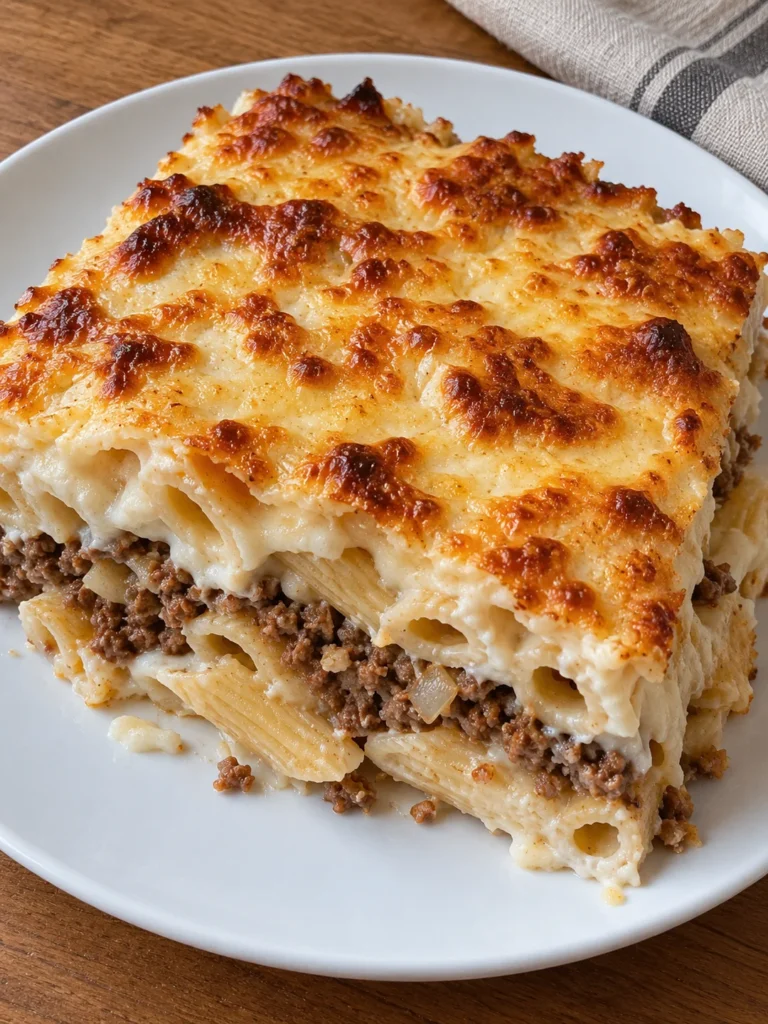
I am glad I did not.
The class was in a converted apartment kitchen off Shar’a Brazil, six of us around a marble counter that had clearly seen decades of use. Our instructor was a woman named Hala who ran the class and, it turned out, moonlighted as a sommelier at a restaurant nearby. She poured us something while the casserole baked. A dry white from the Gianaclis vineyards out near Alexandria, a label I had never heard of and now look for every time I am back. She said it cut the bechamel. She was right.
The Kitchen on Shar’a Brazil
The room smelled like browning butter and grated nutmeg, and underneath that, tomato paste cooking down in oil. That third smell is the one I associate with Egyptian home kitchens now. Hot oil separating out at the edge of a red sauce.
Hala explained while she whisked that the bechamel is not Egyptian at all in origin. It came in through the nineteenth century, when French-trained chefs were working in the khedival palace kitchens and the luxury hotels, and Egyptian cooks slowly took the technique for their own. Then the Greek community in Cairo and Alexandria brought pastitsio to their restaurants in the early twentieth century, and Egyptian cooks adapted that too, swapping out the cinnamon-forward Greek ragu for their own spiced tomato and beef.
So the dish is a record of who passed through. I liked that. Most food is, but this one wears it openly.
What Macarona Bechamel Actually Is
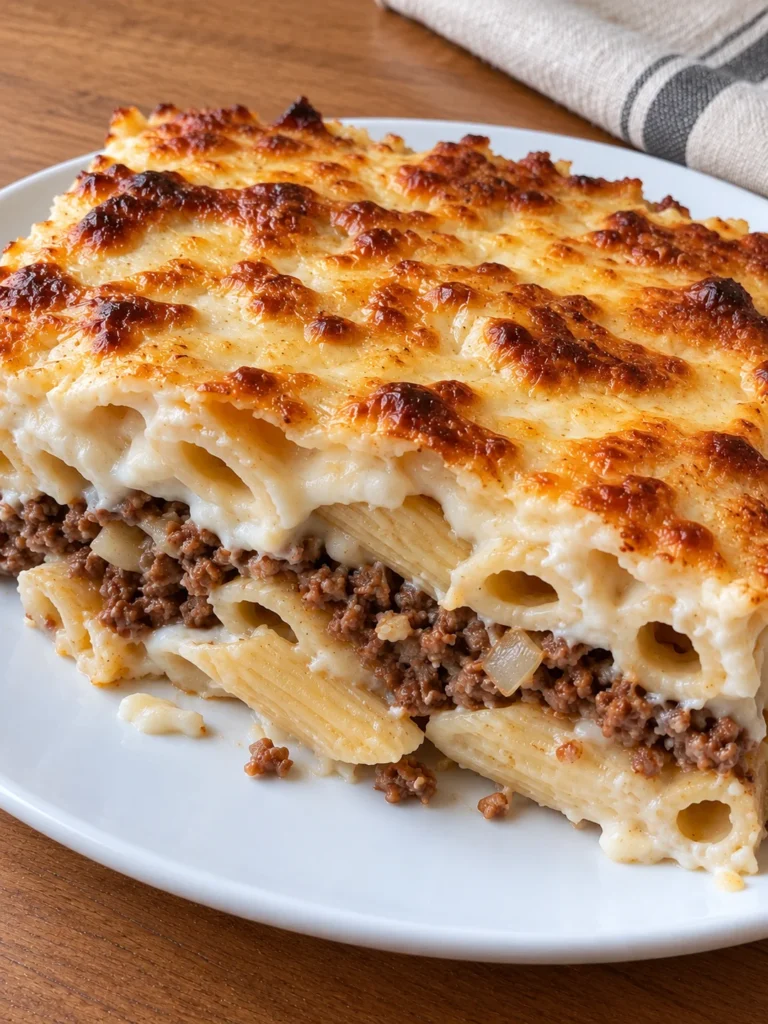
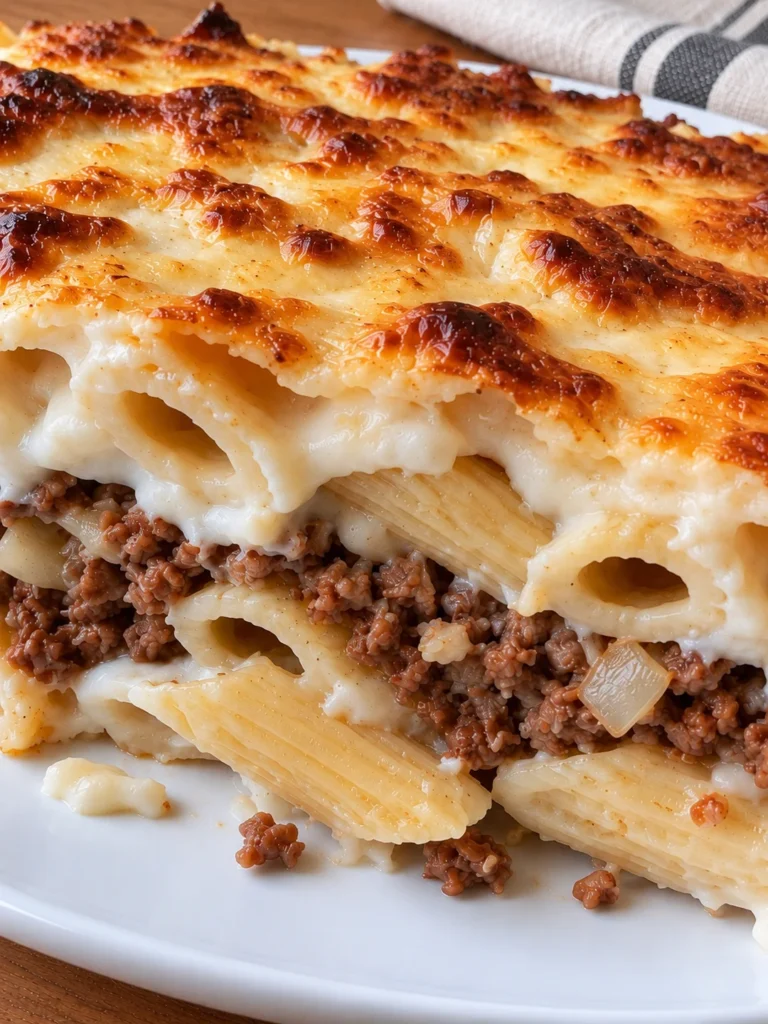
It is penne. Not elbow macaroni, despite what the English name suggests, and Hala was firm about this in a way that made me think she had corrected foreigners before. Penne, undercooked by two minutes, tossed in bechamel so every tube is coated inside and out.
Under that goes a layer of spiced ground beef simmered in tomato puree until the oil breaks at the edges. Sharp aged cheese between the layers and on top. Then the rest of the bechamel poured over and baked until the surface sets into something you can cut cleanly.
It is not lasagna, which uses flat sheets and sometimes ricotta. It is not pastitsio either, though they are cousins. The beaten egg whisked into the bechamel is what makes the difference between cutting squares and scooping mush, and that is the one thing in the whole process worth being careful about.
What I Used
- A pound of penne, undercooked by two minutes
- A pound of ground beef, the 80/20, because leaner beef makes a dry meat layer
- One large onion, chopped small, and three cloves of garlic
- A cup and a half of tomato puree
- Salt, black pepper, and half a teaspoon of chili powder
- Six tablespoons of butter and half a cup of flour for the roux
- Five cups of cold whole milk, straight out of the fridge
- Freshly grated nutmeg, half a teaspoon, and no more than that
- One egg, beaten, tempered into the finished sauce
- A cup of grated Rumi cheese, or Pecorino Romano when I cannot find it
Bringing the Macarona Bechamel Recipe Home
The macarona bechamel recipe I wrote down on the plane home needed two adjustments once I was standing in my own kitchen, and both were about sourcing rather than technique.
Rumi is the first. It is a hard, sharp aged Egyptian cheese and it does specific work here, cutting through five cups of milk sauce so the whole thing does not read as bland richness. I found it once at a Middle Eastern grocery in Glendale and have not found it since. Pecorino Romano is my standing substitute and it is close enough that I stopped feeling guilty about it. A well-aged Parmesan also works, though it is gentler.
The second is the nutmeg. In Cairo Hala grated it fresh from a whole nutmeg into the pot, and I came home and used the pre-ground jar that had been in my spice drawer since some previous decade. The sauce tasted like nothing. Now I keep whole nutmeg and a microplane, which is the only new tool this dish made me buy.
The Two Things Worth Fussing Over
Cold milk into hot roux. That is the whole trick to a lump-free bechamel and it is counterintuitive enough that I got it wrong the first time, standing there whisking warm milk into warm roux and wondering why the sauce looked like cottage cheese. Cold milk, poured in a steady stream, whisking hard. It comes together.
The egg is the other one. Pull the pan off the heat, whisk one ladle of the hot bechamel into the beaten egg first, then pour that back in. Dump the egg straight into the hot pot and you get scrambled egg suspended in white sauce. I have done this. It is not salvageable.
Otherwise the dish is forgiving. Undercook the pasta and it finishes in the oven. Simmer the meat until the oil separates, which takes about ten minutes and is a visual cue rather than a timer.
How It Goes in My Kitchen Now
I make this on Sunday afternoons, mostly in winter, because it is a forty minute bake and the oven does something useful for the apartment. Last time there was rain on the kitchen window the entire time it was in there and it felt appropriate.
The resting is the part I have to talk myself into. Fifteen minutes after it comes out, no shortcuts, or the layers slide apart when you put a knife in. I set a timer and go do something else because otherwise I will cut it early and then be annoyed at myself.
It feeds eight and keeps four days covered. Reheated at 325 it is nearly as good. Cold, straight from the fridge, eaten standing at the counter the next morning. Honestly better than I expected.
In Egypt this shows up at family gatherings, at holidays, all through Ramadan, and also just sold by the square at eateries in Cairo and Alexandria as an ordinary weekday lunch. Both things are true about it. That range is why I keep making it.
I went to that class for stuffed vegetables and came home with a pasta casserole instead. Hala, if you ever read this, I found the wine. It still cuts the bechamel.
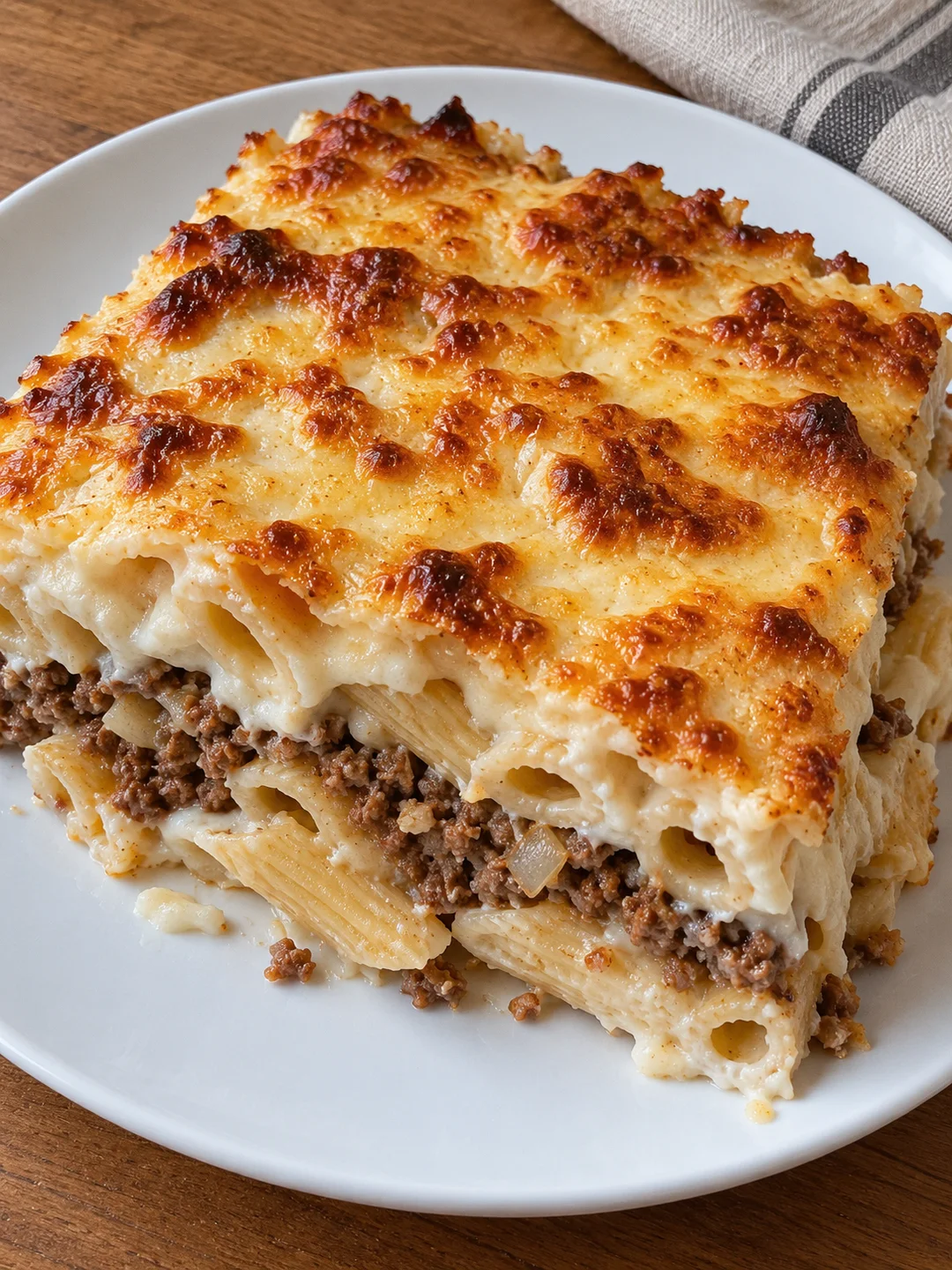
Macarona Bechamel
Ingredients
Equipment
Method
- Bring a large pot of well-salted water to a boil. Cook the penne 2 minutes short of al dente, around 8 minutes. Drain and set aside in the colander. Do not rinse.
- Heat the vegetable oil in a large skillet over medium heat. Add the chopped onion and cook until translucent, about 5 minutes. Add the garlic and cook 1 minute more until fragrant.
- Add the ground beef with 3/4 teaspoon of the salt, the black pepper and the chili powder. Break the meat apart with a wooden spoon and cook until no pink remains, about 5 minutes.
- Pour in the tomato puree, lower the heat to medium-low and simmer uncovered 10 minutes, until the sauce thickens and the oil separates at the edges. Taste and correct the salt. Set aside.
- Preheat the oven to 375 F and butter the baking dish.
- Make the bechamel. Melt the butter in a heavy saucepan over medium heat. Whisk in the flour and cook 2 minutes, whisking constantly, until it smells nutty but takes on no color.
- Pour in the cold milk in a steady stream while whisking hard. Cold milk into hot roux is what prevents lumps. Add the remaining 3/4 teaspoon salt and the grated nutmeg.
- Keep whisking over medium heat 8 to 10 minutes until the sauce coats the back of a spoon and holds a line when you draw a finger through it. Pull the pan off the heat.
- Whisk one ladle of the hot bechamel into the beaten egg to temper it, then pour that mixture back into the saucepan off the heat, whisking until smooth and glossy.
- Toss the drained penne with about one third of the bechamel until every tube is coated.
- Spread half the coated pasta across the bottom of the baking dish. Spoon the meat sauce over it in an even layer and scatter half the Rumi cheese across the meat.
- Top with the remaining pasta, level it with the back of a spoon, then pour the rest of the bechamel over the whole surface. Tilt the dish so it settles into the corners.
- Scatter the remaining Rumi cheese over the top.
- Bake 35 to 40 minutes, until the top is set, puffed at the edges and deep golden. If it is pale after 40 minutes, run it under the broiler for 2 minutes, watching closely.
- Rest 15 minutes before cutting. Serve hot, cut into squares straight from the dish.