
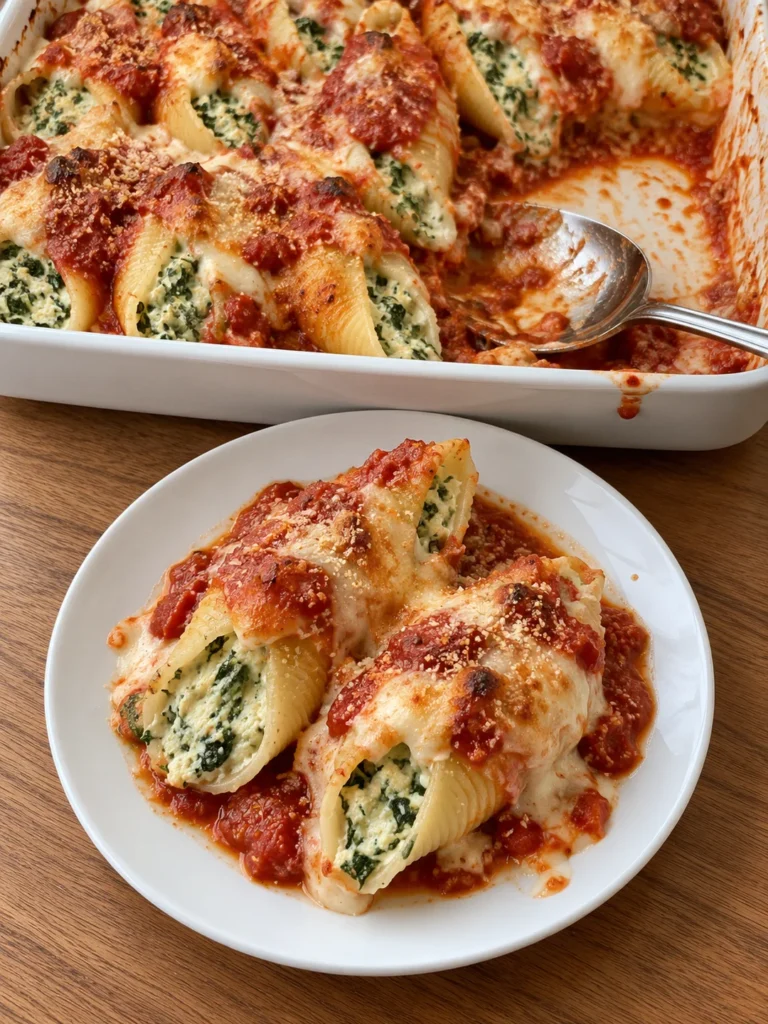
Spinach Ricotta Stuffed Shells were not actually what I ordered. I had pointed at a line of handwriting on a board in Gragnano, about forty minutes southeast of Naples, and a small white dish arrived instead, still hissing at the edges.
The room had six tables and a counter with three stools, and I was on the middle stool because the tables were full of men arguing about something that was either football or a parking space. No English menu. No menu at all, really, just the board and whatever the kitchen felt like.
The owner, Nunzia, came out with a towel over one shoulder and watched me eat the first one. Then she pointed at the pasta, said the word Gragnano twice, and tapped her chest.
What Nunzia Explained at the Counter in Gragnano
Her son translated the parts I was clearly missing. The shells are conchiglioni, the biggest size of the ridged shell pasta, and they are made in Gragnano because Gragnano has been pushing durum dough through bronze dies and exporting it since the 1500s. She said the name of the IGP like it was a family surname.
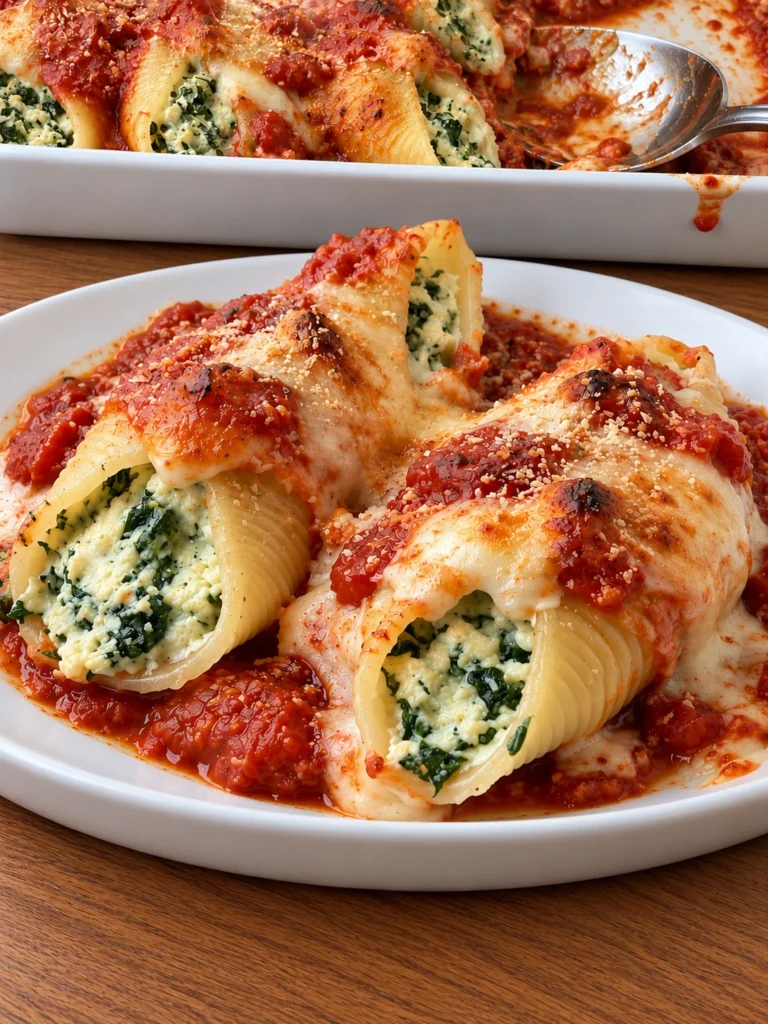
The thing that surprised me was the sauce. There was tomato under and around the shells, yes, but also pale ribbons of something richer over the top, browned in patches. Béchamel. In Campania the baked version is usually finished that way, alongside the tomato, which is not at all the picture most of us have in our heads.
I had come inland for the day from the Amalfi Coast, mostly to escape the ferry crowds, and I left with a photo of her baking dish and a very firm instruction about spinach that I will get to.
Why Spinach Ricotta Stuffed Shells Are Older Than You Think
I assumed the ricotta and spinach filling was a vegetarian workaround invented somewhere in New Jersey. Wrong. In Campania the two classic fillings for baked conchiglioni are meat ragù and ricotta with spinach, both of them served as a primo piatto before the meat or fish, usually on a Sunday or a feast day.
What Italian immigrants carried to the United States was the format, not the finish. Over there jumbo shells were easy to buy, the filling drifted toward three cheeses, and the béchamel got replaced by a blanket of marinara and melted mozzarella. That version became a Christmas and Easter fixture and it is genuinely good. It is just a different lineage.
Also worth knowing, because I got corrected on this once. These are not manicotti and not cannelloni. Manicotti are extruded tubes filled from one end, cannelloni are flat sheets rolled around the filling, and conchiglioni are shells you spoon full and bake open-side up.
What I Used
- Jumbo conchiglioni, about 30 shells, Gragnano IGP if the deli has it
- Fresh spinach, a lot of it, stems off and washed
- Fresh whole-milk ricotta, drained in a sieve if it looks loose
- One egg to bind
- Grated Parmigiano Reggiano, divided between filling and top
- Freshly grated nutmeg, plus a pinch for the béchamel
- Salt and black pepper
- Tomato passata and two crushed garlic cloves
- Extra-virgin olive oil
- Butter, flour and warm whole milk for the béchamel
- Fior di latte mozzarella, torn small
- Fresh basil, torn at the end
The Spinach Is the Whole Argument
Nunzia mimed wringing out a dishcloth, hard, with both fists. That was the instruction. A pound and a half of raw spinach collapses down to about a cup once you have squeezed it, and it should come out of your hands as a tight dry ball.
My first attempt at home was soup. Nice flavour, swimming in liquid, and I blamed the passata for about a week before admitting it was the spinach.
The ricotta matters just as much. Whole-milk only. Skim-milk ricotta runs in the oven and tastes of nothing, and if yours looks even slightly wet, sit it in a fine sieve over a bowl in the fridge overnight.
One more. Pull the shells three minutes before the package says al dente, around eight or nine minutes, then spread them on a baking sheet in a single layer. Fully cooked shells split when you stuff them and go slack in the oven.
Baking It at Home on a Sunday Afternoon
I make this when there is no rush, usually a Sunday around four, because the stuffing part takes as long as it takes. Pino Daniele on the speakers, which is on the nose and I do not care. Taralli and a glass of Aglianico on the counter, because standing up filling thirty shells by hand with nothing to eat is a bad plan.
Order of operations that works for me. Spinach first so it has time to cool and get squeezed, then the tomato with the garlic warmed gently in oil for two minutes and simmered fifteen, then the béchamel last so it stays loose enough to pour in ribbons.
I buy the ricotta and the fior di latte at the same Italian deli counter, and I have learned to go before noon because the good ricotta is gone by two. A zip-top bag with the corner snipped off fills shells about four times faster than a spoon. My baking dish has a chip in one corner and I keep meaning to replace it.
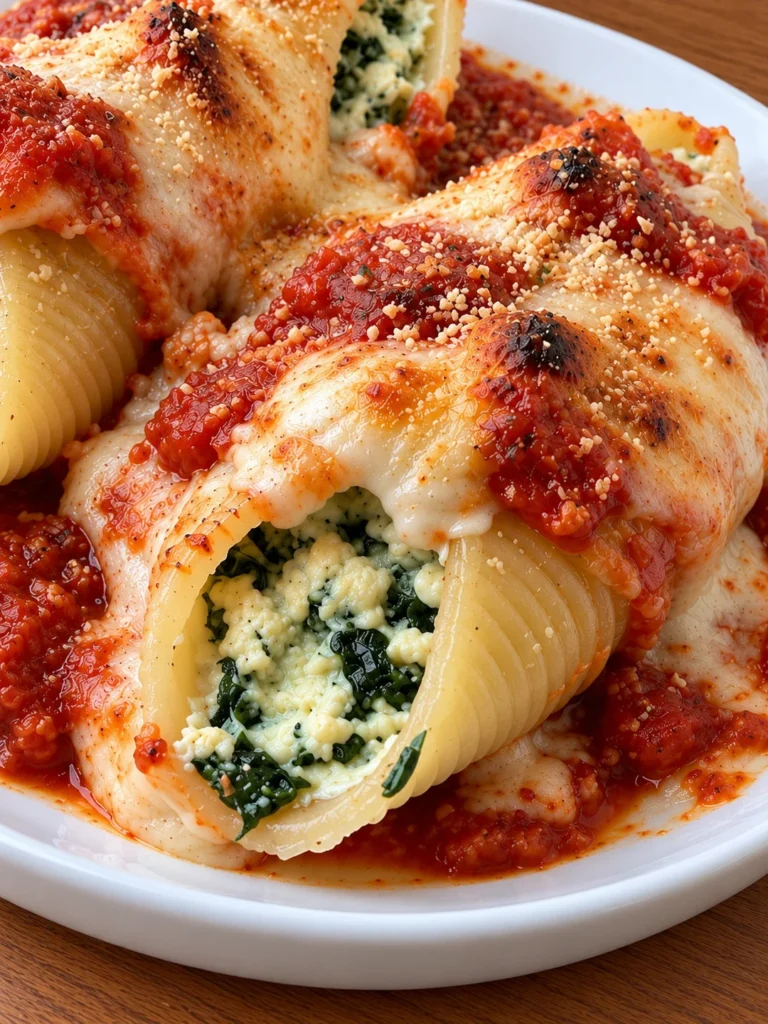
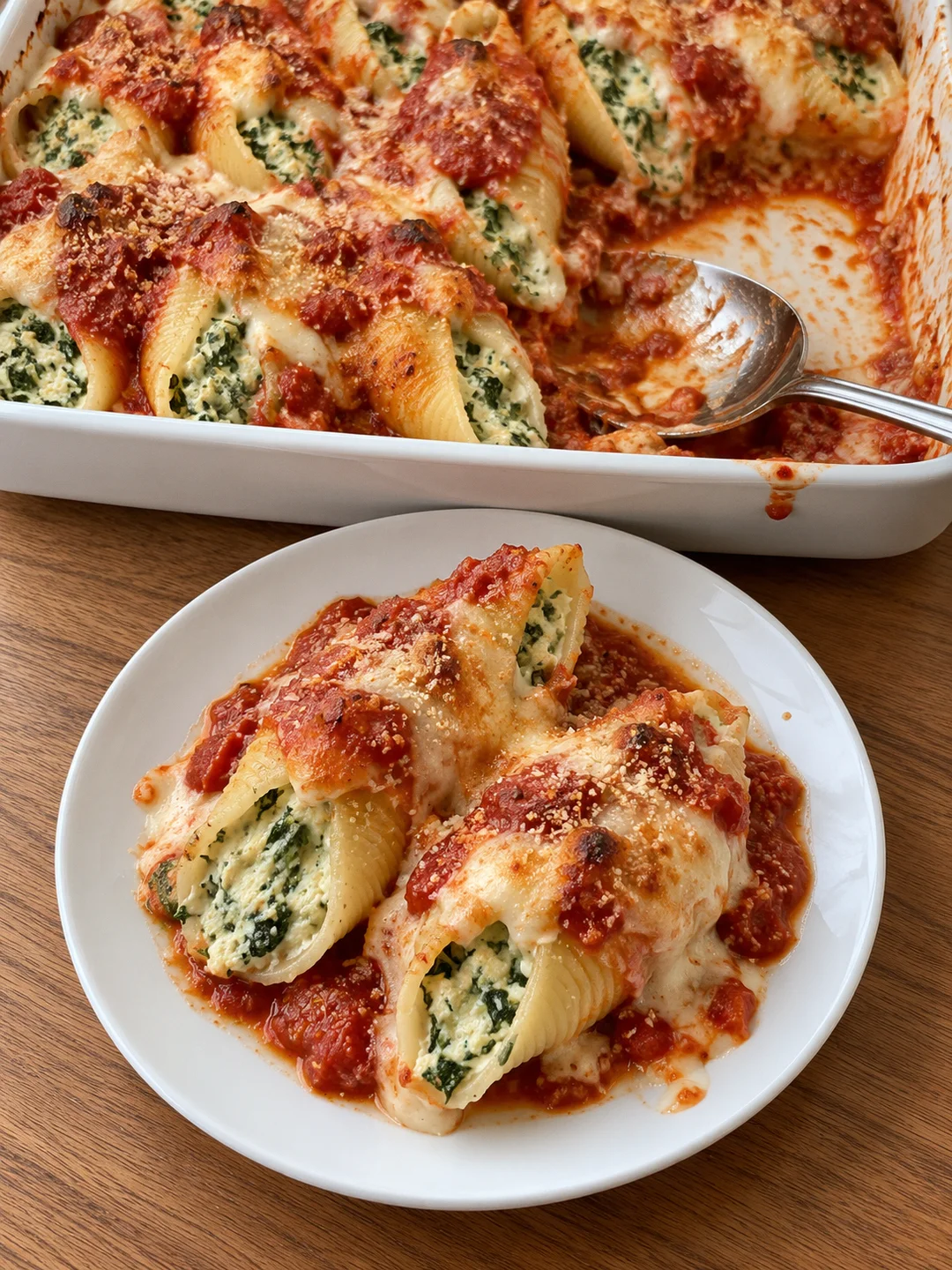
Covered with foil for twenty minutes, then uncovered for twelve to fifteen so the top browns in patches. Baking it uncovered the whole time dries out the sauce and the filling both, which I know because I tried it. Then rest it ten minutes or the first serving will slump across the plate.
Swaps, and What I Would Not Change
Swiss chard works instead of spinach if the leaves are young, squeezed just as ruthlessly. Frozen spinach is fine in a pinch and saves about fifteen minutes, though you need to squeeze it twice and it tastes flatter. A little lemon zest in the filling is good and not traditional, so use it when you feel like it.
What I would not touch is the béchamel. I made a batch without it once, just tomato and mozzarella, and it was perfectly pleasant, but it was no longer the dish I ate on that stool. These stuffed shells need the two sauces arguing with each other.
You can assemble the whole tray a day ahead, keep it covered in the fridge, and add ten minutes to the covered time. Honestly I prefer it that way. The filling firms up and the shells hold their shape better.
I went to Gragnano for the pasta factories and came home with a tray I now make every few months. Nunzia never told me her recipe in any organised way, just the squeezing and the word Gragnano and a look that said I would figure out the rest. Cold leftovers, eaten standing at the counter the next morning. Possibly better than the first night.
Spinach Ricotta Stuffed Shells
Ingredients
Equipment
Method
- Wilt the spinach first. Put the washed spinach in a large lidded saucepan with 2 tablespoons water, cover, and cook over medium heat for about 5 minutes, turning it once with tongs, until fully collapsed. Tip it into a sieve and leave until cool enough to handle.
- Squeeze the spinach in handfuls, pressing hard between your palms until almost no liquid comes out and each handful is a tight dry ball. You should end up with about 1 cup. Chop it finely and set aside. Do not skip or rush this step, as wet spinach is what makes the bake watery.
- Make the tomato sauce. Warm the olive oil with the crushed garlic in a small saucepan over medium-low heat for 2 minutes, until fragrant but not browned. Add the passata and 0.5 teaspoon salt, bring to a gentle simmer, and cook uncovered for 15 minutes. Discard the garlic and stir in the torn basil.
- Make the bechamel. Melt the butter in a medium saucepan over medium heat, whisk in the flour, and cook for 1 minute until it smells faintly nutty. Pour in the warm milk in a slow stream, whisking constantly, and cook for 4 to 5 minutes until it thickly coats a spoon. Season with 0.5 teaspoon salt and a pinch of nutmeg, then cover with the lid to keep it loose.
- Bring a large pot of well-salted water to a boil and cook the conchiglioni 3 minutes short of al dente, usually 8 to 9 minutes, so they are still firm. Drain gently, rinse briefly under cool water, and spread them out on a baking sheet in a single layer so they do not stick or tear.
- Preheat the oven to 375 F.
- Mix the filling. In a bowl, combine the ricotta, chopped spinach, egg, 0.75 cup of the Parmigiano Reggiano, 0.25 teaspoon nutmeg, 1 teaspoon salt and the black pepper. Stir until smooth and well seasoned. Taste it now, as it should be assertive.
- Spread about 1 cup of the tomato sauce over the bottom of the 9x13 inch baking dish. Spoon or pipe the filling into each shell, about 1.5 tablespoons each, and set them open-side up in a single snug layer.
- Spoon the remaining tomato sauce over and between the shells, then drizzle the bechamel over the top in wide ribbons. Scatter over the mozzarella and the remaining 0.25 cup Parmigiano Reggiano.
- Cover the dish tightly with foil and bake for 20 minutes. Uncover and bake another 12 to 15 minutes, until the top is browned in patches and the sauce bubbles at the edges.
- Rest the dish 5 to 10 minutes before serving so the filling sets and the shells lift out cleanly.