
I was not looking for shepherds pie that afternoon. I was three hours into a drive from Buffalo to Albany in the first week of March, salt crust on the windshield, the lake on my left the colour of a dirty nickel.

I stopped in Geneva, New York, because my hands hurt from gripping the wheel and because a little wine bar on Linden Street had its lights on at four in the afternoon. I went in for one glass of dry Riesling and a place to sit still. I got a ramekin of something I have now made about thirty times.
A Wine Bar in Geneva, New York
The chef’s name was Declan. He was working alone behind a counter the size of a door, and between plating two orders he pushed a small dish across the bar at me without really explaining it. Said he was testing it for the St. Patrick’s Day menu and wanted to know if the gravy was too thick.
It was not too thick. That was the whole point of it, I learned later. He had cooked the filling down until it mounded on a spoon, so when he cut into the potato top with the edge of the spoon the thing held its shape instead of running into a puddle.
I asked him three questions and he answered all of them while doing something else. Brown the beef properly. Cook the tomato paste until it goes from red to brick. Let the filling cool before the mash goes on, or the mash sinks.
I wrote it on the back of the parking receipt. I still have it, soft as cloth now.
Why Shepherds Pie Has Two Names and Neither Is About Lamb
When I got home I went looking, because Declan’s version was beef and I had always been told beef makes it a cottage pie. Turns out the rule is newer than the dish by a long way.
Cottage pie is the older recorded name, showing up in Parson Woodforde’s diary in 1791, and Maria Rundell’s 1806 recipe describes minced beef or mutton with onion and gravy under mashed potato. Shepherd’s pie does not appear in print until an 1849 Edinburgh cookbook. For most of their history the two names were used interchangeably, and the lamb-versus-beef line was drawn much later by people who liked tidy categories.
It started in northern England, Scotland and Ireland as a way to stretch Sunday’s leftover roast into a second hot meal, which only became possible once the potato spread through Britain and Ireland in the eighteenth century. Irish and British families carried it to North America, where ground beef was cheap, and the American version settled on ground beef while keeping the shepherd’s name.
Also worth saying out loud since the word pie is right there. There is no pastry in this. The crust is mashed potato.
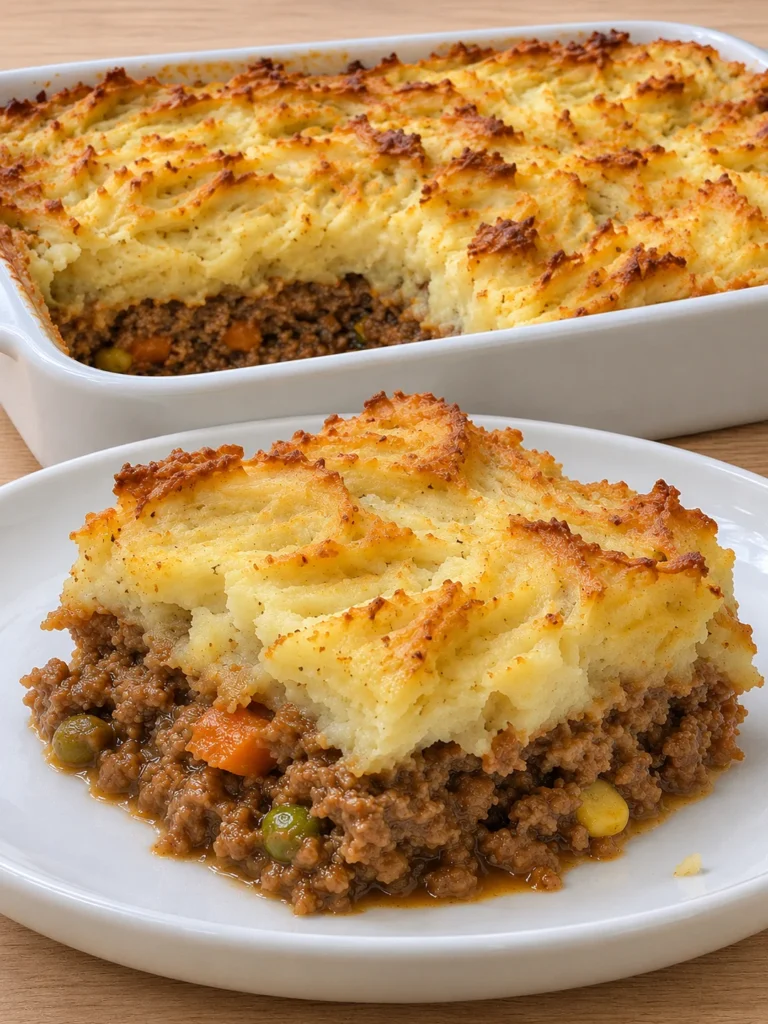
What I Used
- Russet potatoes, peeled and quartered, about three pounds. Not waxy ones. Waxy potatoes go gummy on you.
- Butter, a generous six tablespoons, plus more for the dish
- Whole milk, warmed. Cold milk cools the mash and you fight it
- Sharp cheddar for the mash, shredded. Optional, and I use it about half the time
- Ground beef, 85/15, two pounds
- One large yellow onion, finely diced, and two carrots diced small
- Four cloves garlic
- Tomato paste, three tablespoons
- Worcestershire sauce
- All-purpose flour for the gravy
- Beef broth
- Fresh thyme, fresh rosemary, one bay leaf
- Frozen peas and frozen corn, a cup each
- Salt, a lot of it for the potato water, and plenty of black pepper
The corn is the American part. Declan skipped it and so do I when I am feeling purist, which is rarely.
The Night I Finally Got the Gravy Right
First few attempts, the filling was too loose. I would spoon the mash on and watch it sink like a stone into wet sand, and then it baked into one grey layer with no edges to it.
The fix is boring and it is just patience. You simmer the filling uncovered for ten or twelve minutes until a trail drawn through the pan with a spoon holds open for a second before it closes. That is the whole test. Then you let it sit ten minutes off the heat before the potatoes go anywhere near it.
My other early mistake was the mash. I used a hand mixer once because I was in a hurry, and I produced something closer to wallpaper paste than potato. Starch. It develops when you whip it. Now I use a dented old masher with a bent handle and I do it by hand, standing at the counter, which takes four minutes and is somehow the part I look forward to.
I make this on rainy Sunday afternoons, which in March here means about two Sundays a year. I put the Pogues on while the beef browns, because of Declan and because it is funny, and then something slower once the thing is in the oven. Half an hour of nothing to do. I usually eat cheddar and a few cornichons standing at the counter with a glass of stout while the gravy bubbles up at the corners of the dish.
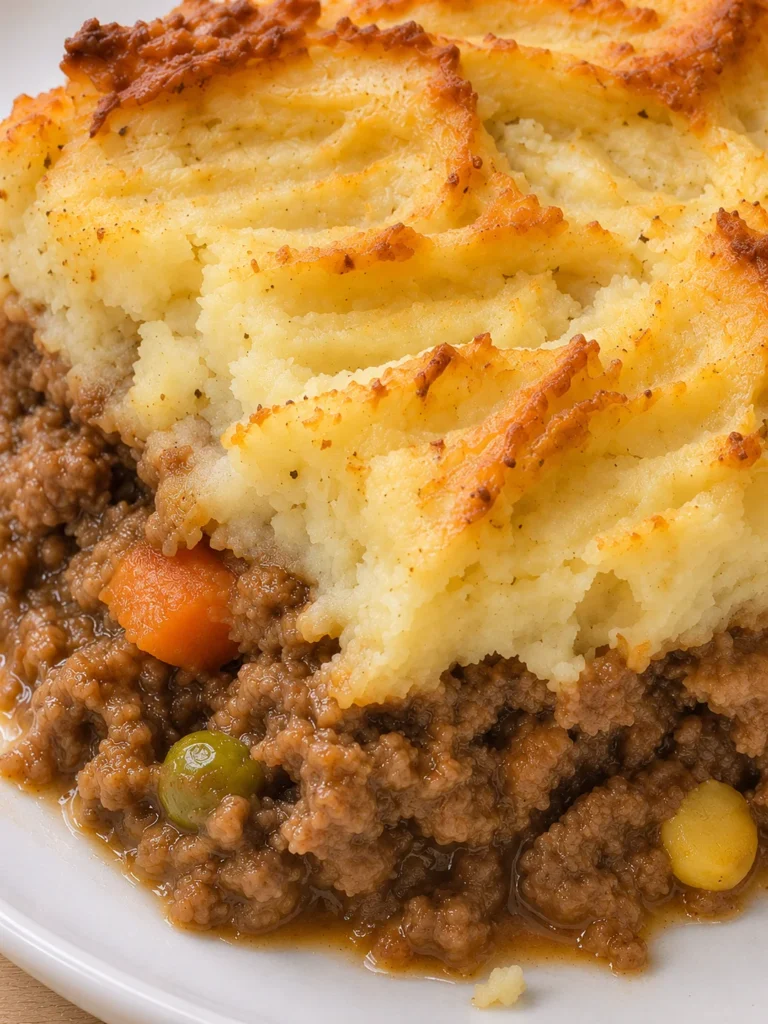
The last two minutes matter more than they should. You rake the potato top all over with a fork, bake it, then put it under the broiler and watch it the entire time. The ridges go deep gold and the flat parts stay pale and that contrast is most of the pleasure of eating it. Then rest it fifteen minutes or it will not slice.
Swaps, and What I Changed
Ground lamb instead of beef gives you the British-style version, and if you go that way skip the corn. It tastes older somehow. Grassier.
The research point I keep coming back to is that this never needed fresh ground meat to be right. It was built on leftover cooked roast. So if you have the end of a pot roast sitting in the fridge, chop it fine and use it, add the broth and let the gravy do the work.
You can assemble the whole thing two days ahead and refrigerate it unbaked, then add fifteen minutes in the oven. I do that whenever I am feeding more than four people, because nobody wants to peel three pounds of potatoes with guests already in the kitchen.
Cold, the Next Day
Here is my unpopular opinion. I like it better cold, out of the fridge, standing with the door open, the gravy set to a sort of savoury jelly and the potato dense. Second day shepherds pie is a different food and a better one.
What I cannot recreate is the hunger. Three hundred miles of grey highway and a bad coffee in Rochester made that first ramekin taste like something I had been missing for years. Still, it comes close, and that drive comes back every time I smell the tomato paste hit the pan.
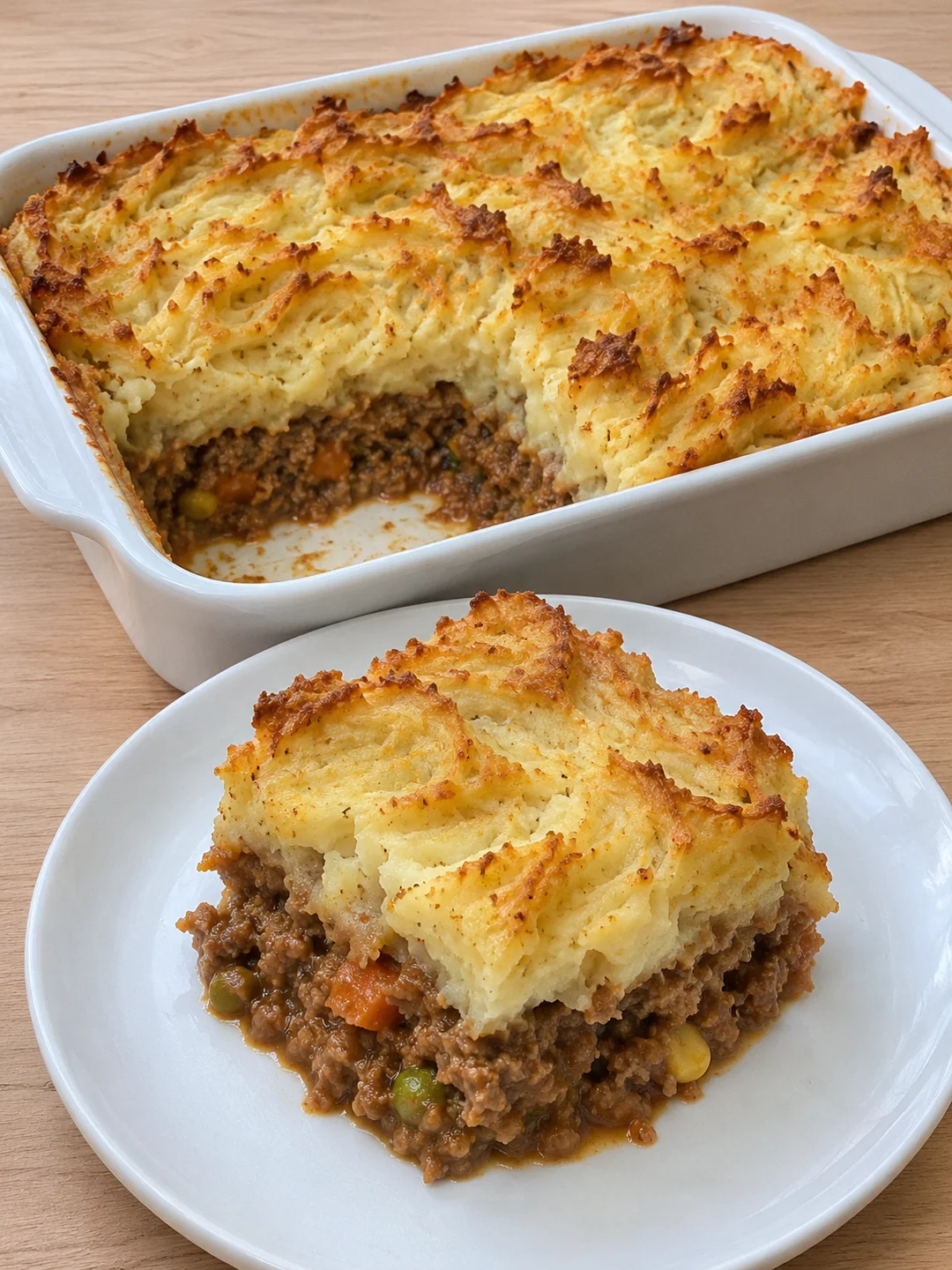
Shepherds Pie
Ingredients
Equipment
Method
- Put the quartered potatoes in a large pot, cover with cold water by 2 inches, add 1 tablespoon salt, and bring to a boil. Cook 15 to 18 minutes, until a fork slides through with no resistance.
- Drain the potatoes in a colander and let them sit 2 to 3 minutes to steam dry. Dry potatoes drink up butter; wet ones turn soupy.
- Return the potatoes to the hot empty pot. Add 6 tablespoons butter and the warm milk, then mash by hand or push through a ricer until smooth. Season with 1 teaspoon salt and half the pepper. Stir in the cheddar if using. Do not use a mixer.
- Heat the olive oil in a large deep skillet over medium-high heat. Add the ground beef and break it into small crumbles with a wooden spoon. Cook 7 to 8 minutes without stirring too often, letting it brown rather than steam.
- Tilt the pan and spoon off all but about 1 tablespoon of the fat. Add the onion and carrot, season with 1 teaspoon salt, and cook 6 minutes until the onion is soft. Stir in the garlic and cook 1 minute more.
- Add the tomato paste and cook it against the hot pan for 2 minutes, until it darkens from red to brick. Pour in the Worcestershire sauce and scrape the bottom clean.
- Sprinkle the flour over the meat and stir for 1 minute to coat everything. Pour in the beef broth, add the thyme, rosemary and bay leaf, and bring to a simmer.
- Simmer uncovered 10 to 12 minutes, stirring now and then, until the gravy is thick enough to mound on a spoon and a trail drawn through the pan holds open. This is the step that decides whether your pie slices or slumps.
- Fish out the bay leaf. Stir in the frozen peas and corn, add the remaining pepper, and taste for salt. Heat oven to 400 F.
- Butter a 9x13 inch baking dish and spread the filling in an even layer. Let it cool about 10 minutes so the mash will not sink into it.
- Spoon the mashed potatoes over the filling in dollops, then join them together and spread right to the edges of the dish to seal the gravy underneath. Rake the surface all over with a fork to make ridges.
- Bake 25 to 30 minutes, until the gravy bubbles up at the corners and the mash is set.
- Switch to the broiler and brown 2 to 4 minutes, watching closely, until the fork ridges are deep gold.
- Rest the pie 10 to 15 minutes before cutting. Serve in squares, scooping from the bottom so each portion keeps its potato top.