
Bread pudding was nowhere on my mind when I pulled off the A1 just past Scotch Corner. I had been driving since York, the heater was losing an argument with a wet March afternoon, and I wanted tea and anything hot in front of me.
The café was one of those low brick transport stops with a laminated menu and a bell above the door. Three tables of lorry drivers. A woman called Jean behind the counter who asked if I wanted the pudding before I had even finished asking for the tea.
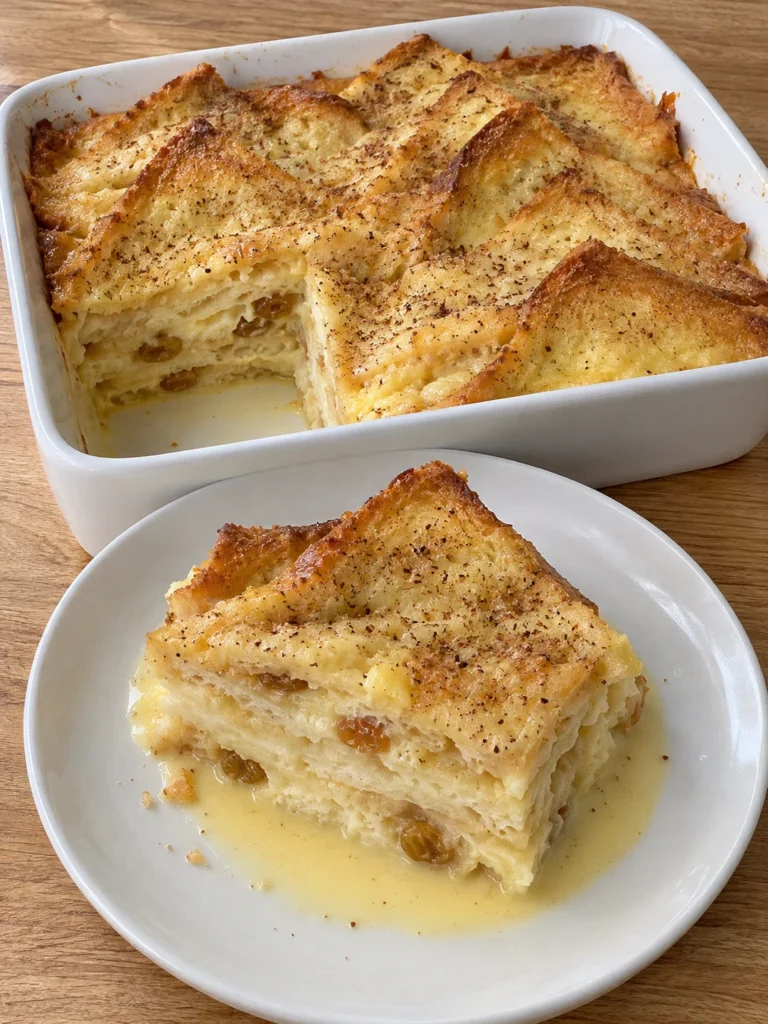
It arrived in a shallow white bowl, scooped out of a big dish behind the glass. Dark crisp corners on top, something soft and set underneath, and a jug of hot custard poured over it without anyone checking whether I wanted that.
The Café Past Scotch Corner
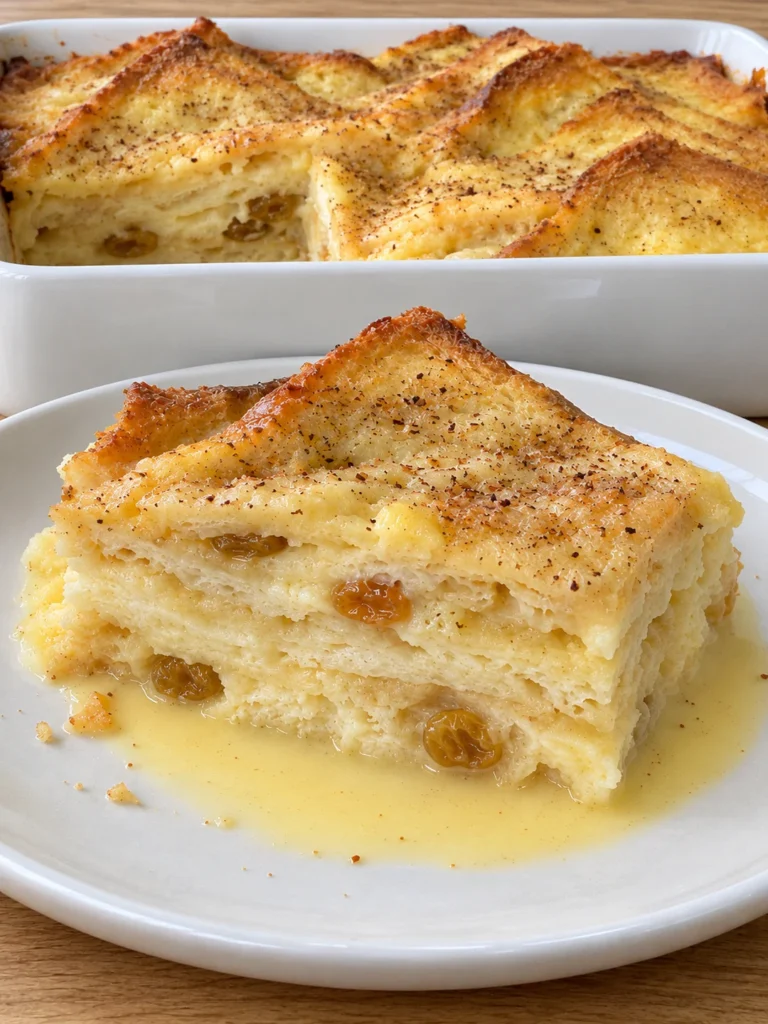
I asked what was in it mostly to be polite, and Jean gave me the entire method standing there holding the teapot. Buttered slices cut into triangles, overlapped like roof tiles. Sultanas tucked between the layers rather than scattered on top, because on top they scorch.
Then she said the thing that actually stuck. The bread has to be yesterday’s.
Fresh bread, she said, goes to paste. She also called it bread and butter pudding, not bread pudding, and she was right to, which cost me a week of mild confusion once I got home and started reading about it properly.
Why Bread Pudding Means Two Different Things
In Britain, bread pudding traditionally means a dense, fruit-packed slab cut into squares, closer to a heavy cake than to custard. The soft spoonable thing most people outside the UK picture is bread and butter pudding, built from whole buttered slices layered in a dish instead of torn or cubed bread soaked loose.
So all bread and butter puddings are bread puddings. Not the reverse. At home I use both names sloppily and so does nearly everyone, but it helps to know which one you are chasing before you start buttering.
The dish goes back to eleventh-century England, when cooks softened hard stale loaves with hot water and sweetened them with whatever sugar and spice was in the house. By the thirteenth century it had picked up the nickname poor man’s pudding, which tells you exactly how grand it was not. Eggs, milk and butter came later, and one of the earliest printed versions appears in Eliza Smith’s 1728 household book, already layering bread and butter with currants and raisins under a spiced custard.
It took the Victorians to make it respectable, with dried fruit and spirits and a place on a proper dinner table. The whiskey sauce a lot of people associate with it is a New Orleans Creole invention, not an English one at all.
What I Used
- Ten slices of plain white bread, a day or two old, crusts left on
- Five tablespoons of softened butter, plus more for the dish
- Three quarters of a cup of sultanas, from the Persian grocery on Westwood where they sell them by the scoop and they are never dusty
- A teaspoon of finely grated lemon zest
- A cup and a half of whole milk
- Three quarters of a cup of heavy cream
- Three eggs plus one extra yolk, out of the fridge an hour early
- Half a cup of superfine sugar, plus a tablespoon for the top
- A teaspoon and a half of vanilla extract
- A quarter teaspoon of salt
- Whole nutmeg, grated fresh over the top, never the pre-ground stuff
Where Most Home Cooks Lose It
Two places. The soak and the bread.
The soak is thirty minutes and it is not a suggestion. The first time I made this I gave it about ten because I was hungry and impatient, and what came out of the oven was wet bread sitting in liquid, with a pale set layer on top pretending everything was fine. The rest is what fuses custard and crumb into one thing you can scoop cleanly.
The bread matters just as much. Slightly stale is the method, not a compromise, because dried-out crumb drinks the custard instead of collapsing. If your loaf is fresh, lay the slices on a rack for an hour or give them five minutes in a 300 F oven while you butter the dish.
Third trap, and this one got me once. Pour the hot milk into the eggs slowly, in a thin stream, whisking the whole time. I once dumped it in all at once while reaching for my phone and ended up with sweet scrambled egg in a bowl, which no amount of whisking undoes.
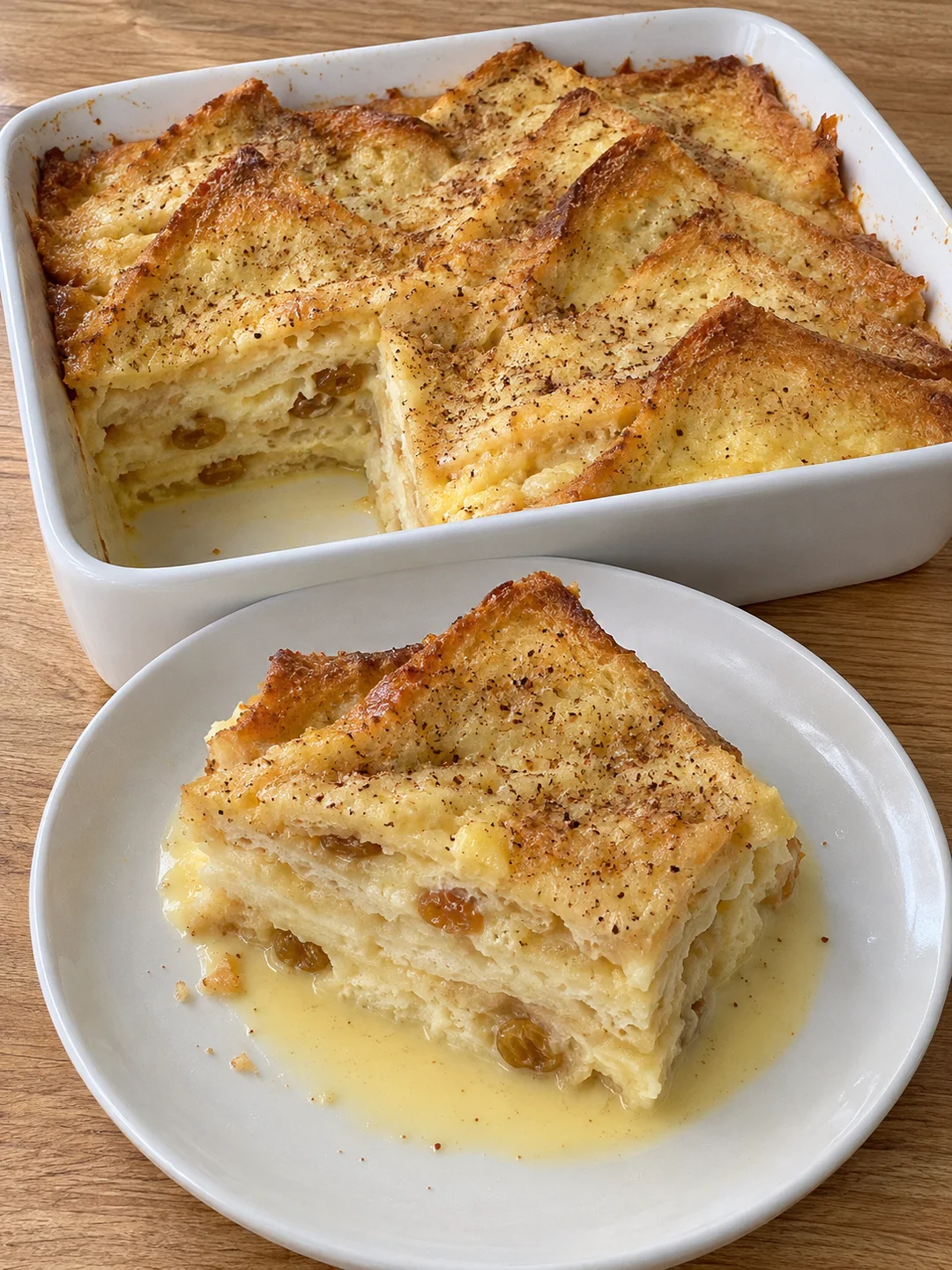
Then the doneness question. You want the exposed corners deep gold and genuinely crisp, the custard set around the sides, and a slight wobble left in the middle when you nudge the dish. Pull it fully set and it turns rubbery as it cools.

Making It in My Own Kitchen
I do this on Sunday mornings, usually in the June gloom when the kitchen is grey enough that the oven light looks cheerful. Butter the dish right up the sides, butter every slice generously, cut them on the diagonal, then overlap the triangles butter side up like Jean described.
My dish is an 8 by 11 ceramic one with a chip on the near corner from a move, and it holds exactly ten slices if you shingle them tightly. Half the sultanas and half the lemon zest go between the two layers. The rest get pushed down between the top slices with a fingertip so they stay buried.
Press the top gently once the custard is in, let the slices float back up, and walk away for half an hour. I use that time to grate the nutmeg and wash the whisk, and to decide whether I am making custard to pour over or just eating it with cold cream straight out of the carton.
The recipe says rest it ten minutes before serving. I say that too. Then I serve it after about four, every single time.
Swaps, and the Hunger I Cannot Recreate
Brioche or challah instead of white bread, with half cream and half milk, makes a richer version that is lovely and also slightly beside the point given the dish was invented to use up what nobody wanted. If the sultanas are dry, soak them twenty minutes in warm tea or rum first. Currants work. Raisins work.
What I cannot recreate is the four hours of grey motorway that came before that first bowl. No amount of fresh nutmeg replaces being cold, tired and genuinely hungry at a counter in North Yorkshire. I stopped trying to chase that about a year ago and the pudding got better once I did.
Honestly, I like it best the next day. Cold, straight from the fridge, eaten standing at the counter with a spoon, the top gone chewy instead of crisp. That part Jean never mentioned, and I suspect she knows anyway.
Bread Pudding
Ingredients
Equipment
Method
- Butter the baking dish well, right up the sides. Spread the softened butter generously over one side of every bread slice, then cut each slice in half on the diagonal to make triangles.
- Arrange a first layer of triangles in the dish, butter side up and overlapping like roof tiles. Scatter over half the sultanas and half the lemon zest.
- Lay the remaining triangles over the top in the same overlapping way, butter side up, and tuck the rest of the sultanas and zest between the slices rather than on top, where they would scorch.
- Warm the milk and cream in a saucepan over medium heat until steam rises and the edges just tremble. Do not let it boil.
- In a large bowl whisk the eggs, egg yolk, half cup of sugar, vanilla and salt until smooth and pale, about 1 minute.
- Pour the hot milk into the eggs in a slow stream, whisking constantly, until you have a thin, even custard.
- Pour the custard slowly and evenly over the bread, letting it soak in before adding more. Press the top slices down gently with your fingertips so they drink it up, then let them float back.
- Leave the dish to stand at room temperature for 30 minutes. The bread should feel heavy and saturated, with only a shallow pool of custard left around the edges. Heat the oven to 350 F toward the end of the soak.
- Sprinkle the remaining tablespoon of sugar over the surface and grate nutmeg generously across the top.
- Bake uncovered on the middle rack for 35 to 45 minutes. It is done when the exposed corners are deep golden and crisp, the custard is set around the sides, and the center still has a slight wobble when you nudge the dish.
- Rest 10 minutes before serving. Spoon it out warm, straight from the dish, scooping down through the crisp top to the soft custard underneath.