
The Pumpkin Risotto I make now came out of a cooking class in Mantua, in a kitchen that smelled like toasted rice and cold stone. Three hours on a Thursday afternoon in October. I signed up because the class was cheap and I had a night to kill before my train.
The teacher was a woman named Renata, seventy-eight, who lived in the apartment directly above the restaurant where her grandson cooked the dinner service. She came down the back stairs in slippers. She did not introduce herself properly for about twenty minutes because she was busy telling us our onions were cut wrong.
The Class Above the Restaurant in Mantua
There were five of us. Renata worked at a marble counter, and every so often a pan would crash downstairs and she would pause, listen, and shout something at the floor in dialect. Her grandson never shouted back.
She had a wedge of zucca mantovana on the counter, deep orange and dry-looking, and she told us the sweetness had to come from that and nothing else. No cinnamon. No nutmeg. She said the American pumpkin thing with pie spice as if she were describing a mild crime.
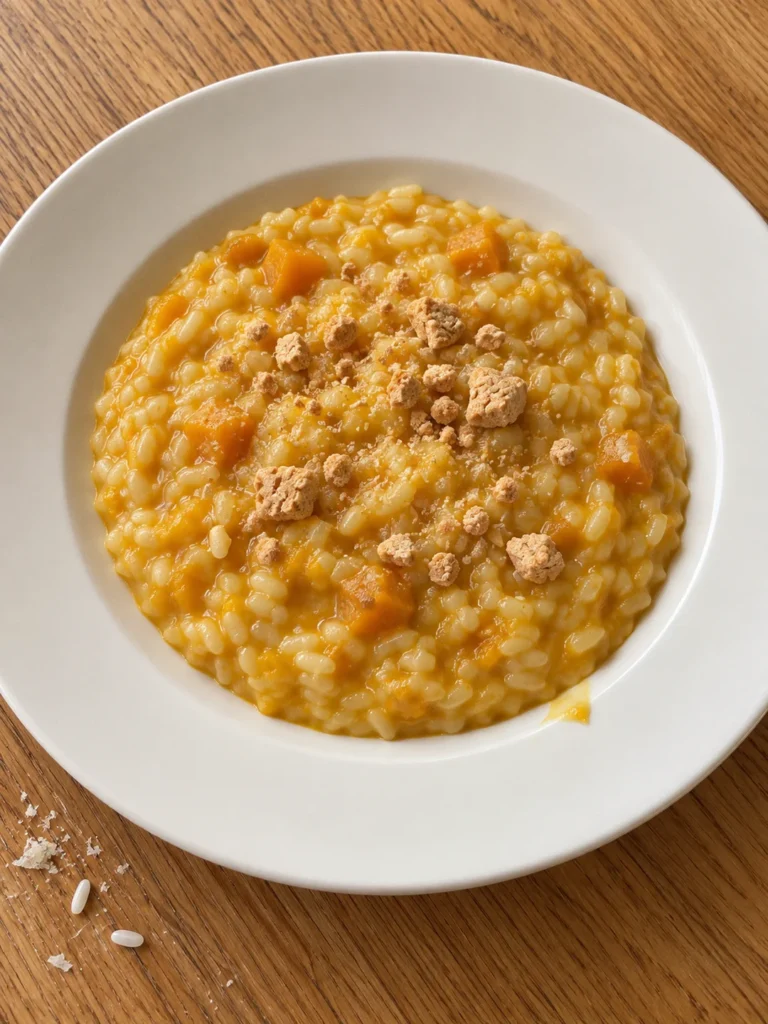
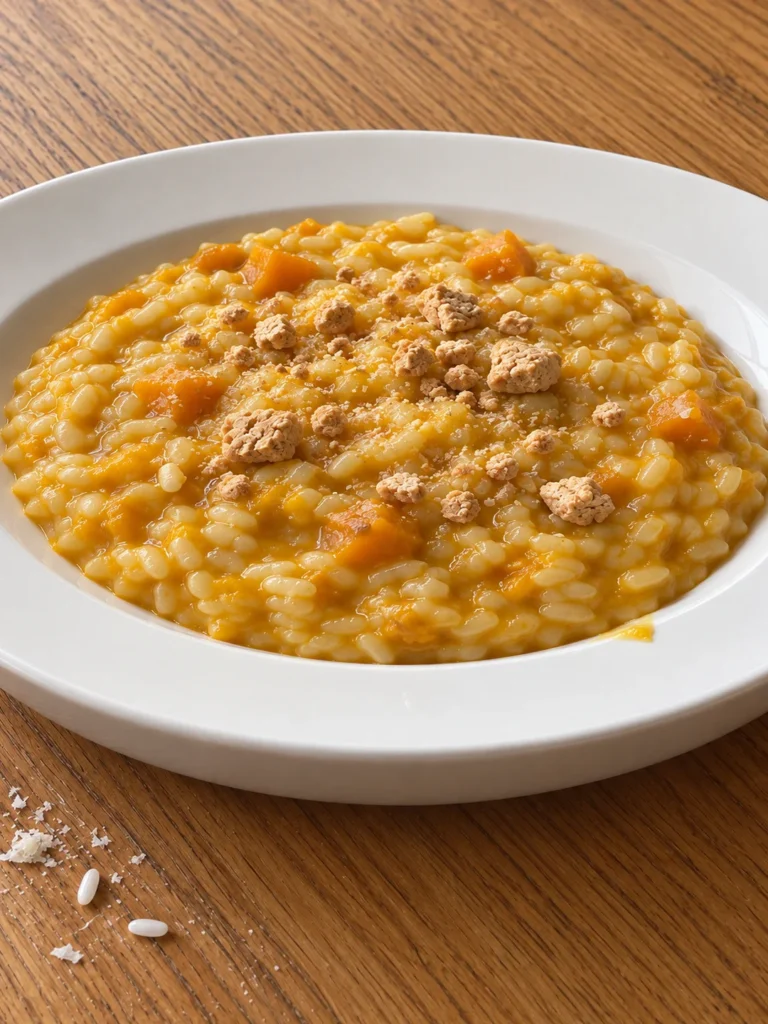
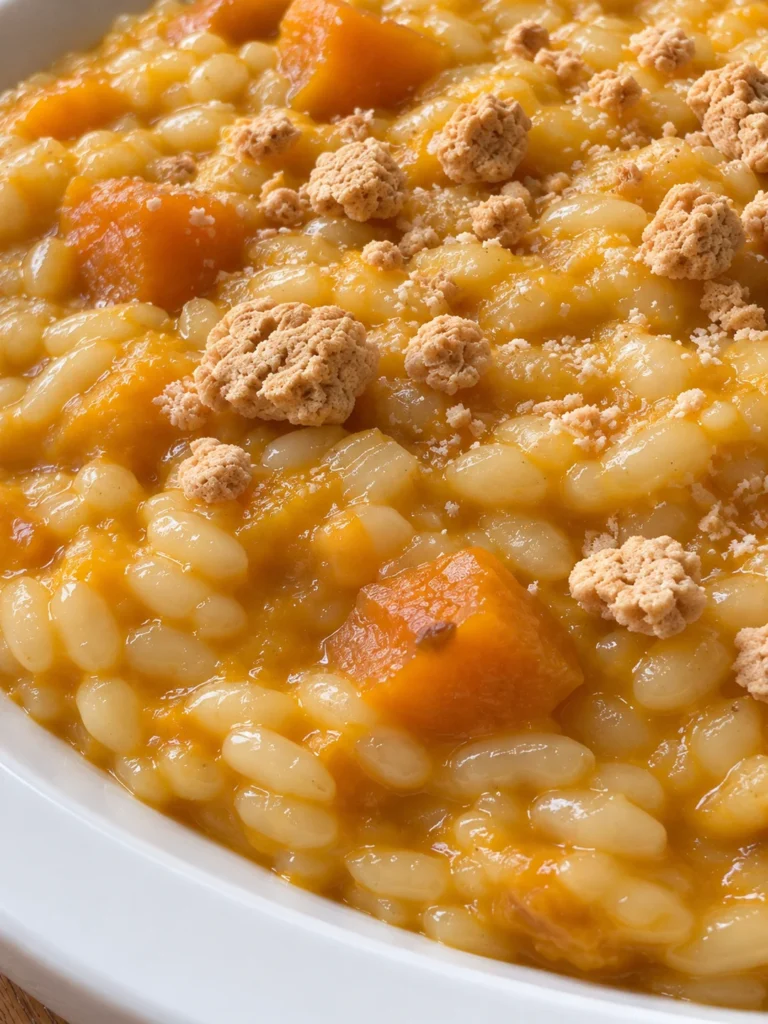
What surprised me was the cubes. I had eaten pumpkin risotto before and it was always smooth and orange all the way through, like soup that got ambitious. Renata cut her squash into half-inch pieces and said half of them would collapse and half would not, and that the two textures together were the whole point.
Why Risotto alla Zucca Belongs to Mantua
This dish is Mantuan before it is anything else. Pumpkin came to Europe from the Americas and was growing around Mantua by the 1500s, though at first it mostly went to the animals, which feels rude in hindsight.
Within about a century it had climbed into the Gonzaga court kitchens and was listed among the good ingredients rather than the cheap ones. Mantuan recipe books have risotto alla zucca written down as far back as the 18th century, both as everyday country food and as something you make for a feast. The zucca mantovana itself got official PAT recognition in 2004 for exactly what Renata was pointing at, the dry firm sweet flesh.
She mentioned tortelli di zucca twice, the way you mention a sibling. In Mantua the pumpkin is basically the town mascot.
What I Used
- Winter pumpkin, about 1.5 lb whole to get a pound of clean cubes. Delica or Marina di Chioggia if you can find it, kabocha if you cannot
- Carnaroli rice, a cup and a half
- Vegetable broth, six cups, kept at a bare simmer the whole time
- One medium white onion, chopped small
- Extra virgin olive oil
- Dry white wine, half a cup, room temperature
- Cold unsalted butter, cubed
- Grana Padano, finely grated. Parmigiano is equally correct and nobody will fight you
- Salt and freshly ground black pepper
- Soft amaretti, a few, crumbled at the end
What Happens Inside the Pan
The tostatura is the part I did not understand until I did it badly. You add the dry rice to the soft onion and stir it over medium heat for two or three minutes with no liquid at all, and you are waiting for the outside of each grain to go glassy while the middle stays chalky white.
That toasted shell is what keeps the grain from disintegrating later. Skip it and you get porridge. I skipped it once because I was in a hurry and the result was sad and gluey and I ate it anyway, standing at the counter.
The wine goes in next and has to disappear completely. Renata made us smell the pan before she let us move on. If there is any alcohol left in there it turns sharp and sour by the time you plate it, and no amount of cheese fixes that.
Then it is ladle, stir, wait. The rice should look like wet sand, never like soup. Flood the pan and the grains boil instead of releasing starch, and starch is the entire creaminess mechanism here. There is no cream in this. There never was.
Around eight minutes in the pumpkin goes in whole-cube. At twelve minutes you press about half of them against the side of the pan with your spoon and they give way and dissolve into the base, turning everything a deep amber, while the survivors stay intact and sweet. By minute eighteen or so the pan should ripple slowly when you tilt it. All’onda, like a wave.
Bringing the Pumpkin Risotto Back to My Kitchen
Home is Los Angeles, and I cannot get zucca mantovana here, so I use kabocha from the Saturday farmers market. The woman who sells them picks out the heavy dry ones for me now because I asked too many questions the first three times.
Everything else I kept. I use a wide low saute pan, the one with the slightly warped handle that my flatmate keeps threatening to throw out, because the surface area matters more than the depth. My broth sits in a small saucepan on the back burner at a bare simmer for the whole cook. Cold broth hitting hot rice stalls everything, which is a fact I learned by ruining a dinner for four people.
The mantecatura is where it becomes the dish. Off the heat, cold butter cubes and the grated Grana go in and you beat it hard for a full minute with a wooden spoon. Arm work. It goes from grainy to glossy in front of you, and if you have never seen that turn happen it is genuinely satisfying.
The Amaretti Thing
Renata crumbled amaretti over each plate at the end and I assumed she was joking. Sweet almond cookies on a savoury rice dish sounds like a dare. It is not a joke, it is the Mantovana version, and that sweet-savoury register runs through a lot of Mantuan cooking, mostarda included.
I do it at home about half the time. Maybe more than half. When friends are over I always do, because the face people make is worth it.
One non-negotiable. Risotto waits for nobody. It tightens and turns sticky within a couple of minutes of leaving the pan, so warm your plates, shake each one so the rice spreads flat, and get it to the table immediately. This is a primo, a first course, not a side dish parked next to a chicken.
I went into that class expecting a pleasant afternoon and came out with the only rice dish I make on repeat. Renata told us at the end that her grandson cooks it downstairs every autumn and gets it slightly wrong every year. She said it fondly. I think about that whenever mine comes out a little loose.
Pumpkin Risotto
Ingredients
Equipment
Method
- Bring the vegetable broth to a simmer in a medium saucepan and keep it there over low heat for the whole cook. It must be hot every time it hits the rice.
- Peel the pumpkin, scrape out the seeds and fibers, and cut the flesh into half-inch cubes. You want about 1 pound of clean cubes. Do not puree it.
- Warm the olive oil in the wide pan over medium-low heat. Add the chopped onion and sweat it for 6 to 8 minutes until soft and translucent, stirring now and then. Do not let it color.
- Raise the heat to medium and add the rice dry, with no liquid. Toast it for 2 to 3 minutes, stirring constantly, until the grains are hot to the touch and the edges turn translucent while the center stays chalky white. This is the tostatura and it keeps the grains intact.
- Pour in the white wine. Let it bubble and evaporate completely, about 2 minutes, until you can no longer smell alcohol. Any wine left behind turns the finished dish sour.
- Add the first two ladles of hot broth and a pinch of salt. Cook at a lively simmer, stirring often, and continue adding broth one ladle at a time as the previous one is absorbed. Never flood the pan; the rice should look like wet sand, not soup.
- After about 8 minutes of this, add all the pumpkin cubes. Stir them through and keep ladling broth. Around the 12 minute mark, press roughly half the cubes against the side of the pan with your spoon so they collapse into the base, leaving the rest whole.
- Keep cooking and stirring until the rice is al dente with a faint firmness at the core, about 18 to 20 minutes total from the first ladle. The risotto should ripple slowly when you tilt the pan, all'onda. Taste and adjust the salt.
- Pull the pan off the heat. Add the cold butter cubes and the grated Grana Padano and beat hard with the wooden spoon for 30 to 60 seconds until the risotto turns glossy and creamy. This is the mantecatura and it is where the texture is made.
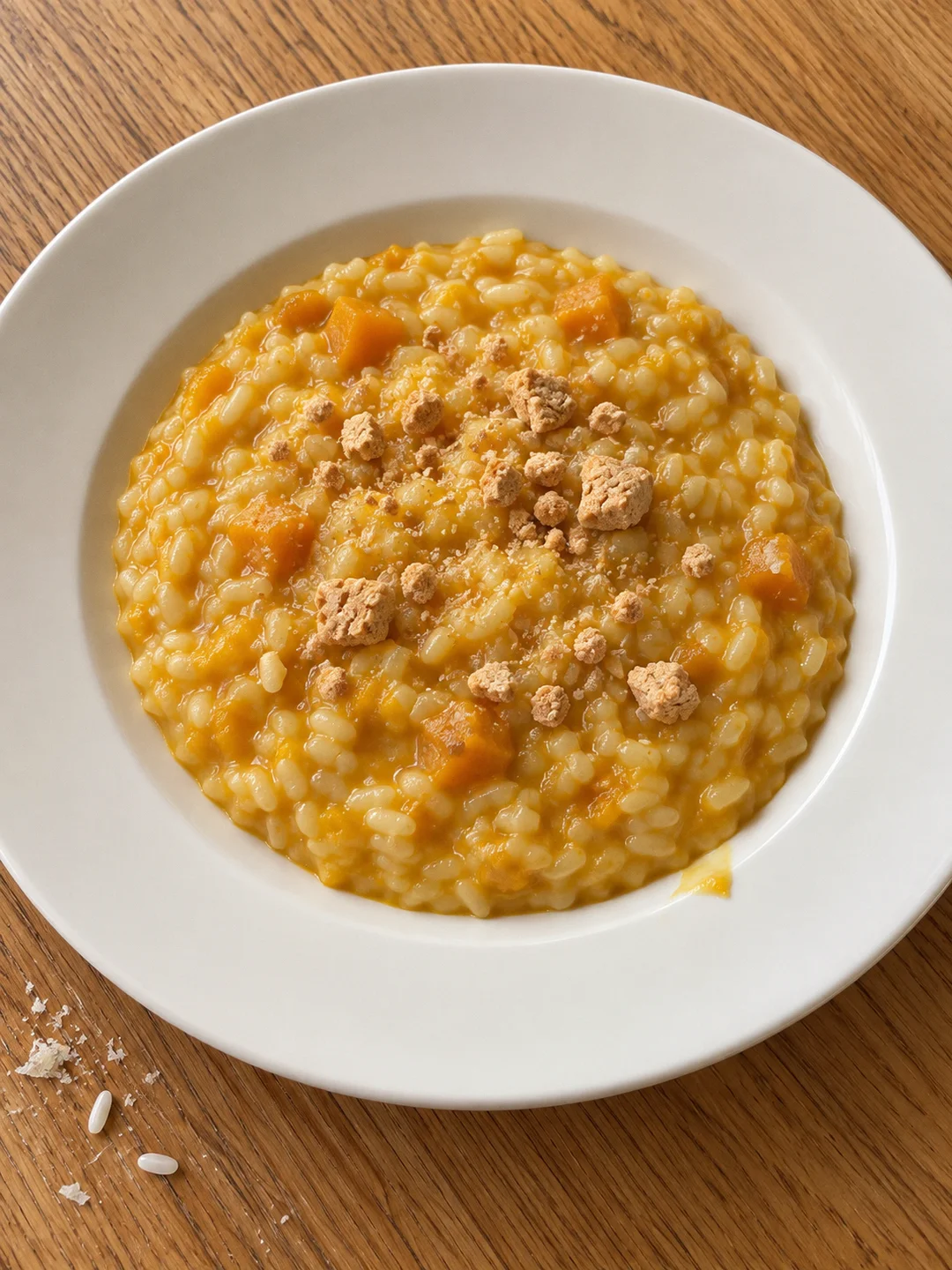
- Grind in the black pepper, cover the pan, and rest for 1 to 2 minutes. Spoon onto warm flat plates, shake each plate gently so the risotto spreads into an even layer, scatter with crumbled amaretti, and serve immediately.