
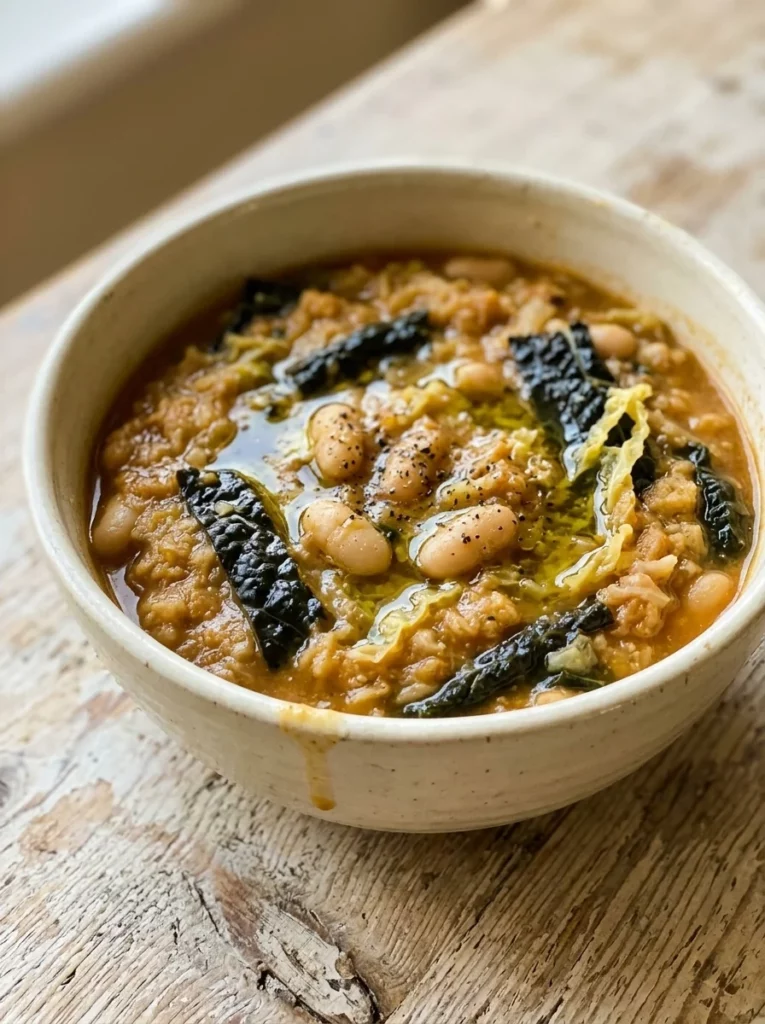
The first real Tuscan White Bean Soup I ever ate was ladled out of a dented pot at a wine bar called Le Volpi e l’Uva, tucked behind Piazza Santo Spirito in Florence. The chef, Matteo, was between courses, sleeves pushed up, spooning something the colour of wet clay into a chipped bowl for me. He set it down without ceremony and said, quietly, taste this before I put it on the menu.
It was November. The Oltrarno smelled of wet stone and woodsmoke and the espresso machine hissing behind the counter.
Meeting Matteo in the Oltrarno
I had booked a solo week in Florence to walk off a bad breakup and eat what the city ate in cold weather. Le Volpi was a tiny room with maybe twelve seats, a marble counter, and a chalkboard of natural wines from small Chianti producers I could not pronounce. Matteo was in his early forties, a former sommelier who had taken over the kitchen when his cousin retired, and he liked to test dishes on whoever was drinking alone at the end of the bar.
He poured me a glass of young Sangiovese and asked where I was from. Los Angeles, I said. He laughed. Then you have never eaten ribollita properly.
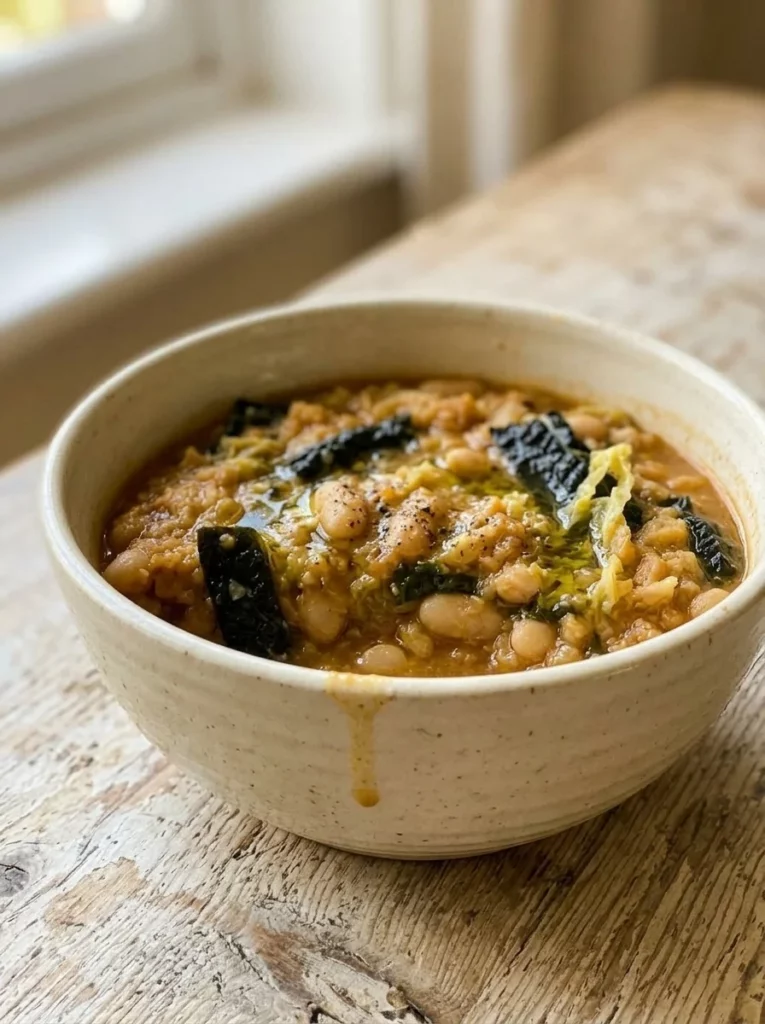
He was not wrong. What he brought over was thick enough that the spoon actually did stand up in it, the way the old Tuscan grandmothers insist. It tasted of slow onions and bean broth and something green and iron-rich underneath. I asked him three questions about it before I finished the bowl. He wrote his number on the back of a wine list and told me to come back the next afternoon before service, and he would show me how it was really made.
What Ribollita Actually Is
Ribollita means reboiled, and that is not a marketing flourish. It is the whole point of the dish. Tuscan cooks in the countryside around Florence, Siena, and Arezzo have made it for centuries as cucina povera, the thrifty tradition where nothing edible ever hit the bin. The story goes that servants in feudal households would collect the stale bread trenchers left after banquets and boil them the next day with beans and winter greens. It was first written down in 1910, in Alberto Cougnet’s L’arte cucinaria in Italia, but the dish is far older than the book.
Matteo was firm about a few things. No cream. No sausage. No cheese stirred through. The richness comes from the beans, the bread, and a hard drizzle of raw Tuscan olive oil at the end. He rolled his eyes when I mentioned the Olive Garden version, that 1990s American invention with russet potatoes and heavy cream. That, he said, is not our soup. Our soup is bread.
He also told me it is not minestrone. Minestrone is fresh and brothy. This cannellini bean soup is thick, bread-bound, and always cooked over at least two days. The cavolo nero has to have seen a frost first, which is why real ribollita is a late-autumn and winter dish. Never August.
Bringing It Home to My Kitchen
Back in LA, I chased the ingredients down one Saturday morning. I get the cavolo nero and the savoy cabbage at the Hollywood farmers market from a stall run by a family who grow it up in Fillmore. The dried cannellini beans come from an Italian grocer in Atwater Village that stocks proper pane toscano sciocco, the saltless Tuscan bread that is the only bread that behaves right in this soup. Sourdough goes gummy. Baguette dissolves into sludge. I learned that the hard way the first time I tried to shortcut it with a loaf from Bristol Farms. Do not.
The first proper attempt I made was on a Sunday in January, rain hammering the skylight over the stove, Chet Baker on quietly in the background. I made it exactly the way Matteo had shown me in his little kitchen behind the wine bar, and I texted him a photo the next day when I reboiled it. He wrote back, brava, but next time thicker.
What Goes Into It
- Two cups of dried cannellini beans, soaked overnight
- A bay leaf and a smashed garlic clove for the bean pot
- Half a cup of Tuscan extra virgin olive oil, plus more for finishing
- One large yellow onion, two carrots, and two stalks of celery, all finely diced for the soffritto
- Four cloves of garlic, minced
- A sprig of rosemary and three sprigs of thyme
- A cup of canned whole peeled tomatoes, crushed by hand
- A large bunch of cavolo nero, stems out, leaves roughly chopped
- Half a head of savoy cabbage, cored and shredded
- Kosher salt and freshly ground black pepper
- Around eight cups of water, or the reserved bean broth
- Twelve ounces of stale pane toscano sciocco, torn into thick pieces
Inside the Pot
The soffritto is where you cannot cheat. The onion, carrot, and celery go into warm olive oil over low heat, and for the next twenty minutes they sweat and collapse and turn sweet, the water leaching out of them, the sugars slowly caramelising at the edges of the pot. Rush this and the soup tastes flat forever. There is no fixing it later.
When the tomatoes go in, the whole pot turns brick red and the raw tin smell burns off in about five minutes. Then the greens, in handfuls, wilting down and going glossy as they hit the fat. The cavolo nero holds its shape longer than the cabbage, which is what you want.
Then the beans go home. Whole beans, mashed beans, all their starchy cooking liquid, everything. The pot loosens into something that looks almost like a stew someone forgot about. Forty five minutes of quiet simmer and the flavours start behaving like one thing instead of many.
Then the bread. This is the moment. You tear it in with your hands and stir gently, and within a minute or two the crusts start softening at the edges and giving themselves up to the broth. Ten more minutes and you kill the heat, cover the pot, and walk away. Overnight in the fridge is best. The bread finishes what it started.
The Reboil
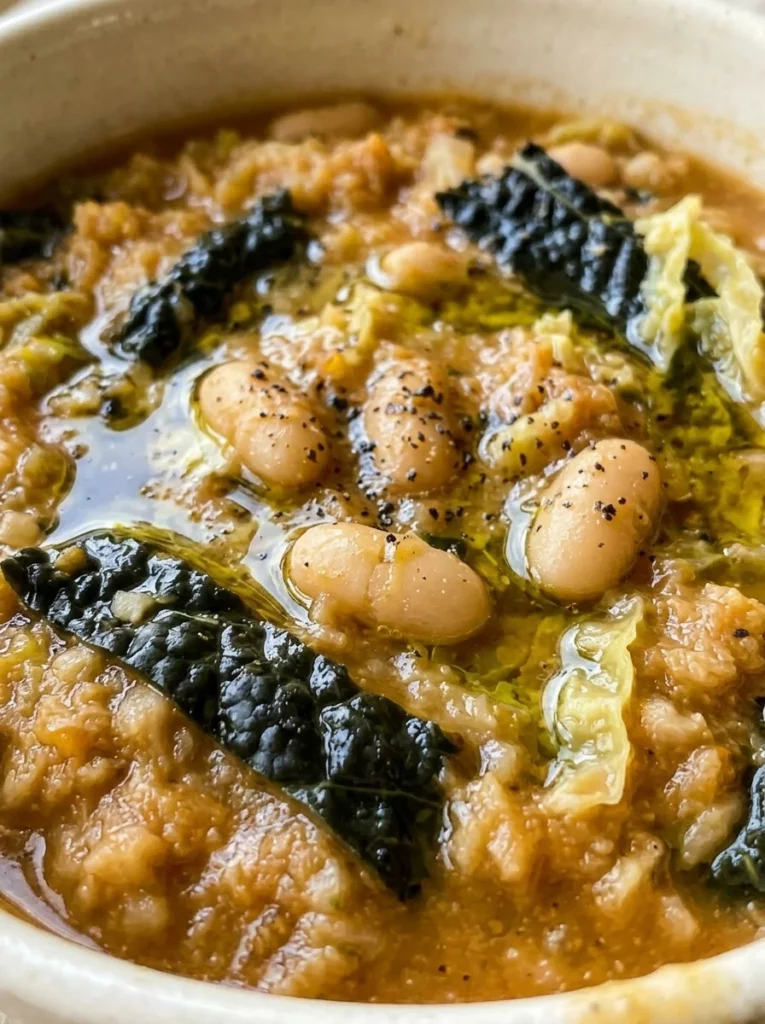
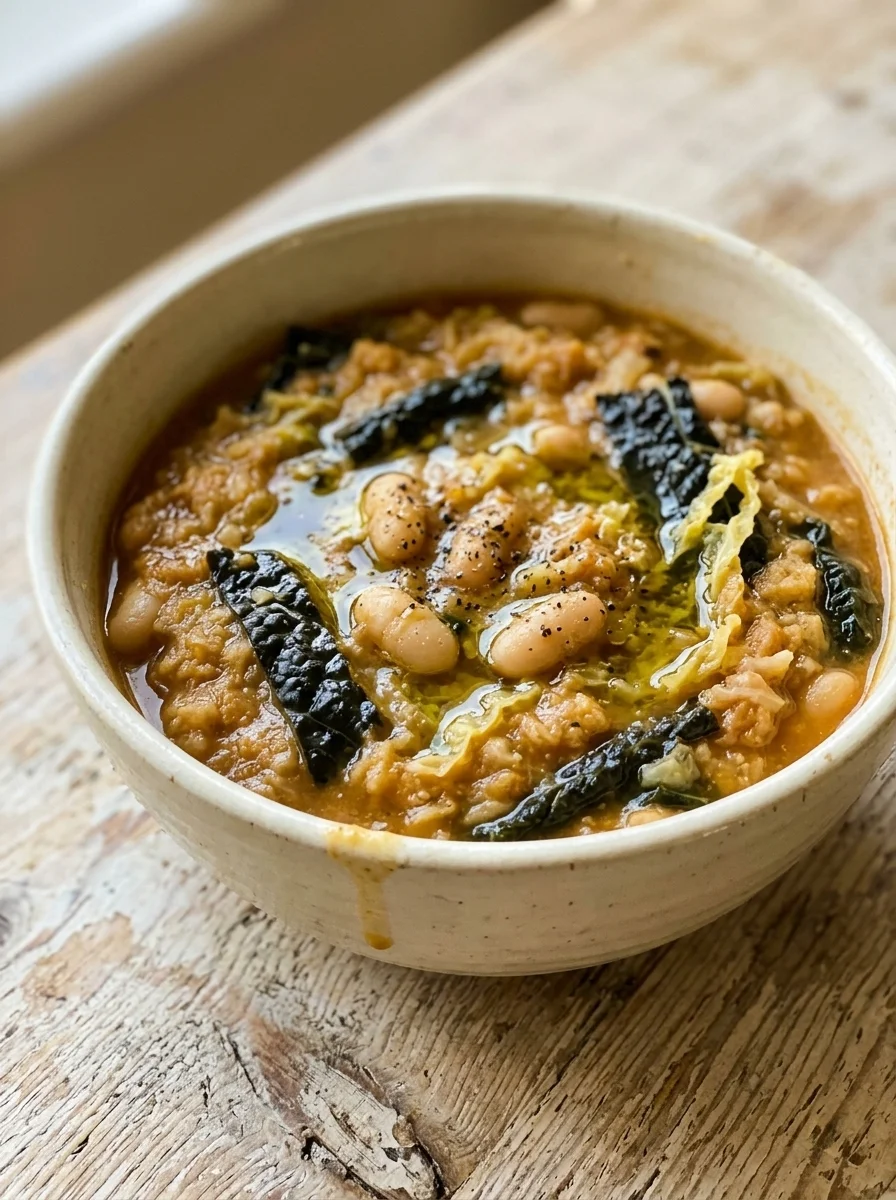
The next day, low heat, twenty five patient minutes, stirring every so often so the bottom does not scorch. It thickens into something you almost eat with a fork. Ladle it into warm bowls, drown the top in raw green olive oil, crack pepper over it, drop on a few thin slices of raw red onion if you like a sharp bite. A young Chianti at the table if you have one open.
I still text Matteo every few months. He sent me a photo last winter of the first cavolo nero after the frost, laid out on his marble counter, and told me it was time. It always is.
Tuscan White Bean Soup
Ingredients
Equipment
Method
- Drain the soaked cannellini beans and place them in a pot with the bay leaf, the smashed garlic clove, and enough fresh cold water to cover by 2 inches. Bring to a gentle simmer and cook uncovered for about 60 to 75 minutes, until the beans are fully tender but not falling apart. Season with a pinch of salt in the last 10 minutes. Do not drain; reserve the beans in their cooking liquid.
- Pass about one third of the cooked beans, with some of their liquid, through a food mill or mash them thoroughly with a potato masher to make a thick puree. Set the whole beans and the puree aside separately, keeping all the bean broth.
- In a large heavy pot, warm the extra-virgin olive oil over medium-low heat. Add the onion, carrots, and celery and cook slowly, stirring often, for 15 to 20 minutes, until very soft, sweet, and lightly golden. Do not rush this soffritto; it is the foundation of the soup.
- Stir in the minced garlic, rosemary sprig, and thyme sprigs and cook for 2 minutes, until fragrant. Add the crushed tomatoes with their juice and cook for 5 minutes, stirring, until the tomato darkens and loses its raw smell.
- Add the shredded savoy cabbage and cavolo nero to the pot in handfuls, stirring to wilt each batch before adding the next. Cook for 10 minutes, until the greens are collapsed and glossy.
- Pour in the bean puree, the whole beans, all of the reserved bean cooking liquid, and enough water to just cover the vegetables, about 8 cups total liquid. Add the kosher salt and black pepper. Bring to a gentle simmer and cook uncovered for 45 minutes, stirring occasionally, until the soup is deeply flavored and slightly thickened.
- Remove the rosemary and thyme stems. Tear the stale Tuscan bread into thick chunks and stir them directly into the hot soup. The bread should fully submerge and begin to melt into the liquid. Simmer for 10 more minutes, stirring gently, then turn off the heat.
- Cover the pot and let the soup rest at room temperature for at least 2 hours, or ideally refrigerate overnight. This resting step is essential; the bread absorbs the broth and the soup becomes thick and almost stew-like.
- The next day, return the pot to low heat and reboil (ribollita) the soup gently for 20 to 25 minutes, stirring often and adding a splash of water only if it threatens to scorch. The finished soup should be thick enough that a spoon almost stands up in it.
- Ladle into warm bowls and finish each serving with a generous drizzle of raw Tuscan extra-virgin olive oil and a grind of black pepper. Serve immediately, with thinly sliced raw red onion on top if desired.