
The marry me chicken story did not start in my kitchen. It started at a butcher counter in Chelsea Market, Manhattan, on a Tuesday food walk I booked mostly because the rain was sideways and I wanted a roof.
Our guide was a woman named Renata who talked faster than she walked. She had six stops planned. We spent almost half the tour at the second one.
That second stop was the meat counter, and the butcher working it had opinions.
The Butcher at Chelsea Market Who Would Not Let Me Buy Whole Breasts
His name was Hector. I asked for two boneless breasts, thinking vaguely about dinner back at the rental, and he held one up like evidence in a trial.
Too thick at one end, too thin at the other, he said. Cook that whole and half of it is chalk. He laid it flat on the board and ran his knife through it horizontally, turning one breast into two even cutlets in about four seconds, then told me to pound the fat end flat anyway.
Then came the salt lecture. Salt both sides, let it sit while you chop everything else, then pat it dry again before the flour. He said people salt and sear in the same breath and then wonder why the crust slides off.
Renata, meanwhile, was tapping her watch and losing the battle. Hector asked what I was making and when I said I was not sure, he said what every New Yorker seems to say about chicken cutlets right now. Make the marry me one. Sun-dried tomatoes, cream, Parmesan.
It Is Not Tuscan and It Is Not Old
I assumed, standing there, that this was some Italian-American thing that had been around for generations. It is not, and I like it more knowing the truth.
Marry Me Chicken was built in 2016 in the Delish test kitchen in New York, by an editor named Lindsay Funston, who was reworking a creamy Tuscan-style chicken into something faster for a weeknight. She was going to call it Sicilian Chicken Skillet. During the video shoot the videographer tasted it and said he would marry her for that chicken, and that was the end of Sicilian Chicken Skillet.
It went slowly for a few years, then detonated on TikTok in the early 2020s and became one of the most-searched recipes of 2022. There are now Marry Me soups, pastas, dips and a butter bean version.
Two things it is not. It is not Engagement Chicken, which is a whole lemon-roasted bird from a 1982 Glamour magazine recipe, a completely different dinner. And it is not creamy Tuscan chicken either, which brings spinach and mushrooms into it. This one lives and dies on sun-dried tomatoes and Parmesan.
What I Used
- Boneless skinless chicken breasts, sliced horizontally into four cutlets and pounded even
- Kosher salt, black pepper and garlic powder for the seasoning
- All-purpose flour, a thin dredge only
- Olive oil, or better, the oil straight out of the sun-dried tomato jar
- Unsalted butter
- Garlic, minced, four cloves
- Tomato paste, one tablespoon, doing more work than it looks like
- Oil-packed sun-dried tomatoes, drained and chopped
- Dried oregano, fresh thyme, red pepper flakes
- Low sodium chicken broth
- Heavy cream
- Freshly grated Parmesan, plus more at the table
- Fresh basil, torn at the last second
Bringing Marry Me Chicken Back to My Kitchen
Back home I did the sourcing in about twenty minutes. Chicken from the butcher stall at the Hollywood farmers market on a Sunday, the one where the guy already knows I want them split before I ask.
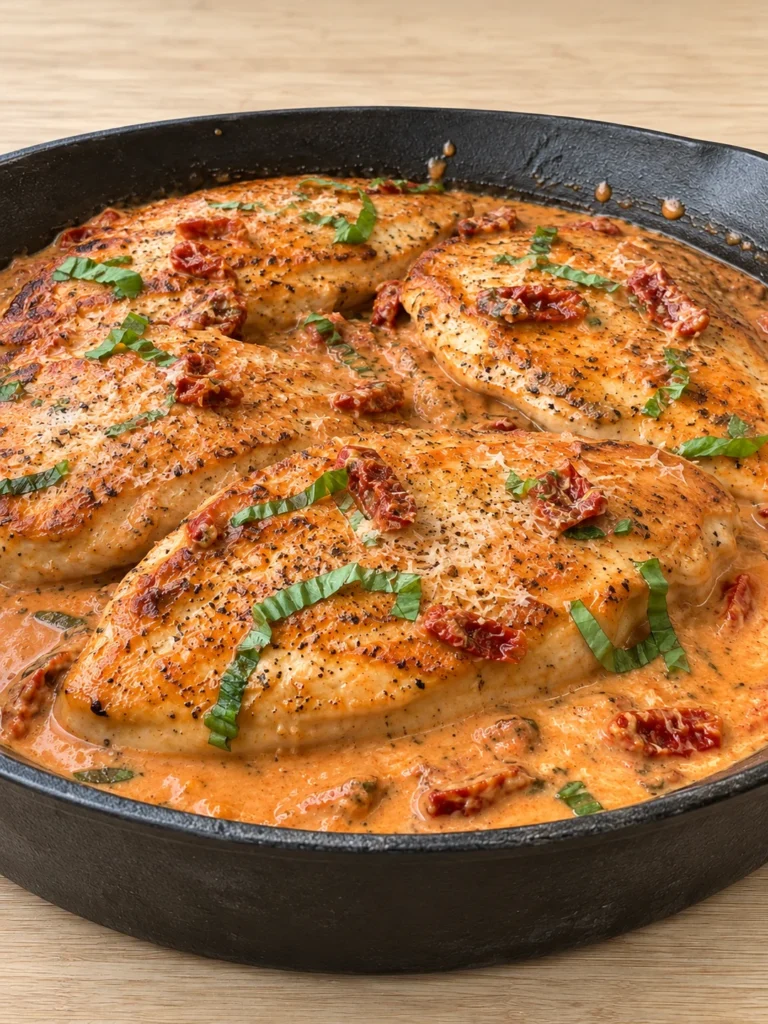
The sun-dried tomatoes are the part worth fussing over. Oil-packed, in a jar, not the leathery dry ones in a bag. The dry ones never fully soften in a twenty-minute sauce and you end up chewing little tomato erasers. I use the jar oil to sear in and the sauce comes out a deeper rust color for it.
Parmesan I buy as a wedge and grate myself. The pre-shredded stuff is coated in anti-caking powder and it turns the sauce slightly gritty, which you will notice.
The skillet is my cast iron, the heavy twelve inch one with a handle that got scorched black years ago and never came clean. It holds heat hard enough that the second batch of cutlets browns as fast as the first.
Where the Timing Punishes You
This dish is quick but it is not forgiving, and every mistake I have made with it was a timing mistake.
The garlic. Thirty seconds in the butter, no more. The first time I made this I let it go closer to two minutes because I was answering the door, and the whole sauce carried a burnt edge I could not sweeten out of it. I now have the broth measured and sitting next to the stove before the garlic ever hits the pan.
The tomato paste wants a full minute or two pressed against the hot skillet until it darkens to brick red and starts smelling sweet instead of tinny. People rush this and then wonder why the sauce tastes flat.
And the Parmesan goes in off the heat. Pull the skillet completely off the burner, then whisk it in a handful at a time. Cheese dropped into a boiling cream sauce splits and goes grainy and there is no going back from that.
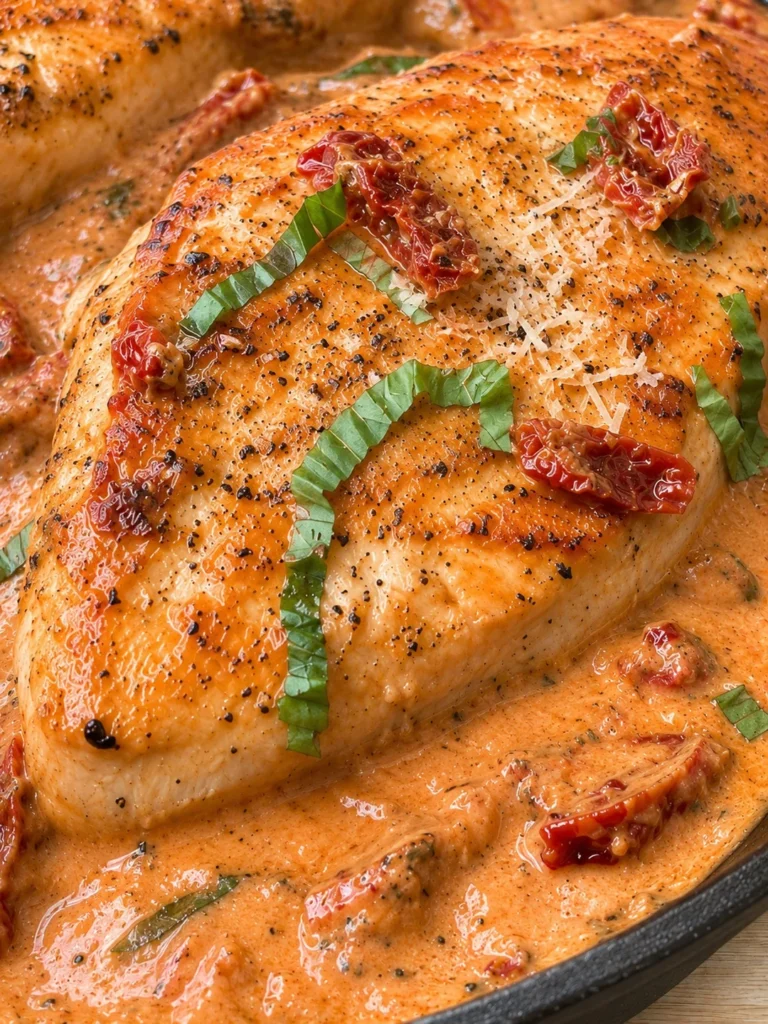
The last bit of patience is the easiest to skip. Put the cutlets back in, spoon sauce over each one, and leave them over low heat for three or four minutes. They drink some of it up. Skip that and the sauce is just sitting on the plate next to the chicken instead of on it.
Small Changes I Actually Make
Thighs work and honestly I use them half the time. No pounding, no slicing, six minutes a side, and they stay juicier if you get distracted.
I usually double the red pepper flakes. I almost said skip the basil too, since I used to think it was decoration. Actually no, it matters. Torn basil over the hot sauce smells like the whole dish is finished, and dried basil does nothing at all here.
Egg noodles underneath, buttered. Rice is fine, mashed potatoes are better, but bread is non-negotiable because somebody is going to scrape the pan.
Leftovers hold three days and the sauce tightens up in the fridge. Reheat it slow with a splash of broth. Cold, straight from the container, standing at the counter at midnight. Also good, and I will not be defending that one.
One Last Thing
I have made this maybe thirty times since that rainy walk through Chelsea Market and I still hear Hector saying cook that whole and half of it is chalk. Best twenty-dollar detour of the trip, and it was not even a stop Renata planned to linger on.
Nobody has proposed over it in my kitchen. The pan always comes back empty, which I will take.
Marry Me Chicken
Ingredients
Equipment
Method
- Lay each chicken breast flat and slice it horizontally into two thin cutlets. Place them between sheets of plastic wrap and pound the thick ends until each cutlet is an even half inch thick.
- Pat the cutlets dry. Season both sides with the salt, black pepper and garlic powder.
- Spread the flour in a shallow dish. Dredge each cutlet lightly, pressing gently, then shake off the excess. A thin coat is all you want.
- Heat the olive oil and 1 tablespoon of the butter in a large skillet over medium-high heat until the butter foams. Add the cutlets in a single layer, working in two batches if needed, and sear 4 to 5 minutes per side until deeply golden and cooked through, 165 F at the center. Transfer to a plate.
- Lower the heat to medium. Add the remaining tablespoon of butter to the same skillet along with the minced garlic. Cook 30 seconds, stirring, until fragrant but not browned.
- Stir in the tomato paste, chopped sun-dried tomatoes, oregano, thyme and red pepper flakes. Cook 1 to 2 minutes, pressing the tomato paste against the hot pan until it darkens to brick red and smells sweet.
- Pour in the chicken broth and scrape the bottom of the skillet with a wooden spoon to lift every browned bit. Simmer 2 minutes until the liquid reduces by about half.
- Add the heavy cream and bring to a gentle simmer. Cook 4 to 5 minutes, stirring now and then, until the sauce coats the back of a spoon.
- Pull the skillet off the heat. Whisk in the grated Parmesan a handful at a time until smooth and glossy. Taste and adjust salt.
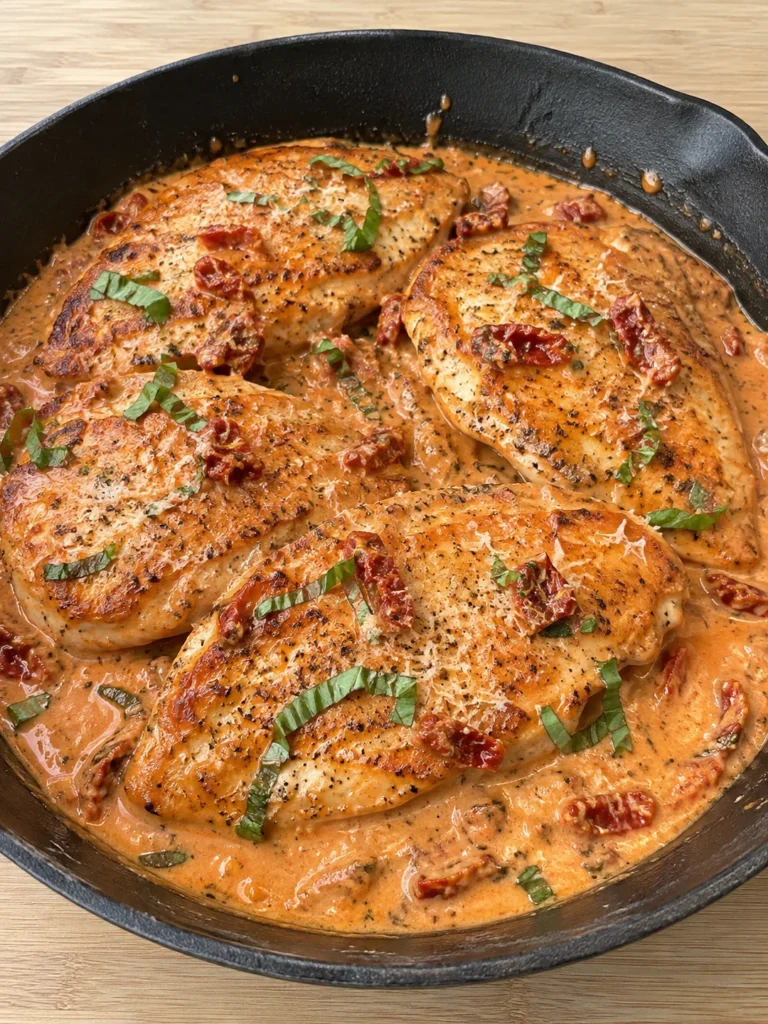
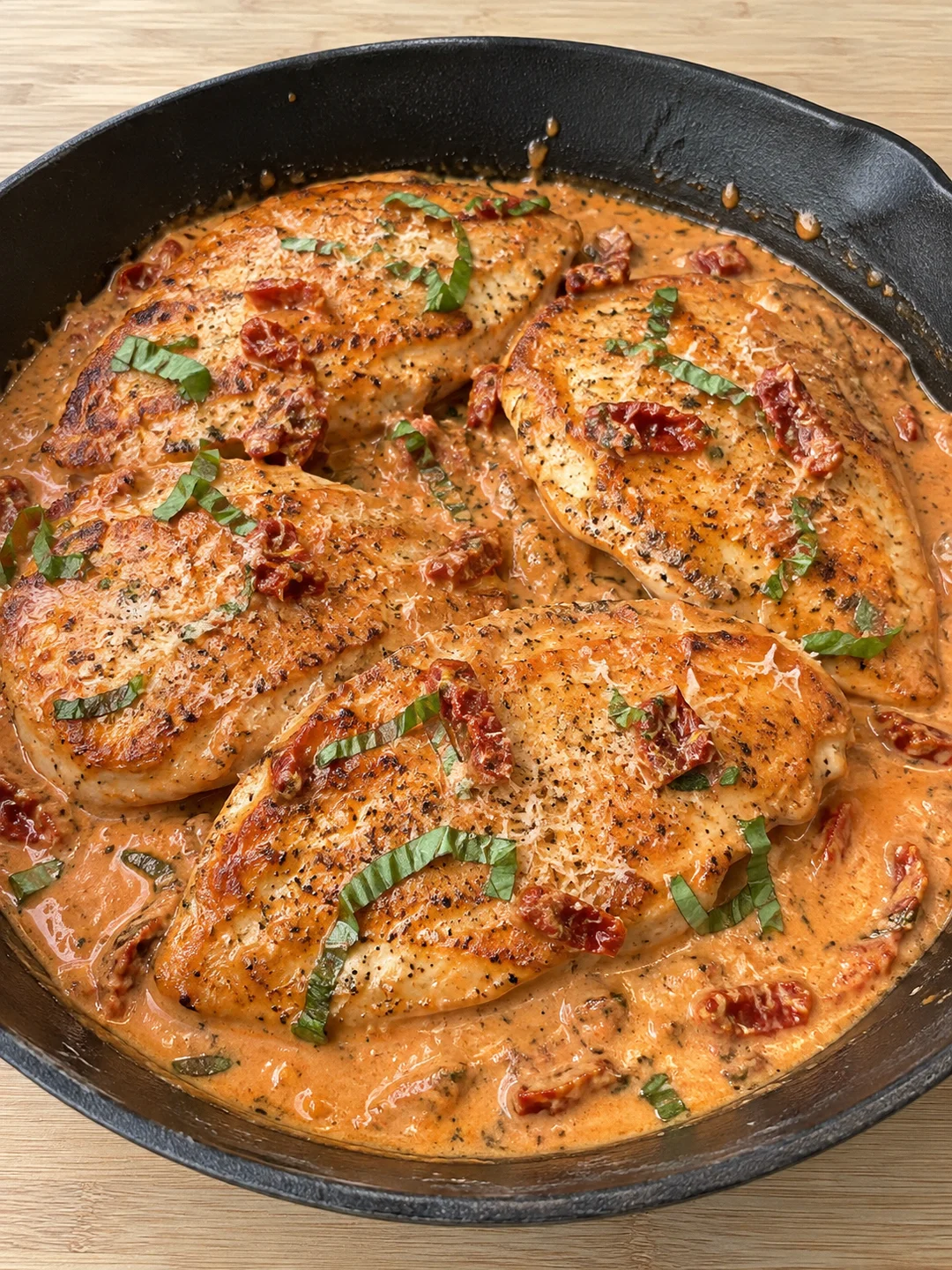
- Return the chicken and any juices from the plate to the skillet, spooning sauce over each cutlet. Set back over low heat for 3 to 4 minutes so the chicken warms through and takes on the sauce.
- Scatter torn basil and a little extra Parmesan over the top. Serve straight from the skillet.