
The cinnamon roll cookies that changed my mind about slice-and-bake dough came out of a chest freezer in Dalarna, Sweden, on an afternoon of flat grey rain. I had stopped at a roadside place north of Mora because the sign was hand-painted and there were three cars in the lot, which is usually a good ratio.
Lunch service was finished by the time I got a plate. The owner brought me the last of the potato soup, then sat down across the table with her own coffee because there was nobody left to feed.
Birgitta’s Kitchen North of Mora
Her name was Birgitta. Grey wool cardigan with the sleeves shoved to the elbow, a dried pale line of flour along one forearm, reading glasses hanging on a cord she kept forgetting she was wearing.
She asked where I was driving and I said north, vaguely, because I did not know yet. Then she asked if I wanted to see something, and walked me back through the swing door into a kitchen tiled white to shoulder height, with a chest freezer humming in the corner under a window.
Inside the freezer were logs of dough wrapped tight in plastic, each one labelled in marker with the date. She pulled one out and set it on a wooden board.
These were not kanelbullar, she said, and she wanted that clear. She made kanelbullar every morning and these were not those. These were cookies her daughter had sent her in a letter from Minnesota, written out by hand on two sides of a page.
She let the log sit maybe ten minutes, then cut. My first attempt, when she handed me the knife, was straight down with my whole weight behind it, and the log flattened on one side like a squashed can. She turned it a quarter turn after each slice. That one small habit is the whole difference between a round spiral and an oval one, and she was patient about it in a way that made me feel worse, not better.
Rounds, not buns. She said that twice.
Where Cinnamon Roll Cookies Actually Come From
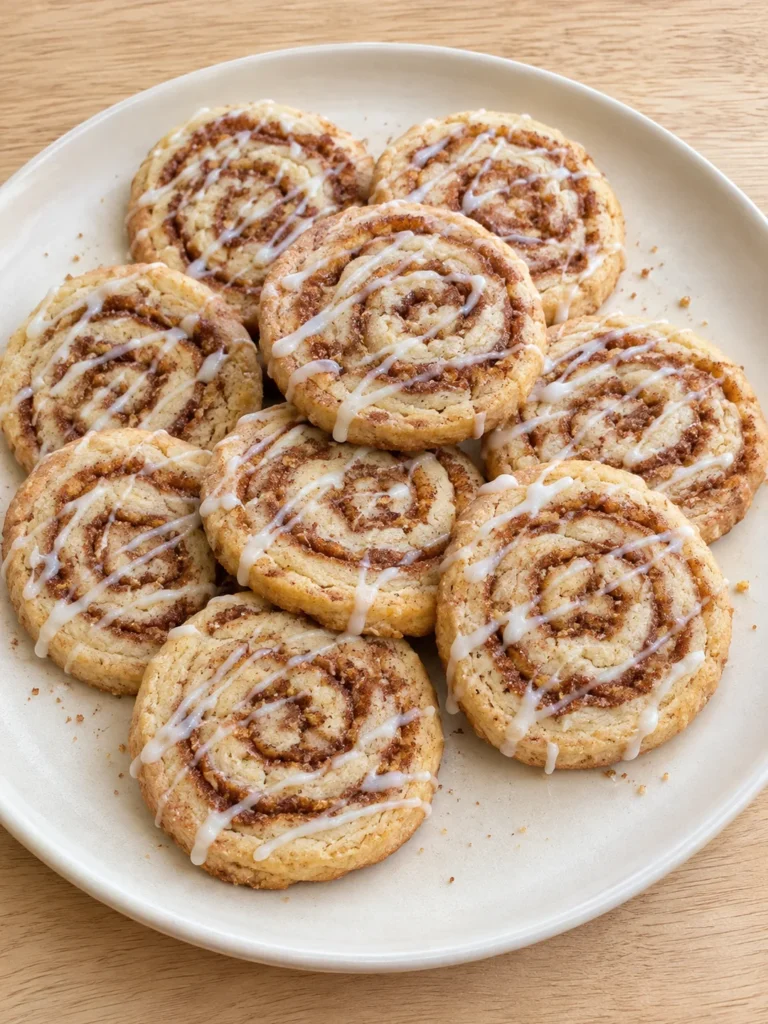
Birgitta was right to draw the line. These are not a Swedish pastry and nobody should sell them that way. The swirl is borrowed from the kanelbulle, which Sweden is widely credited with shaping into its modern form after the First World War, but the cookie itself is American.
Its other parent is the icebox cookie, which turned up in the United States in the early twentieth century when iceboxes became standard kitchen equipment. Bakers worked out that a chilled log of dough could be sliced on demand, a few at a time, and the decorative pinwheel and checkerboard patterns came directly out of that layering-and-slicing habit.
Graft the cinnamon-butter filling onto a sugar cookie sheet, chill it, slice rounds that look like miniature buns, and you have a hybrid with no village or bakery to credit. It spread through American home baking and holiday cookie trays and cookie exchanges, which is exactly how it reached a letter mailed to central Sweden.
Two things they are not. They are not snickerdoodles, which carry their cinnamon sugar on the outside of a rolled ball. And they are not cinnamon rolls, because the dough is chemically leavened with baking powder. No yeast, no proofing, no rise. Treat it like bread dough and you will overwork it into something tough.

What I Used
- All-purpose flour, spooned and levelled, plus a couple of extra spoons for the filling so it does not run
- Baking powder and salt
- Unsalted butter, softened, for the dough and again for the filling
- Granulated sugar
- One egg, properly at room temperature
- Vanilla extract, split between the dough and the glaze
- Light brown sugar, packed
- Ground cinnamon, and a generous amount of it
- Full-fat cream cheese, softened
- Powdered sugar, sifted, because unsifted glaze looks lumpy and you will see it
- Whole milk to thin the glaze
The cinnamon is the one thing I will not economise on. I buy it from a small spice shop where it gets ground in reasonable quantities rather than sitting in a warehouse for two years, and the difference between that and the dusty supermarket jar I used the first time is not subtle.
Making Cinnamon Roll Cookies Without Rushing Them
This dough punishes impatience at three separate points, and I have failed at all three.
The first was the filling. I melted the butter because it seemed faster, and the filling soaked straight into the dough, then slid out of the spiral in the oven and pooled on the parchment in greasy brown rings. Softened and spreadable is not a suggestion. Use a fork and work it into a thick paste.
The second was the quantity. I thought more filling meant more cinnamon flavour. What it actually means is pressure, and the layer forces itself out between the coils and separates the whole spiral. Spread it thin enough that you can still see the dough through it in places, and leave a clean border along the far edge so the seam has something to grip.
The third is the chill, and it is the one most people skip. Twenty minutes for the dough before rolling, then a full hour in the refrigerator for the log, or two to three hours in the freezer if you want it faster. Firm all the way through, not just on the outside. A log that is soft in the middle will slice into ovals and spread flat on the sheet.
Bake at 350 F for nine to twelve minutes and pull them when the edges are barely golden and the centres still look slightly underdone. They firm up on the hot sheet. I have overbaked a tray by two minutes while answering the door and the difference was immediate, dry and sandy instead of soft.
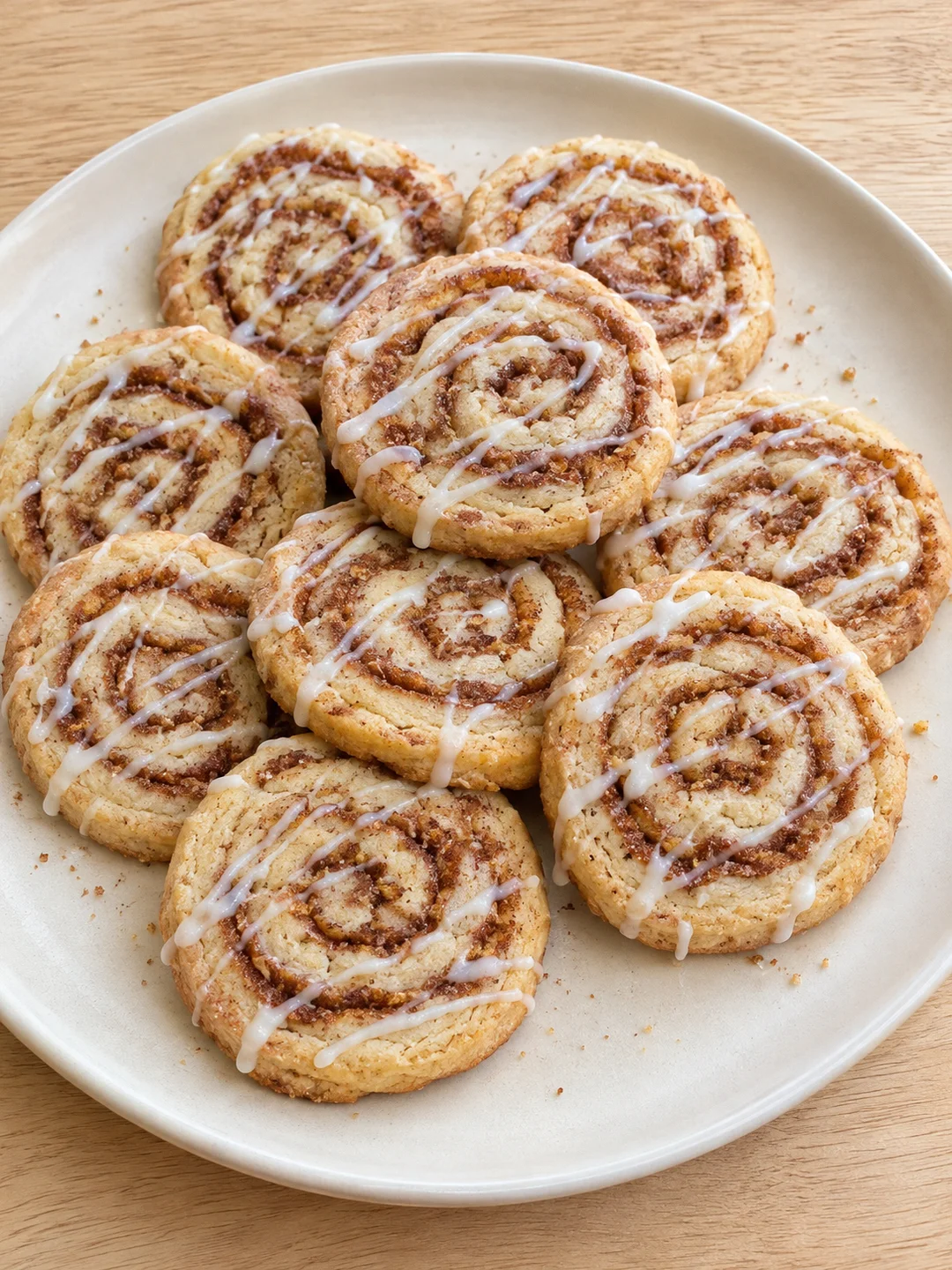
The glaze goes on when the cookies are barely warm. Not hot. Hot and it soaks in and disappears. Barely warm and it sets into a thin shell you can hear crack slightly against your teeth.

The Cardamom Version and Other Small Changes
I made these on a Sunday morning in October with rain coming down hard enough to drum on the kitchen window, which is as close to Dalarna weather as I get at home. Some batches I glaze. Most, honestly, I do not.
For a version that nods back at where the swirl came from, put a teaspoon of ground cardamom in the dough and finish with pearl sugar instead of the cream cheese glaze. It is less sweet and I prefer it, though nobody else in the room ever does.
The log keeps wrapped in the freezer for up to two months. Slice straight from frozen and add two minutes to the bake. Baked and unglazed they hold four days in a tin, and I like them best on day two, cold, standing at the counter before coffee.
I did not take a photo of Birgitta’s kitchen and I think about that more than I should. What I did take was the quarter-turn trick, which I use every single time, and the sound of her saying rounds, not buns. The cookies turn out round now.
Cinnamon Roll Cookies
Ingredients
Equipment
Method
- Whisk 2.75 cups flour, the baking powder and 0.5 teaspoon salt together in a bowl and set aside.
- Beat 0.75 cup softened butter with the granulated sugar on medium speed for 2 to 3 minutes, until pale and fluffy. Beat in the egg and 1 teaspoon vanilla, scraping the bowl once.
- Add the flour mixture in two additions on low speed, mixing only until no dry streaks remain. The dough will be soft but not sticky.
- Gather the dough, flatten it into a rough rectangle, wrap it and chill 20 minutes. This firms the butter just enough to roll cleanly.
- Make the filling. Stir the 6 tablespoons softened butter, brown sugar, cinnamon, 2 tablespoons flour and 0.25 teaspoon salt with a fork into a thick, spreadable paste. Do not melt the butter.
- Roll the chilled dough between two sheets of parchment into a rectangle about 10 by 14 inches and 1/4 inch thick. Peel off the top sheet and square up the edges with your hands.
- Spread the filling in a thin, even layer over the dough, leaving a clean 1/2 inch border along the far long edge. Resist adding more filling than this.
- Starting at the long edge closest to you, roll the dough up tightly, using the parchment to lift and guide it. Keep the spiral snug with no air gaps.
- Pinch the seam closed along its length and roll the log gently to even out the thickness. Rest it seam-side down.
- Wrap the log tightly in plastic and refrigerate at least 1 hour, or freeze 2 to 3 hours, until completely firm all the way through.
- Preheat the oven to 350 F and line two baking sheets with parchment.
- Unwrap the log and slice rounds about 1/3 inch thick with a sharp knife, rotating the log a quarter turn after each cut so it stays round. Press any loose spiral ends back into place.
- Arrange the rounds 2 inches apart on the sheets. Bake 9 to 12 minutes, until the edges are just light golden and the centers still look soft and slightly underdone.
- Cool the cookies on the baking sheet 5 minutes, then move them to a wire rack. They firm up as they cool.
- Beat the cream cheese smooth, then beat in the powdered sugar, 2 tablespoons milk and the remaining 1 teaspoon vanilla. Add milk a teaspoon at a time until the glaze ribbons off a spoon.
- Drizzle the glaze over the cookies while they are barely warm, not hot, so it sets into a thin shell rather than soaking in. Let stand 20 minutes before stacking.