
My copy of this Korean cookbook lives on the counter now, not the shelf. It’s spattered with soy sauce, the spine is crumbling, and there’s a sticky note on page 84 that just says MORE PEAR in big block letters. That’s the bulgogi page. I’ve been working on it for months, ever since one strange and lucky night last fall when I crashed a dinner I wasn’t invited to.
The Koreatown Dinner I Wasn’t Supposed to Be At
A friend texted me on a Saturday evening saying her plus-one had bailed and she needed a body in 20 minutes. I threw on jeans, expecting a casual potluck. It turned out to be a small private dinner in a chef’s apartment in Koreatown, ten guests around a long table, with a chef named Joon demonstrating each course as he plated it.
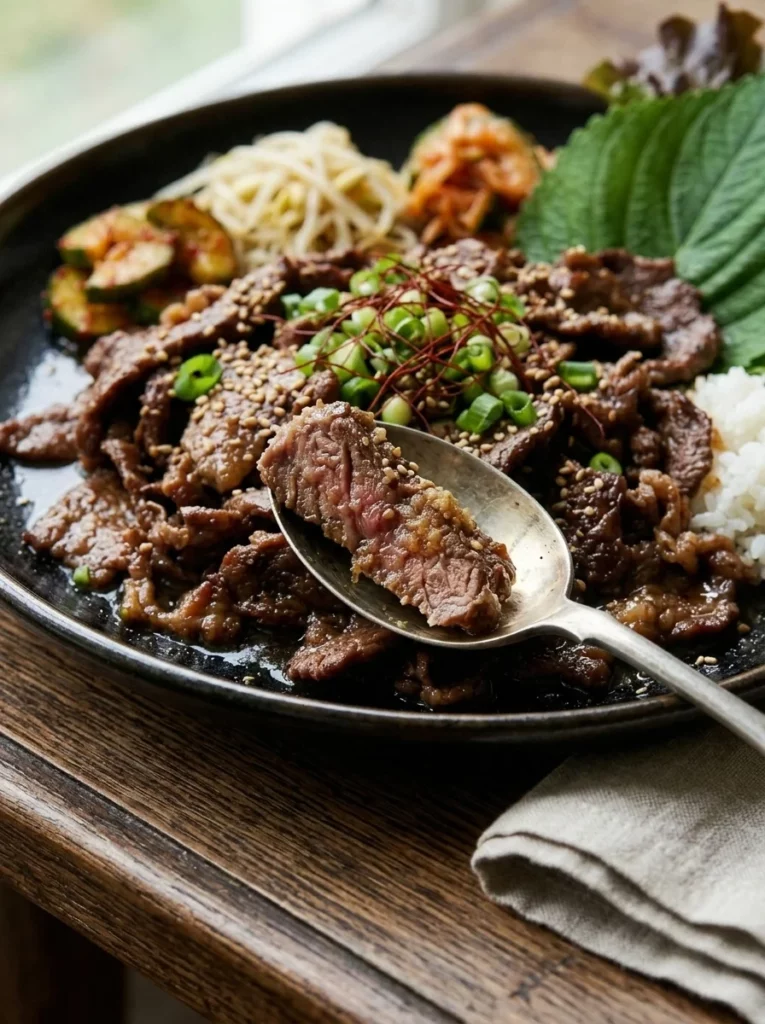
He had a huge cast iron griddle going on the stove and was tossing paper-thin slices of ribeye onto it in batches. The smell was unreal. Caramelized soy, garlic, that toasty sesame note, and something fruity I couldn’t place. When I asked, he held up half a Korean pear and grinned like it was the answer to everything.
That was the night bulgogi became the dish I had to figure out. I went home and ordered the cookbook within the week, and I’ve been refining the recipe ever since.
Why the Cookbook’s Bulgogi Wasn’t Quite Enough
The cookbook recipe is genuinely good. It is. But Joon’s bulgogi had this lacquered, almost barbecue-pit char on the edges, and the book’s version came out softer and juicier in a kind of steamy way. I realized after a few tries that the recipe’s instructions to cook everything together in one big pan were the culprit. The beef was steaming in its own marinade instead of searing.
So the first change I made was batching. I cook in three rounds now in a screaming hot pan, wiping it between batches. The difference is night and day, and it’s the single biggest fix.
The second change was the pear. The book calls for a quarter cup grated. I doubled it. Korean pear has natural enzymes that tenderize the beef and bring a clean fruity sweetness no amount of plain sugar can match. With more pear and slightly less brown sugar, the marinade got cleaner and the meat got more tender at the same time.
The third tweak was honey instead of all sugar. Honey in a hot pan turns into the most beautiful caramel ribbons along the edges of the beef. The book uses only brown sugar, which is fine, but honey gives you that sticky-glossy finish that looks like every Korean barbecue restaurant photo you’ve ever scrolled past.
What I Used
- 1.5 lb boneless ribeye, sliced paper-thin against the grain
- Half a cup of grated Korean pear with all its juices
- 5 tablespoons of soy sauce, Korean ganjang if you can find it
- 2 tablespoons of honey and 1 tablespoon of light brown sugar
- 2 tablespoons of toasted sesame oil
- 1 tablespoon of mirin or dry sake
- 6 cloves of garlic, finely grated
- 1 teaspoon of fresh ginger, grated
- Half a teaspoon of freshly ground black pepper
- 1 medium yellow onion, halved and sliced thin
- 4 stalks of scallions cut into 2 inch pieces
- Toasted sesame seeds for finishing
- A tablespoon of neutral oil for the pan
- 4 cups of steamed short-grain white rice
- A head of red leaf lettuce, leaves separated for wrapping
The Bulgogi Method I Landed On
The slicing matters more than anything else. I freeze the ribeye for 45 minutes (the cookbook said 20, which wasn’t enough for my somewhat dull knife) and then go thin. Like, 1/8 inch thin. If you can almost read the morning paper through it, you’re there.
The marinade gets at least four hours, ideally overnight. Anything more than 24 hours and the pear enzymes turn the beef weirdly soft, almost mealy. I learned that the hard way after a Sunday meal-prep session turned my Tuesday dinner into beef pudding.
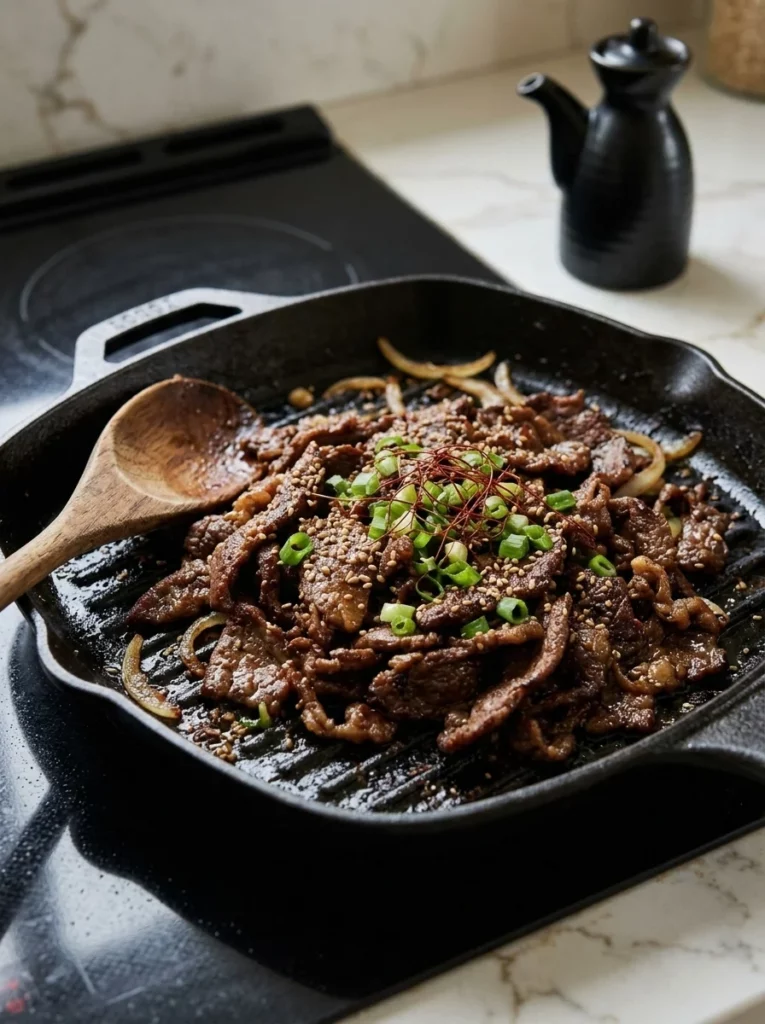
When you cook, the pan needs to be smoking. Not warm, not just hot. Smoking. Lift the meat out of the marinade with tongs and let the excess drip off so you’re not dumping liquid into the pan. Sear undisturbed for 60 to 90 seconds until the bottom is dark and lacquered, then toss for another minute. Done.
A Few Notes on Authenticity
Here’s something the cookbook taught me that I love. Bulgogi isn’t one fixed recipe. The name literally means fire meat in the Pyongan dialect, and the dish traces back to northern Korea, eventually traveling south through Pyongan refugees in the 20th century. Regional styles like Eonyang and Gwangyang are barely sweet at all, just savory and clean.
So the version I make is sweet, glossy, Seoul-leaning, and it goes hard on the pear and honey. That’s a choice, not a law. If you prefer a more savory bulgogi, scale the honey way back and let the soy and sesame oil do more of the talking, and it’ll still be bulgogi.
Also, quick PSA. This is not galbi. Galbi is short ribs and gets a totally different marinade, formulated for a different cut and a different cooking time. Don’t let anyone tell you the two are interchangeable.
How I Serve the Bulgogi
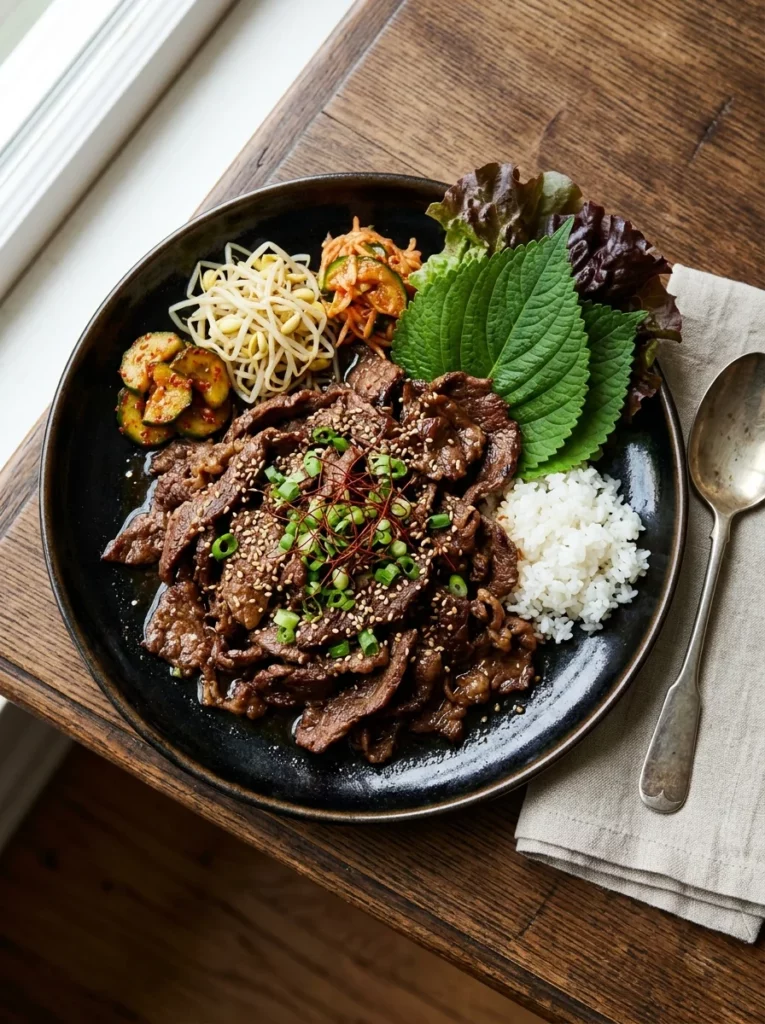
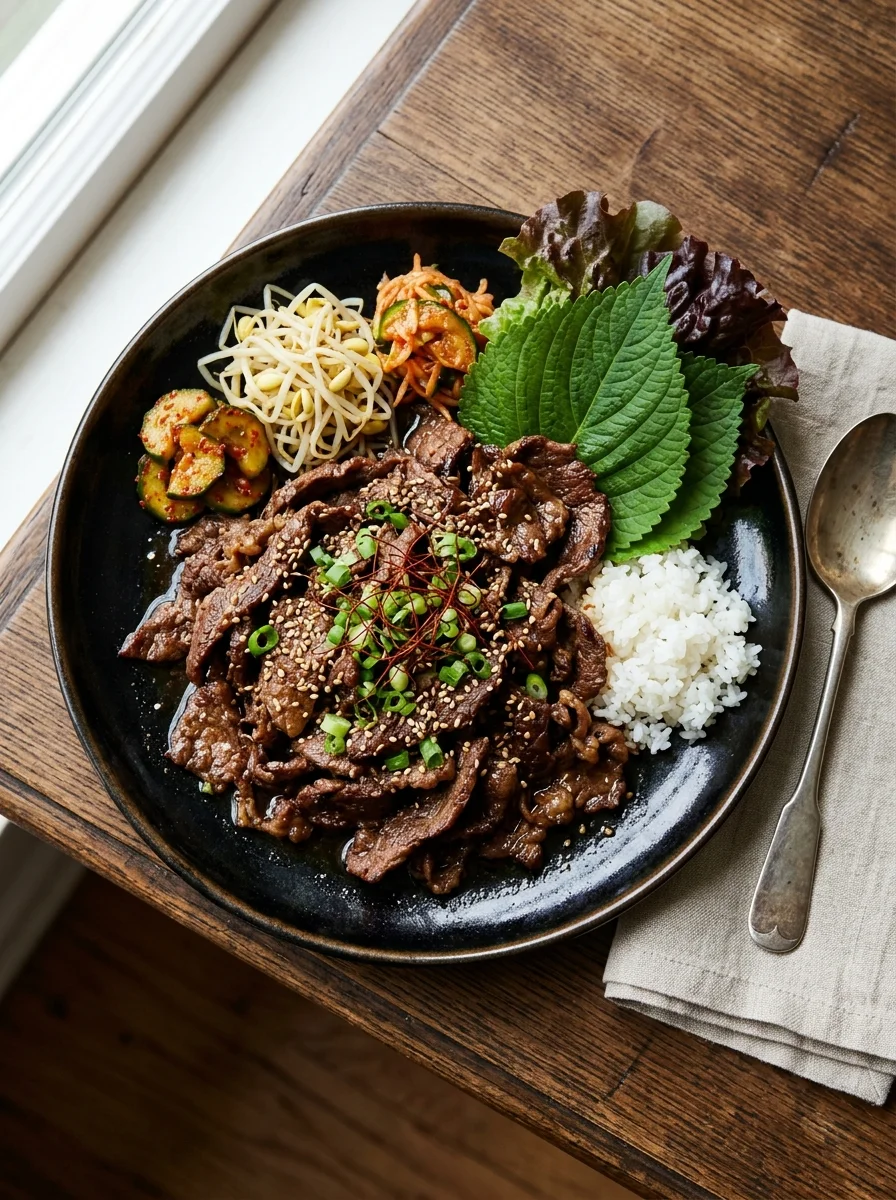
I pile everything on the biggest platter I own and hit it with a small avalanche of toasted sesame seeds. Rice goes in a bowl on the side, a stack of red leaf lettuce washed and patted dry sits in the middle of the table, and whatever banchan I have in the fridge gets opened.
The whole point is the wrap. You take a lettuce leaf in your palm, drop in a spoon of warm rice, a slice or two of beef with some onion, a smear of ssamjang if you have it, and fold the whole thing up. The juice runs down your wrist. You don’t care.
This is the dish I make when friends are coming over and I want to look like I have my life together. The cookbook earned every one of its grease stains. And every time I open it to page 84, I think about Joon, his cast iron griddle, and the night I almost didn’t go.
Seoul-Style Beef Bulgogi
Ingredients
Equipment
Method
- Place the ribeye on a plate and freeze for 30 to 45 minutes until firm but not solid. Slice across the grain into pieces about 1/8 inch thick, then cut any oversized slices into 3 inch lengths.
- In a large mixing bowl, whisk together the grated Korean pear with its juices, soy sauce, honey, brown sugar, sesame oil, mirin, grated garlic, grated ginger, and black pepper until the sugar dissolves.
- Add the sliced beef to the marinade and gently massage with your hands for 1 to 2 minutes so every piece is coated. Cover and refrigerate for at least 4 hours, ideally overnight, but no longer than 24 hours.
- About 30 minutes before cooking, add the sliced yellow onion and scallions to the bowl and toss to combine, letting them mingle with the beef and marinade.
- Heat a large cast iron skillet over high heat for 3 minutes until smoking. Add 1 teaspoon of neutral oil and swirl to coat.
- Working in 3 batches to avoid crowding, lift portions of beef and vegetables from the marinade, letting excess drip off, and spread them in a single layer in the hot pan.
- Cook undisturbed for 60 to 90 seconds until the bottom is deeply caramelized, then toss and cook 30 to 60 seconds more until the beef is just cooked through and the edges are charred. Transfer to a warm platter.
- Wipe the pan with a paper towel between batches, add another teaspoon of oil, and repeat with the remaining beef and vegetables.
- Pile all the cooked bulgogi onto a serving platter, sprinkle generously with toasted sesame seeds, and scatter over a few extra fresh scallion pieces if you like.
- Serve immediately with bowls of steamed short-grain rice and a stack of lettuce leaves, letting everyone wrap bites of beef and rice into hand-held parcels.