
I went to Tokyo in late spring with no reservations except one, a sunset slot at an observation deck I had booked two weeks ahead like everyone told me to. Everything else I let happen. I walked until my feet complained and then I walked a bit more.
What follows is the actual shape of those five days. Shrines in the morning when the air is still cool, markets and alleys later, one day out to Kamakura on the train because the sea was calling and Tokyo in June gets heavy. I have kept the timings loose on purpose. This city rewards drifting.
Bring cash. A lot of the best places in this itinerary will not take a card.
Day 1, Shibuya and the Long Green Walk In
I gave the first day to Shibuya and Harajuku because they sit next to each other and because the contrast is almost comic. You start under cedar trees in near silence and you end up looking down at the busiest pedestrian crossing on earth, lit like a stage.
All of it is walkable. I did not take a train once between these stops. The day ends high up, so book that ticket before you fly.
Meiji Jingu
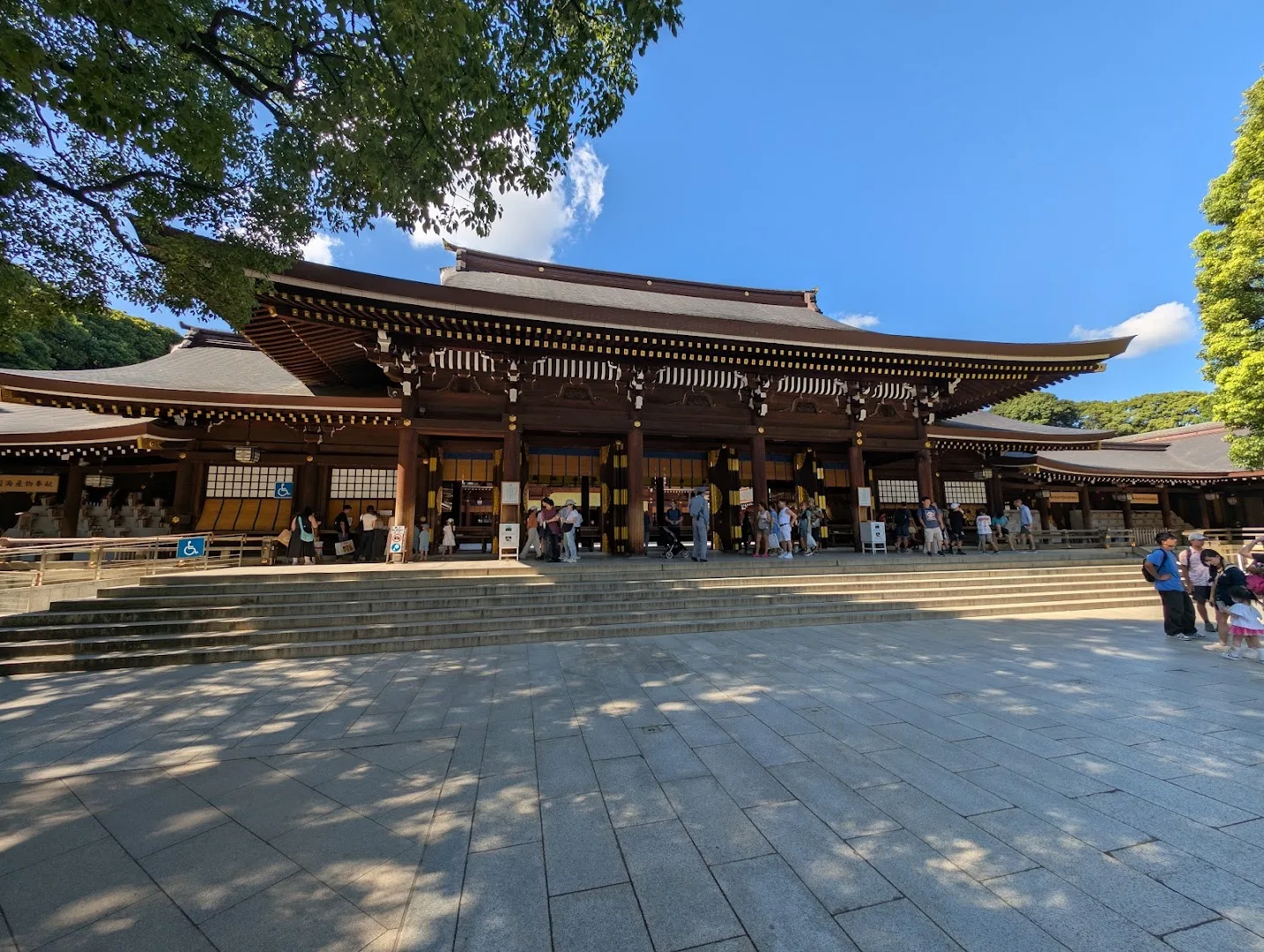
1-1 Yoyogikamizonocho, Shibuya, Tokyo 151-8557, Japan Open in Google Maps Photo Credit to Léonard Havet
The air was still cool, almost ten, and the gravel under the first torii made a sound I can still hear. You come out of the back of Harajuku Station, turn one corner, and the city just stops. Cedar closes over the path and the temperature drops a few degrees.
It is about ten minutes up to the main shrine buildings and I took longer, because the sake barrels stacked along the left side of the path are worth standing in front of for a while. Painted, faded, enormous. I did not check the time. Somewhere near the courtyard a wedding procession crossed in front of me, white silk and a red parasol, and everyone went quiet without being asked.
The inner garden costs 500 yen. I paid it and would again.
From the shrine I followed the path back out toward Harajuku Station, and the noise came back up around me like a wave, which is exactly how you should arrive at the next street.
Takeshita St
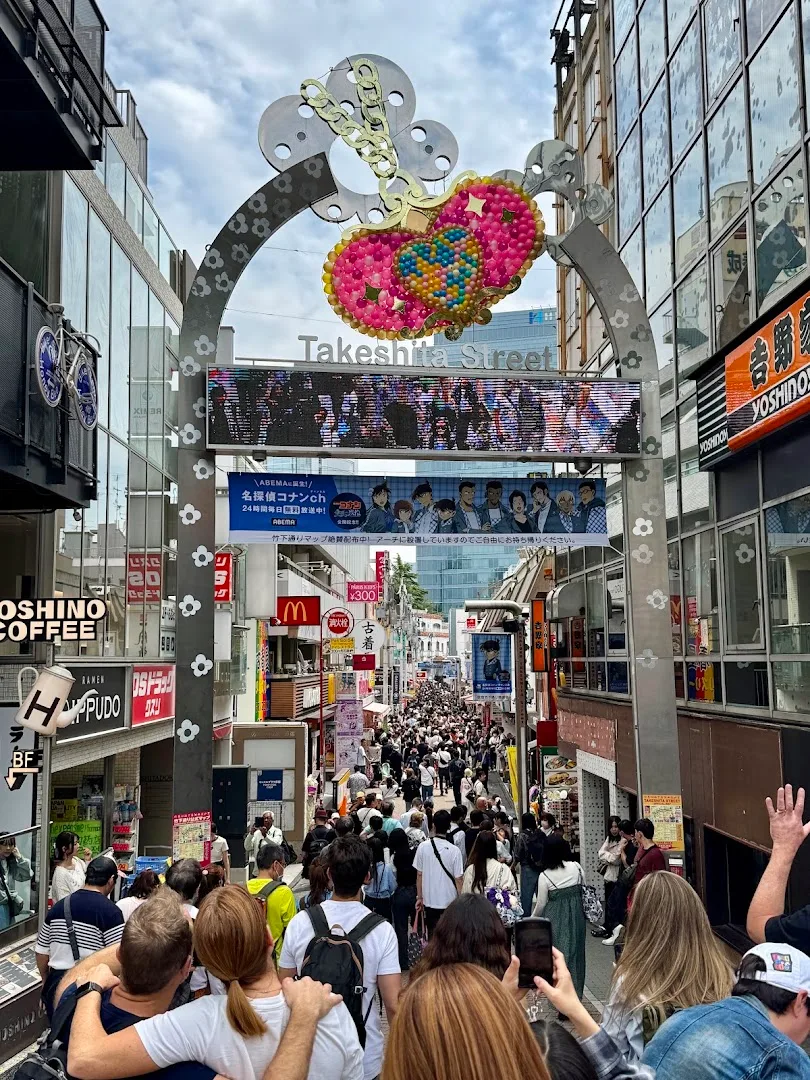
1 Chome Jingumae, Shibuya, Tokyo 150-0001, Japan Open in Google Maps Photo Credit to Alex Giles
Sugar first, then sound. The whole lane smells of crepe batter and fruit syrup before you have even committed to walking down it, and the shopfronts are stacked so densely with colour that your eyes give up trying to read them.
It is narrow. Gloriously, ridiculously narrow, and by late morning the crowd moves at one speed and that speed is not yours. I went in with a plan. It did not survive the first shop window.
What I liked most was the noise layering, every store playing something different at the doorway, so you walk through a hundred metres of shifting music. It is not a place I would linger in, honestly. Twenty minutes and I had had my fill of it. But skipping it would have been a mistake too, because nowhere else in Tokyo does exactly this.
At the far end the lane spills out and I turned off into the quieter backstreets, where the volume drops almost immediately.
Cat St
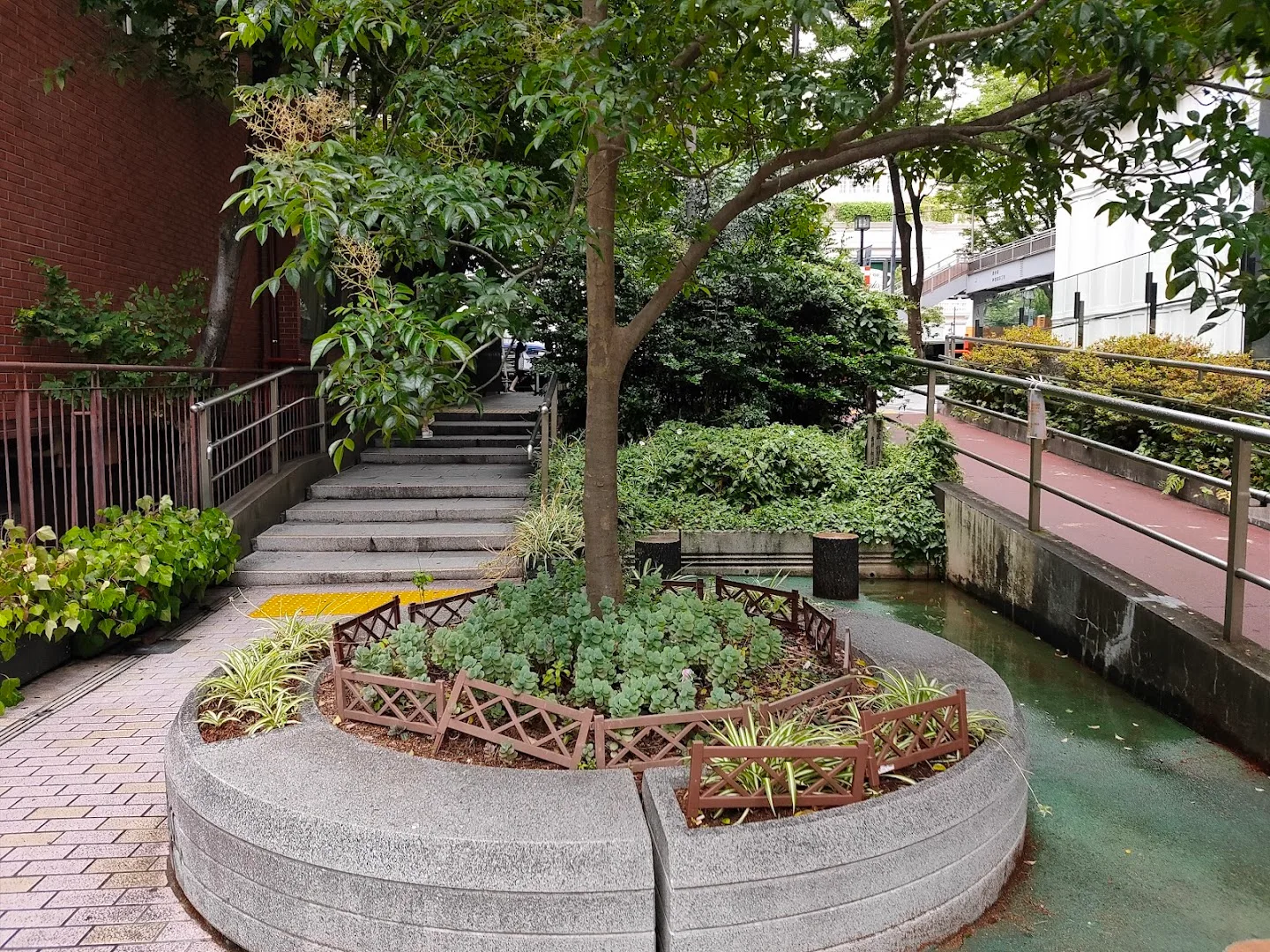
Shibuya, Tokyo, Japan Open in Google Maps Photo Credit to 秋野惣一郎
Then the light changed. Cat Street runs between Harajuku and Shibuya without cars, a soft curving line of low buildings, and after Takeshita it felt like someone had turned the volume down by half.
Skate shops, small concrete-fronted boutiques, people sitting on steps with iced coffee doing nothing in particular. I liked the doing nothing. There are benches and low walls and nobody moves you along.
This is where I understood how walkable that part of the city is. Three completely different moods within about fifteen minutes of each other, all on foot, no train needed.
The street bends and drops you out near a much grander avenue, so I followed it down.
Omote-Sando Ave
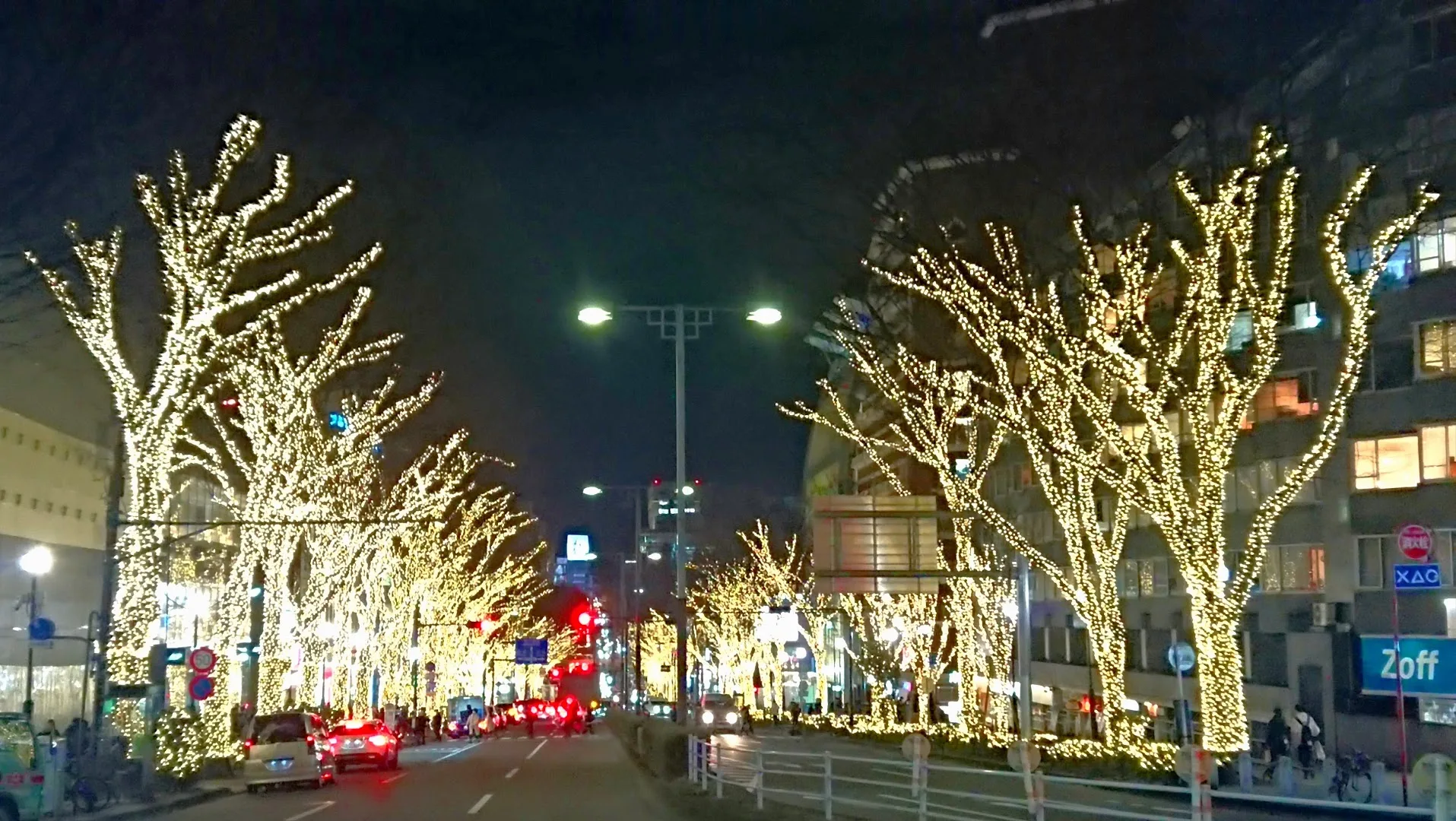
Tokyo, Japan Open in Google Maps Photo Credit to masami shibano
Zelkova trees on both sides, the branches meeting overhead, and in the afternoon the light comes down through them in pieces. Omote-Sando is the wide one, the boulevard everybody photographs, and it earns it.
The architecture is the reason to walk it slowly. Glass facades that bend, one building that looks like woven basketwork, another that reflects the whole street back at you sideways. I was not shopping. I was just looking up, which is not a thing I do enough of in cities.
An hour or so, maybe more, if you let yourself drift into the side lanes off it. Those are quieter and better.
The avenue runs downhill toward Shibuya, and I kept walking until the buildings got taller and the screens started.
Shibuya Scramble Crossing
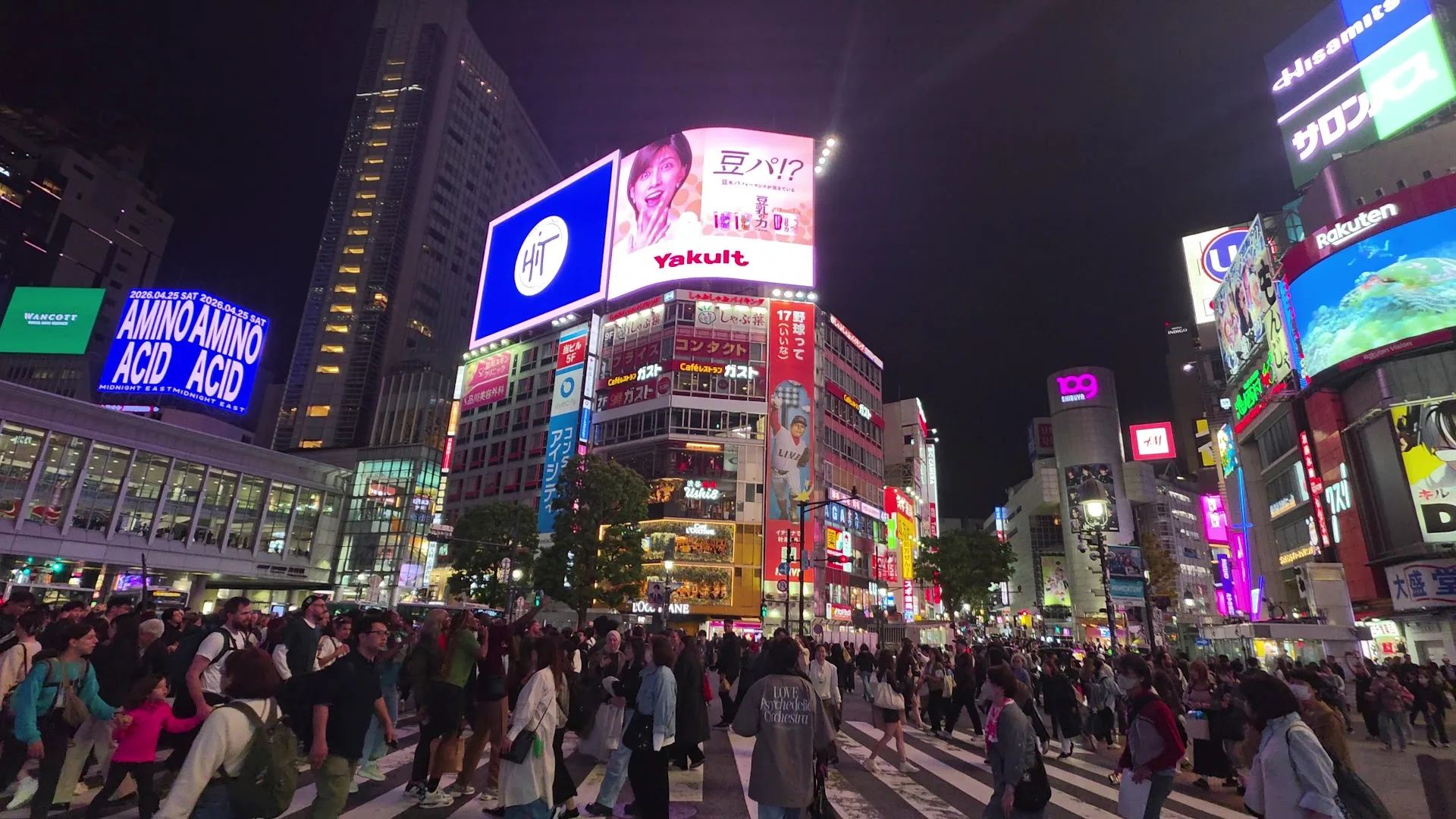
Shibuya, Tokyo, Japan Open in Google Maps Photo Credit to Jordan
The sound is what gets you first. Not traffic, feet. Hundreds of them at once, and then the beeping of the signal, and then the enormous screens overhead going through their loop while a 3D cat stretches across one of them.
Here is my honest take. It is smaller than the videos suggest and I understand why some people call it overrated. I did too, for about four minutes. Then I stood at the edge and watched three cycles of it and changed my mind. The precision is the whole point. Thousands of people crossing from every angle and nobody collides, nobody shoves. It is a kind of choreography.
I crossed it four times for no reason at all.
The best viewpoint is directly above, in the building on the corner, so I went up.
Shibuya Sky
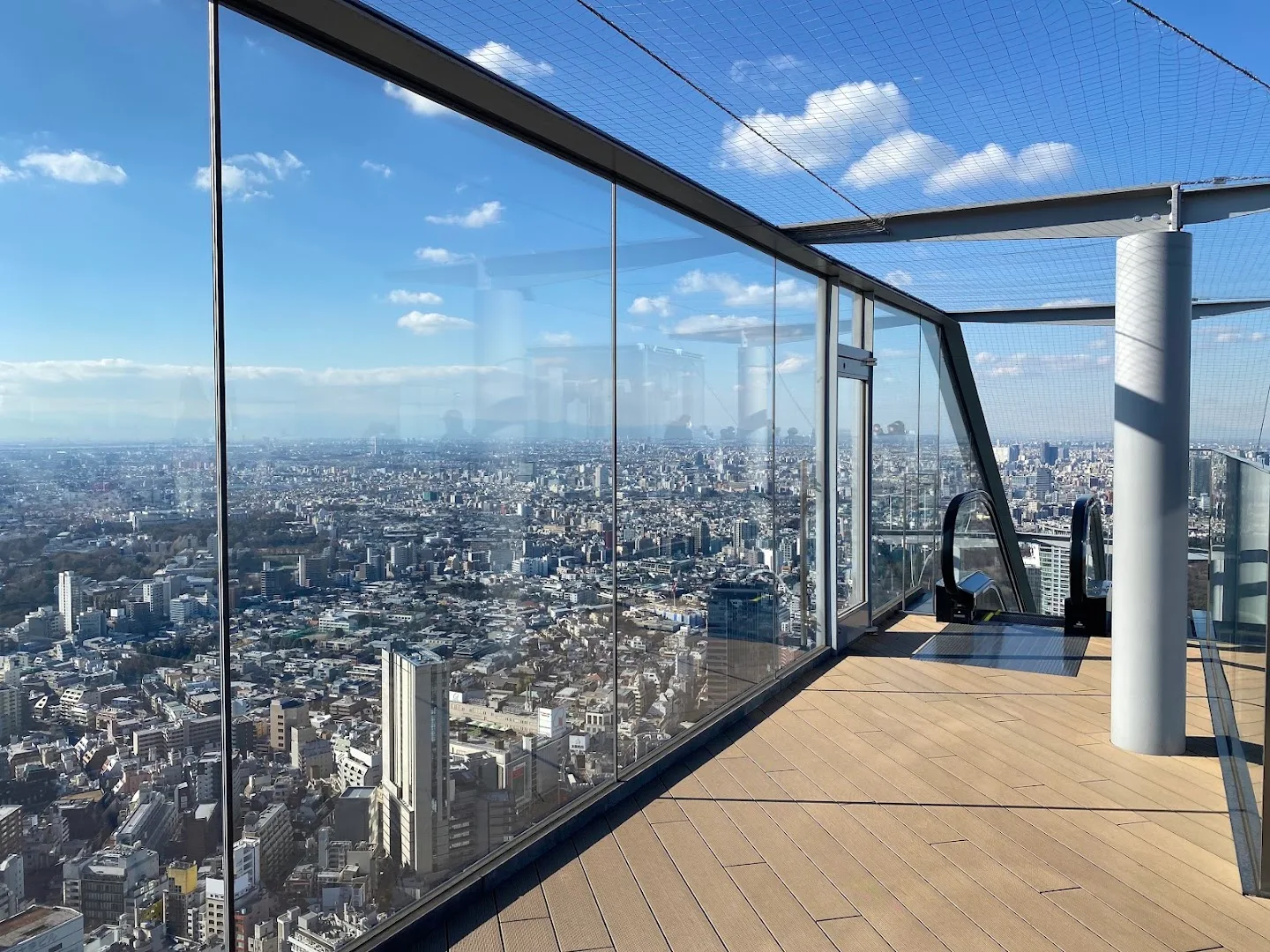
Japan, 〒150-6145 Tokyo, Shibuya, 2 Chome−24−12 スクランブルスクエア 14階・45階 46階・屋上 Open in Google Maps Photo Credit to たろきち
After the last of the sun, and I mean exactly that, because I had booked a slot about forty minutes before sunset and it was the single best decision of the trip. Golden light on the rooftop, wind coming hard across the open deck, and then the whole city switching over to neon underneath while I stood there.
Book it. Two weeks ahead, on the official site, because the sunset slots go and then there is nothing. Bring a layer too, it is genuinely cold up there once the sun drops.
The rooftop is the reason to come, not the indoor floors. Walk out to the far corners where fewer people gather. On a clear evening Mount Fuji shows up as a small grey triangle on the horizon and everybody around you notices at the same moment.
I stayed until my hands went numb. Then I came down into Shibuya, ate standing up somewhere near the station, and walked back to the hotel with the screens still flickering behind me.
Day 2, Asakusa Incense and the Quieter North
Day two goes east and then north, from the biggest temple crowd in the city into the residential streets where nobody is in a hurry. Incense smoke first, then torii gates under trees, then a shopping street that feels like it has forgotten which decade it is in.
I started early on purpose. Asakusa before nine is a different place entirely.
Sensō-ji
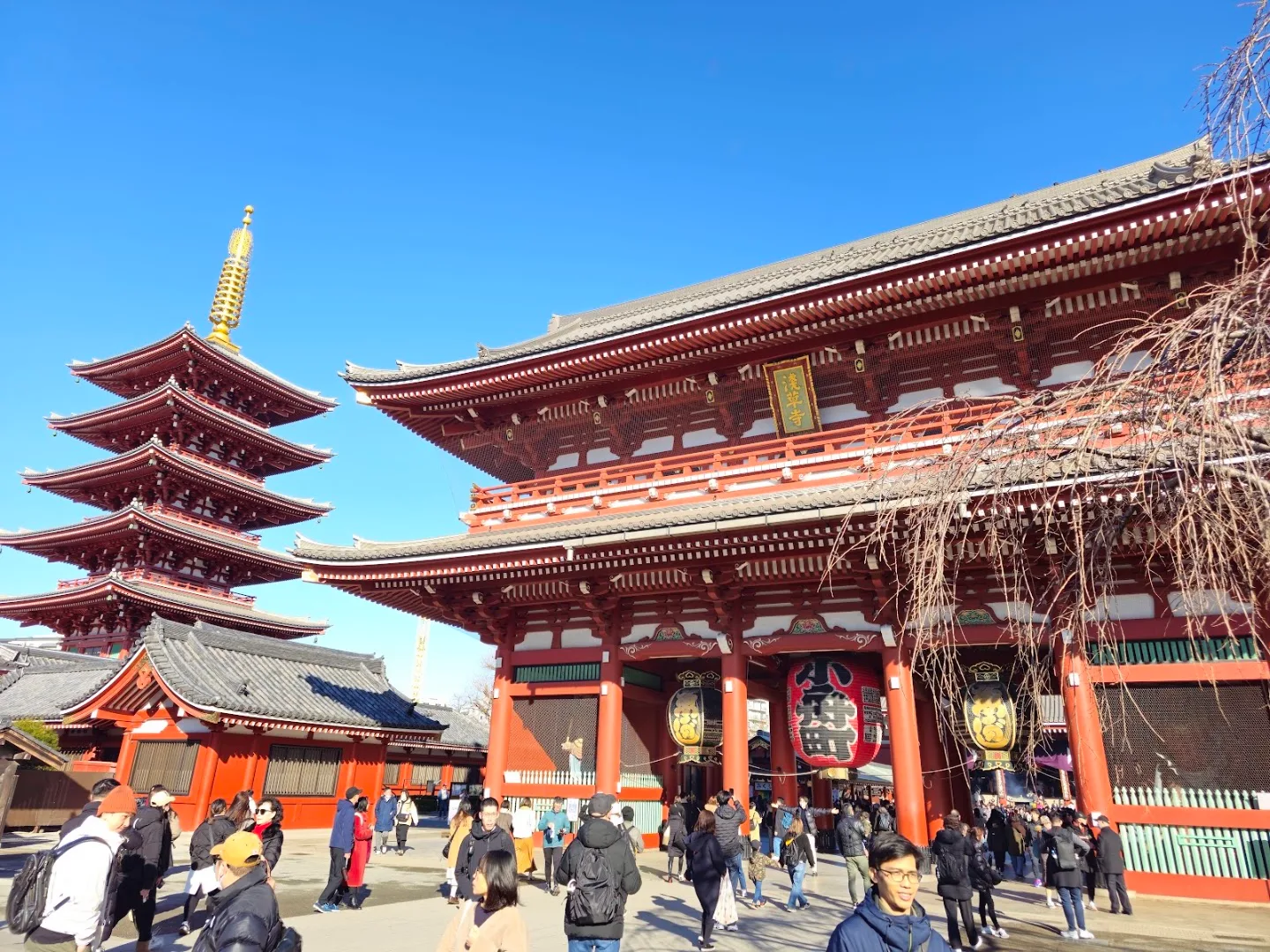
2 Chome-3-1 Asakusa, Taito City, Tokyo 111-0032, Japan Open in Google Maps Photo Credit to Michael Hollander
Incense first. You smell the big bronze burner before you reach it, and people were cupping the smoke and pulling it over their heads and shoulders, which is supposed to bring good health. I did it too. It felt like the polite thing.
I came early, well before the crowds thickened, and the main hall had that particular morning stillness where you can hear coins landing in the offering box. The five-story pagoda sits just off to the side and the whole thing is deep red against a modern skyline, which is a contrast that does not get old.
I drew an omikuji fortune for 100 yen. Bad luck, apparently, which people had warned me was statistically likely here. You tie the bad ones to the rack so they stay behind. Mine is still there.
From the main hall the whole thing funnels back toward an enormous red lantern at the far gate, so I walked down toward it.
Kaminarimon
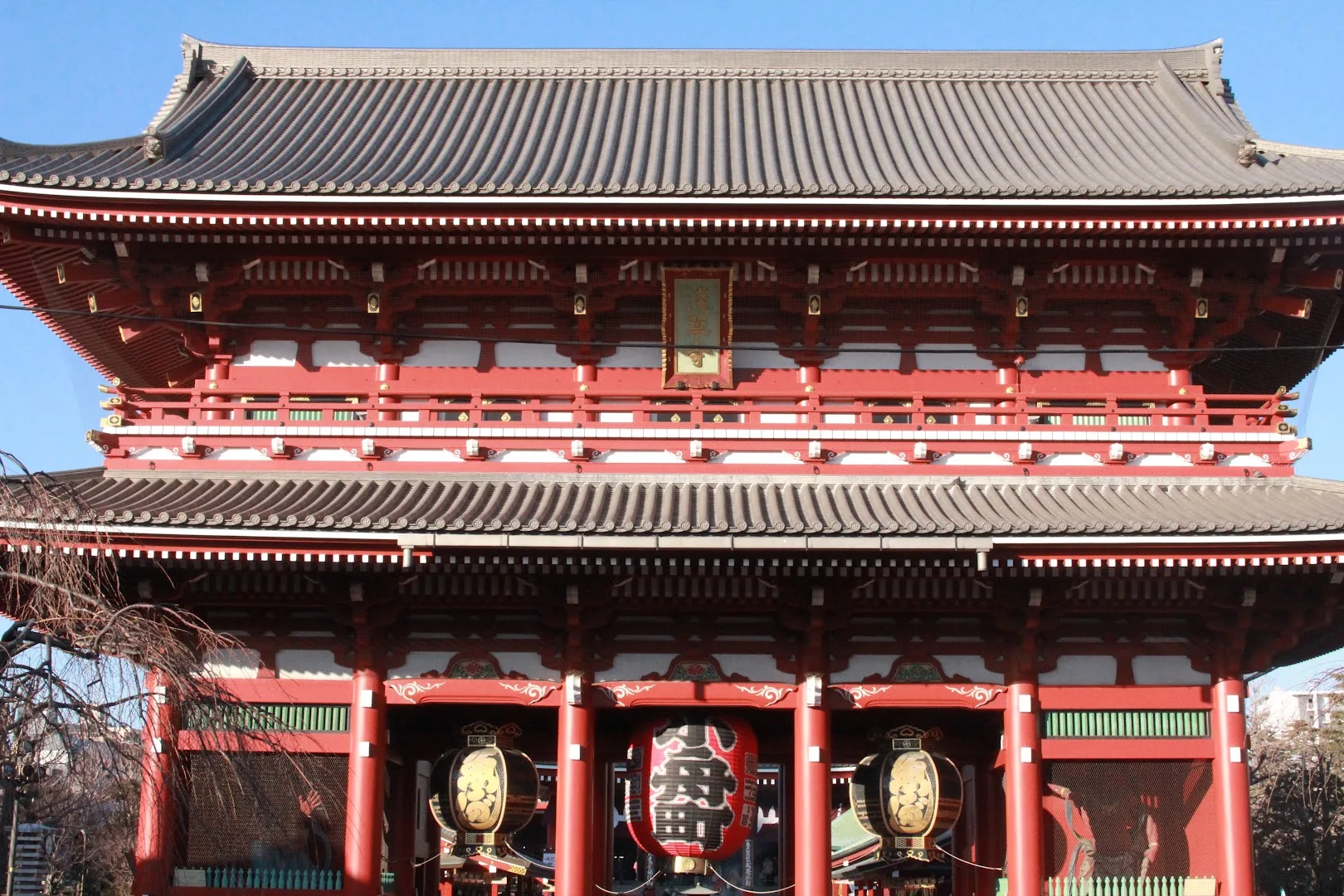
Taito City, Tokyo 111-0034, Japan Open in Google Maps Photo Credit to Brian Ho
The lantern is bigger than photographs let on. Deep red, black characters down the front, hanging heavy in a gate flanked by two fierce guardian statues who have clearly seen a lot of tourists.
Everybody stops here. Everybody. It is the bottleneck of Asakusa and there is no polite way around it, so I gave in and stood under it and looked straight up, which is when you notice the carved wooden dragon on the underside of the lantern’s base. Almost nobody looks up.
Two minutes, maybe five if the crowd is thick. That is all it needs.
Turning back toward the temple, the stalls start immediately.
Nakamise Shopping Street
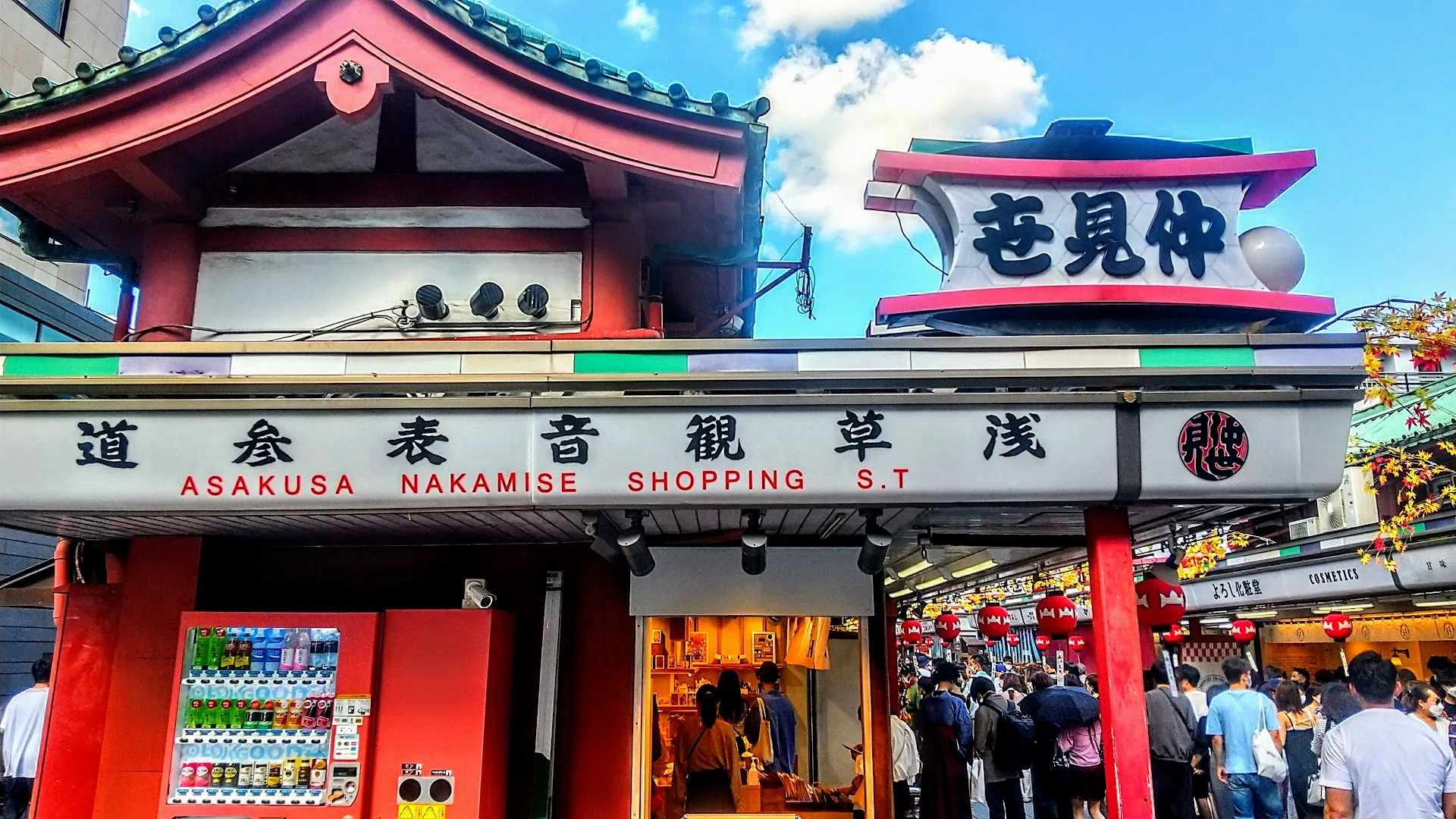
1 Chome-36-3 Asakusa, Taito City, Tokyo 111-0032, Japan Open in Google Maps Photo Credit to ぴぴねこ
Hot sugar and grilled rice. That is the smell of this street and it does not let up for its whole length.
The stalls run tight on both sides, lanterns overhead, and the ningyo-yaki come off the griddle in little batches so you get them warm. I ate mine walking, which is not really the done thing, so I stepped to the side like a local eventually. The senbei rice crackers are the other thing everyone points you toward, crisp and salty and loud to eat.
Here is the tip worth having. Prices vary wildly between stalls selling nearly identical things, so walk the whole length before buying anything. I did not, and paid more than I needed to for a fan.
Come back after half eight in the evening if you can. The shutters come down and they are painted, panel after panel of them, into one continuous artwork most visitors never see.
From the far end I walked back out toward the station and rode a couple of stops northwest.
Ueno
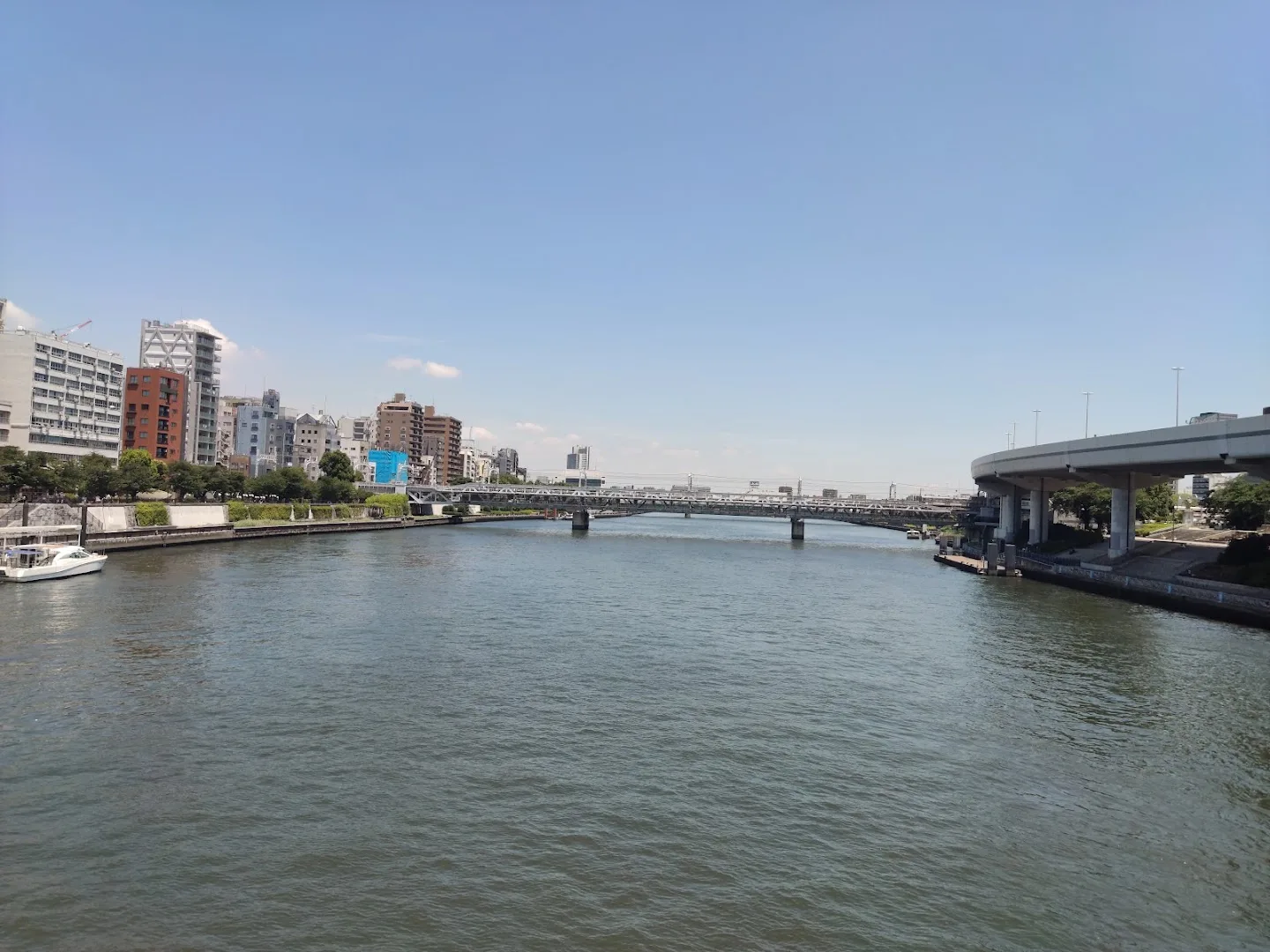
Taito City, Tokyo 110-0005, Japan Open in Google Maps Photo Credit to Georgios Savvidis
By the time the heat was real I was in Ueno, which is broad and green and full of people doing ordinary things. Students on benches. Someone practising a saxophone badly under a tree. Pigeons with opinions.
The park is the anchor here, wide paths and a big pond, but what I liked was the neighbourhood around the station edges, cheap food, old signage, none of the polish of Ginza or Omotesando. It felt like a working part of the city.
An hour or so, longer if you wander into one of the museums. I did not. I sat instead.
From the park’s western edge the streets get residential fast, and I walked that way toward the shrine.
Nezu Shrine
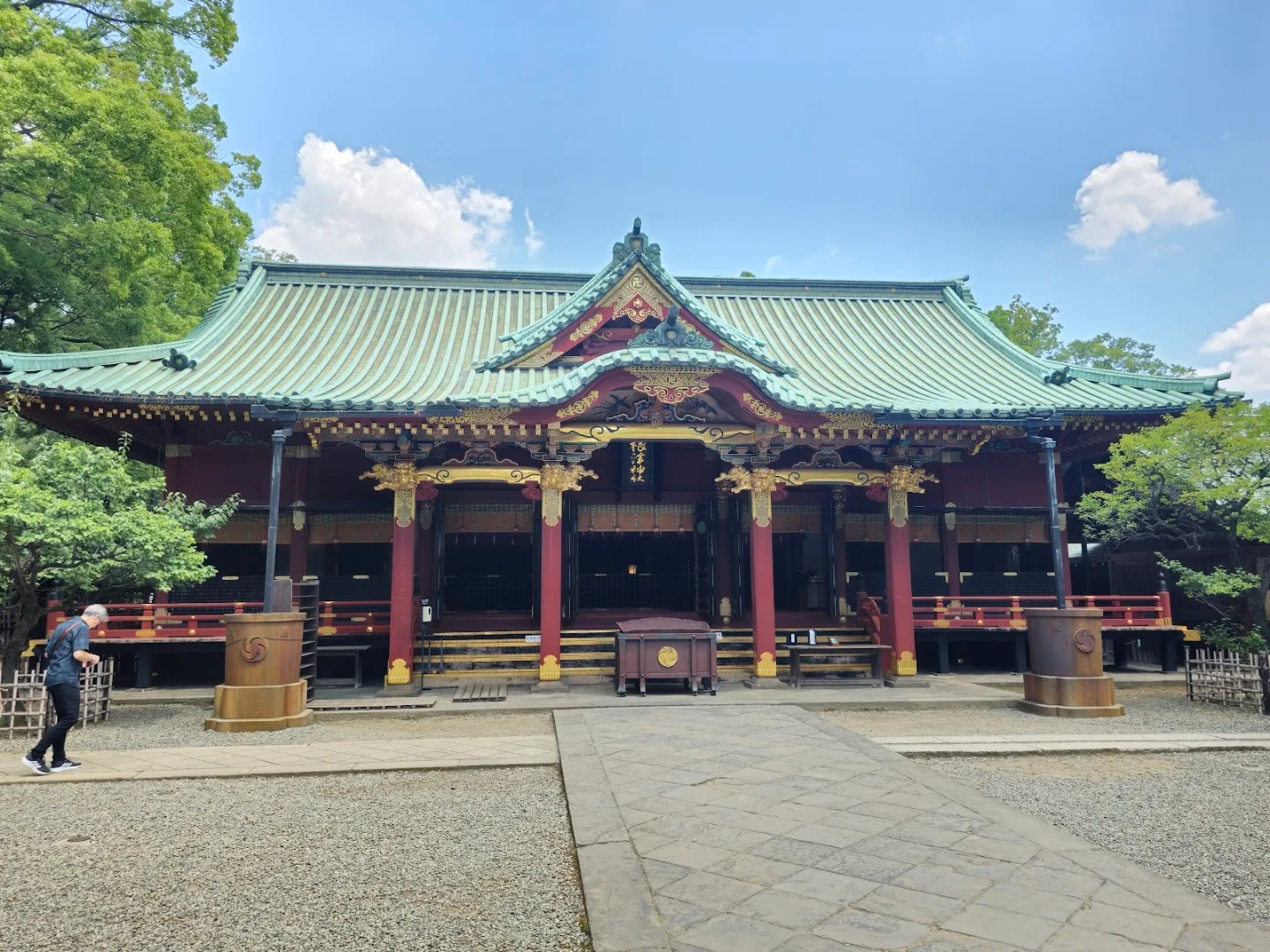
1 Chome-28-9 Nezu, Bunkyo City, Tokyo 113-0031, Japan Open in Google Maps Photo Credit to Dusty “Arctic” Fox
Green light and no noise. The tunnel of small vermilion torii gates here runs up a slope under trees and the light coming through them turns everything faintly orange. People compare it to the famous one in Kyoto, which is unfair to both. This one is smaller and quieter and you can stand still in it without someone waiting for your spot.
Some of the gates are weathered, paint flaking at the base. I liked that more than if they had been perfect.
There are koi in the ponds, big lazy ones, and turtles sunning themselves on the stones. Benches in the shade, which mattered because the day had turned hot. The main buildings are over three hundred years old and survived the war, which is rare in this city and you can feel it.
From the shrine the lanes climb gently northwest, past small galleries and coffee shops, toward an old shopping street.
Yanaka Ginza
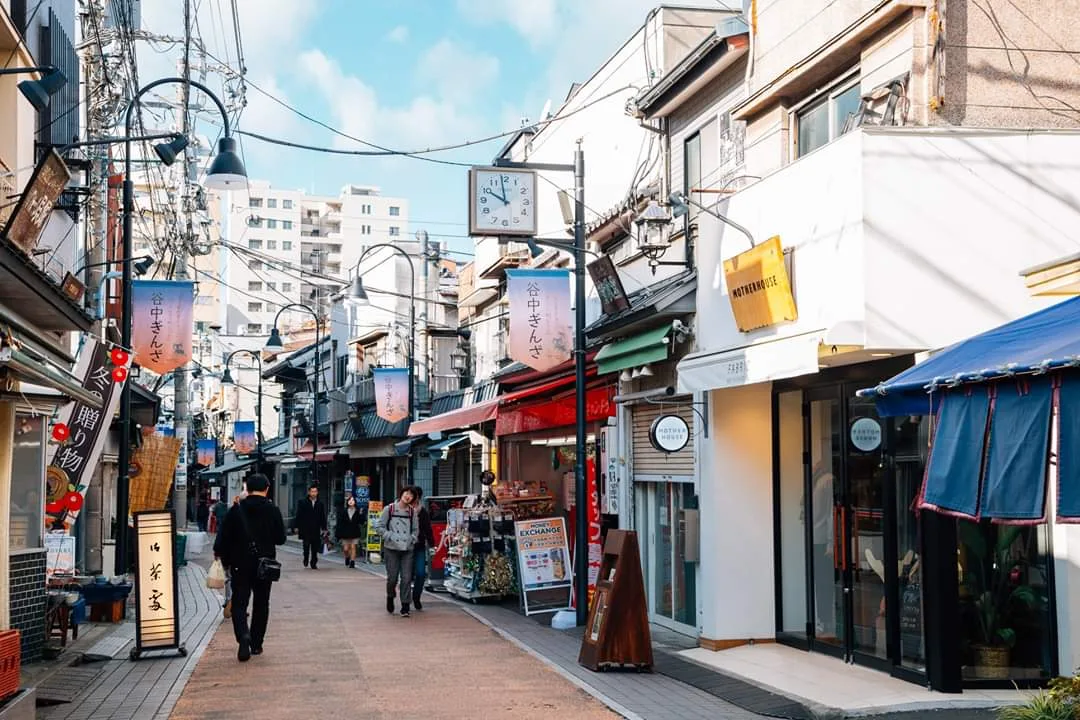
3 Chome-13-1 Yanaka, Taito City, Tokyo 110-0001, Japan Open in Google Maps Photo Credit to SPCA663 Little B
In the dust-orange light of late afternoon this street glows. It is short, maybe six or seven hundred metres, and lined on both sides with small shops that feel forty years behind the rest of Tokyo.
Cats everywhere, mostly in ceramic and print form, carved into signage and sold as everything from tea towels to keyrings. Street food too, croquettes and skewers and things fried in front of you. Bring cash, a lot of the shops here do not take cards.
A small honest warning. I bought something deep fried from a stall near the top that had clearly been sitting out too long, and it was the one genuinely bad thing I ate in Japan. Buy from wherever there is a queue.
I stayed until the light went properly amber down the length of the street and everybody with a camera appeared at once. Then I walked to Nippori Station and took the train back, tired in the best way, smelling faintly of fried onion.
Day 3, Shinjuku Gardens to Alley Smoke
Green in the morning, glass in the afternoon, smoke and lanterns by night. Shinjuku holds all three within about twenty minutes of each other, which still does not make sense to me.
There is a detour out to Shimokitazawa in the middle of it. Worth breaking the rhythm for.
Shinjuku Gyoen National Garden
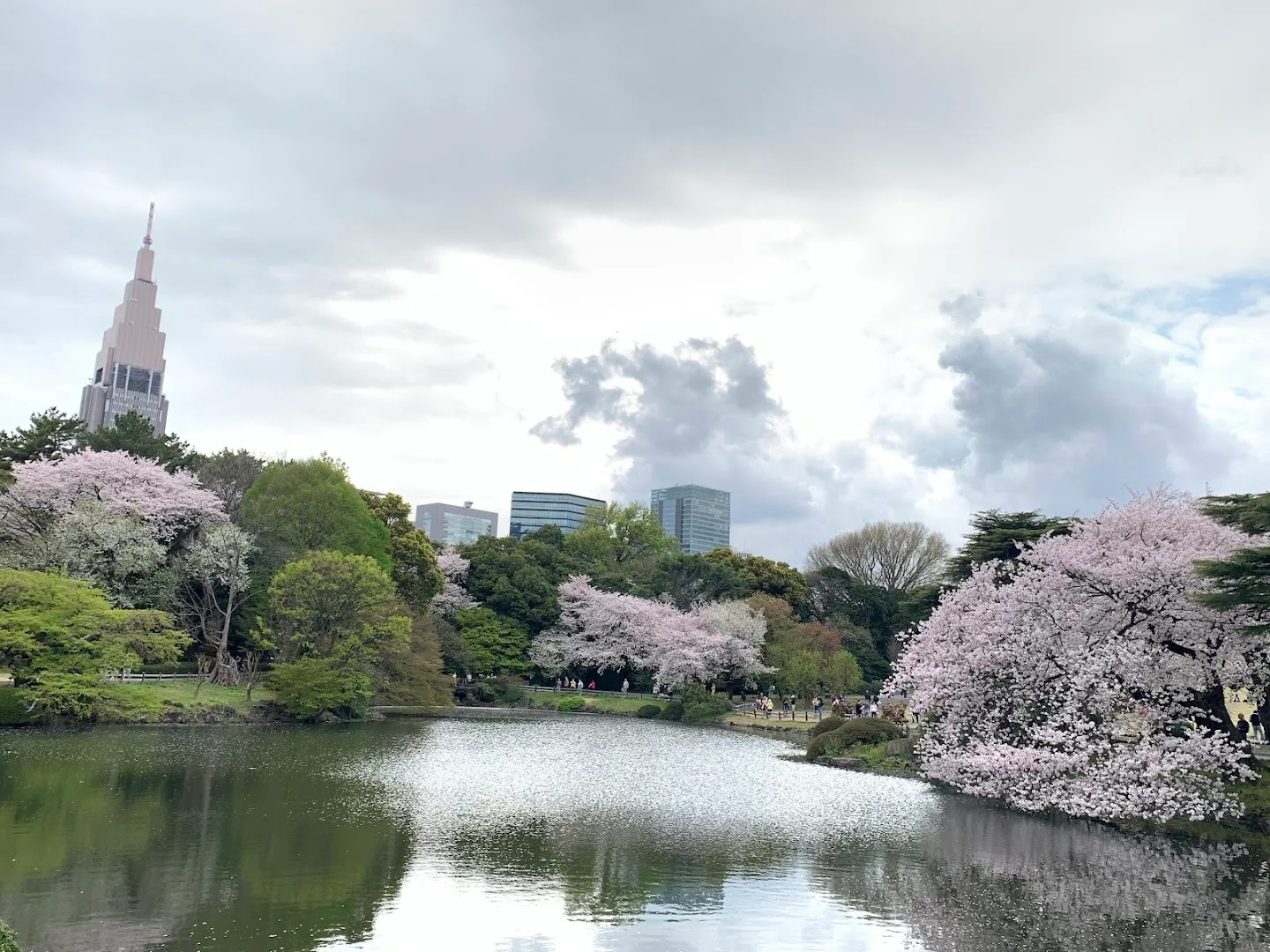
11 Naitomachi, Shinjuku City, Tokyo 160-0014, Japan Open in Google Maps Photo Credit to Vivian Li
Wet grass and cut cedar, the air still cool, almost ten. Five hundred yen at the gate and then a garden so large that within ten minutes I could not hear a single car.
What makes it strange and good is that there are three gardens inside it. A traditional Japanese landscape with ponds and arched bridges, a formal French section of symmetrical flower beds, and a wide open English lawn where people spread blankets and go horizontal. Walking between them feels like changing countries.
There is a greenhouse worth twenty minutes and small tea houses scattered about if you want matcha and something sweet.
I did not check the time. I sat under an enormous old tree near the pond and watched a heron be extremely patient, and then I got up and did another loop of the Japanese section because the light had moved.
Out the west gate, the skyscrapers of Nishi-Shinjuku sit right there, and I walked toward the tallest twin towers.
Tokyo Metropolitan Government Building
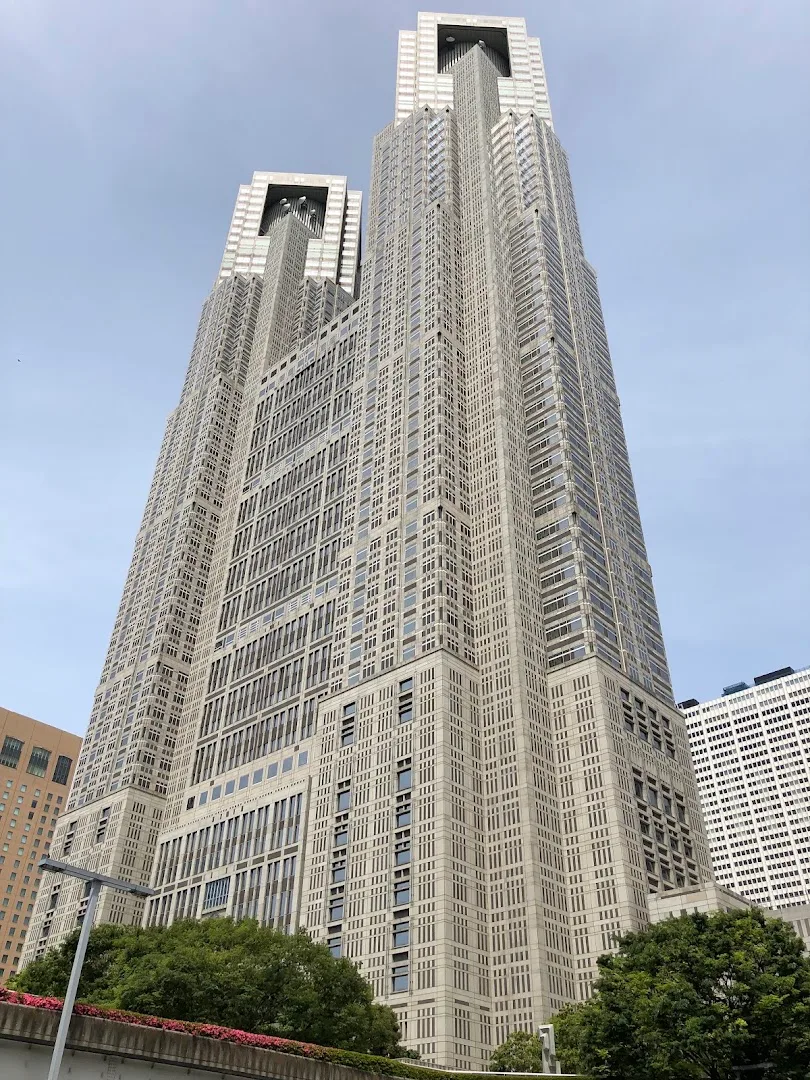
2 Chome-8-1 Nishishinjuku, Shinjuku City, Tokyo 163-8001, Japan Open in Google Maps Photo Credit to I S
Two grey towers that look like a cathedral designed by an engineer. The observation deck on the 45th floor is free, which still feels like an error somebody forgot to correct.
There is a bag check and then a lift, and then the whole city spread out flat in every direction. I waited about twenty five minutes despite a sign warning of forty five. The north deck stays open later than the south one, which is useful to know.
Go up during the day if you want the view without the queue, but the reason to come back is after dark. At seven they project mapping across the whole facade of the building, colour and animation moving up thirty floors of stone, and you can sit or lie down in the small plaza between the towers to watch it. Fifteen minutes long, repeating every half hour.
Behind the station on the far side, an alley I had been looking forward to all day.
Omoide Yokocho Memory Lane
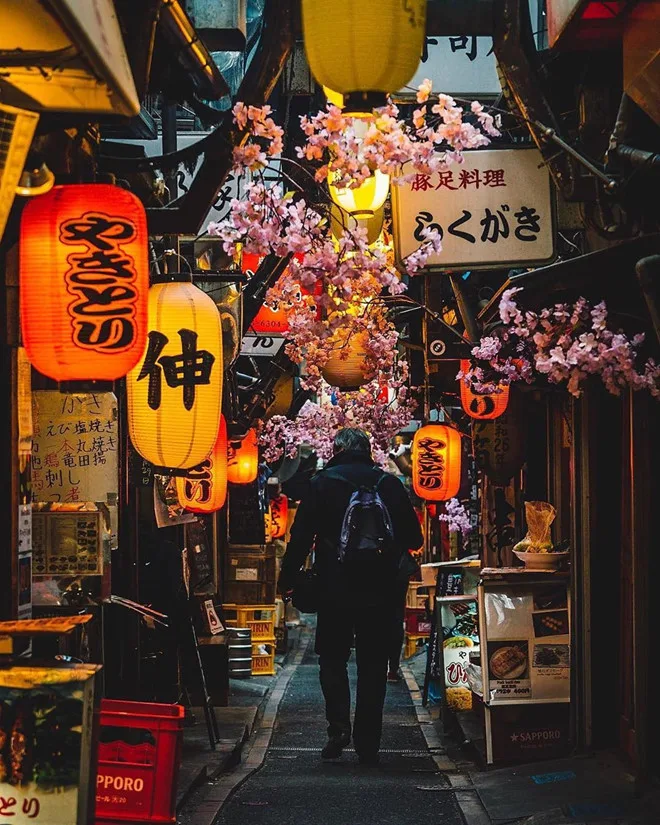
1 Chome-2-2 Nishishinjuku, Shinjuku City, Tokyo 160-0023, Japan Open in Google Maps Photo Credit to Hieu Loki
Smoke. That is the first thing and almost the only thing. Yakitori grills going in a dozen tiny doorways at once, the air thick with it, lanterns glowing orange through the haze.
The alley is barely wide enough for two people to pass. Most of the places seat six at a squeeze and you end up shoulder to shoulder with strangers, which is either the appeal or the problem depending on your mood. I squeezed into one and ordered skewers and a beer and the man next to me showed me photos of his dog.
It is touristy now. Several stalls charge a cover of a few hundred yen before you have eaten anything, and some of the food blurs together from one doorway to the next. Worth it anyway for the atmosphere, which exists nowhere else.
From the alley I took the Odakyu line a few stops southwest, out of the neon and into something completely different.
Shimokitazawa
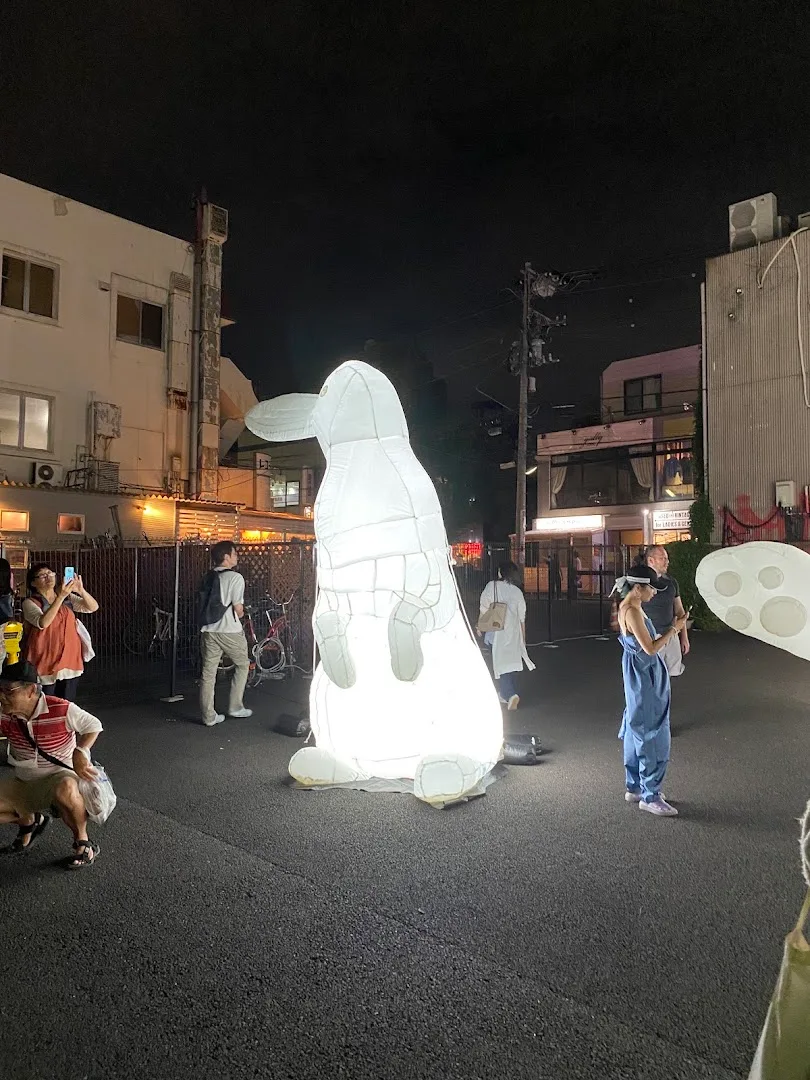
Kitazawa, Setagaya City, Tokyo 155-0031, Japan Open in Google Maps Photo Credit to CAD
Lower buildings, softer light, and the smell of second-hand clothing which is a specific smell and I mean it kindly. Shimokitazawa is all narrow lanes with no clear grid, vintage shops stacked on top of record stores on top of tiny bars with four seats.
Nothing here is tall. After a day of Shinjuku towers that felt like taking off tight shoes.
I bought a shirt I did not need and drank coffee at a counter facing the street, watching people on bicycles navigate lanes too narrow for cars. Students, mostly. Musicians carrying cases.
Back on the train toward Shinjuku as the sky went dark, for one more alley.
Shinjuku Golden-Gai
Japan, 〒160-0021 Tokyo, Shinjuku City, Kabukicho, 1 Chome−1−6 あかるい花園 五番街 Open in Google Maps Photo Credit to Tekcho
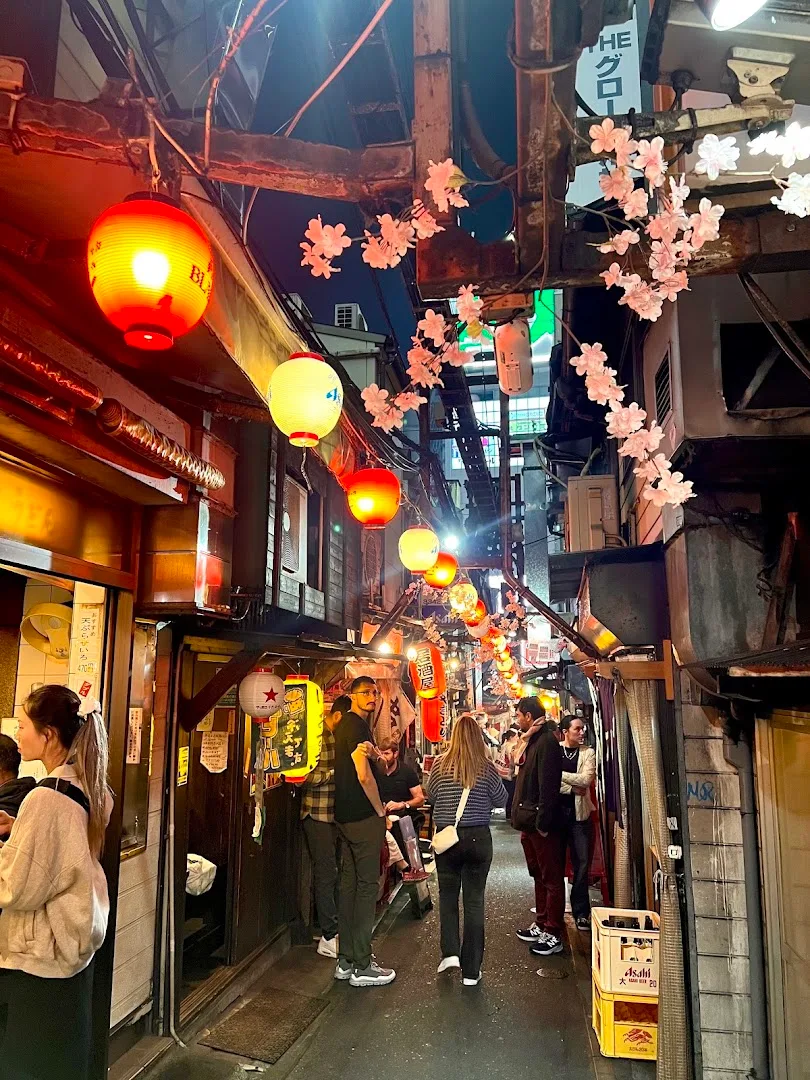
Six lanes, over two hundred bars, most of them the size of a garden shed. Neon and hand-painted signs and a low hum of conversation spilling out of doorways you would otherwise walk past.
Cash only in most places. Many charge a seating fee, somewhere between two hundred and a thousand yen, and it is usually written on the door if you look. Some are locals only and they will say so politely. Read before you push a door open, that is the whole etiquette.
I found a gin bar with a wall of over a hundred bottles and four stools. Within ten minutes I was talking to a Japanese architect and a man from Osaka about whether Tokyo is a good city to be lonely in. We did not settle it.
It is smoky inside, which surprised me given how strict the streets are about it. That is part of the deal.
I walked back through Kabukicho toward my hotel well after midnight, the streets still fully awake, and slept badly and happily.
Day 4, Kamakura and the Sea Air
Out of the city for the day. The train down to Kamakura takes about an hour from Tokyo Station and then you swap onto a tiny two-car line that rattles between houses close enough to see into kitchens.
Bronze, hillside temples, ocean somewhere below. I came back into the city hungry and went straight to the fish market.
Kotoku-in
4 Chome-2-28 Hase, Kamakura, Kanagawa 248-0016, Japan Open in Google Maps Photo Credit to CMS0113
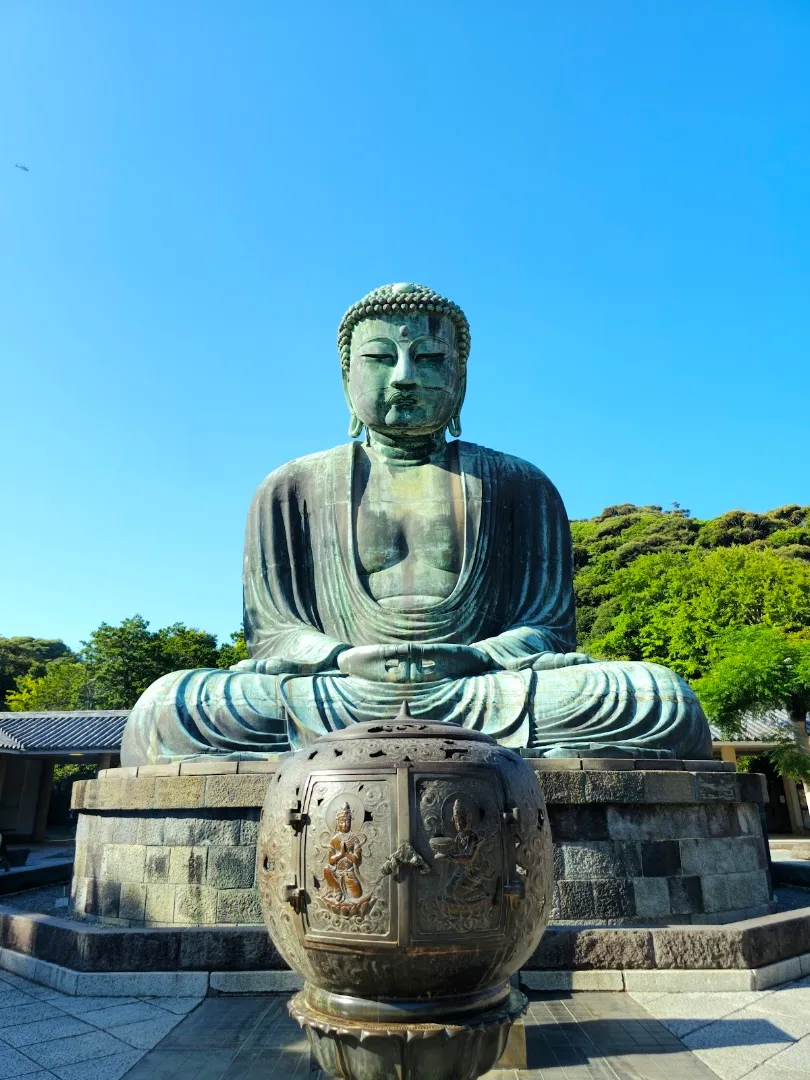
Bronze gone green with eight centuries of weather, sitting in open air with hills behind it. The Great Buddha at Kotoku-in is over eleven metres tall and the first thing that struck me was not the scale but the face, which is calm in a way that does not photograph.
It has been outdoors since a tsunami took the hall around it in the fifteenth century. Nobody rebuilt it. That feels like the right decision.
Three hundred yen, cash only, and for another fifty you can go inside the statue and see how the bronze plates were joined. It is hot in there, genuinely hot, and the explanation is in Japanese only. I went anyway and do not regret the fifty yen.
The grounds are simple. Twenty minutes covers it honestly, unless you sit, which I did.
A short walk downhill through quiet streets lined with small cafes takes you to the next temple.
Hase-dera
3 Chome-11-2 Hase, Kamakura, Kanagawa 248-0016, Japan Open in Google Maps Photo Credit to Ian Boardman
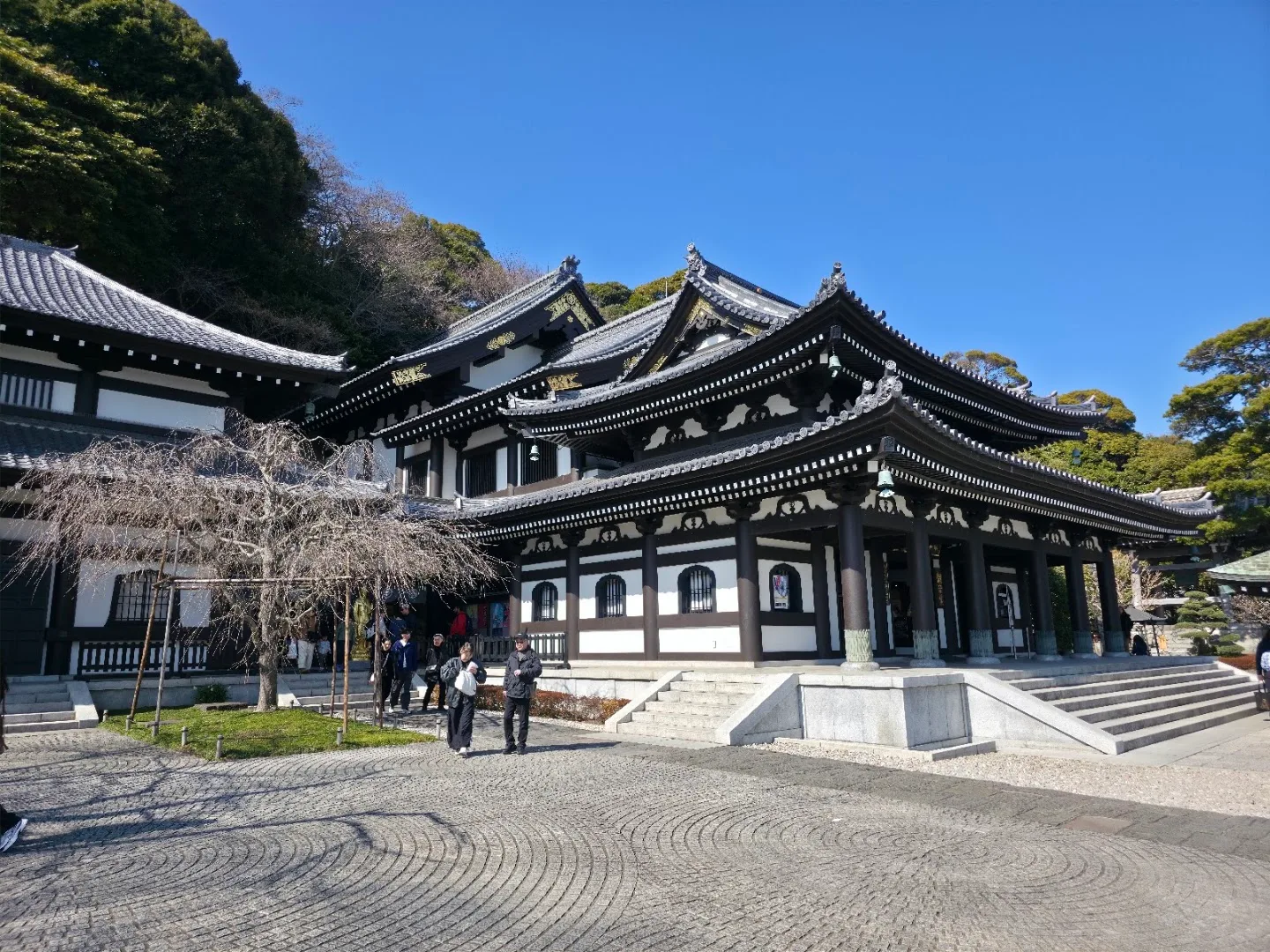
Moss and sea wind, which is a combination I did not expect. Hase-dera climbs a hillside in terraces and at the top there is a viewpoint where the whole Kamakura coastline opens up below you, grey-blue and flat to the horizon.
Four hundred yen. Worth it twice over.
The grounds are full of small stone Jizo statues in groups, hundreds of them, some with tiny knitted hats. There is a cave on the lower level you duck through, cool and dark and carved. And a row of prayer cylinders you run your fingers along as you pass.
Go early. I was there not long after opening and had whole terraces to myself, which by midday would have been impossible. Hydrangeas in June turn this place into something else entirely, and the crowds follow them.
From the temple gate it is a few minutes back to Hase Station, then the little Enoden line and the train north, and I went straight to the market with an appetite.
Fish Market Tsukiji Outer Market
Japan, 〒104-0045 Tokyo, Chuo City, Tsukiji, 4 Chome および6丁目一部 Open in Google Maps Photo Credit to Kevin Wong
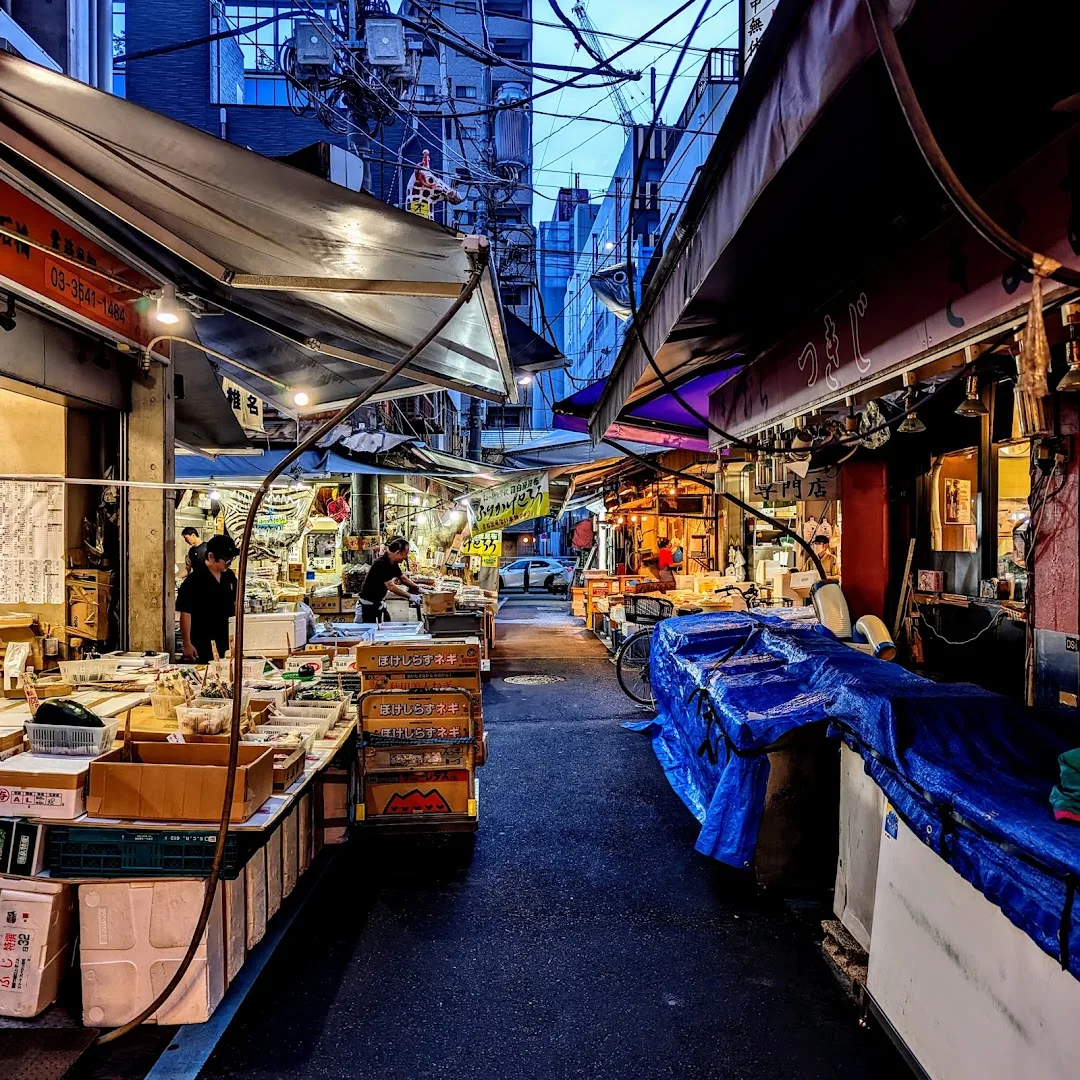
Salt, charcoal and ice water running in the gutters. The outer market at Tsukiji is loud and tight and every few metres something is being seared, shucked or sliced in front of you.
I ate fatty tuna nigiri at a counter between two lanes and it did not need soy sauce at all. Then a wagyu skewer, then grilled scallop, then tamagoyaki still warm, sweet and dense. Then I stopped, briefly, and then had strawberry mochi.
Bring cash. Most of the prepared food stalls will not take a card and there is only one ATM I found. Come hungry and come early, before nine if you can manage it, because after that the lanes get properly difficult to move through.
I left full and slightly sticky and walked out toward the water as the afternoon went soft. A good last stop on a long day, and the kind of eating that ruins supermarket fish for you forever.
Day 5, Vermilion, Water and the Old Castle Ground
One more morning in Kamakura, then back for a slow last afternoon in the middle of Tokyo. Gardens, a rooftop, and the stone walls of a castle that is not there anymore.
A soft ending on purpose. I did not want the last day to be loud.
Tsurugaoka Hachiman-gu
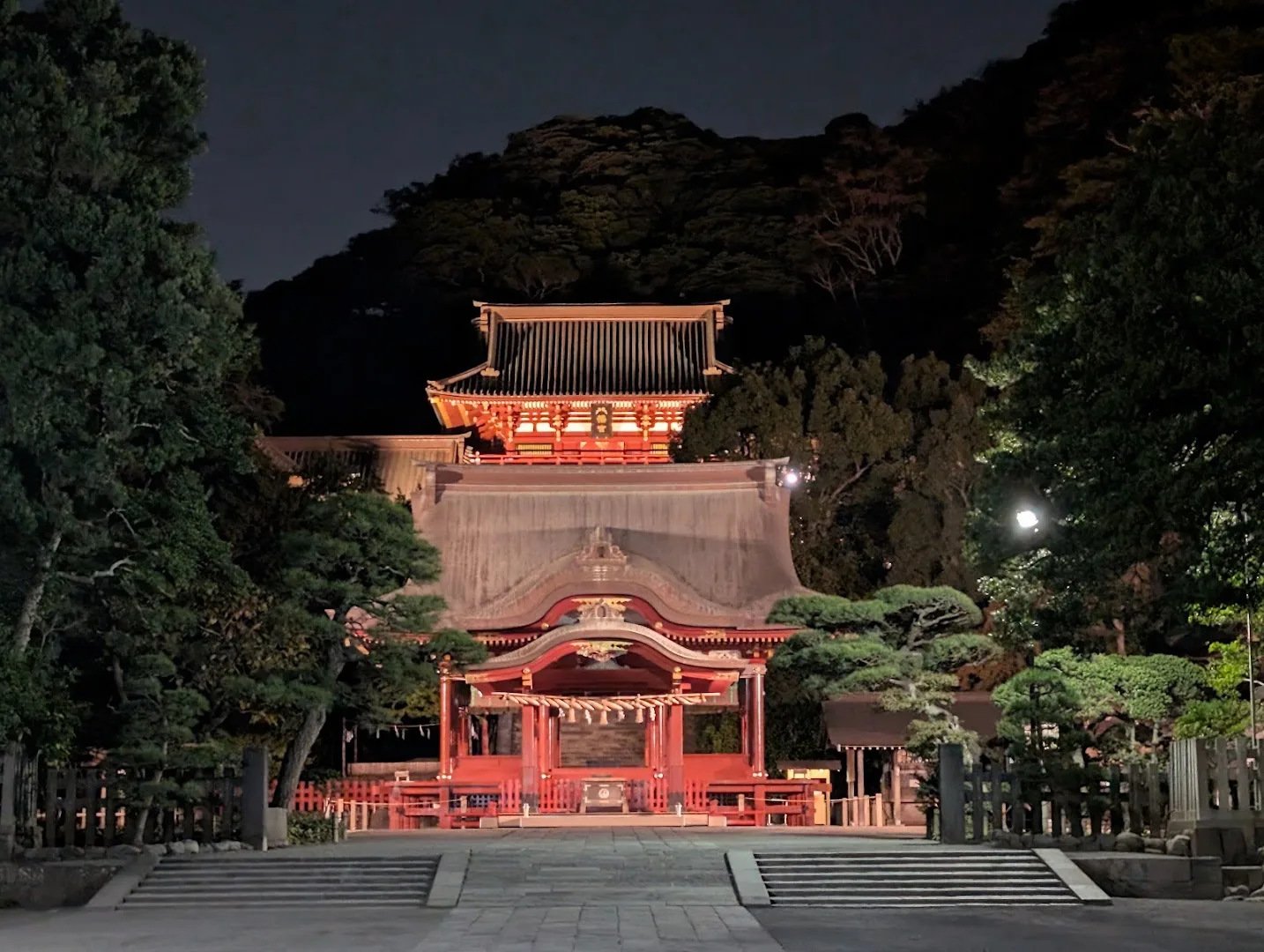
2 Chome-1-31 Yukinoshita, Kamakura, Kanagawa 248-8588, Japan Open in Google Maps Photo Credit to ながいだよ
Vermilion against green hills, and a long straight approach that makes you slow down whether you meant to or not. The walk up from Kamakura Station is the thing here. Wide avenue, torii gates spaced along it, and the shrine rising at the end above a steep flight of stone steps.
There are sake barrels displayed here too, stacked and painted, and honestly I got a cleaner photograph of them than I did at Meiji Jingu because there were a fraction of the people.
Lotus ponds on either side of the approach. Steps that leave you slightly out of breath and then a view back down over the whole town from the top.
I will be fair. Some people find it ordinary compared to the hillside temples, and on a busy weekend I would probably agree. Early, it is worth the climb.
Komachi-dori runs parallel back toward the station, all snacks and small shops, and I ate my way down it before catching the train back into Tokyo.
Hamarikyu Gardens
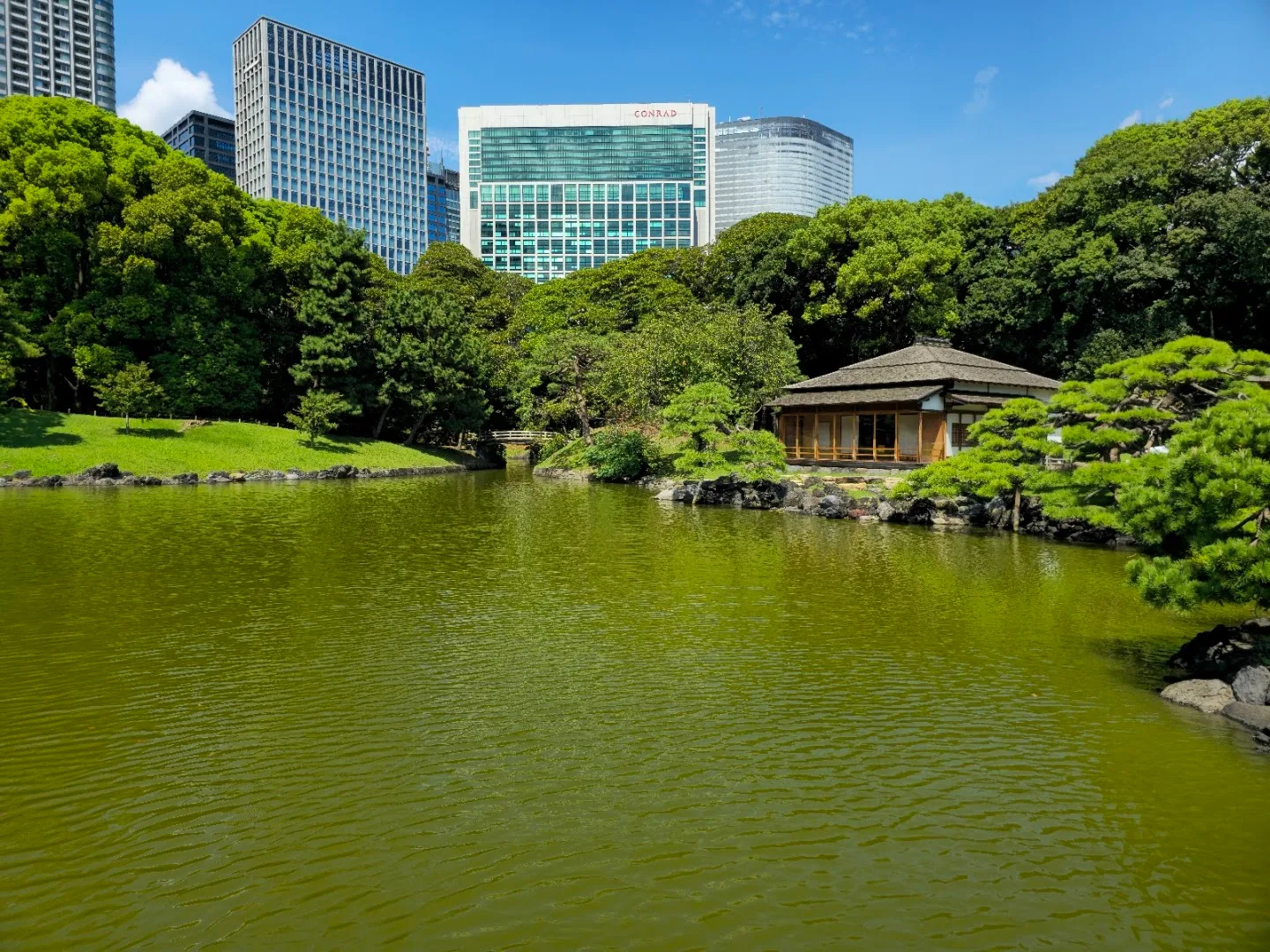
1-1 Hamarikyuteien, Chuo City, Tokyo 104-0046, Japan Open in Google Maps Photo Credit to Gary Heuard
Pine trees against skyscrapers, and a pond that fills and empties with the tide because it connects to the bay. Three hundred yen to get in. That is not a typo.
The three-hundred-year-old pine near the entrance is enormous and propped up on wooden supports like an elderly relative being helped along. Past it the paths open into wooded stretches where the traffic noise genuinely disappears.
The teahouse sits out on the water, reachable by a wooden bridge, and you sit on the floor with matcha and a small seasonal sweet while the towers of Shiodome rise behind the trees. The sweet was not too sugary, which mattered.
There is also a monument to ducks, which has a long and slightly alarming story behind it involving falcons. Read the panel. It is the strangest thing in this itinerary.
Out the north gate and a short walk inland brings you into Ginza, where everything changes texture.
GINZA SIX
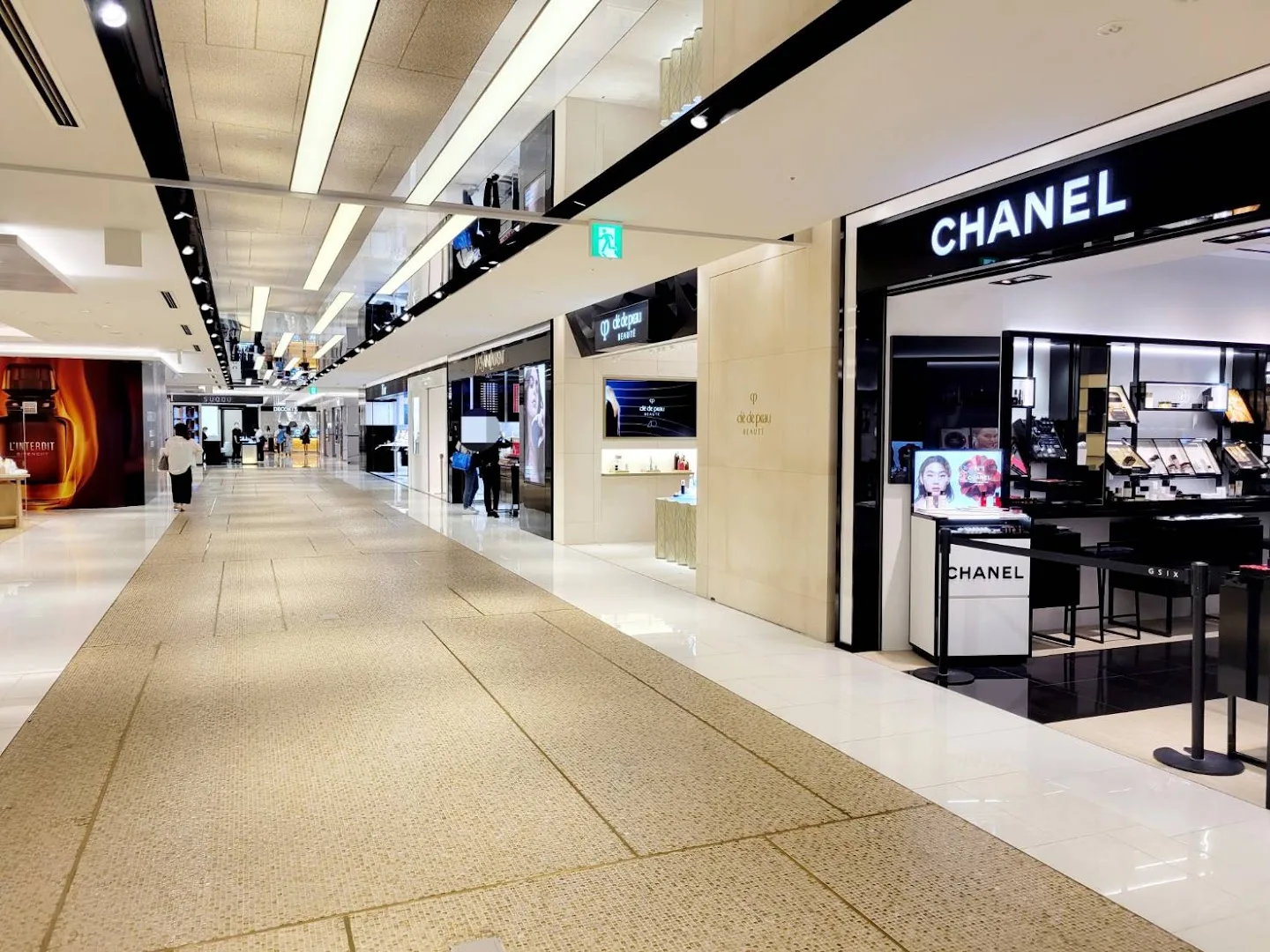
6 Chome-10-1 Ginza, Chuo City, Tokyo 104-0061, Japan Open in Google Maps Photo Credit to 日本侍
Cool marble, quiet air, and the particular hush of somewhere very expensive. I did not come here to shop. I came for the roof.
The rooftop garden is free and almost empty compared to everything below it. Real trees, a shallow water feature, benches. From one side you can see Tokyo Tower and from the other the Skytree, both at once if you walk twenty steps.
Inside, the bookshop on the upper floor is worth an hour even if you cannot read Japanese, because of how the shelves are staged and lit. There is coffee and there is Eataly beside it if you need to sit down.
An hour or so covers it. Honestly the mall is a mall. The roof is the reason.
From Ginza it is a straightforward walk northwest toward the moat, which is where the city gets old.
Imperial Palace East National Gardens
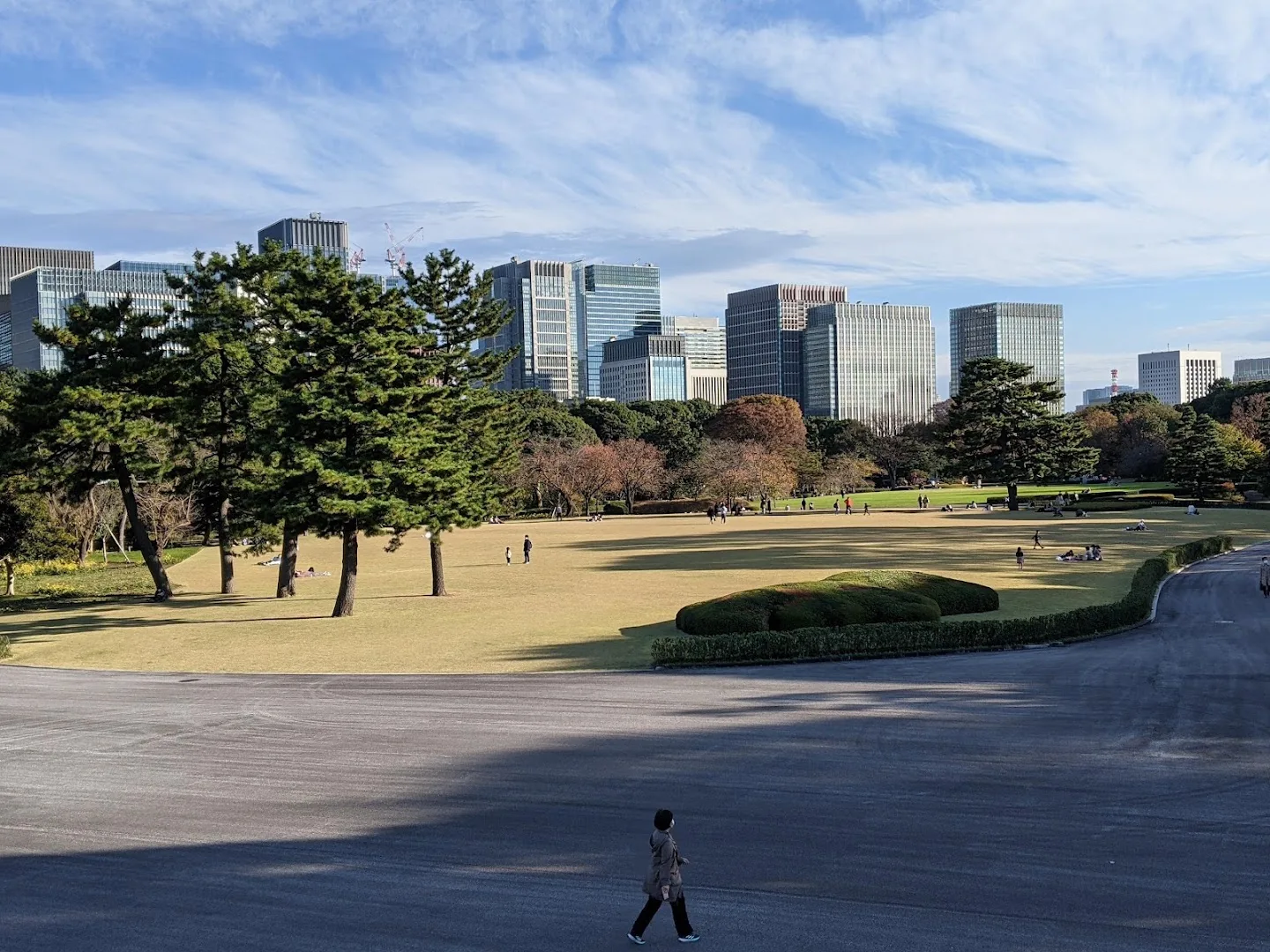
1-1 Chiyoda, Chiyoda City, Tokyo 100-8111, Japan Open in Google Maps Photo Credit to 加藤美千代
Stone walls the height of a building, fitted without mortar, and beyond them lawns and orchards and quiet. This was Edo Castle. The keep is gone but the foundation platform remains and you can climb it.
Free entry, which after five days of small fees felt like a gift.
The gatehouses are original, dark timber and heavy tile. Koi in the ponds. A small building with a model of the palace inside if you want the context. And a whole section where different plantings give off different scents as you pass, which I only noticed on the second loop.
Bring water. There is not much shade on some of the paths and the rest area with the vending machines is at the far end.
I walked until the light went long and gold across the lawns and then sat on the castle platform with the city humming somewhere below, and that was the end of it. Five days, mostly on foot, and I still have not seen the half of it.
Five days is not enough and everybody knows it. I left with a list of things I did not get to, which is the correct way to leave a city. The shape above held together well though, cool mornings for shrines and gardens, afternoons for streets, evenings for smoke and neon and whatever the alleys were serving.
If you go, and you find something I missed, come tell me. I want to know what is behind the doors I walked past.