
The best Sausage Stuffing I have ever eaten came out of a rented kitchen above a fish stall in Charleston, on a Tuesday in November, cooked by a chef I had known for about forty minutes.
I was on a market food walk through the Charleston City Market with a guide named Dell, who talked with his hands and kept saying we were behind schedule while stopping at every third table. He was not actually behind schedule. He just wanted us to try things.
Near the end of the walk he pulled us into a side door and up a narrow staircase. A friend of his was doing a private dinner that night for eight people and had agreed to let a food tour stand in the corner while he worked. The chef’s name was Marcus. He had a pan of pork sausage going before we had finished taking off our jackets.
The Stall That Made the Sausage
Two stops earlier Dell had walked us past a butcher counter where a woman was grinding pork shoulder with fresh sage folded straight into the mix. I bought half a pound with no plan for it. That was the same sausage Marcus was browning upstairs, which I did not realise until he said the vendor’s name out loud and Dell laughed.
So the dish and the ingredient came from the same morning. That almost never happens on a food walk.
Marcus worked fast and narrated nothing, which meant I had to actually watch. The sausage went into a wide skillet over medium-high and he broke it into small crumbles with a wooden spoon, not chunks. Within about five minutes the pan bottom had gone glossy with rendered fat and the pink was gone. Then he lifted the meat out with a slotted spoon and left every drop of that fat behind.
That was the part I had been getting wrong at home for years. I used to drain it. The fat is the whole point.
What Happens in the Pan
Butter went in on top of the sausage fat, and once it foamed he added a mountain of diced onion and thin-sliced celery with a pinch of salt. Low and slow from there. Eight, ten minutes, until the onion turned from opaque white to translucent and the celery lost its squeak. He kept the heat down so nothing browned, and when I asked why he said colour here tastes like a different dish.
Sage, thyme and a few scrapes of nutmeg went in for the last minute. You could smell the sage hit the hot butter across the room. Then the whole pan got scraped into a bowl the size of a small sink where the sausage was waiting.
The bread had been sitting out on sheet pans since the night before. Dry cubes, not toasted, not browned, just genuinely stale through to the middle. He was firm about this and so am I now. Fresh soft bread turns to paste in the stock and there is no recovering from it.
What I Used
- Country white bread, about a pound and a half, cut into three-quarter inch cubes and dried overnight
- Bulk pork sausage, a pound, sage-seasoned if the butcher does it
- Unsalted butter, six tablespoons, plus more for the dish
- Yellow onion, two cups diced small
- Celery, a cup and a half, sliced thin
- Fresh sage, two tablespoons, chopped
- Fresh thyme leaves, a tablespoon
- Flat-leaf parsley, half a cup, chopped
- Nutmeg, a quarter teaspoon, grated fresh
- Chicken or turkey stock, three cups, warmed
- Two large eggs, beaten
- Salt and plenty of black pepper
Bringing the Sausage Stuffing Home
Back in my own kitchen the sourcing changed. I get sage-heavy bulk pork sausage from the butcher at the Wednesday farmers market, who will grind extra sage in if I ask the week before. The bread is a two-day-old country loaf from the bakery down the block, the kind with a real crust. Everything else is ordinary supermarket.
I dry the cubes on two rimmed sheet pans overnight, uncovered, on the counter. Twenty minutes in a 300 F oven works if you forgot, but it is not as good. The overnight version drinks stock differently.
My cast iron is the twelve inch one with the handle that gets too hot, and I still grab it without a towel about once a month. Sunday morning is when I make this, coffee going, radio on, before anyone needs the kitchen for anything else.
The moment that decides everything is the stock. Whisk the beaten eggs into three cups of warm stock, pour about two-thirds over the bread, and fold with a wide spatula, lifting from the bottom. Do not stir. Every extra pass compacts the bread and you lose the texture you dried it for.
Add the rest a splash at a time. Squeeze a handful. It should clump and hold. The second it weeps liquid into your palm, stop. Too much stock is the single most common way this sausage stuffing recipe goes wrong, and more liquid does not mean moister, it means dense and grey in the middle.
Stuffing, Dressing, and One Thing People Get Wrong
Dell told us on the walk that in the South it is dressing regardless of whether it ever goes near a bird. Technically stuffing is cooked inside the turkey and dressing is baked separately, but in practice that line is a regional naming habit more than a rule.
He also mentioned that people assume stuffing was on the table at Plymouth in 1621. There is no documentary evidence for that at all. The bread-based version came over with British colonists, and its ancestors run much further back than that, to the Roman recipes collected under the name Apicius that describe filling animal cavities with grain and herbs before roasting. Sausage got added much later, as American cooks enriched the plain bread base through the 1800s.
If you do bake it inside the bird, cut the stock to two cups, pack it loosely, and check the centre with a thermometer. It has to hit 165 F on its own. Whatever the turkey reads is irrelevant.
Into the Oven
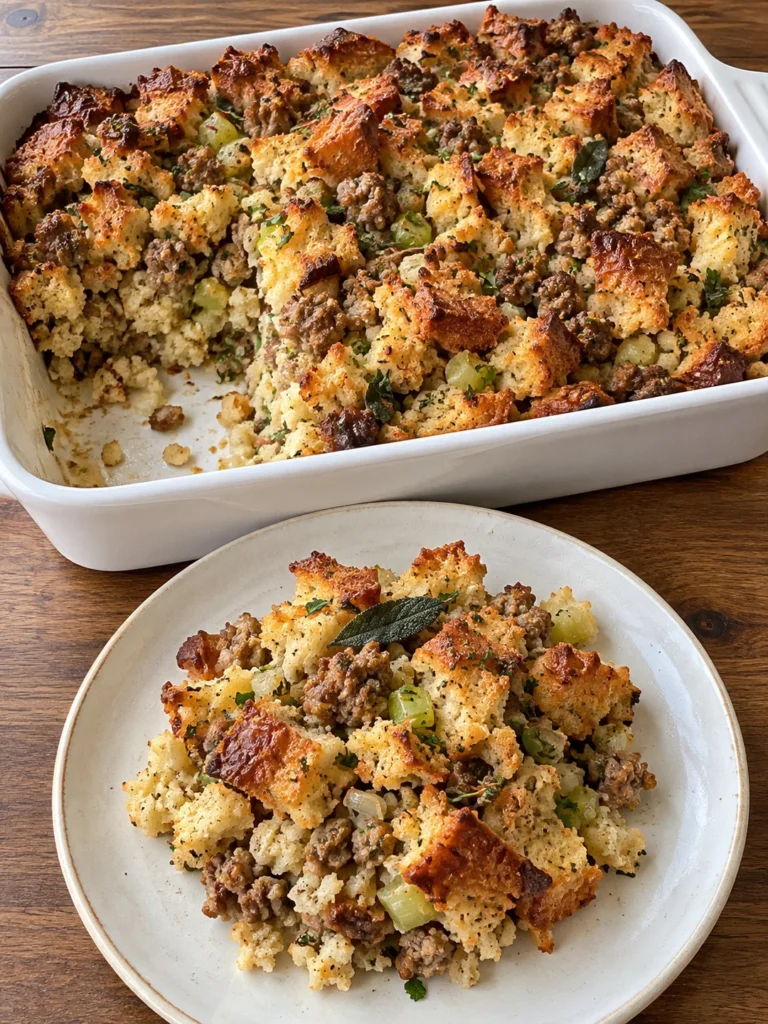
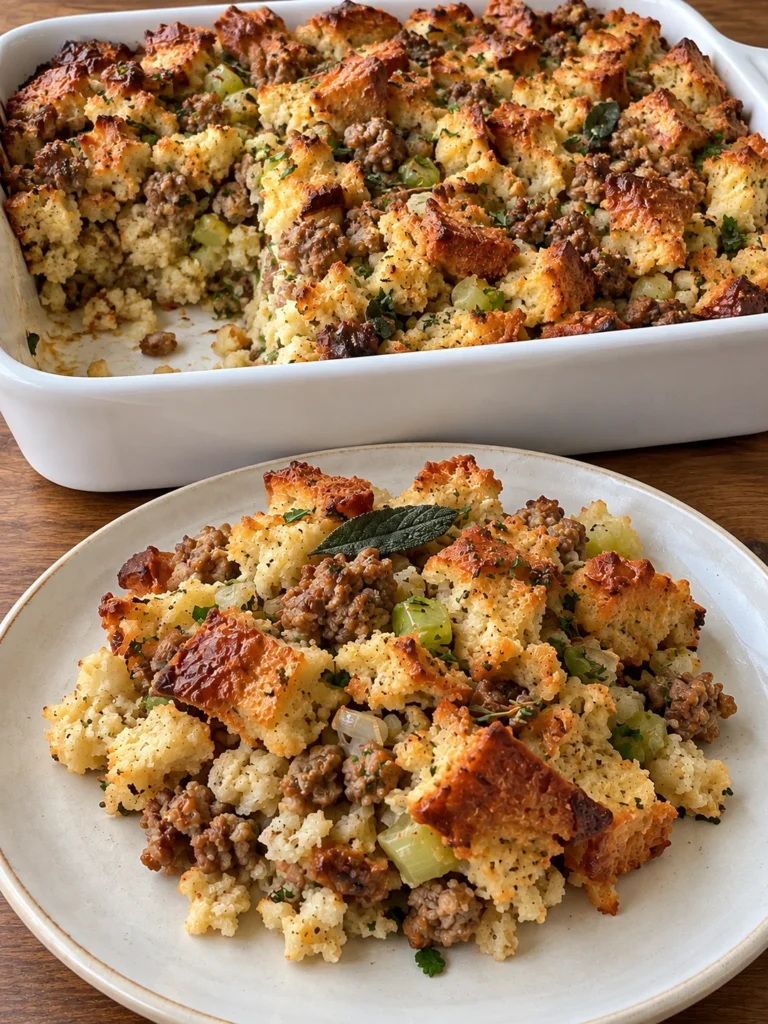
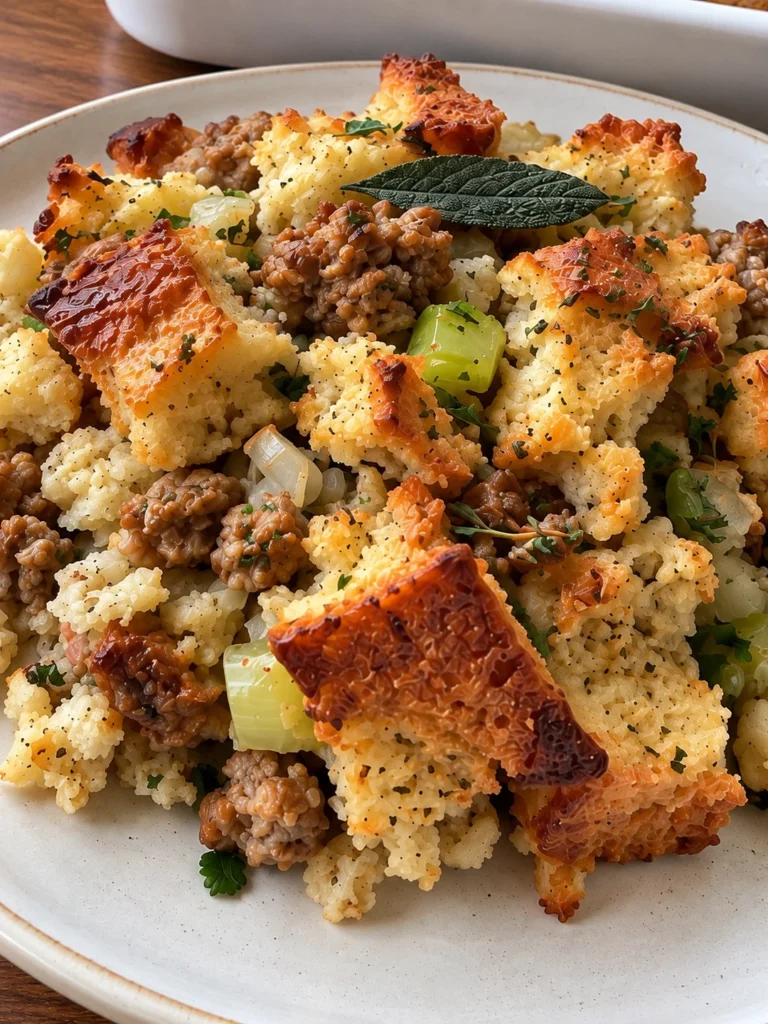
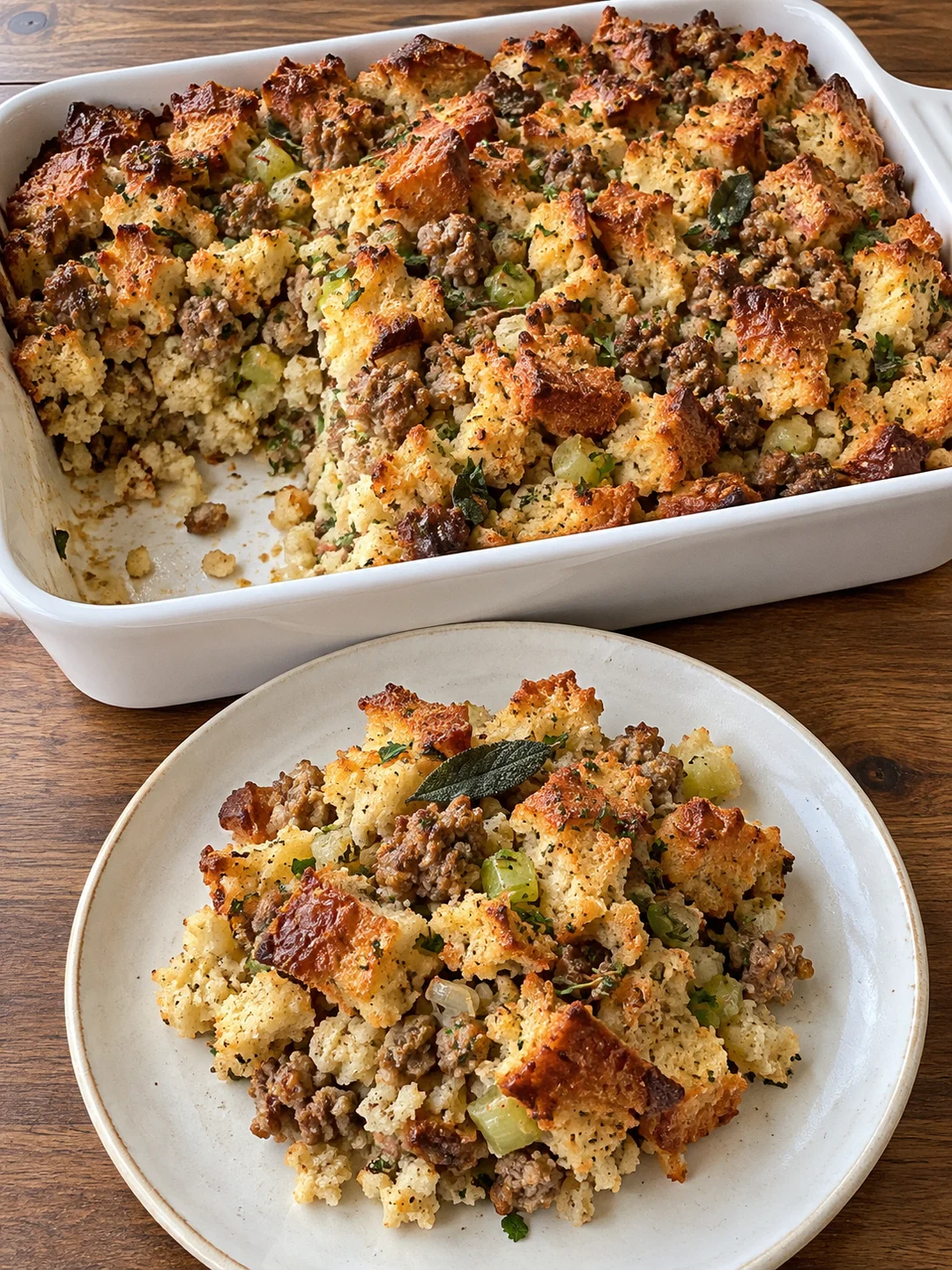
Buttered 9×13 dish, mixture spooned in loose and craggy, no pressing down. Foil on for twenty-five minutes, then off for another twenty to twenty-five. The top goes deep gold and the edges turn properly crunchy while the centre stays just set.
Rest it ten minutes. It firms as it settles and spoons out cleanly instead of sliding.
I have made this every November since Charleston and once in July for no reason. The leftovers, cold, eaten standing at the counter, are arguably better than the first night. I keep meaning to tell Marcus that.
Sausage Stuffing
Ingredients
Equipment
Method
- Spread the bread cubes across two sheet pans in a single layer and leave them uncovered overnight. If you are short on time, bake them at 300 F for 20 to 25 minutes, tossing once, until dry to the center but not browned. Let them cool completely.
- Heat the oven to 350 F and butter a 9x13 inch baking dish.
- Brown the sausage in a large skillet over medium-high heat, breaking it into small crumbles with a wooden spoon, about 5 to 6 minutes, until no pink remains. Lift the sausage into the mixing bowl with a slotted spoon and leave every bit of rendered fat in the pan.
- Lower the heat to medium and add the butter to the sausage fat. Once it foams, add the onion and celery with a pinch of salt. Cook 8 to 10 minutes, stirring now and then, until the onion is translucent and the celery has lost its squeak. Do not let them color.
- Stir the sage, thyme and nutmeg into the vegetables and cook 1 minute more, just until you can smell them. Scrape everything into the bowl with the sausage.
- Add the dried bread cubes and the parsley to the bowl. Season with the salt and pepper and toss with your hands until the sausage and vegetables are evenly distributed through the bread.
- Whisk the beaten eggs into 3 cups of warm stock. Pour about two-thirds of it over the bread and fold gently with a wide spatula, lifting from the bottom rather than stirring. Add the rest a little at a time until the cubes are moistened through but still hold their shape. Squeeze a handful: it should clump and stay clumped, not weep liquid. Stop adding stock the moment it does.
- Transfer the mixture to the buttered dish without pressing it down. Leave it loose and craggy so the top can crisp.
- Cover with foil and bake 25 minutes. Uncover and bake another 20 to 25 minutes, until the top is deep golden and crunchy at the edges and an instant-read thermometer pushed into the center reads 165 F.
- Let it rest 10 minutes before serving. It firms up as it settles and spoons out far more cleanly.