
Pumpkin Snickerdoodles were not what I expected to find at a bus-stop counter in Brattleboro, Vermont, on a grey October afternoon with three hours still to go. I had stopped for coffee. I left with two cookies wrapped in a paper napkin and a very strong opinion about cream of tartar.

The drive had started before sunrise. By the time I pulled off Route 9 my legs were stiff and I was in that particular mood where anything warm tastes like a small miracle. The woman behind the counter said her sister baked them. Then she wrote the phone number of the homestay down the road on my receipt, which is how the rest of this happened.
The Napkin That Came Home With Me
I stayed two nights with Marjorie, who ran a four-room place on the edge of town and baked the way people bake when it is genuinely cold outside. Constantly. Without ceremony.
The second morning she was making a batch while I sat at her kitchen table with a mug I had not asked for and did not want to put down. When I asked how she got them chewy instead of puffy, she pulled a paper towel off the roll and started pressing pumpkin puree flat on the counter, blotting it like she was drying a cut. That was the whole answer.
She wrote the rest on a napkin that already had butter on it. I still have it. It is in a drawer in my kitchen with a rubber band around a small stack of similar things, and the ink has gone a bit soft where the grease was.
What Marjorie Told Me About Snickerdoodles
She was blunt about one thing. A snickerdoodle is not a sugar cookie rolled in cinnamon, and anyone who says it is has not tasted a proper one. The cream of tartar does the work. It brings the tang, the chew, the rise, and that cracked crinkled top that makes the thing look like it has been through something.
The cookie has been in American home kitchens since the mid-1800s, mostly through New England and Pennsylvania Dutch baking. The name is a mess. Some trace it to the German Schneckennudeln, a cinnamon spiral roll. Others to the Dutch snekrad, meaning wrinkle or crinkle, which suits the cracked top so neatly you almost want it to be true. And some people insist it is New England nonsense that means absolutely nothing.
My favourite fact of the lot is that the earliest New England snickerdoodle, sometimes called a snipdoodle, was not a cookie at all. It was a coffee cake.
The pumpkin version is modern. Nobody in 1870 was making these. They turned up alongside brown butter and vegan versions once autumn pumpkin baking became its own annual event, and they belong to bake sales and cookie swaps rather than anything historical. Marjorie knew that and did not care one bit.
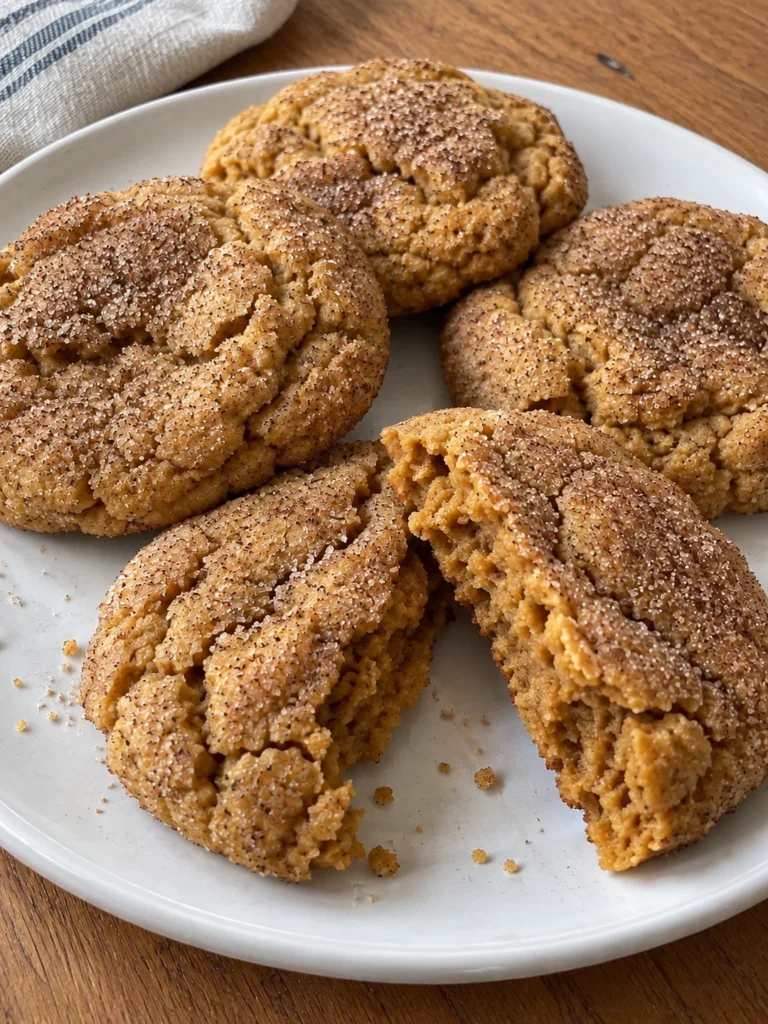
Blotting Pumpkin in a Kitchen That Is Not Vermont
Back in my own kitchen the first batch came out cakey. Little orange domes. Perfectly pleasant and completely wrong.
Two things had gone wrong and both were mine. I had scooped the flour straight from the bag with the measuring cup, which packs in far more than it should, and I had been lazy with the blotting. One pass with a paper towel is not blotting. You press, you lift, you get a fresh towel, you go again, until the paper comes away almost dry. Three quarters of a cup of puree should end up around half a cup of dense orange paste. It takes longer than you think it will.
Now I weigh the flour at twelve ounces instead of measuring cups. That single change fixed more than anything else I tried.
The other adaptation was the butter. Marjorie creamed hers, because her kitchen sat at a temperature where butter behaves. Mine does not. I tried creaming in September once and the butter had gone soupy before I got halfway, so I switched to melted butter, cooled slightly, whisked straight into the sugars. The crumb comes out tighter and the cookie stays chewy for days. I am not going back.
What I Used
- Pure pumpkin puree, blotted hard. Not pumpkin pie filling, which is already sweetened and spiced and will wreck the balance
- All-purpose flour, spooned and levelled or weighed at 12 ounces
- Cream of tartar, two full teaspoons, non-negotiable
- Baking soda
- Ground cinnamon, ginger, and a little nutmeg, freshly grated if you have a microplane
- Salt
- Unsalted butter, melted and cooled
- Granulated sugar and packed light brown sugar
- One egg yolk only. The puree handles the binding
- Vanilla extract
- More granulated sugar and a generous tablespoon of cinnamon for the coating

Rolling, Chilling, and the Part Where You Stop Early
The dough needs at least thirty minutes in the fridge, longer is fine. Straight from the bowl it sticks to your palms and you end up with sad lopsided lumps. I have done that too.
Roll each ball in the cinnamon sugar two or three times. Heavily. This is not a dusting, it is a crust, and it is what gives the edges that faint crackle when you bite in. I keep the sugar in a shallow ceramic bowl that came from a stall at the Hollywood farmers’ market and has a chip on the rim I keep meaning to care about.
Pull them out while the centres still look underdone and puffy. Ten to twelve minutes, one sheet at a time, middle rack. They finish on the hot pan for five minutes and settle into themselves. If you wait for the middles to look baked in the oven you have already lost.
Small Changes Worth Trying
A quarter teaspoon of ground cloves in the dry mix makes them darker and a bit more wintry. Freshly grated nutmeg over the jarred stuff is a genuine upgrade and takes ten seconds.
I have frozen the rolled balls more times than I have baked them fresh, honestly. They keep three months and go straight into the oven from frozen with two extra minutes. Saturday morning, coffee on, four cookies in the oven, no mixing bowls to wash. That is the version of this recipe I actually live with.
These pumpkin snickerdoodle cookies are also the only thing I have ever successfully mailed. They survive a box better than anything else I bake.
The Ones That Never Make It to the Rack
I always cool them completely on a wire rack. Except I do not, because two always get eaten standing at the counter while the second sheet is still baking, and those two are the best ones of the batch. Warm, crackled, sugar still slightly gritty on the edge.
Marjorie mailed me a note last November asking if I was still making them. I was. I had a sheet in the oven when I read it, which felt like the sort of coincidence you do not get to arrange.
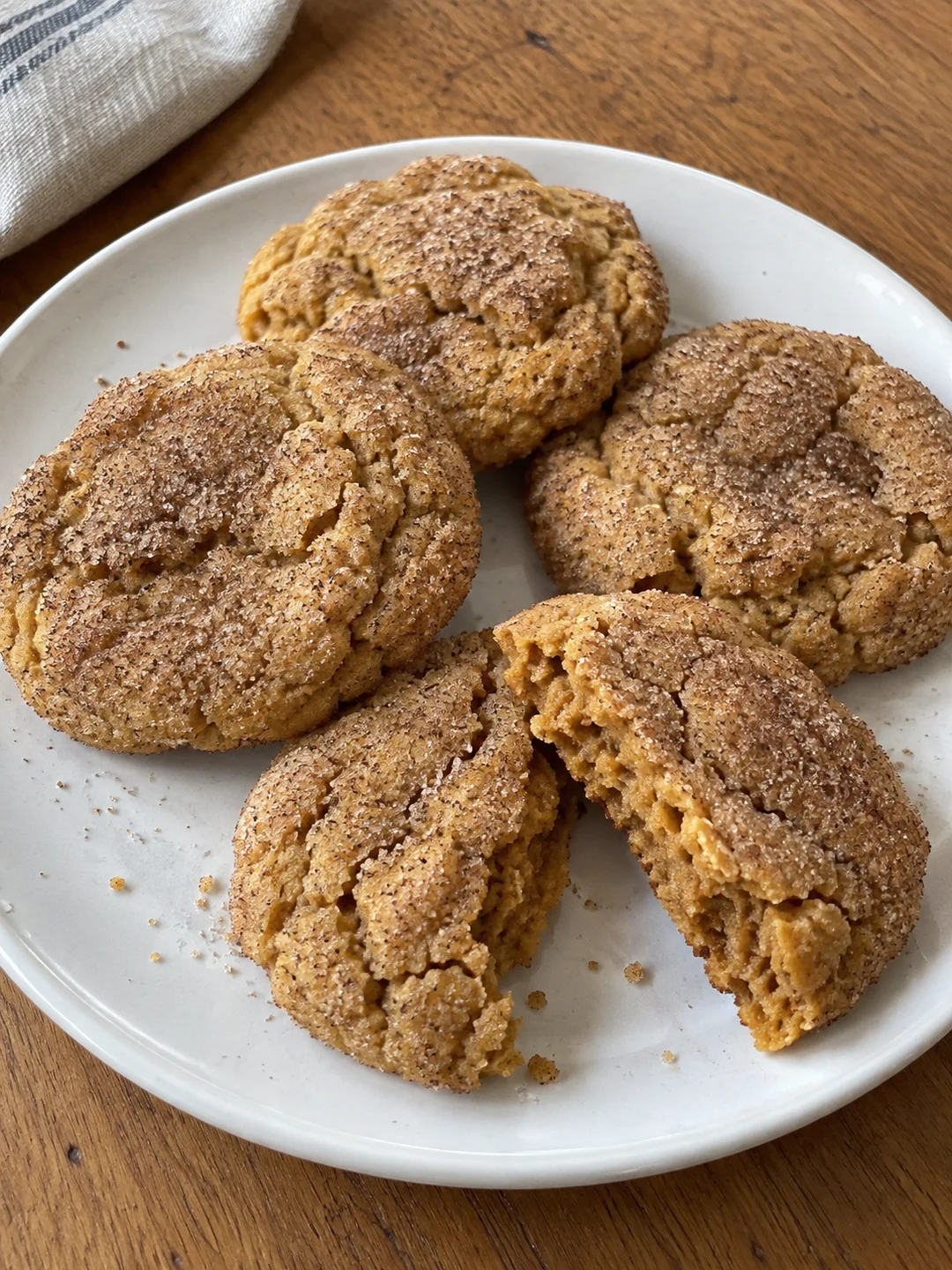
Pumpkin Snickerdoodles
Ingredients
Equipment
Method
- Spread the pumpkin puree in a thin layer over a double thickness of paper towels. Press more paper towels firmly on top, lift them away, and repeat with fresh towels until the paper comes away nearly dry. You should be left with roughly 1/2 cup of dense, dry puree. Do not rush this.
- In a medium bowl, whisk together the flour, cream of tartar, baking soda, 1 teaspoon cinnamon, ginger, nutmeg, and salt until evenly combined.
- In a large bowl, whisk the melted butter with 1 cup granulated sugar and the brown sugar until smooth and glossy, about 1 minute.
- Whisk in the egg yolk and vanilla, then the blotted pumpkin, beating until the mixture is uniform and no streaks remain.
- Add the dry ingredients to the wet and fold with a rubber spatula just until no dry flour is visible. The dough will be soft and slightly tacky. Do not overmix.
- Cover the bowl and chill in the refrigerator at least 30 minutes, or up to 24 hours. The dough must be firm enough to roll without sticking to your palms.
- Heat the oven to 350 F and line two baking sheets with parchment paper. Stir together the remaining 1/3 cup granulated sugar and 1 tablespoon cinnamon in a small shallow bowl.
- Scoop the dough into 1.5 tablespoon portions and roll each into a ball between your palms. Roll each ball generously in the cinnamon sugar, turning it two or three times so it is fully and heavily coated.
- Arrange the balls 2 inches apart on the prepared sheets, 12 per sheet. Do not flatten them.
- Bake one sheet at a time on the middle rack for 10 to 12 minutes, until the edges are set and the tops have cracked but the centers still look slightly underdone and puffy.
- Let the cookies rest on the hot baking sheet for 5 minutes. They will settle and firm into a chewy center with a crisp edge. Transfer to a wire rack to cool completely.