
The best roasted butternut squash I have eaten came on a paper plate at a butcher’s counter in Wellington, next to three slices of lamb shoulder, on a morning that smelled like diesel and rosemary.
I was on a food walk around the Harbourside Market with a guide named Tania, who had already handed me whitebait and a flat white and was clearly holding something back. She stopped at the butcher’s case, told me to wait there, and said he would talk my ear off. He did.
The Butcher’s Counter at the Wellington Market
His name was Hemi. He was wrapping shoulder for a woman ahead of me and explaining the cut while he worked. Shoulder for Sunday if you want flavour, leg if you want it tidy and sliceable.
Salt it the night before and leave it uncovered in the fridge, he said. Then rest it a full twenty minutes before anyone comes near it with a knife.
I nodded along like I was going to roast a lamb that afternoon in a hotel room. Then he pushed a little plate across the glass, the one he was feeding to anyone who stood there longer than a minute.
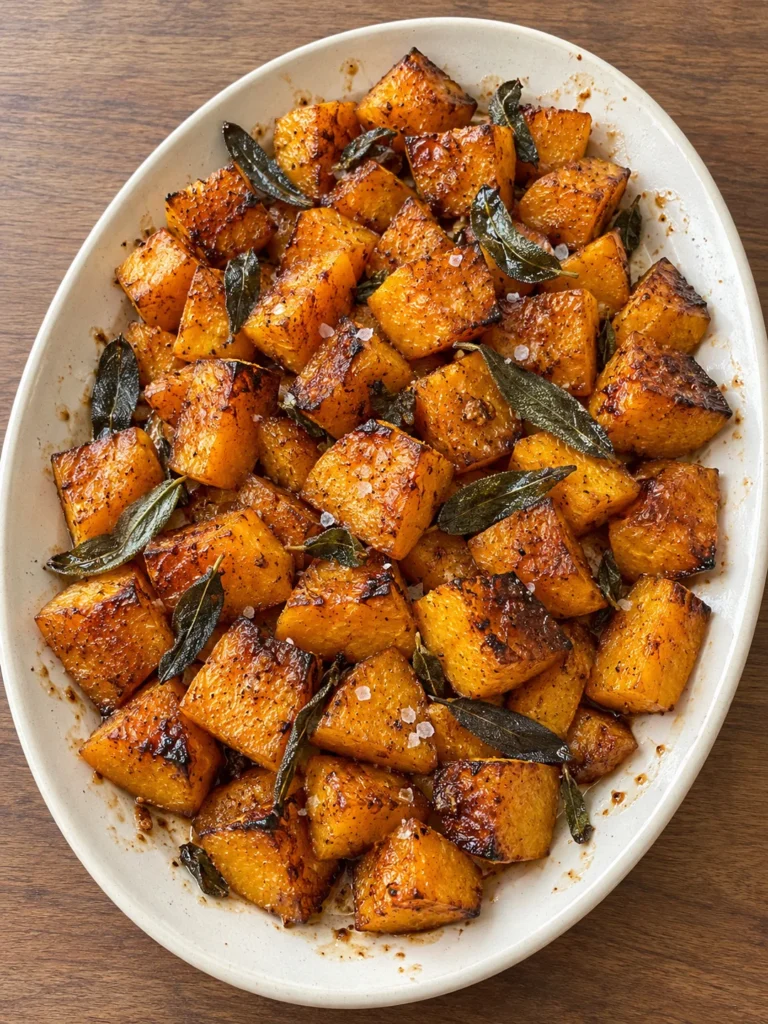
Butternut pumpkin, he called it. Cubes gone almost black at the corners, soft as custard inside, slicked with something nutty, with one crisp sage leaf laid on top like a decision. He said the meat is the easy part and the squash is where people fall over. Oven too cool, pan too full, nobody willing to wait.
Tania told me afterward that roasted butternut pumpkin is simply expected beside a Sunday roast there, the way gravy is. Nobody treats it as a side you can skip. I ate the rest of the plate standing up, in the wind, and wrote three words in my phone. Hot. Uncrowded. Late maple.
A Squash Bred in Massachusetts, Eaten on a Wellington Sunday
I assumed butternut was ancient. It is not. The species, Cucurbita moschata, was domesticated in Mesoamerica thousands of years ago, but the butternut itself is a twentieth-century New England invention.
Charles Leggett, an insurance officer who farmed in Stow, Massachusetts, bred it in the late 1930s and early 1940s, crossing gooseneck squash with other squash and pumpkin types. He wanted something smaller and smoother than the giant hard-shelled Hubbard squash that dominated the region, something a household could actually cut, carry and store. He brought his seed to the Waltham Field Station, where Professor Robert E. Young stabilized the line, and by 1944 Massachusetts growers were already switching over. The refined Waltham Butternut was released in 1968 and travelled, which is how it ended up on Hemi’s counter under a different name.
So the thing I learned in New Zealand was bred eleven time zones away, by a man who mostly sold insurance. And despite the name, it is not a pumpkin, not an acorn, not a Hubbard.

What I Used
- About 3 lb butternut squash, one large one, peeled and seeded
- Extra-virgin olive oil, 3 tablespoons, more than feels polite
- Kosher salt and freshly ground black pepper
- 3 whole garlic cloves, peeled, left alone
- 2 tablespoons pure maple syrup, dark amber if you can get it
- 3 tablespoons unsalted butter
- 12 fresh sage leaves, whole and dry
- Flaky sea salt for the end
I buy the squash at the Wednesday farmers’ market in Santa Monica, from the stand that stacks them like firewood and lets me press a thumbnail into the skin to check it is properly hard. The sage comes off a plant on my fire escape that has survived two years of neglect. The maple I order in from a small Vermont producer, because supermarket dark amber tastes thin to me and this is one of maybe four things I actually import.
Where Most People Lose the Roasted Butternut Squash
The oven goes to 425 F with both sheet pans inside it, heating up empty. That one move does most of the work. When the oiled cubes land they hiss immediately and start browning on contact instead of sitting there leaking water.
Low and slow is the trap. Gentle heat steams squash into baby food. You want it hot enough to be slightly nerve-racking.
Two pans, not one. I know it is an extra thing to wash. Crowding is the single most common mistake with this dish, because overlapping cubes trap their own moisture and go pale and wet and sad. Spread them out with space between pieces, tuck the garlic cloves in among them, and then leave them completely alone for twenty minutes.
Peel it properly. My Y-peeler has a dent in the handle from being dropped on tile and it still outperforms a knife here, but you have to go back over any pale green streaks a second time until you hit solid orange. Cut 1-inch cubes and make them even rather than pretty, because mismatched sizes finish at different times and you end up choosing which ones to sacrifice.
The maple goes on near the end. The first time I made this I tossed it in at the start with the oil and had carbonized sugar welded to the pan in fifteen minutes. Last 8 to 10 minutes only. It glazes instead of burning.
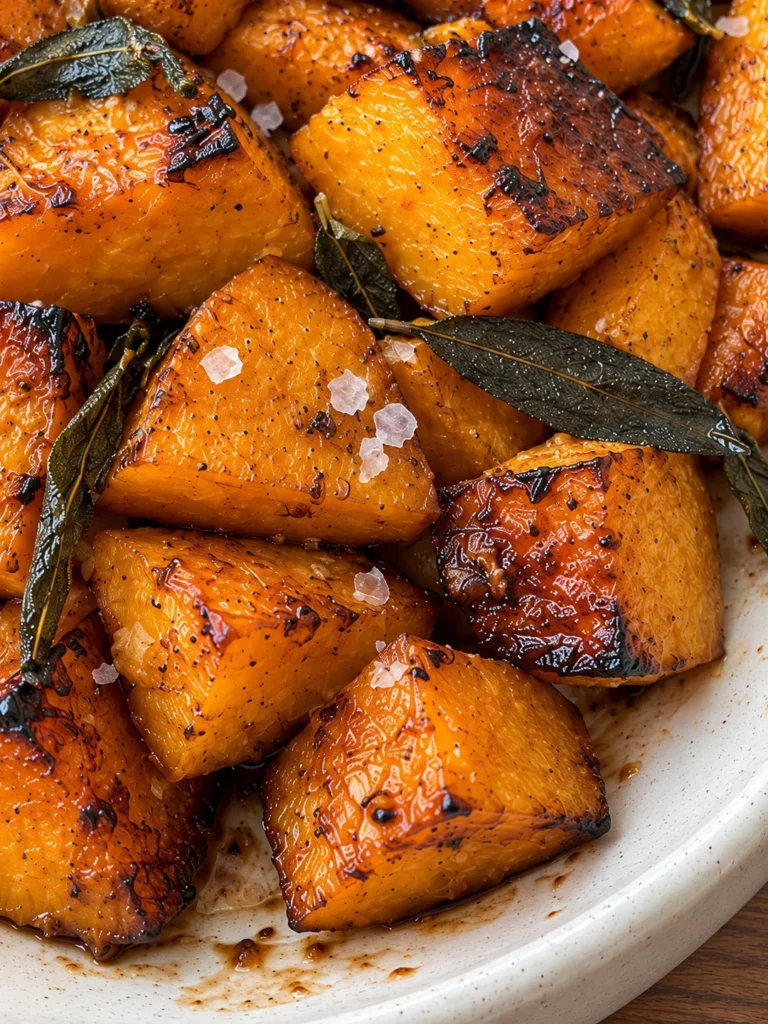
And do not stop at pale and tender. That is the halfway point. You want shrunken edges, deep mahogany faces, a knife tip sliding in with zero resistance.
Brown Butter, Crisp Sage, and the Last Ten Minutes
While the squash finishes, the butter goes into my smallest skillet, the pale-interior one, because you cannot judge brown butter in a black pan. Let it foam, then keep going until the solids at the bottom turn the colour of a hazelnut shell and the whole kitchen smells like toffee and toast.
Sage in for 20 to 30 seconds, until the loud sizzling stops and the leaves go stiff. Pull the pan off the heat right then. Burnt sage tastes like ash and there is no fixing it.
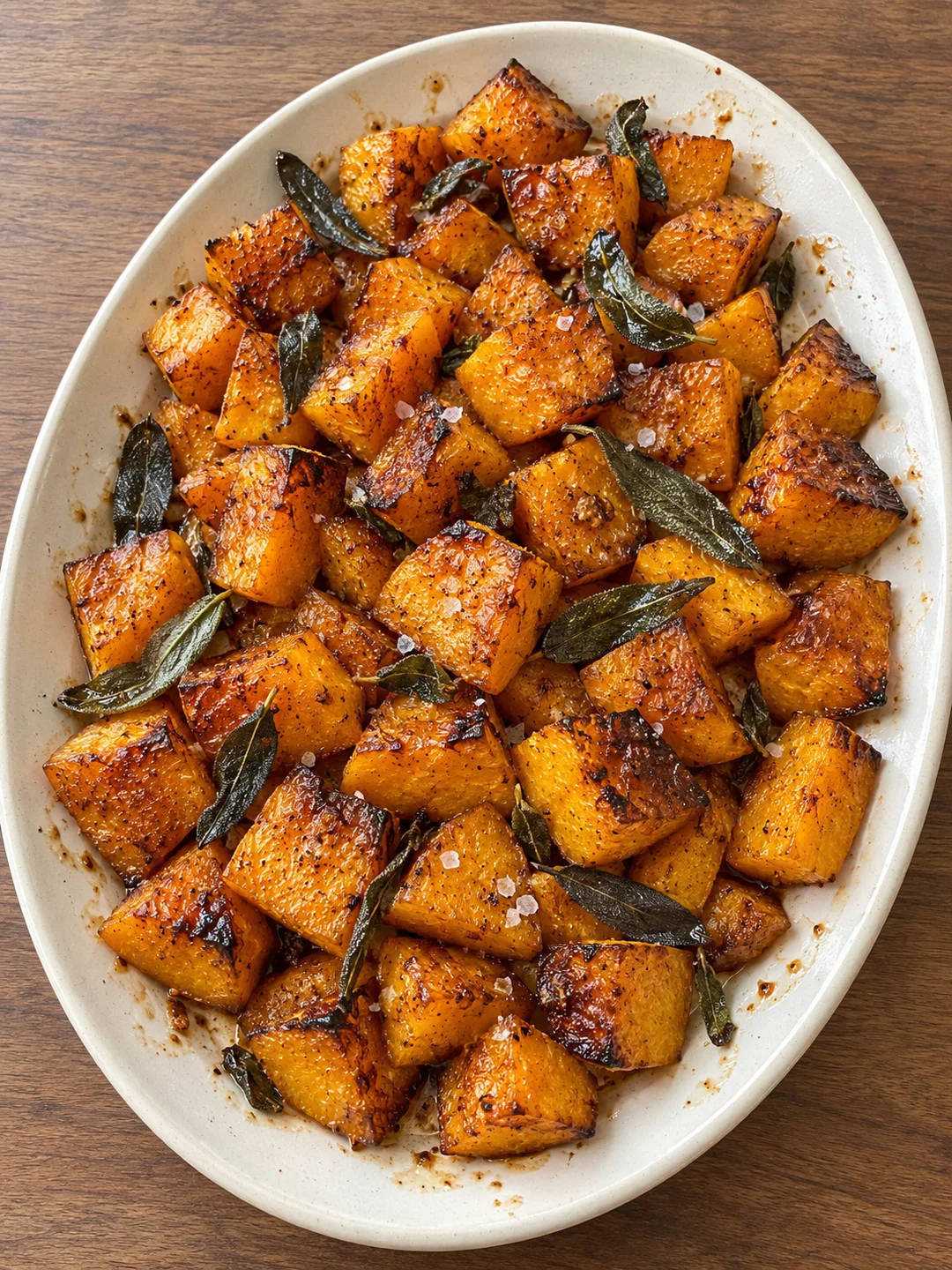
Then I mash the roasted garlic cloves into the butter with a fork, pour the whole lot over the squash on a warm platter, crumble the sage over, and finish with flaky salt. I made this on a Sunday in late October with the kitchen window open and the first cool air of the year coming in, and it was the closest I have come to that paper plate.
Swaps, and What Happens the Next Day
Crumbled feta or goat cheese over the top turns it into a proper plate with farro and a sharp bitter-leaf salad. Toasted hazelnuts or pumpkin seeds if you want crunch. Skin-on wedges work too, cut into 1.5-inch crescents and roasted 40 to 45 minutes, and honestly they hold their shape better than cubes.
Leftovers keep four days. Reheat them on a sheet pan at 425 F for eight minutes and the edges come back. The microwave undoes everything.
I went to Wellington for the coastline and came home with a vegetable side dish. Hemi was right that the meat is the easy part. I think about that plate most weeks, usually around five in the afternoon, when the oven is already hot for something else.
Roasted Butternut Squash
Ingredients
Equipment
Method
- Heat the oven to 425 F with racks in the upper-middle and lower-middle positions. Put both sheet pans in the oven as it heats so they are ripping hot when the squash hits them.
- Cut the stem and base off the squash so it stands flat. Peel it with a sturdy vegetable peeler, going over any pale green streaks a second time until you reach solid orange flesh. Halve it lengthwise and scrape the seed cavity clean with a spoon.
- Cut the squash into even 1-inch cubes. Evenness matters more than precision here, since mismatched pieces finish at different times.
- Toss the cubes in a large bowl with the olive oil, 1 teaspoon of the kosher salt, and the black pepper. Work it with your hands until every surface is slick. Dry patches will not brown.
- Pull the hot pans out and tip the squash onto them, dividing it between the two. Spread the cubes into a single uncrowded layer with space between pieces, tucking the whole garlic cloves among them. You should hear a sizzle as they land.
- Roast 20 minutes without touching them. Then turn the cubes with a metal spatula, scraping under any that stick, and swap the pans between racks. Roast 8 to 10 minutes more.
- Brush or drizzle the maple syrup over the squash and return to the oven for a final 6 to 8 minutes, until the edges are deeply browned and slightly shrunken and a knife tip slides in with no resistance. Do not stop at pale and just tender. That is the halfway point, not the finish.
- While the squash finishes, melt the butter in a small skillet over medium heat. Let it foam, then keep going until the milk solids at the bottom turn the color of a hazelnut shell and the smell turns nutty, 3 to 4 minutes. Drop in the sage leaves and fry 20 to 30 seconds, until they stop sizzling loudly and go crisp. Pull the pan off the heat at once.
- Mash the roasted garlic cloves into the brown butter with a fork. Pile the squash onto a warm platter, pour the brown butter over it, and crumble or scatter the crisped sage on top. Finish with flaky sea salt and the remaining 0.5 teaspoon kosher salt to taste. Serve hot.