
Texas Red Chili found me at two in the afternoon in Marathon, Texas, in a roadside place with a swamp cooler rattling in the window and nobody left in the dining room but me. The lunch rush had come and gone in about forty minutes, which is what a rush looks like out there.
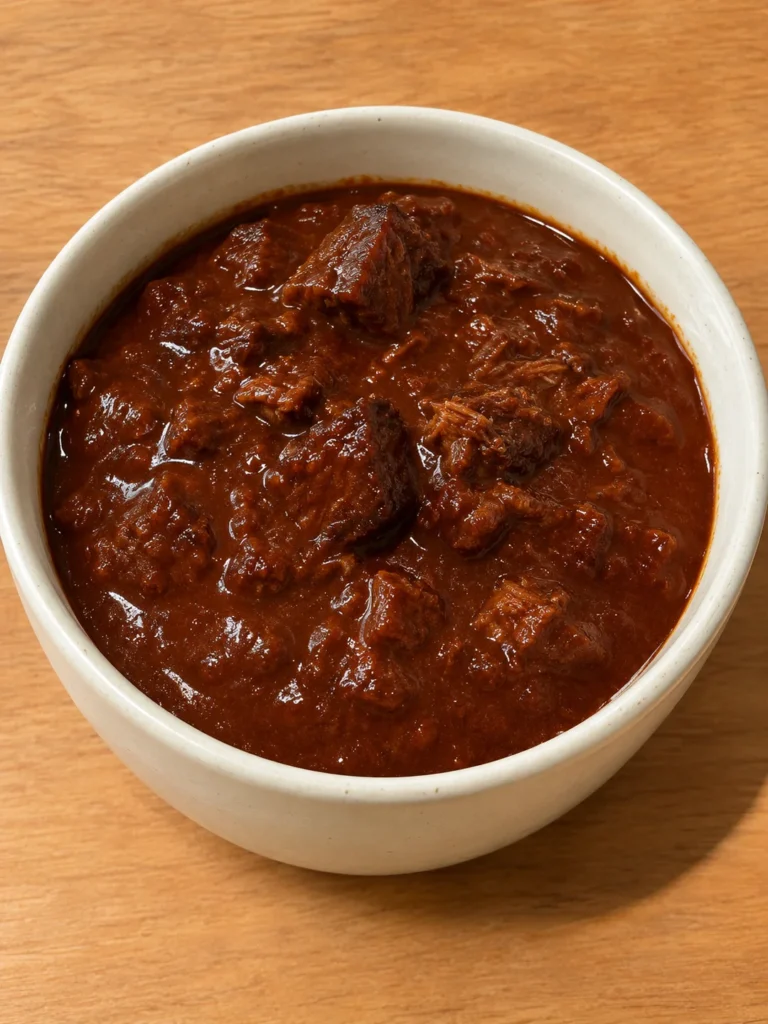
I was driving the long empty stretch toward Big Bend and had stopped mostly because the sign said OPEN and I had not seen another building in an hour. The owner, Delia, brought me a bowl of something dark red with no beans in it and then, once the kitchen was off, she sat down across from me with her own bowl and a glass of iced tea.
She had an apron with a bleach stain shaped like Florida and she talked the whole time I ate.
The Kitchen Behind the Counter in Marathon
When I asked what was in it she did not answer. She got up and waved me through the swinging door, which I have learned to take as an invitation and not a dare. The kitchen was small and spotless and smelled like toasted chile skins, and there was a flat black comal on the range that she clearly used for nothing else.
She showed me her chiles first, in a plastic bin under the prep table. Ancho, guajillo, pasilla, and a handful of skinny arbols she handled like they were live wires.
I made the mistake of saying the word tomato and she looked at me the way you look at someone who has just put ketchup on a steak. No tomato, she said. The red comes out of the chiles, nowhere else. Then she corrected my toasting right there at the comal, because I left a guajillo down too long and it went from fragrant to faintly smoky, and smoky means bitter in about three more seconds.
Thirty seconds a side. Press it flat. Pull it when it smells like something you want to eat, not before and not after.
What Texas Red Chili Actually Is
I read up on it afterward, in a motel in Alpine with the TV on mute, because Delia had made about six assertions over lunch that I wanted to check. Most of them held up.
The dish comes out of South Texas and San Antonio, descended from the chile-seasoned beef stews of northern Mexico and Tejano cooking, where dried beef, suet and dried chiles got cooked down into carne con chile. A traveler in San Antonio in 1828 described it as a kind of hash with nearly as many peppers as there are pieces of meat, which is still a fair description of a good pot.
From the 1860s into the 1930s the Chili Queens, Tejana and Mexican women vendors, sold bowls of it out of open-air stalls in Military and Market plazas. They are the reason the dish exists in the public imagination at all, and they are the part of the story that got left out of most of the telling for a very long time.
The Texas Legislature made chili con carne the official state dish in 1977. The no-beans doctrine got hardened at the Terlingua cookoffs, which started in 1967 about an hour south of where I was eating, and beans are still banned outright in competition. Delia’s version of this was shorter. Beans are a side dish and they know it.
Two other things worth knowing. Ground beef is a shortcut rather than the tradition, and supermarket chili powder, which is a salted blend, will give you a flat dusty pot no matter how long you simmer it.
What I Used
- 4 lb beef chuck, hand-cut into 3/4-inch cubes, not ground
- 5 dried ancho chiles, stemmed and seeded
- 4 dried guajillo chiles
- 2 dried pasilla chiles
- 3 chiles de arbol, or 1 if you are feeding cautious people
- 3 tbsp beef tallow, or lard
- 2 yellow onions, finely diced
- 8 cloves garlic, minced
- 2 tbsp ground cumin, toasted whole first if you have the patience
- 1 tbsp Mexican oregano, crumbled between your palms
- 5 cups beef stock, divided
- 1 cup dark beer, or strong black coffee
- 1 tbsp cider vinegar, at the end
- 3 tbsp masa harina for the slurry
- Kosher salt and black pepper
Cooking Texas Red Chili at Home
I buy the dried chiles whole from a Mexican grocery a few blocks from my place, where they sell them in bags roughly the size of a pillow and the turnover is fast enough that nothing is dusty. If a chile cracks instead of bending, leave it. You want them leathery.
The first real work happens in the blender. Toasted chiles soaked twenty minutes in hot stock go soft enough that two full minutes of blending turns them into a paste with no grit, and if you push that through a sieve you lose the skins and gain a gravy that coats a spoon like silk. I skip the sieve about half the time. Then I regret it about half of that.
Searing comes next and it is the step people rush. Pat the cubes dry, give them room, and let them sit still long enough to build a hard brown crust, because that crust is flavor you cannot add later. Three or four batches, in my cast iron Dutch oven with the chipped lid, which holds heat so well that batch four browns faster than batch one.
Then the paste goes into the fat with the bloomed cumin and oregano and darkens for five minutes, losing its raw edge and tightening into something closer to a sauce than a puree. Beef back in, beer, enough stock to barely cover. After that it is three hours of the lowest heat your burner can produce, with a stir every half hour.
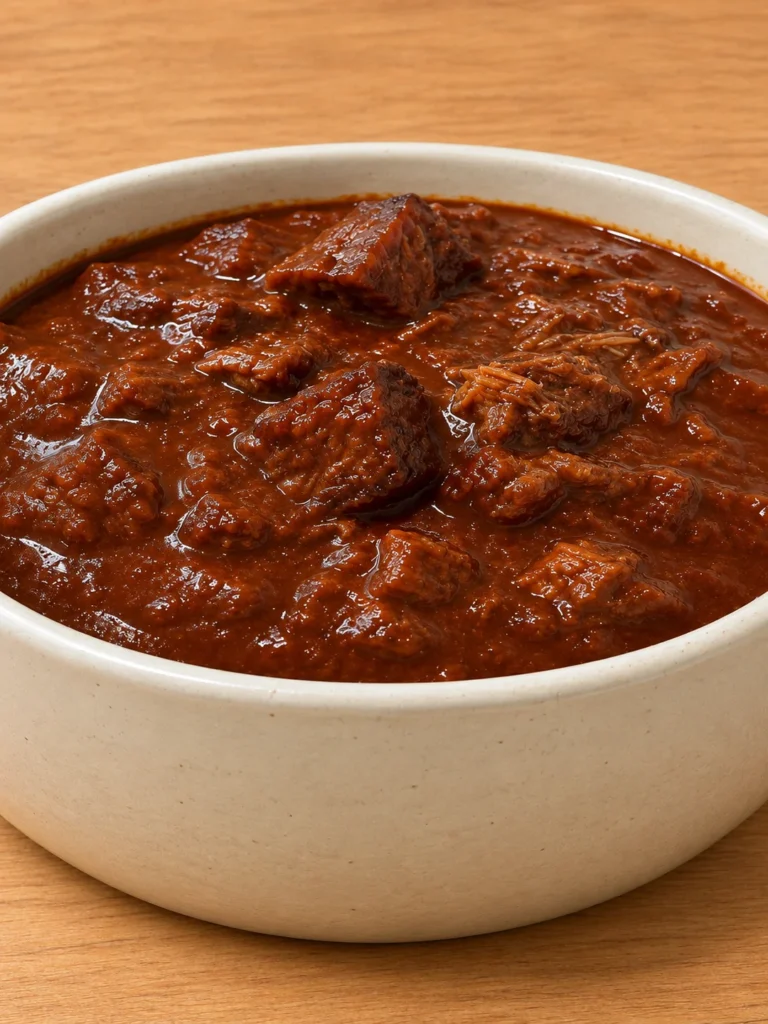
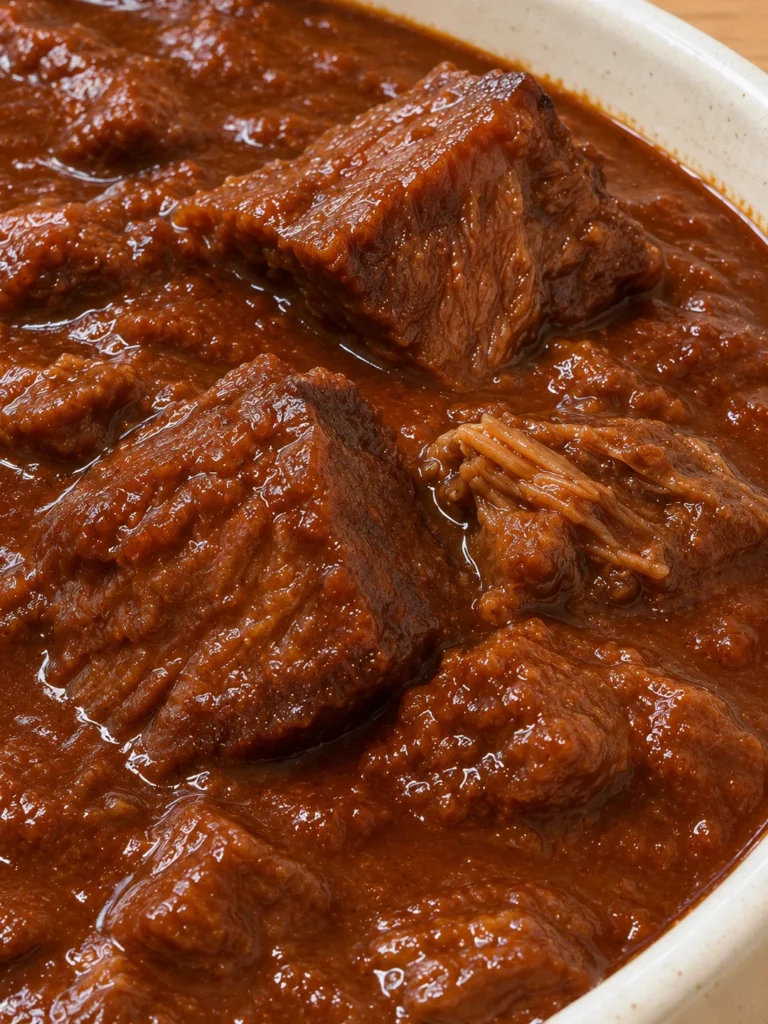
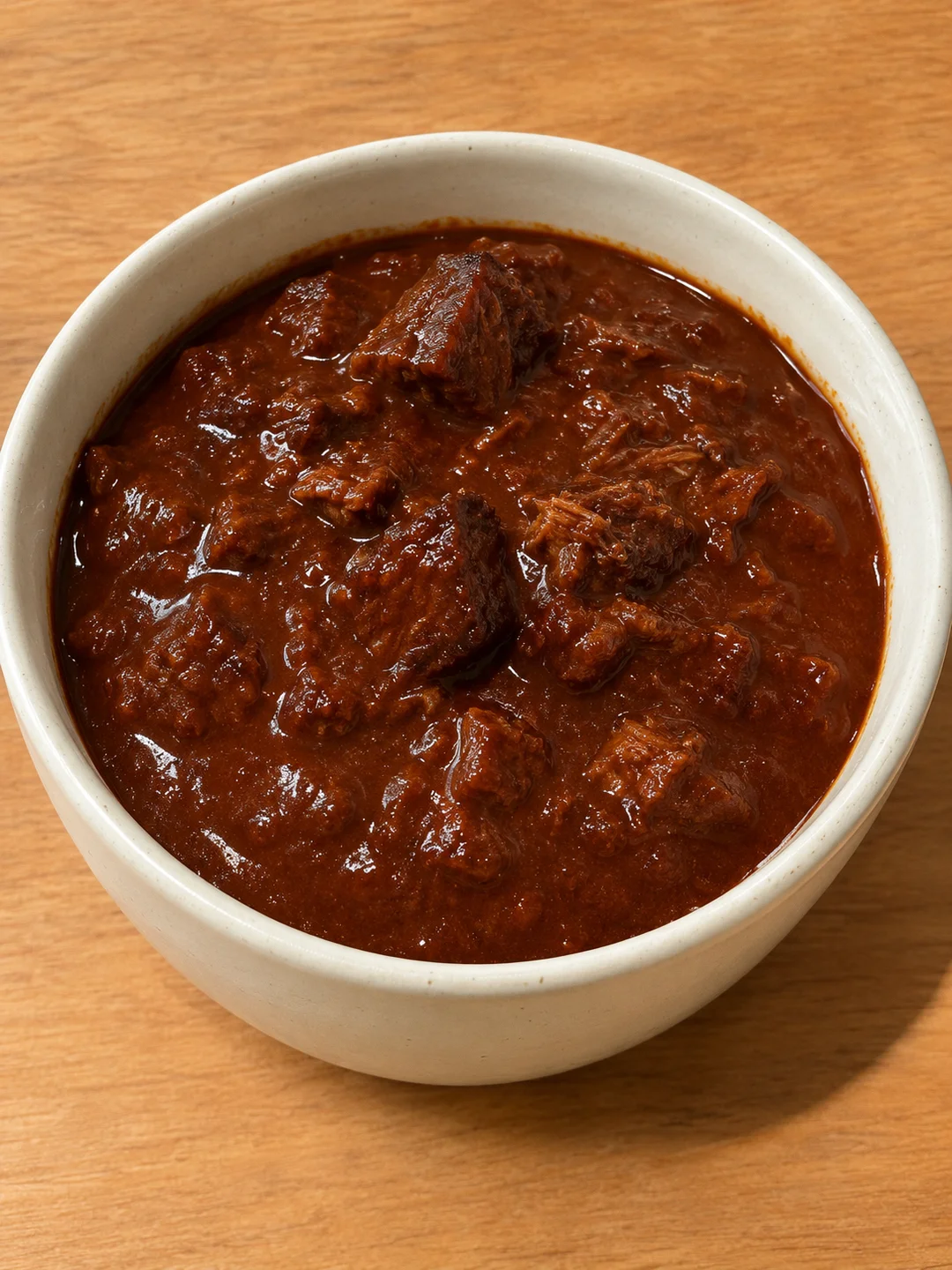
What happens in there is slow and worth watching. The collagen in the chuck melts into the liquid, the cubes stop being tough and start giving way under a fork, and the gravy reduces to a glossy brick red that clings to the meat instead of pooling around it. The masa slurry at the end, whisked into cold stock first or you will be picking out lumps, tightens the whole pot and adds a quiet corn sweetness underneath the chile.
The vinegar at the finish is not optional. One tablespoon, and the whole thing snaps into focus.
Swaps, and the Bean Question
Coffee instead of beer works and leans a little more bitter in a good way. Arbols are the only real dial for heat, so adjust there and leave the anchos alone, since they are doing the sweetness and the color. If you want beans, cook them separately and put them in a bowl on the table. Nobody in Texas will know.
Everyone says chili is better on day two, and it is, the fat settles and the flavors round off. Except the first time I made it I stood at the stove with a spoon and ate a quarter of the pot at eleven at night with the windows open, so I am not the person to lecture you about patience.
I serve it with saltines, diced raw white onion, longhorn cheddar and lime. I still have not matched Delia’s, and I think the missing part is the comal and about forty years of practice. But the pot I make now in my own kitchen is close enough that I stopped tinkering with it, which for me is saying something.
Texas Red Chili
Ingredients
Equipment
Method
- Heat a dry skillet or comal over medium heat. Toast the stemmed, seeded ancho, guajillo, pasilla and arbol chiles a few at a time, pressing them flat for about 30 seconds per side, until they smell fragrant and turn slightly pliable. Do not let them smoke or darken, as burnt chiles make the chili bitter.
- Put the toasted chiles in a bowl, pour over 2 cups of hot beef stock, and weigh them down with a small plate so they stay submerged. Soak 20 minutes until completely soft.
- Transfer the chiles and their soaking liquid to a blender and puree 2 full minutes until the paste is perfectly smooth. For a silkier gravy, push it through a fine-mesh sieve and discard the skins. Set the paste aside.
- Pat the beef cubes dry and season with the salt and black pepper. Dry meat is the difference between searing and steaming.
- Melt the beef tallow in a heavy Dutch oven over medium-high heat. Working in three or four batches with plenty of room between the cubes, sear the beef hard until deeply browned on at least two sides, about 4 minutes per batch. Move each batch to a plate as it finishes.
- Lower the heat to medium and add the diced onions to the rendered fat. Cook 6 to 8 minutes, scraping up the browned bits from the bottom, until soft and golden. Add the garlic and cook 1 minute more until fragrant.
- Stir in the cumin and Mexican oregano and let them bloom in the fat for 30 seconds. Pour in the chile paste and cook, stirring often, for 5 minutes until it darkens and thickens slightly and the raw edge cooks off.
- Return the beef and any collected juices to the pot. Add the beer and enough of the remaining beef stock to barely cover the meat, about 3 cups. Bring to a bare simmer.
- Simmer uncovered or partly covered over the lowest heat for 2 1/2 to 3 1/2 hours, stirring every 30 minutes and adding a splash of stock if the meat ever pokes above the liquid. The chili is ready when the beef shreds under light pressure from a fork and the gravy has reduced to a glossy brick red.
- Whisk the masa harina into 1/2 cup cold beef stock until completely smooth with no lumps. Stir the slurry into the simmering chili and cook 8 to 10 minutes more, until the gravy thickens and coats a spoon.
- Stir in the cider vinegar, then taste and adjust salt. The chili should taste deep and faintly sweet from the chiles with a clean acidic lift at the finish.
- Serve hot in bowls. For the best flavor, cool the pot, refrigerate overnight, and reheat gently the next day.