
The sugared cranberries sat in a plastic tub at the far end of Lyudmila’s stall in Vologda, wedged between salted mushrooms and a crate of beets. The price was written in marker on a torn flap of cardboard propped against the tub.
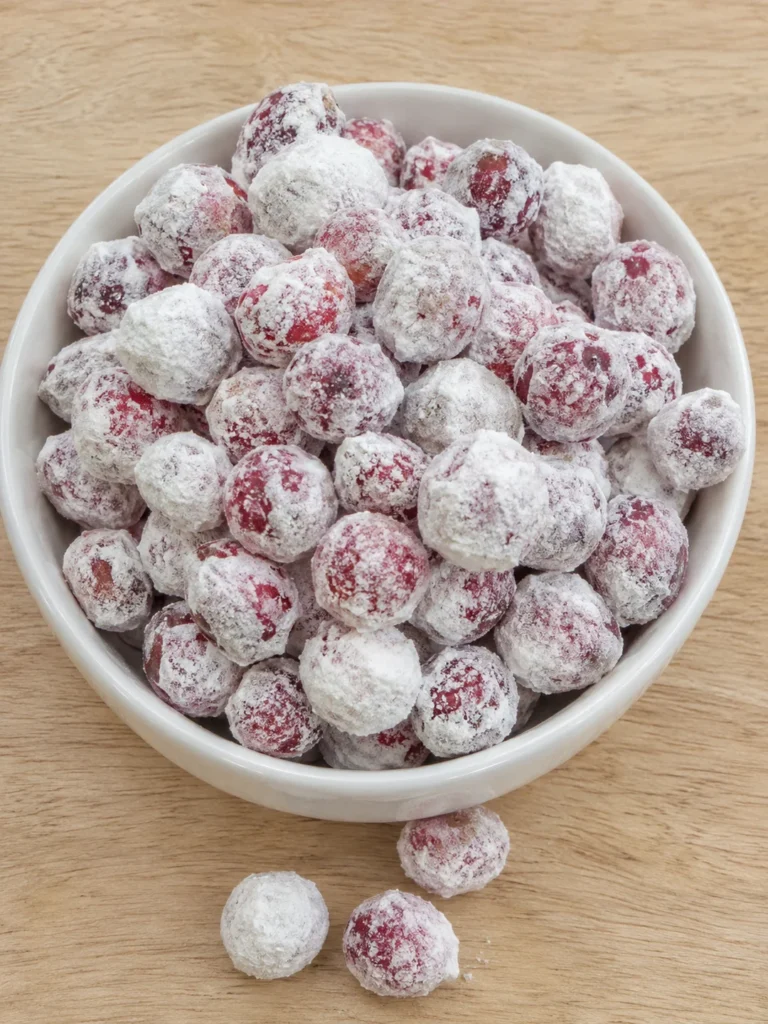
I had walked over to the Kolkhozny market for bread and a thicker pair of socks. I left with a paper cone of what looked like a hundred tiny snowballs and no real idea what was inside them.
First bite, the shell crumbled softly, and then the berry burst and went so sour that I pulled a face in public. The woman ahead of me in the queue laughed. Fair enough.
The Stall in Vologda
It was somewhere around minus eight and the snow had that dry squeak underfoot. Lyudmila was working in wool mittens with the fingertips cut off, scooping the berries with a dented aluminium cup and tipping them into cones she rolled herself.
She said one word I actually understood. Klyukva. Then she tapped the tub twice and shook her head at the pot of jam next to it, which I took to mean these are not that.
She was right, and it took me longer than it should have to believe it. The berries are raw. Nothing on that stall had been simmered, reduced or set. Just fresh bog cranberries, a sugar shell, and time spent drying somewhere cold.
Not an American Thanksgiving Invention
I assumed, before Vologda, that sugar-dusted cranberries were an American holiday prop. Something invented for a magazine cover around 1998 to sit on top of a cheesecake.
Wrong by about two hundred years. Cranberries have been one of the most prized wild berries of the Russian north for centuries, usually turned into mors or varenie so that something fresh-tasting survived the winter. Coating them in sugar is documented as a Russian and Slavic treat as far back as the 1800s, and popular lore insists it was Pushkin’s favourite sweet.
The Soviet era is what made it legendary, though, and for an unglamorous reason. The berries came in small cardboard boxes, there were never enough of them, and people queued. Anyone who grew up in the USSR remembers the box. Reliable year-round supply in Russian shops only really arrived in the early 2000s.
Calling it cranberry candy undersells the thing slightly, because there is no hard crack, no cooking, no thermometer. Sugared and candied cranberries are the same preparation under two names, and neither has anything to do with cranberry sauce or with those chewy sweetened craisins in the baking aisle.
What I Used
- Fresh cranberries, about 12 oz, the firmest ones I could dig out of the bin
- A cup of plain granulated sugar for the syrup
- A cup of water
- A cup and a half of powdered sugar, sifted, for the coating
- A small saucepan and a slotted spoon
- Two baking sheets lined with parchment
- My fine mesh sieve, the one with the bent rim I keep meaning to replace
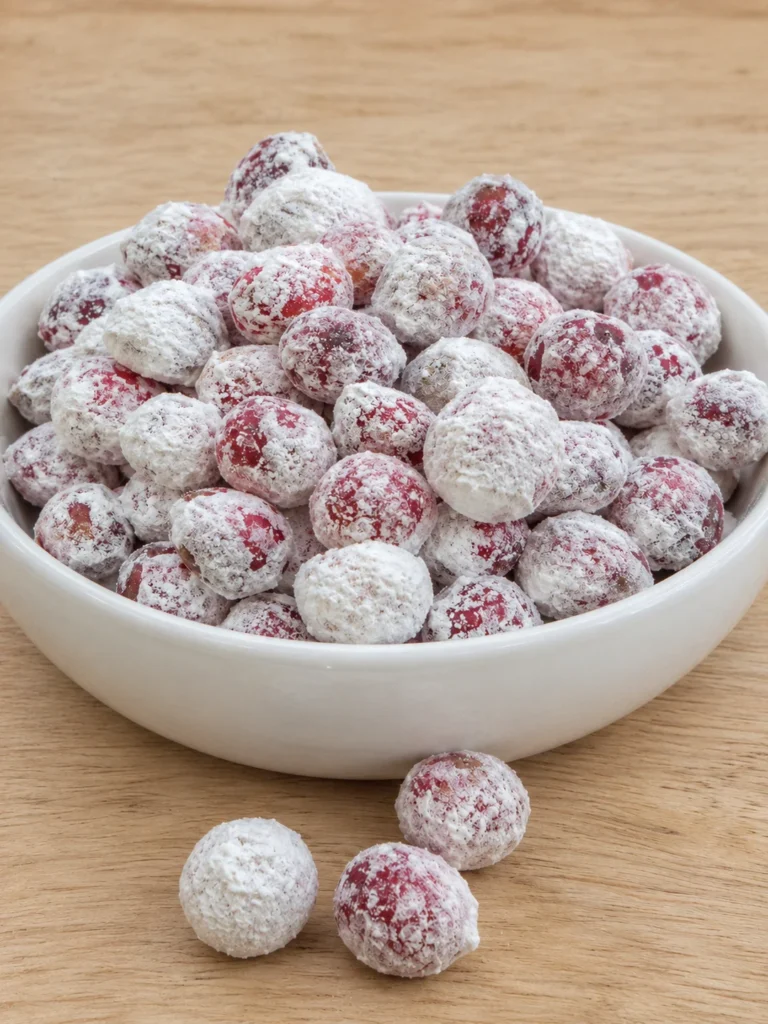
Making Sugared Cranberries in My Own Kitchen
I bought the berries at the Wednesday farmers’ market in Santa Monica, from a stand that only has them for about six weeks a year. Firm is the whole game here. A good berry squeaks faintly when you press it between finger and thumb.
Sorting is the unglamorous part and the part most people skip. Any berry with a split, a soft patch, a wrinkle or a pale spot will weep through its coating and turn into a sticky grey pebble by morning. I threw out maybe fifteen out of three cups and felt smug about it later.
Then the syrup. Sugar and water over medium heat, stirred only until the liquid goes clear, which takes three or four minutes. Do not let it boil, you are not making candy.
And now the step that decides everything. The syrup has to cool until it is no warmer than lukewarm, which is thirty to forty minutes of doing nothing. My first batch, years before I understood this, went into syrup I thought was “basically cool.” The skins split on contact and I ended up with pink sludge. Touch it with a fingertip. If there is any heat at all, wait.
Cool syrup, dry berries, thirty seconds of gentle stirring, then out with the slotted spoon onto parchment to drain for two or three minutes. You want them tacky, not dripping.
The rolling is a small logistics problem. Eight or ten berries at a time into the sifted powdered sugar, tilt the bowl, move them around with your fingers. Tip in a big handful and they clump into one sticky raft and you have to start over with a new bowl of sugar. I learned that too.
Then they sit uncovered on the second sheet, not touching, for at least an hour and ideally two or three. The shell should feel powdery and dry. Any that still look shiny get a second quick roll.
I had the radio on low the whole time, some long segment about reservoir levels. It is not a dish that needs your full attention. It needs your patience, which is different.
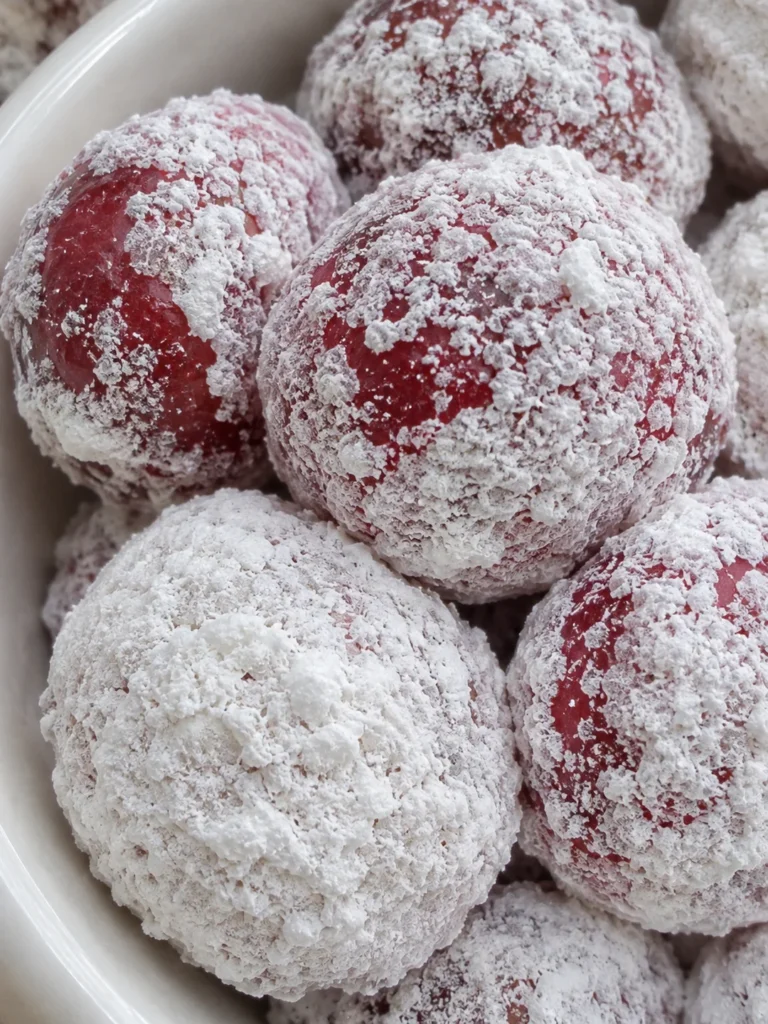
Powdered Sugar Versus the Sparkly Version
Most American recipes insist on coarse sanding sugar, which gives you crunch and glitter and looks great on a pavlova. That version is genuinely good. But the matte snow finish from sifted powdered sugar is the traditional Russian one, so anyone telling you powdered sugar is a mistake has it backwards.
Soviet factories often used lightly whisked egg white as the binder instead of syrup. Whisk one white until just frothy, toss the berries, drain, dust. Slightly thinner shell, slightly faster.
Frozen cranberries work in the sense that they will technically become sugared cranberries. They also weep as they thaw and you get a wetter, duller coat. I did it once in March out of curiosity. Not again.
I thought about putting lemon zest in the sugar. Actually no. The berry is already doing plenty.
How They Get Eaten Here
They are not shelf stable, which surprises people who assume sugar means forever. Two or three days at cool room temperature, uncovered or loosely covered. Never the fridge and never the freezer, the coating just dissolves back into syrup and you are left with a sad wet dish.
Mine go into a bowl next to very strong black tea, which is how Lyudmila’s regulars seemed to treat them. A few land on a cheese board. Some get dropped into a glass of something fizzy, where they sink and then slowly give up their sugar.
Honestly, most of them get eaten standing at the counter off the drying tray. Mostly. A reasonable number do reach the tea.
What I like about this one is that it asks nothing of your skill and everything of your willingness to wait forty minutes for a pan to cool. That is a trade I will take in November. And every time I bite one and flinch at the sourness, I am briefly back in that market with cold feet, eating out of a paper cone.
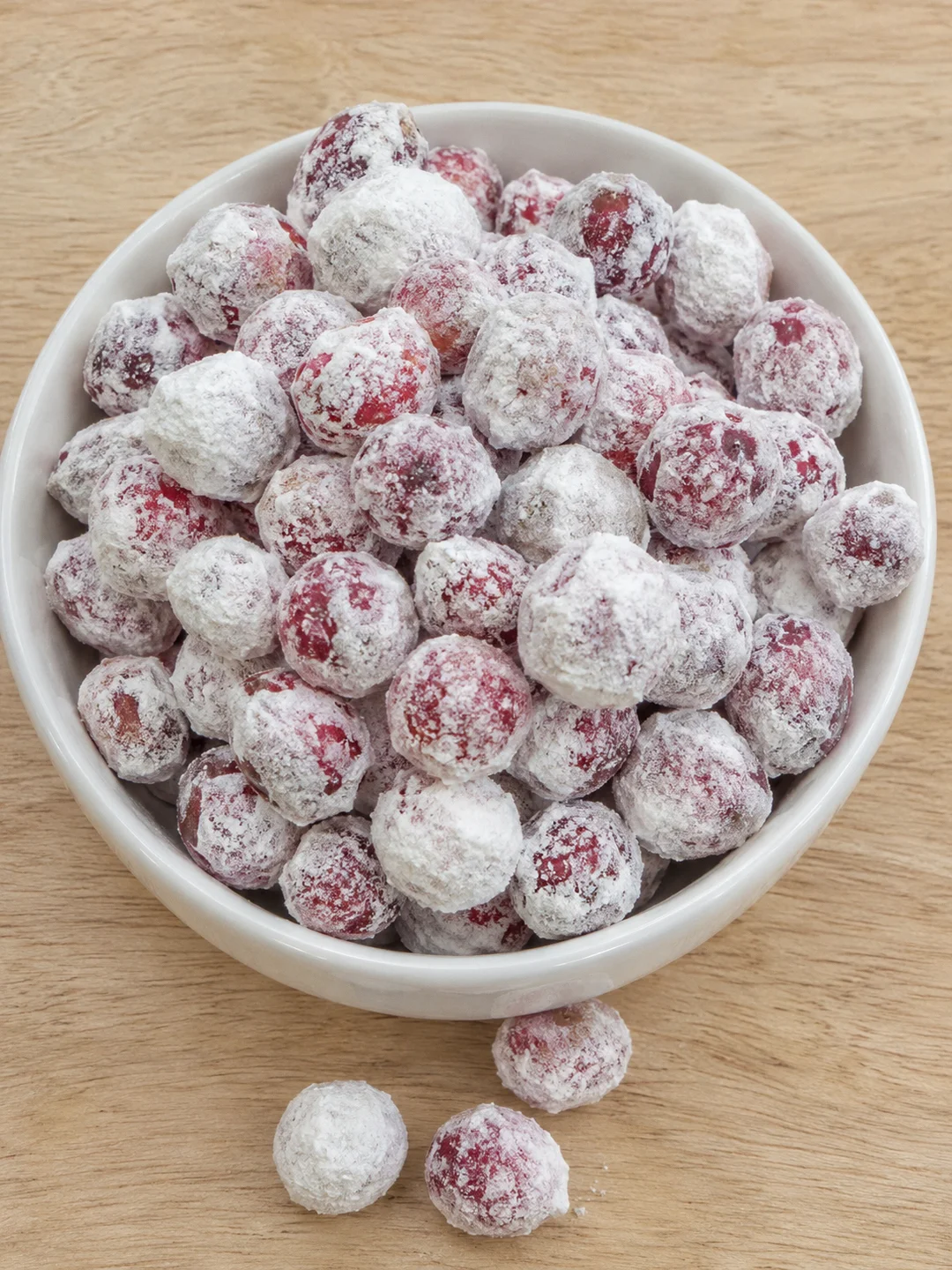
Sugared Cranberries
Ingredients
Equipment
Method
- Tip the cranberries onto a tray and sort them one by one. Keep only berries that are firm, glossy and completely intact. Discard any that are split, soft, wrinkled or pale. Rinse the keepers in cold water and spread them on a kitchen towel to dry completely, about 10 minutes. Wet berries will not hold their coating.
- Combine the granulated sugar and water in a small saucepan. Set over medium heat and stir just until the sugar fully dissolves and the liquid turns clear, about 3 to 5 minutes. Do not let it boil.
- Take the pan off the heat and let the syrup cool until it is no warmer than lukewarm, 30 to 40 minutes. Test it with a fingertip. If it feels even slightly hot, wait longer. This is the one step that decides whether the batch works.
- Add the dry cranberries to the cooled syrup and stir gently with a spoon for about 30 seconds, just until every berry is slick and tacky all over.
- Lift the berries out with a slotted spoon and spread them on a parchment lined baking sheet in a single layer. Let them drain 2 to 3 minutes so the syrup stops dripping but the surface stays sticky.
- Sift the powdered sugar into a wide shallow bowl. Working in small handfuls of eight to ten berries at a time, drop them into the sugar and roll them around with your fingers or by tilting the bowl until each one is matte white. Small batches are essential, a big handful clumps into a sticky raft.
- Transfer the coated berries to the second parchment lined sheet or a wire rack, spacing them so none touch. Shake off nothing, the loose dusting is part of the look.
- Leave them uncovered at cool room temperature to set and dry, at least 1 hour and ideally 2 to 3. The shell should feel dry and powdery, not damp.
- If any berries look patchy or shiny after drying, give them a second quick roll in the sifted powdered sugar. Serve the same day for the brightest snap, or within 2 days.