
The cranberry salad I make every November came out of a badly planned drive on Route 58 through Carver, Massachusetts, late in the harvest, when the flooded bogs on both sides of the road were the loudest red I have ever seen outdoors. I had left Boston too late and eaten nothing since a bad airport coffee.
There was a counter at the edge of a parking lot near a screenhouse. Six stools, a hand-lettered sign, a pot of coffee that had clearly been sitting.
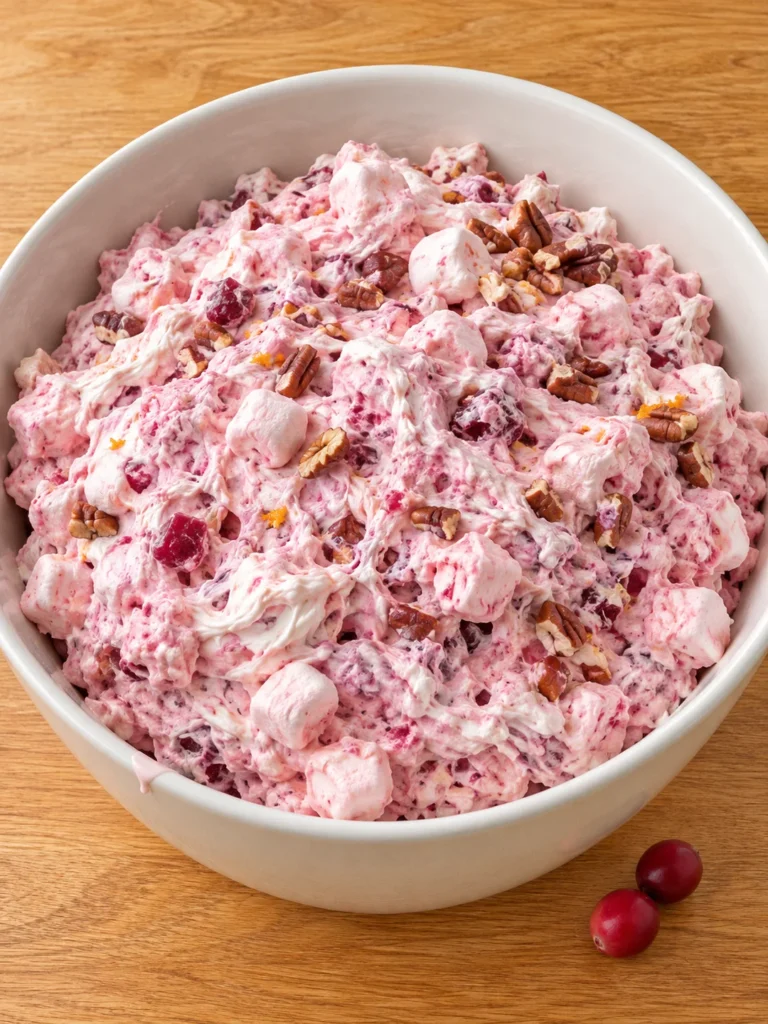
I ordered a turkey plate because it was the only thing on the board. What came with it, in a small cold bowl set to the side, was not the jellied stuff from a can. It was coarse and magenta and sharp enough to make my jaw tighten, with marshmallows in it and streaks of cream that had not been stirred all the way through. I finished the bowl before I touched the turkey.
The Counter in Carver, Massachusetts
The woman working the counter told me the salad was her own, not the diner’s, and that she brought a bowl in every day through October and November because the growers who stopped by expected it. She would not write anything down for me. She said it was her grandmother’s and that the measurements lived in her hands.
Fair enough. I ate there twice more that week, driving back out of my way each time, which tells you something about how the first bowl landed.
What I did get from her was the one rule she repeated. The berries go in raw, ground coarse, and they sit with sugar overnight. Not cooked. Never cooked.
The Dinner Where I Finally Watched Someone Make It
Two days later I was in Wareham for a long harvest supper I had stumbled into because a woman at a gas station mentioned it and I had nothing better to do. Twenty-odd people at trestle tables, and a chef named Roberta working at a side table in full view, narrating as she went.
She had a bowl of ground cranberries already macerating, done the night before, and she tipped it toward me so I could see the pool of juice at the bottom. Deep, almost ink-colored. She said that juice is the whole dish. Sugar pulls it out of the raw fruit and the bitterness leaves with it.
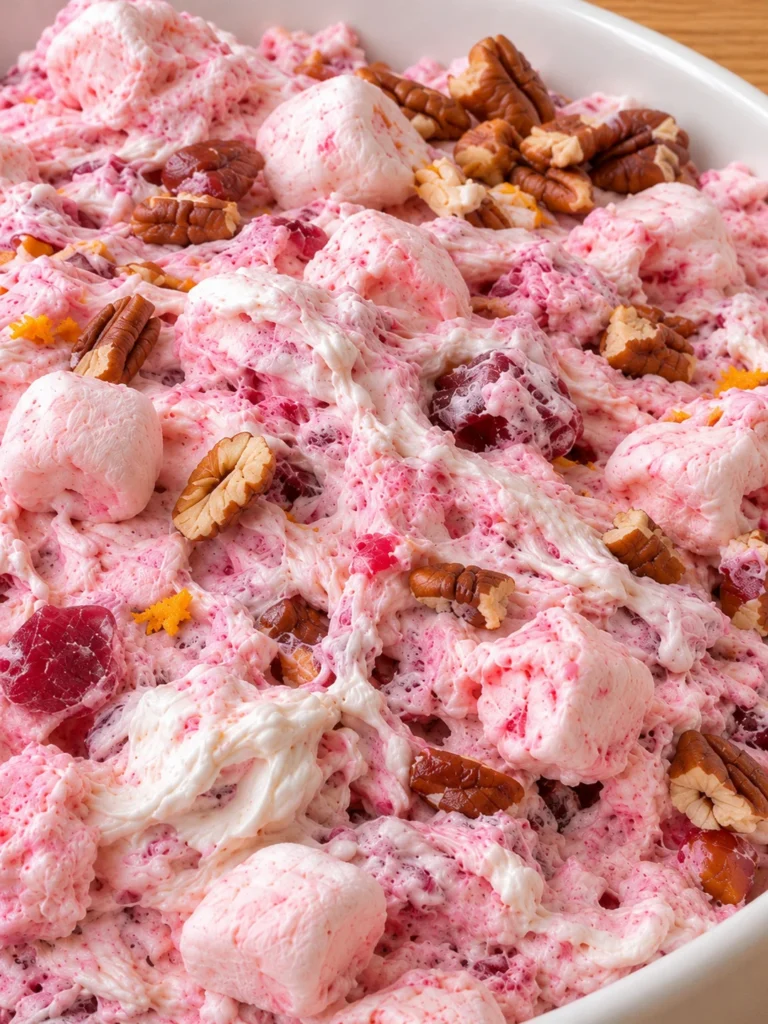
Then she grated an apple straight into the bowl on the big holes of a box grater, zested an orange over the top, pressed the pineapple dry in a sieve, and folded in the marshmallows. The cream came last, whipped unsweetened, folded in three goes. She stopped folding while it was still obviously streaky.
I asked why not just mix it properly. She said a uniform pink salad is a salad that sat too long. That line stuck.
Why Cranberry Salad Is Not Cranberry Sauce
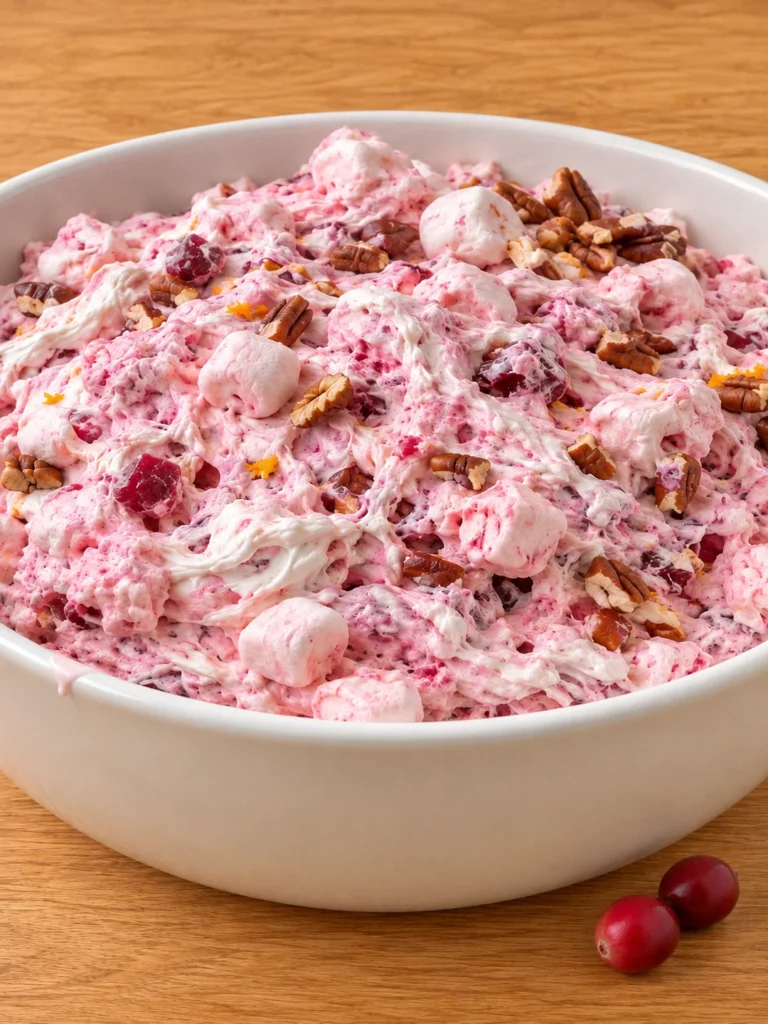
These two get confused constantly and they are not the same thing. Sauce is cooked until the pectin sets and it comes out smooth and sweet. This is raw fruit, coarsely ground, and it stays chunky and tart no matter how much sugar you give it.
It is also not a plate of leaves with dried cranberries scattered over, which is a modern restaurant invention and a different dish entirely. Americans file this one under salad and serve it as a side next to the turkey, not as dessert, and that will make sense the moment you taste it against gravy.
The history is older than the mid-century reputation suggests. Cranberries were a New England commercial crop through the 1800s, and the first printed cranberry sauce recipe showed up in Amelia Simmons’ American Cookery in 1796, already paired with roast turkey. Ground raw relish salads followed once hand-crank food choppers made the work easy, and the congealed cranberry jello salad that still rules Southern holiday tables came later, after Knox gelatin and Jell-O went mass market. All three versions survive, mostly on handwritten cards, and every family is certain theirs is the right one.
What I Used
- Fresh whole cranberries, 12 ounces, picked over for soft ones
- Granulated sugar, a cup, and no less if you want the color
- One tart apple, peeled and grated coarse. Granny Smith or Honeycrisp
- A navel orange, zest plus the sections cut free of membrane and chopped
- Canned crushed pineapple in juice, 8 ounces, drained hard
- Mini marshmallows, two cups
- A quarter teaspoon salt
- A cup of cold heavy cream, whipped unsweetened
- Pecans, three quarters of a cup, chopped rough. Optional but I always
What I Changed Bringing Cranberry Salad Home
The first adaptation was not my choice. Fresh cranberries show up in my markets for about six weeks and they are never bog-fresh, so I buy a few bags in November and freeze them. Frozen works honestly well here. Thaw fully, drain, pat dry, then grind, or the extra water thins the juice and the salad goes slack.
Roberta used a hand-crank grinder on the coarse plate. I use a food processor, two batches, eight to ten short pulses with one scrape-down. The first year I held the button and got purple sludge. Nothing fixes that, so pulse and stop early while you can still see pieces.
The oranges where I shop are sweeter than the ones she had, so I zest the whole thing but chop the sections slightly smaller and skip any added juice. The apple matters more than I expected. I tried it once with a Fuji because it was what I had on the counter and the salad lost its edge entirely.
And the cream stays unsweetened. Every time I have been tempted to add a spoonful of sugar to it, I have regretted it by the second helping.
Timing Is the Whole Recipe
Overnight for the berries and sugar. Then the fruit and marshmallows go in and it rests another four to six hours, which is when the marshmallows swell and drink up the loose juice and the whole thing tightens.
The cream goes in within the hour before serving. Not the night before. I did that once, out of what I thought was good planning, and by dinner it had wept a dull pink puddle and tasted like nothing.
Which means I now make this across two days with a sieve, a bent-cornered box grater I have had for years, and Bill Evans on in the background on a Sunday morning before anyone texts me. Twenty-five minutes of actual work spread very thin.
Swaps I Have Tried
Walnuts instead of pecans are fine, a little more bitter, which I do not mind. Canned pineapple tidbits chopped down work if crushed is sold out. Some people swap in sour cream for a third of the whipped cream and it holds better on a long table, though you lose the streaks.
What I would not swap is the whole-berry base for canned sauce. It is a shortcut, not a version.
I still think about that bowl on the stool next to the window, with the bogs going dark outside and the coffee pot hissing. Mine is close. Nine hours of driving and nothing to eat all day is the one ingredient I cannot reproduce in my own kitchen, and I have stopped trying.

Cranberry Salad
Ingredients
Equipment
Method
- Rinse the cranberries and pick out any soft or shriveled berries. Drain them well and pat dry.
- Working in two batches so the bowl is not crowded, pulse the cranberries in a food processor 8 to 10 short pulses, scraping down once. Stop while the berries are still coarse, recognizable chunks. Do not let them turn to puree.
- Scrape the ground cranberries into a large non-reactive bowl. Add the sugar and salt and stir well, pressing the mixture against the side of the bowl a few times to start the juice running.
- Cover and refrigerate overnight, at least 8 hours and up to 24. The sugar will draw out a pool of deep magenta juice and the raw bitterness will fade. Stir once if you happen to open the refrigerator.
- The next day, peel and coarsely grate the apple on the large holes of a box grater. Add it to the cranberries along with the orange zest and chopped orange sections.
- Press the crushed pineapple in a fine-mesh sieve to drain off the juice, then fold it in. Fold in the mini marshmallows.
- Cover and return the bowl to the refrigerator for 4 to 6 hours. The marshmallows will swell and absorb the loose juice, and the salad will tighten up.
- Up to one hour before serving, whip the cold cream in a chilled bowl to soft peaks that just hold their shape. Leave it unsweetened. The salad is sweet enough.
- Fold the whipped cream into the cranberry mixture in three additions with a rubber spatula, using a light under-and-over motion. Stop while the salad is still streaky pink and white rather than uniformly pink.
- Fold in the chopped pecans if using, reserving a small handful for the top.
- Transfer to a serving bowl, scatter the reserved pecans over the surface, and refrigerate until serving. Serve cold, within the hour, as a side dish.