
Classic Deviled Eggs were the last thing I expected to carry home in my notebook after a week in Seville. I had signed up for the cooking class to learn about sherry vinegar and frying fish properly.
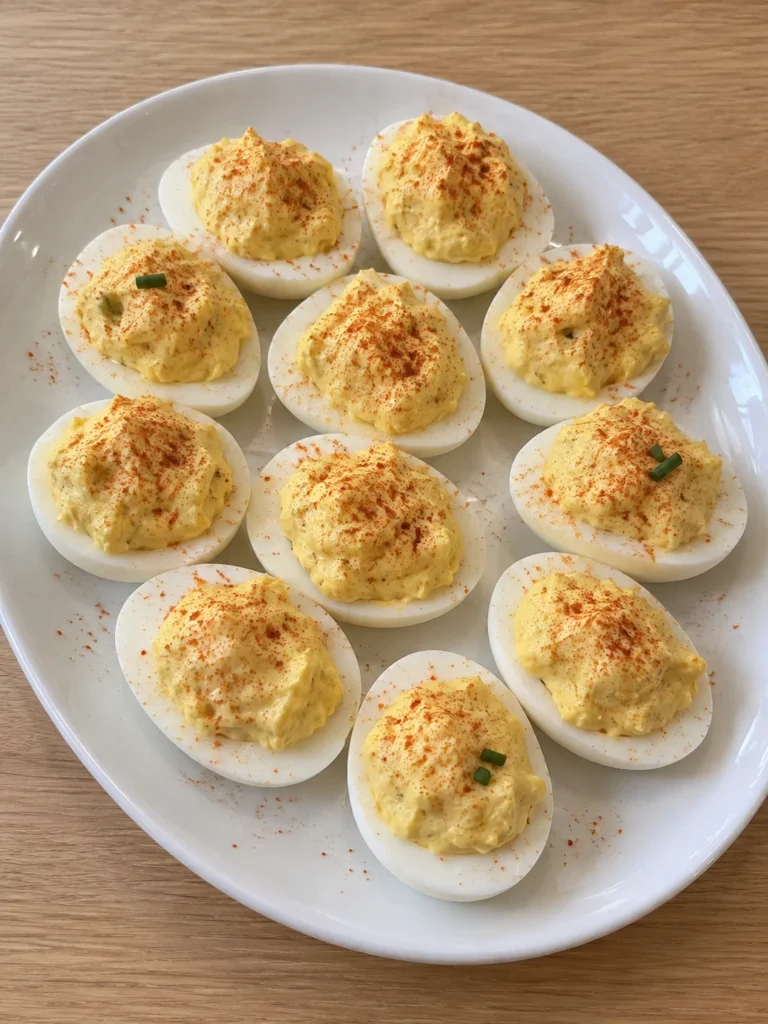
Instead I left thinking about eggs. Boiled eggs, of all things.
The class ran out of a back room off the Mercado de Triana, four of us at a scarred steel counter, and the whole place smelled of hot olive oil, wet market floor and pimentón that had been sitting open too long in the warm air. It was late April and the roller doors were up.
A Tuesday Morning Class in Seville
The instructor was a woman named Marisol Ortega who had been teaching the same three-hour session for eleven years and still corrected everyone’s knife grip. We did salmorejo, we did a tortilla she refused to let anyone flip, and then at the end, almost as filler, she made huevos rellenos.
She mashed the yolks against the side of a bowl with a fork, added her fat in careful little spoonfuls, and then kept tasting and kept salting long past the point where I would have stopped. That was the whole lesson, really. Egg is bland and it needs more salt and more acid than you think it does.
When I asked for the amounts she pulled a pen out of her apron, flattened a brown paper bag on the counter and wrote the ratio on it, with a note about the twelve minutes off the heat. I still have the bag in the drawer under my knives. The ink has gone a bit soft.
Classic Deviled Eggs Are Older Than America
Marisol said she taught them in Seville because they belonged there, and she was not wrong. The earliest written recipe that genuinely resembles this dish comes out of 13th-century Andalusia, yolks mashed with cilantro, pepper and onion juice before going back into the whites.
Before that, Rome. The cookbook of Apicius has boiled eggs with the yolks pulled out and blended with pepper, wine, broth and oil, and Horace’s line about a meal running “ab ovo usque ad mala”, egg to apples, tells you where in the dinner they sat.
The American part is narrower than people assume. Mayonnaise got folded into the recipe in Fannie Farmer’s 1896 Boston Cooking-School Cook Book, and from there the dish settled into Southern and Midwestern church suppers, reunions and funeral receptions for good.
And the name has nothing to do with Satan. To “devil” something entered English around 1786 and simply meant to season it hotly, first in print for devil’d lamb kidney. Plenty of families in the South and Midwest still soften it anyway and call them stuffed, dressed, salad or angel eggs.
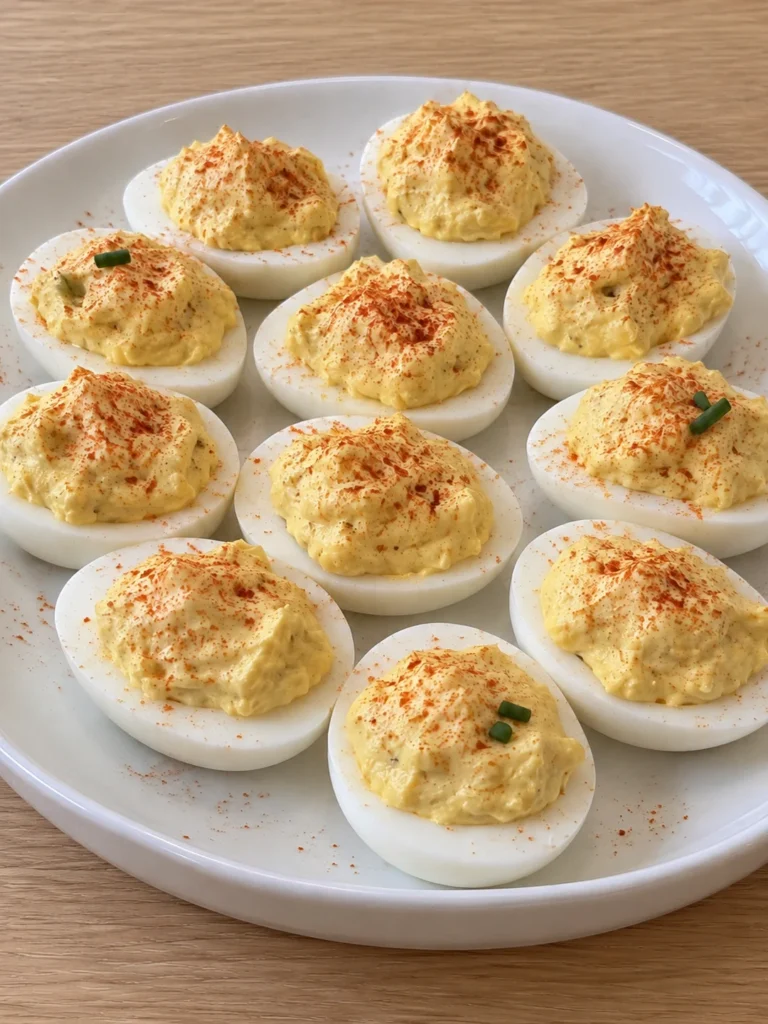
What I Used
- 12 large eggs, about a week old, and that age matters more than anything else here
- Half a cup of full-fat mayonnaise, added a spoon at a time
- Two teaspoons of prepared yellow mustard, the cheap bright yellow kind
- A teaspoon of white vinegar, or sweet pickle brine if there is a jar open
- Half a teaspoon of salt, then more, then probably a bit more again
- A quarter teaspoon of black pepper, ground fresh
- Sweet paprika for dusting, mine from a Spanish tin I overbought in Triana and have been slowly working through
- Chives or dill if I have them, chopped fine
The eggs come from the farmers’ market on Wednesday, and I buy them a full week before I need them on purpose. Very fresh eggs cling to the shell and peel like a punishment.
The Off-Heat Method and Where It Goes Wrong
This is a short recipe with about four places to ruin it, which is why it feels oddly tense for something so humble. Most home cooks lose it at the boiling stage. They keep the pan bubbling for fifteen minutes and get that grey-green ring and the faint sulfur smell, and then blame the eggs.
The water comes to a full boil, the lid goes on, the pan comes off the heat entirely, and it sits for twelve minutes. Then straight into ice water for five. Cold all the way through or the whites will tear when you cut them.
I crack each one all over and peel under cool running water, starting at the wide end where the air pocket is. Halving them is the other place things go wrong. I use my one good chef’s knife, the one with the slightly loose rivet I keep meaning to deal with, and I wipe the blade between every single cut so the whites stay clean.
The mayonnaise goes in gradually. Gradually is not a suggestion, you cannot take it back out once the filling goes slack. Then mustard, vinegar, salt, pepper, and taste it until the filling is sharp enough to be a bit much on its own.
Pressing the yolks through a fine sieve instead of mashing them gives a silkier result and I do it about half the time. Honestly, when it is Sunday morning and I have Chet Baker on and nowhere to be, I sieve. Any other day the fork is fine.
One more thing Marisol was firm about. Boil and peel ahead if you want, even two days ahead, but do not fill them early. The whites go rubbery and the whole plate turns sad.
Swaps and the Plate Everyone Expects
Swapping the vinegar for a spoonful of sweet pickle relish or pickle brine gives you the Southern church-supper version, slightly sweeter and softer in the mouth. A dusting of Old Bay instead of paprika is the Chesapeake habit and I like it more than I expected to.
I prefer yellow mustard here over Dijon, which surprises people. Dijon makes them taste like a sandwich. The cheap yellow stuff tastes like the dish is supposed to taste.
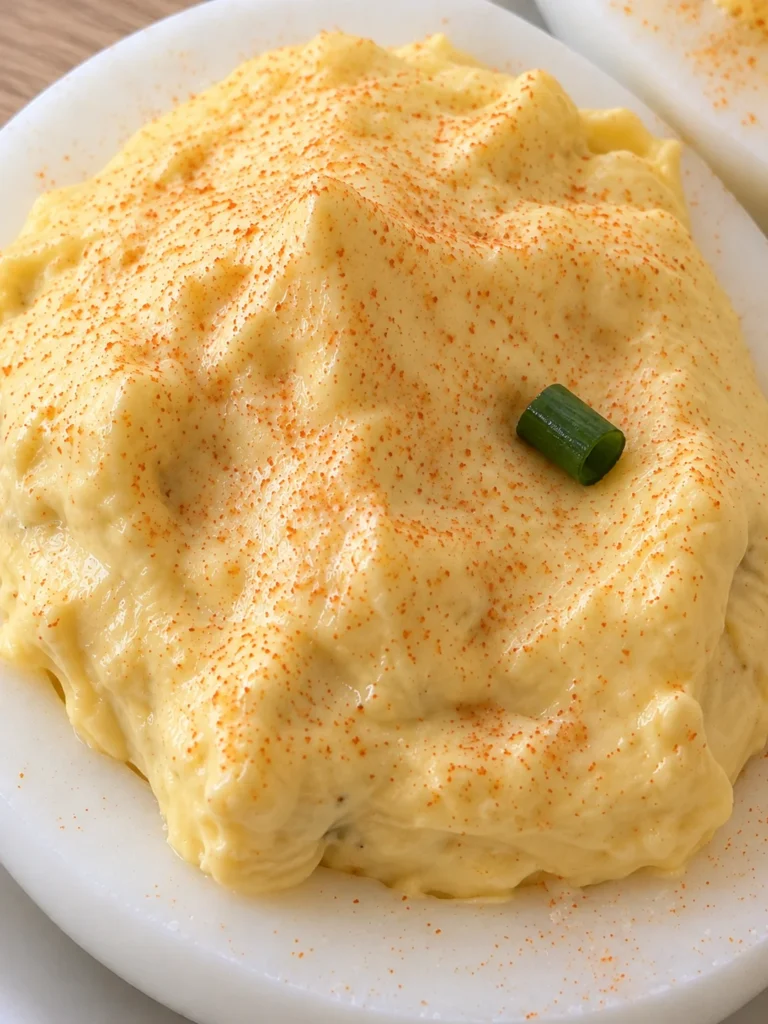
These have quietly become my thanksgiving deviled eggs, the thing I get assigned every November whether I volunteer or not, and they go on the table cold with chopped chives over the top and sliced pickles alongside. The scalloped platter was a thrift-store find and it wobbles, but it is the correct plate and I am not replacing it.
The first year I made them I overboiled the eggs and served them anyway, grey rings and all, and nobody said a word. Which was worse than if they had.
Now I make them a few times a year and I think about that back room off the market every time I pull the pan off the heat and set a timer for twelve minutes. Cold, out of the fridge, standing at the counter, before anyone else has arrived. That is when they taste best.
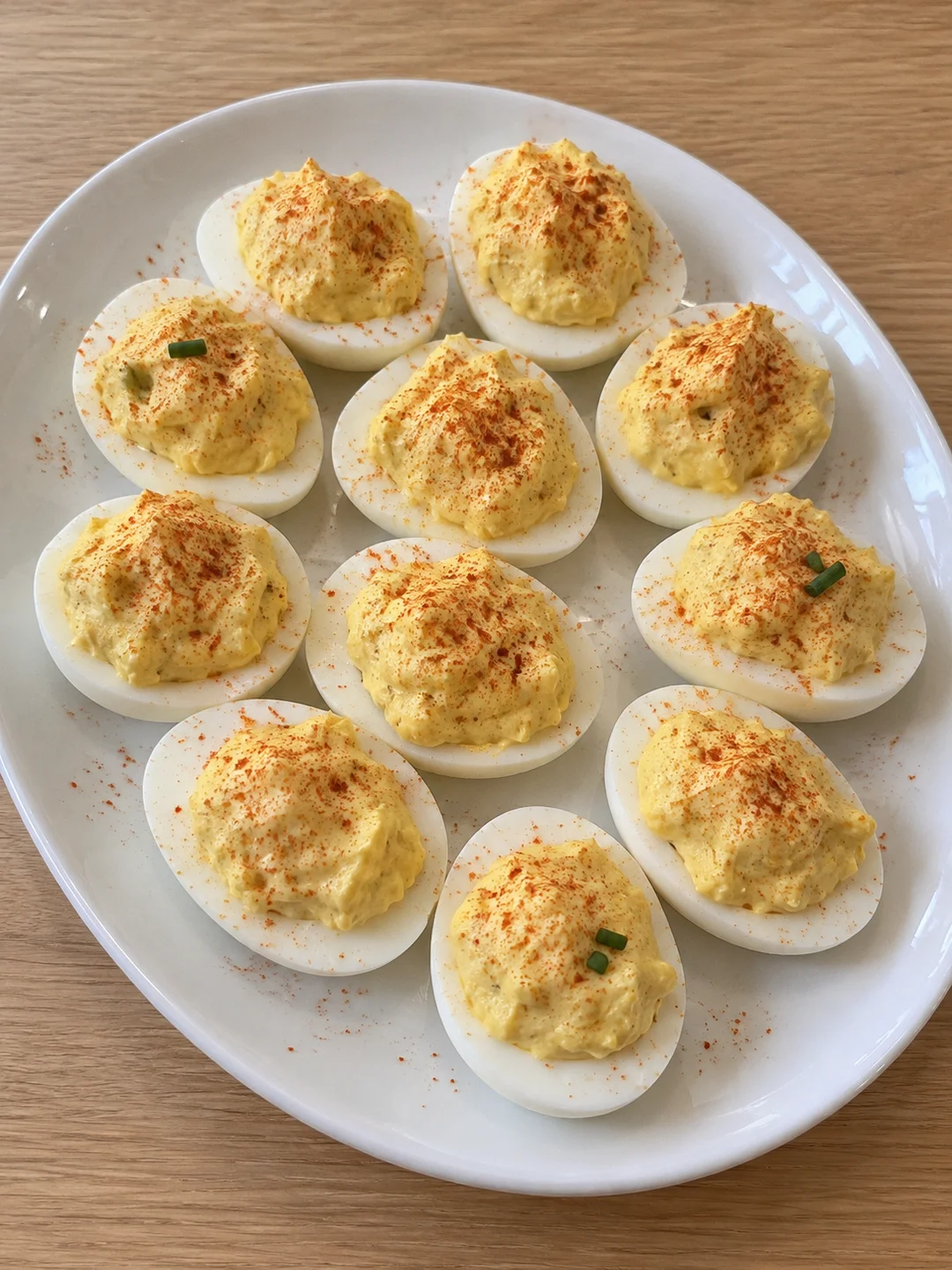
Classic Deviled Eggs
Ingredients
Equipment
Method
- Place the eggs in a single layer in a saucepan and cover with cold water by 1 inch. Set over medium-high heat and bring to a full boil.
- The moment the water boils, cover the pan, pull it off the heat completely and let it stand 12 minutes. This sets the whites firm while keeping the yolks bright yellow and creamy. Do not keep boiling, that is what causes the grey-green ring and the sulfur smell.
- Transfer the eggs straight into a bowl of ice water and leave 5 minutes, until cold all the way through.
- Crack each egg all over and peel under cool running water, starting at the wide end where the air pocket sits. Pat dry.
- Halve each egg lengthwise with a thin sharp knife, wiping the blade clean between cuts so the whites stay neat. Pop the yolks into a mixing bowl and set the whites cut side up on a platter.
- Mash the yolks thoroughly with a fork until no lumps remain, or press them through a fine sieve for a silkier filling.
- Work in the mayonnaise a tablespoon at a time until the mixture is smooth and thick enough to hold a soft peak. Add it gradually, you cannot take it back out.
- Stir in the mustard, vinegar, salt and pepper. Taste and keep seasoning. Egg is bland and needs more salt and acid than you expect, so adjust until the filling tastes sharp on its own.
- Spoon or pipe the filling back into the whites, mounding it generously above the rim.
- Dust evenly with sweet paprika. Chill 20 minutes and serve cold.