
Delia made Parker House Rolls on a Tuesday night in her garden-level kitchen in Beacon Hill, and she poured me a glass of sparkling wine from Westport Rivers, a vineyard about an hour south of Boston that I had never heard of in my life. She was a sommelier. She said if a roll has butter, sugar and egg in it, it deserves bubbles.
I was staying in her spare room for four nights. The oven door was warped and did not latch, so she wedged a wooden spoon against it and kept talking.
That was two autumns ago. I think about that kitchen more than I expected to.
The Beacon Hill Kitchen Where I Learned Parker House Rolls
Delia wore a grey cardigan with a corkscrew in the pocket the entire time, even with flour on her hands. Her counter was a slab of butcher block worn into a shallow dip in the middle from decades of dough. She rolled the rectangle out fast, faster than I would have dared, and let it sit for two minutes so it stopped shrinking back at her.
She let me cut and fold the first six. I folded them neatly in half, edge to edge, feeling quite pleased.
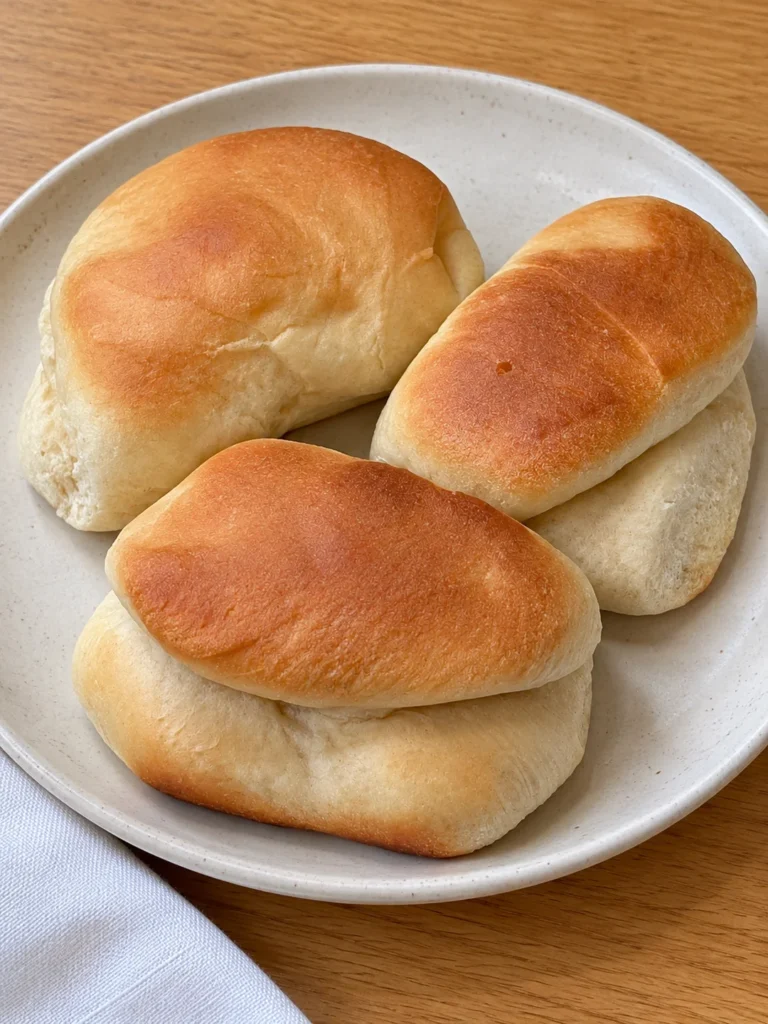
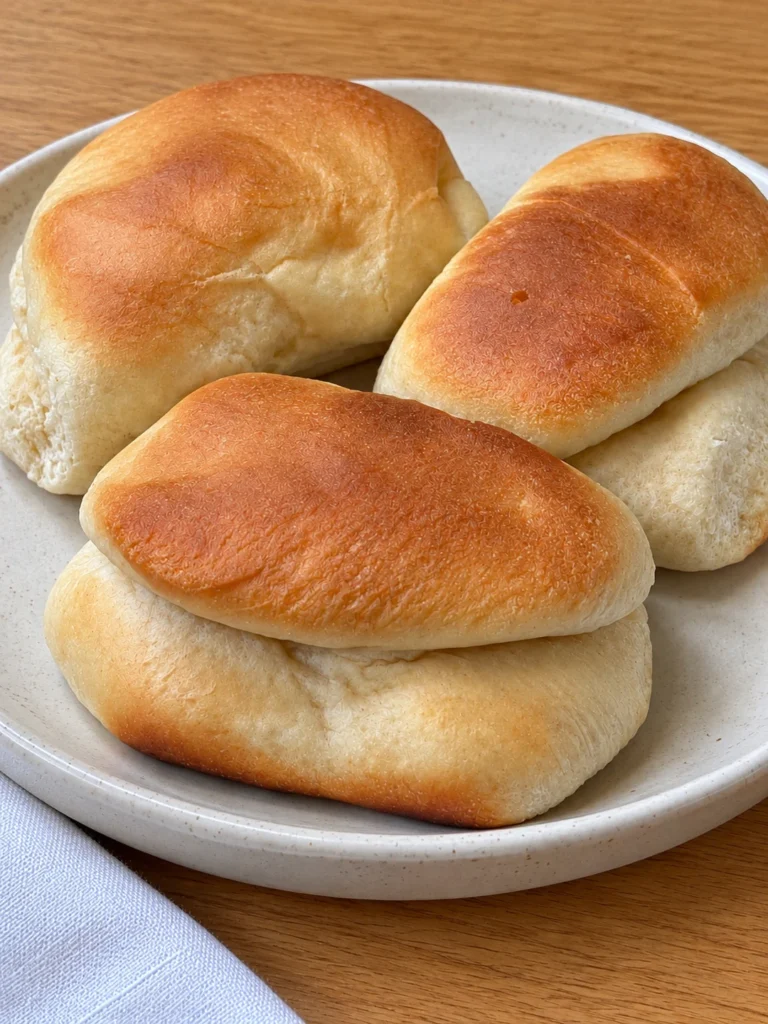
She picked one up and undid it. The top edge has to stop short of the bottom edge by about a quarter inch, she said, so there is a little lip. Even folds give you a sad flat pillow. The offset lip is the whole point.
The other thing she corrected me on was butter. I had brushed the dough lightly, politely, the way you varnish something. She took the brush and went at it properly, right to the edges, puddling it a bit. That trapped butter inside the fold is what makes the roll tear open along a seam instead of being torn apart like ordinary bread.
Boston’s Roll, and the Baker Who Allegedly Lost His Temper
Delia walked me past the Omni Parker House on School Street the next morning on her way to a tasting. Harvey D. Parker opened the hotel in 1854, and somewhere in the decades after, the roll turned up in its kitchens.
Hotel lore blames a German baker remembered only as Ward, who supposedly got furious at a difficult guest and flung unfinished lumps of dough into the oven. They came out creased and folded, thin-crusted, feather-light. By 1876 they were a fixture on the menu.
The hotel kept its own formula quiet until 1933, when Franklin D. Roosevelt asked for the rolls at a White House dinner. Printed home versions existed well before that, including Fannie Farmer’s 1896 Boston Cooking-School book, so the secret was always a little bit of theatre. Delia enjoyed that detail. She said every great house wine list has some theatre in it too.
One thing worth knowing. These are not a separate species of bread. They are homemade dinner rolls, the soft American kind, and what makes them Parker House is the pocketbook fold rather than any unusual dough. The Southern pocketbook roll cut with a biscuit cutter is a later adaptation of the Boston original, not a rival tradition.
What I Used
- Whole milk, scalded and cooled back down to warm
- Active dry yeast, one packet, bloomed in warm water with a pinch of sugar
- Sugar, a third of a cup, enough to make the crumb faintly sweet
- Unsalted butter, ten tablespoons total, split three ways for the dough, the folds and the brushing
- Two eggs, left on the counter until they lost their chill
- All-purpose flour, about four and a half cups
- Fine salt in the dough, flaky sea salt for the tops
No bread flour. I tried it once thinking more protein meant a better roll, and got something chewier and more bagel-adjacent. All-purpose is correct here.
Making Parker House Rolls in My Own Kitchen
I made them the first Sunday after I got home, early, before the June marine layer burned off and the kitchen got hot. I scalded the milk in the small saucepan I use for nothing else, watched the bubbles ring the edge, and pulled it off before it could boil.
Here is what the fifteen minutes of cooling is actually for. Yeast dies somewhere around 130 F and milk straight off the heat is well past that, so you wait until it is only pleasantly warm on the inside of your wrist. The yeast in its water does the opposite of waiting. It foams up and starts smelling like the inside of a bakery, which tells you it is alive before you commit four cups of flour to the project.
In the mixer the dough goes from a shaggy, unpromising mess to something smooth and slightly tacky in about eight minutes. That shift is gluten strands lining up and the fat coating them, which is why an enriched dough feels silkier than a lean one. It should kiss your finger and let go, not stick.
During the rise, carbon dioxide gets trapped in that stretchy net and the mass domes. Then you punch it down, which sounds violent and is really just redistributing the gas so the second rise is even.
The Second Rise Is Where I Ruined My First Batch
I let them go too long. Forty-five minutes seemed modest so I gave them an hour and ten, and they came out wide, coarse and flat, like something sold in a plastic sleeve. Parker House rolls over-proof far faster than round rolls because the dough is thin where it folds.
Now I poke one. If it springs back slowly, it is ready. Do not wait for them to double.
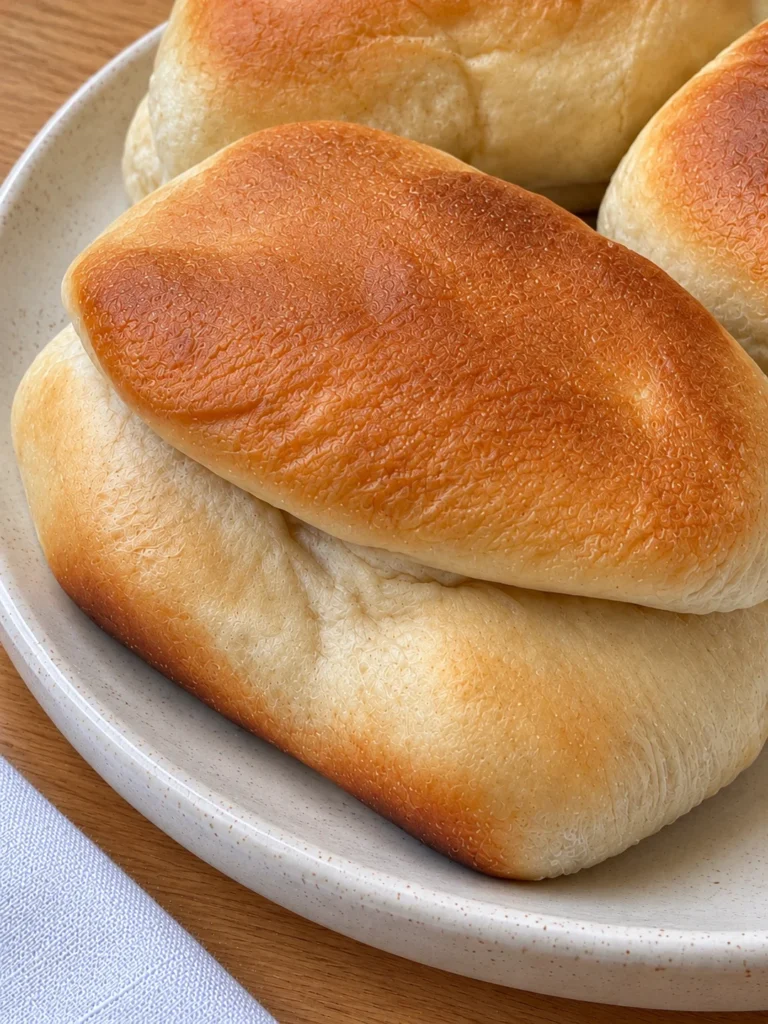
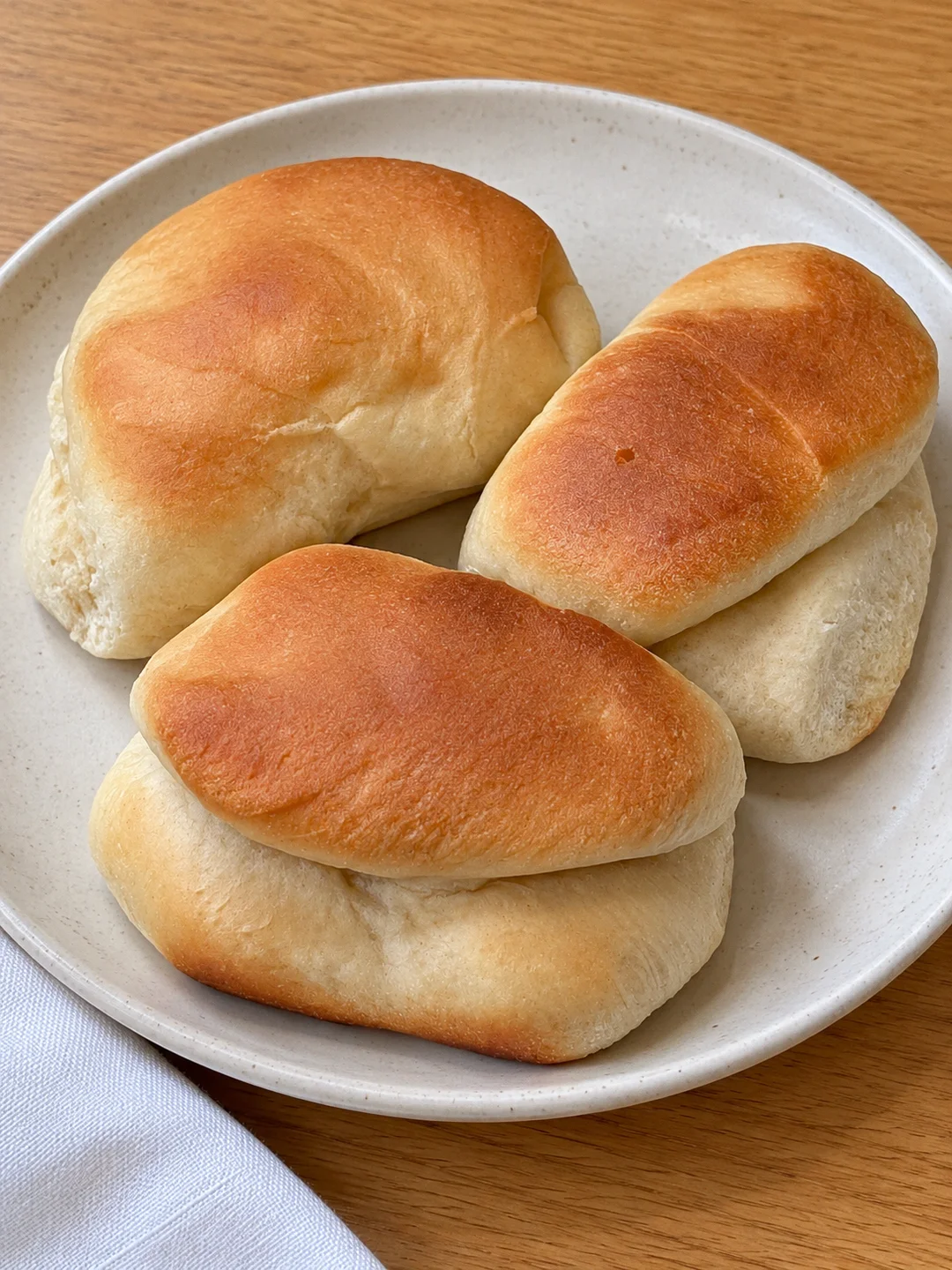
In the oven at 375 F the butter in the seam melts and turns to steam, which pries the two layers apart from the inside while the outside sets. The sugar and the milk proteins brown fast, so you get deep gold on top at eighteen to twenty-two minutes and a hollow sound when you tap the bottoms. 190 F in the middle and they are done.
Butter again the second they come out, generously, then flaky salt while the tops are still wet enough to hold it.
Things I Change, and One I Will Not
I bake them spaced an inch and a half apart on two parchment-lined sheet pans, twelve per pan, which is how the hotel does it. The modern habit of cramming them into a deep baking dish so they pull apart in a slab looks lovely and leaves the center ones gummy. I have done it. Not again.
If I am cooking for people the next day I make the dough the night before, let it do its first rise, then refrigerate it and shape it cold with a longer second rise in the morning. I use a tapered wooden rolling pin with no handles that I bought at a yard sale for two dollars and like more than anything else in that drawer.
Cold ones, split and eaten standing at the counter with jam, are honestly better than they have any right to be.
Delia texts me every November to ask if I have made them yet. I always have, usually in October, usually too early for any reason beyond wanting the house to smell like her kitchen did. Some trips leave you with photos and some leave you with a fold you can do with your eyes closed.
Parker House Rolls
Ingredients
Equipment
Method
- Pour the milk into a small saucepan and heat over medium until it steams and small bubbles ring the edge, about 4 minutes. Do not boil. Pour it into the mixer bowl and let it cool to warm, about 110 F, roughly 15 minutes. If it is hotter than that it will kill the yeast.
- Meanwhile, stir the yeast and a pinch of the sugar into the 1/4 cup warm water. Let it stand 7 to 10 minutes until foamy and smelling of bread. If nothing happens, the yeast is dead and you need a fresh packet.
- To the warm milk add the 1/3 cup sugar, 4 tablespoons of the melted butter, the beaten eggs, the salt and the bloomed yeast mixture. Whisk to combine.
- Add 4 cups of the flour. Mix on low with the dough hook until a shaggy mass forms, then knead on medium-low for 8 to 10 minutes, adding the remaining 1/2 cup flour a spoonful at a time only as needed. You want a smooth, elastic dough that is soft and slightly tacky to the touch but does not coat your finger. By hand, knead on a lightly floured counter for 12 minutes.
- Shape the dough into a ball, place it in a lightly buttered large bowl, cover with plastic wrap and set it somewhere warm and draft-free. Let it rise until doubled and domed, 1 to 1 1/2 hours.
- Punch the dough down gently and turn it out onto a lightly floured counter. Roll it into a rectangle about 9 by 16 inches and 1/4 inch thick. Let it relax for 2 minutes so it stops shrinking back.
- Brush the whole surface with 3 tablespoons melted butter, going right to the edges. Cut the rectangle lengthwise into 4 strips, then crosswise into 6, giving 24 pieces roughly 2 1/4 by 2 2/3 inches.
- Fold each piece unevenly, bringing the top half over the bottom so the upper edge stops about 1/4 inch short of the lower edge. Press the fold lightly to set the crease. That offset lip is the pocketbook shape, and the butter trapped inside becomes the tearing seam.
- Arrange the rolls on the parchment-lined sheet pans, folded edge down and about 1 1/2 inches apart, 12 per pan. Cover loosely with a clean towel.
- Let them rise until visibly puffy and light, 30 to 45 minutes. Test by poking one gently: it should spring back slowly. Do not wait for them to double. These over-proof easily, and a long second rise gives flat, coarse rolls instead of delicate ones.
- While they proof, heat the oven to 375 F with a rack in the center.
- Bake for 18 to 22 minutes, rotating the pans front to back halfway through, until the tops are deep golden brown and the bottoms sound hollow when tapped. The internal temperature should read 190 F.
- The moment they come out, brush the hot rolls generously with the remaining 3 tablespoons melted butter and scatter the flaky sea salt over the tops. Let them sit 5 minutes, then serve warm in a napkin-lined basket.