
The No Bake Pumpkin Pie that changed my mind about the whole genre was sitting on a folding table in Ludwigsburg, Germany, under a tent that smelled like hot oil and wet straw.
Ludwigsburg runs a pumpkin festival every autumn in the palace gardens. Tens of thousands of squash stacked into sculptures, brass band somewhere behind the hedges, a queue for absolutely everything. I was there alone in late October eating a pumpkin sausage I did not need.
The pie stall was run by a woman named Corinne who left Vermont years ago and now has a small bakery a few streets off the gardens. She put a slice on a paper plate and then stood there watching me eat it, which is a lot of pressure for a Tuesday.
Five in the Morning at a Ludwigsburg Bakery
I asked how she made it. She said come to the shop at five, I am not explaining it over a counter with forty people waiting.
So I went. The bakery was cold and smelled of yeast and scorched sugar, the radio tuned to something German and talky that neither of us listened to. She had other doughs going and let me stand near the bench while she worked, which meant I got to watch her hands more than her measuring.
Her crumb crust took about four minutes. Graham crumbs she imports in bulk because German shops do not stock them, melted butter poured in while the crumbs were still being stirred, then packed into the plate with the flat bottom of a glass. Sides first, then the base. She was firm about that order and would not say why beyond “it holds.”
The part that actually mattered was the gelatin. She bloomed it in cold milk in a battered little saucepan, let it swell for five minutes until it looked like wet sand, then warmed it just until the grains vanished. No boiling. She told me half the no bake pies she has eaten in her life were soup because people skip that step and trust the refrigerator to do the work.
What No Bake Pumpkin Pie Actually Is
I looked into it properly when I got home, because Corinne kept calling it an old American thing and I did not think that was right.
Pumpkins are native to North America, and Indigenous peoples were roasting and stewing them long before any European showed up with an opinion. Settlers in the 1600s learned pumpkin cookery from them, and by 1670 Hannah Woolley’s The Gentlewoman’s Companion in England had a pumpkin pie seasoned with rosemary and thyme alongside the cinnamon and cloves, which sounds terrible and I would still try it. The baked custard version we know took shape in the 1700s.
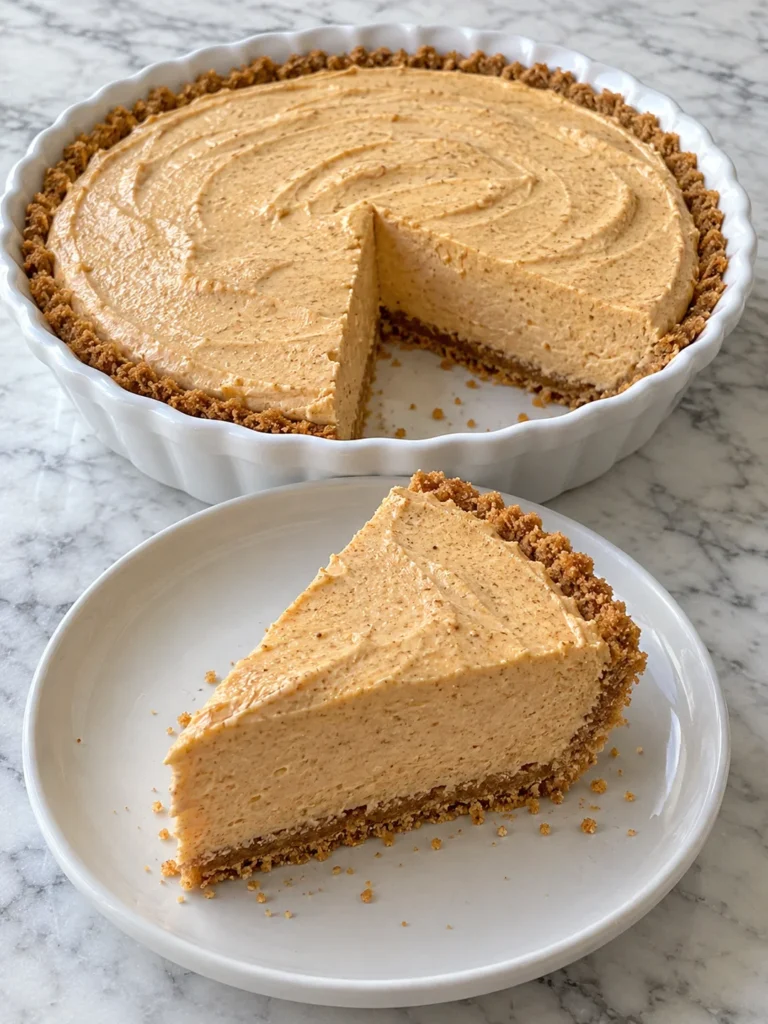
The no bake one is not heritage at all. It is a 20th century convenience dessert, born out of the icebox pie craze and the arrival of canned puree, boxed crumb crusts, powdered gelatin and tubs of whipped topping. Most American versions are a no bake pumpkin pie with cool whip folded straight in, and honestly that works, but Corinne whips real cream and so do I.
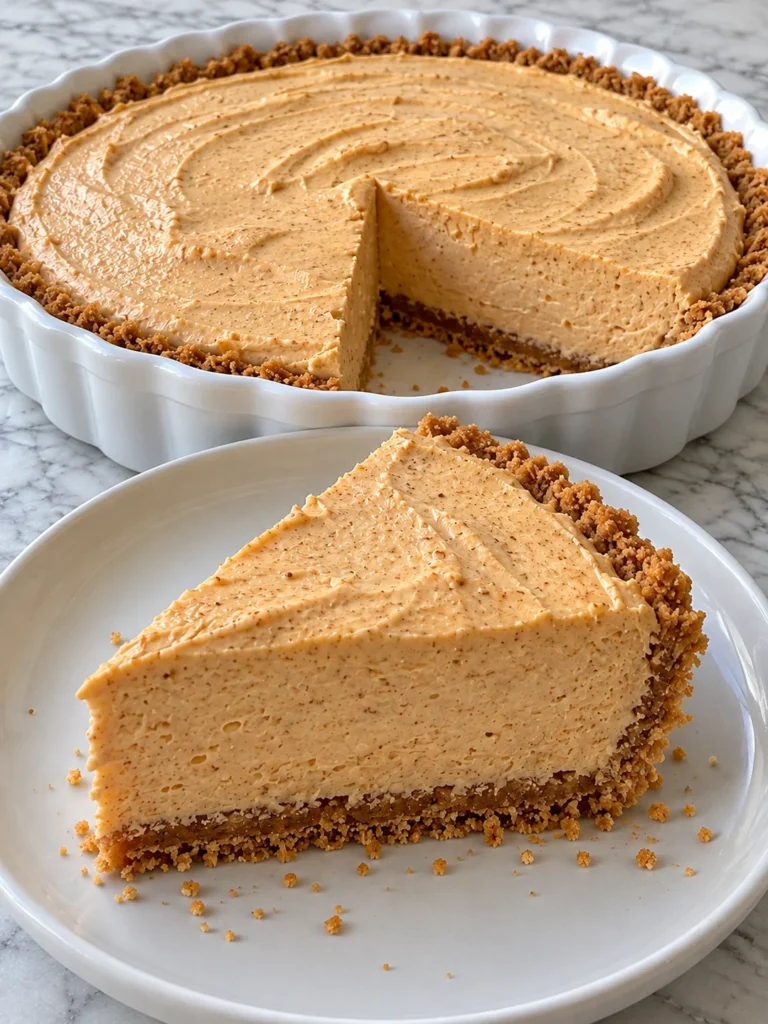
Two things worth knowing. It has no eggs and no baked custard set, so the texture is closer to a firm mousse than to the dense wedge you get at Thanksgiving, and adding an egg yolk to fix a runny one is advice borrowed from the baked pie that does nothing here. Also, canned pumpkin puree and canned pumpkin pie filling are different products. I bought the filling by mistake my second time making this and the result tasted like a candle.
What I Used
- Graham cracker crumbs, about twelve full sheets crushed fine
- Powdered sugar, for the crust, the filling and the cream
- Salt, a little in the crust and a little in the filling
- Unsalted butter, melted
- Unflavored powdered gelatin, one standard envelope
- Whole milk, cold, for blooming the gelatin
- Full fat cream cheese, genuinely at room temperature
- Canned pumpkin puree, the plain kind
- Pumpkin pie spice
- Vanilla extract
- Heavy whipping cream, very cold
Rebuilding the Ludwigsburg Pie in My Own Kitchen
I made it the first Sunday of October, early, Santa Ana wind pushing warm air through the window over the sink. Wrong weather for it entirely. The butter melted faster than I expected and the cream cheese was soft in twenty minutes instead of an hour, which for once was a gift.
The crust smells like a campfire cookie the second the hot butter hits the crumbs. I press it with a metal measuring cup whose markings wore off years ago and which I now use for nothing else. Into the refrigerator for half an hour.
The gelatin stage smells like almost nothing, faintly like a warmed baby bottle, and that is fine. What you are watching for is the milk going clear with no grit left on the spoon. Then it sits five minutes so it is warm rather than hot, because pouring hot gelatin into cold cream cheese gives you little rubbery threads and no way back.
The kitchen only really turns autumnal when the spice goes in. Cream cheese beaten smooth first, a full two minutes, scraped down twice, then the sugar, then the pumpkin and the spice and vanilla. It goes glossy and the smell of clove and ginger takes over the room. Gelatin in last, in a thin stream with the mixer on low, and from that moment you move.
I whip the cream in a bowl I stick in the freezer while the crust chills. Firm peaks, no further. A third folded in to loosen the base, the rest in two goes, spatula cutting down the middle and sweeping up the side.
Then eight hours minimum. I have tried four. It slumped, and I ate it out of the plate with a spoon standing at the counter, which was not a hardship but was not a pie.
Swaps and Small Fussing
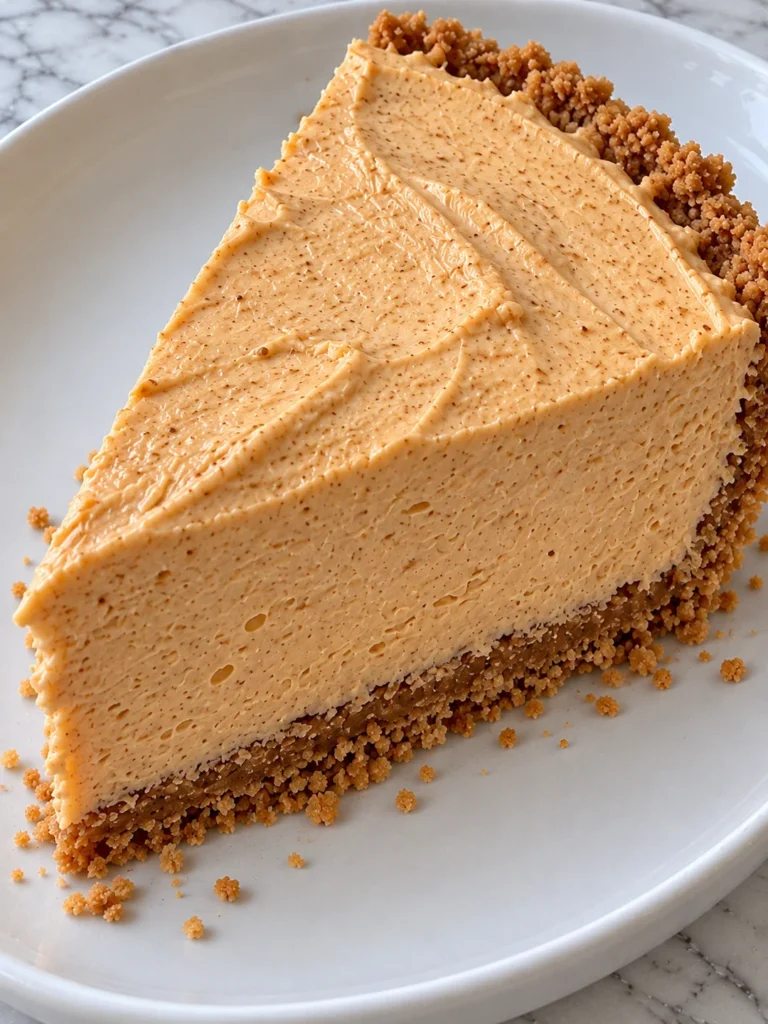
Half graham crumbs and half crushed gingersnaps makes a sharper crust and I now prefer it, although I say that and then buy grahams anyway most years. If your puree looks wet, blot it between paper towels or dry it in a skillet for five minutes and cool it completely. Watery puree is the reason for both a soggy crust and a soft set.
Powdered sugar only. Granulated will not dissolve in a cold filling and you get sand.
Serve it cold with more whipped cream, toasted pecans, a little caramel if the mood is on you, and black coffee. It keeps four days covered and freezes whole for a month.
What I cannot recreate is the tent, the brass band, the smell of frying oil drifting across a garden full of stacked squash. My version tastes the same and the room is quieter. Corinne told me she started making it because she refused to fight anyone for oven space in November, which is the least romantic origin story I have ever been given and also the most honest.
No Bake Pumpkin Pie
Ingredients
Equipment
Method
- Stir the graham cracker crumbs, 2 tablespoons powdered sugar and 1/4 teaspoon salt together in a bowl. Pour in the melted butter and mix until every crumb is damp and the mixture clumps when squeezed.
- Tip the crumbs into a 9 inch pie plate. Press them firmly up the sides first, then across the bottom, using the flat base of a glass to pack them tight and even. Refrigerate at least 30 minutes while you make the filling.
- Sprinkle the gelatin over the cold milk in a small saucepan and let it sit off the heat for 5 minutes, until it swells and looks like wet sand.
- Set the saucepan over low heat and warm gently, stirring, for about 1 to 2 minutes, just until the gelatin fully dissolves and the milk is clear with no grains left. Do not let it boil. Pull it off the heat and let it cool for 5 minutes so it is warm, not hot, but still fluid.
- Beat the softened cream cheese in a large bowl on medium speed for 2 minutes, until completely smooth with no lumps. Scrape the bowl well. Add 3/4 cup sifted powdered sugar and beat 1 minute more.
- Add the pumpkin puree, pumpkin pie spice, vanilla and 1/4 teaspoon salt. Beat on medium until uniform and glossy, about 1 minute, scraping down the sides.
- With the mixer running on low, pour the warm dissolved gelatin into the pumpkin mixture in a thin steady stream. Beat 30 seconds to distribute it completely. Work promptly from here so the gelatin does not begin setting in the bowl.
- In a chilled bowl, whip the cold heavy cream with 2 tablespoons powdered sugar to firm peaks, about 2 to 3 minutes. Stop as soon as the cream holds its shape, overwhipping turns it grainy.
- Fold one third of the whipped cream into the pumpkin base with a spatula to loosen it. Fold in the rest in two additions, cutting down through the center and sweeping up the side, until no white streaks remain. Keep the strokes gentle so the filling stays airy.
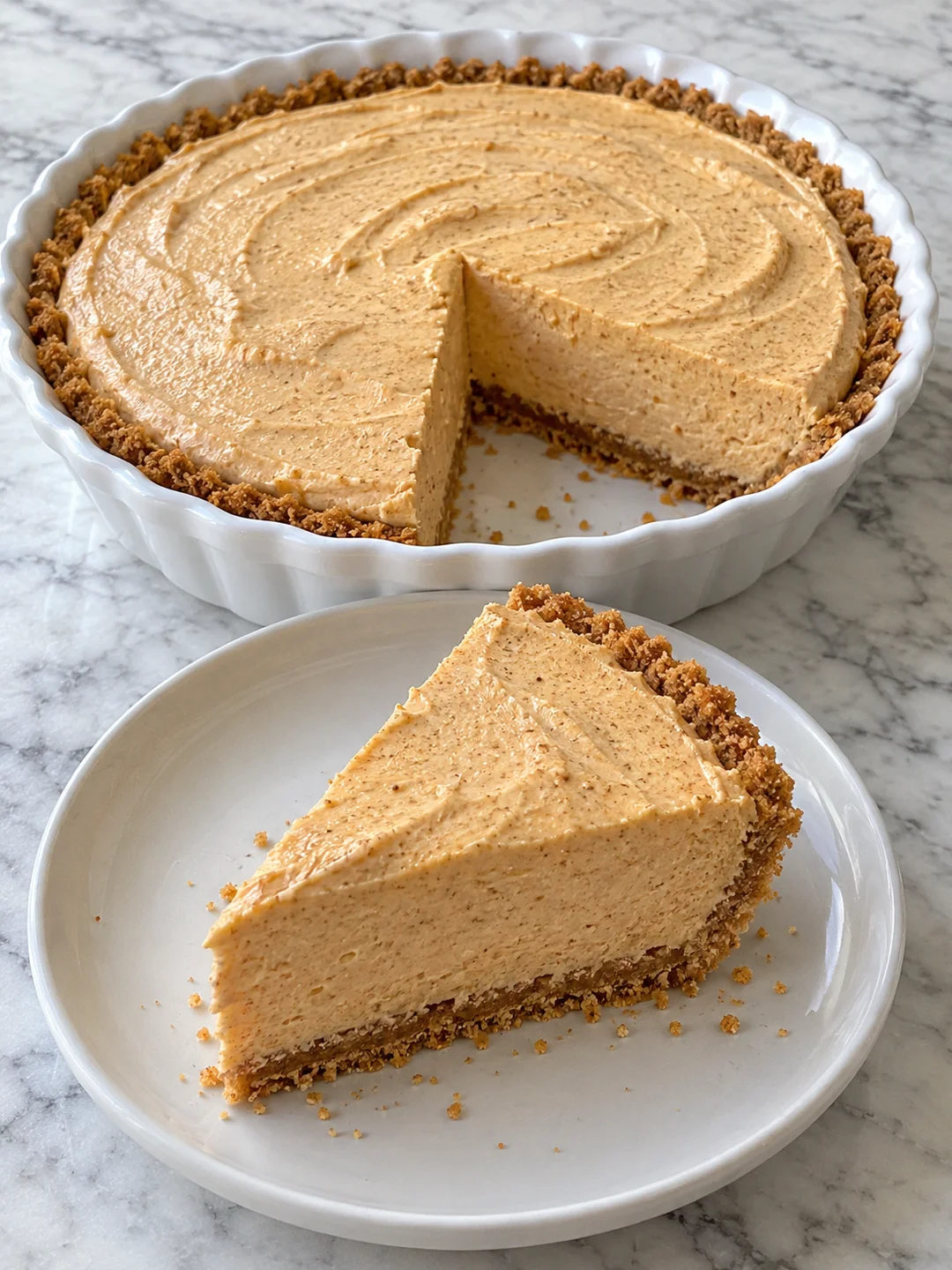
- Scrape the filling into the chilled crust and smooth the top into a soft dome, or swirl it with the back of a spoon.
- Cover loosely and refrigerate at least 8 hours, preferably overnight, until the filling is firm to a light touch in the center.
- Slice with a thin knife wiped clean between cuts and serve straight from the refrigerator.