
Beef short ribs were the last thing I expected to learn on a Tuesday afternoon in Walla Walla, Washington. I had signed up for the class because it was the only one running that week and I had two nights to kill before driving south. Four of us, a chipped prep table, and a man named Ray Fontaine who owned the place and taught the class himself once lunch service was done.
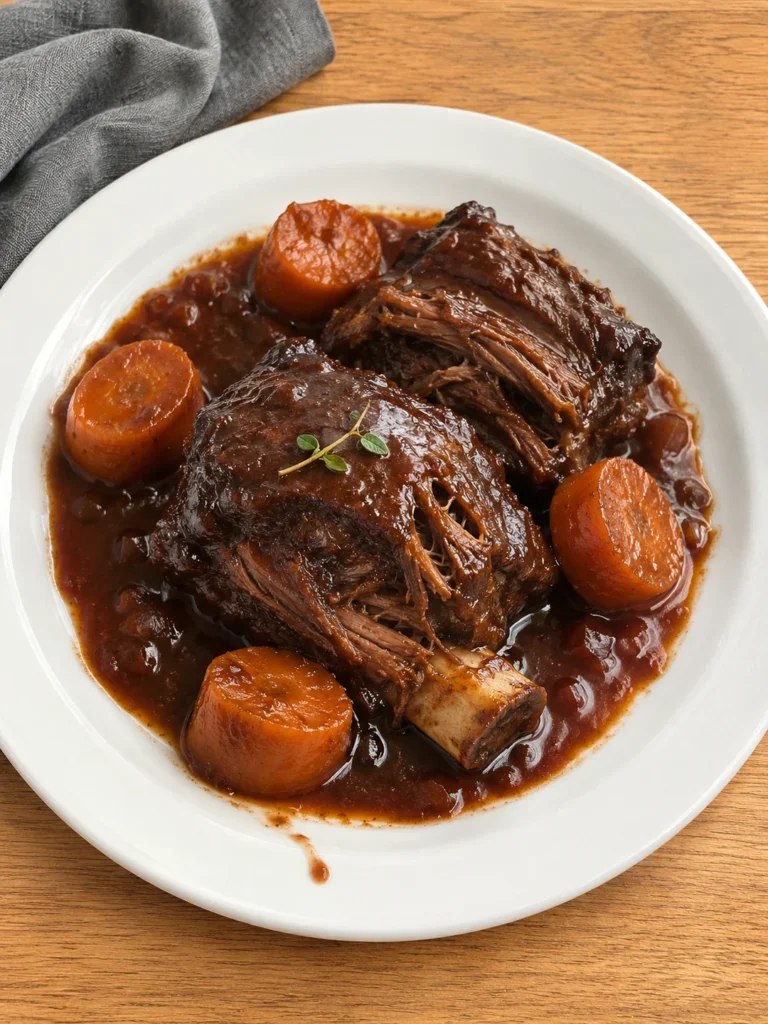
The room still smelled like the lunch rush when we walked in. Fryer oil, lemon, coffee going stale on the burner. By the time his wine hit the pot that smell was gone completely and the whole kitchen had turned into thyme and reducing Cabernet.
The Class Above a Roadside Kitchen in Walla Walla
Ray’s restaurant sits off Highway 12, the kind of low brick building you would drive past at sixty and never think about. He flipped the sign at two, wiped down the table, and set out six enormous blocks of bone-in beef in front of us like he was dealing cards.
He talked while he worked and he did not talk much. The one thing he said twice was about the sear. Three to five minutes a face, no crowding, and if the pot was hissing instead of roaring, pull a rib out and give it room.
What I remember most is him pouring off the fat and leaving the brown crust stuck to the bottom of the pot. He said that layer is the whole sauce, and people who skip the sear because it makes a mess end up with grey meat in brown water. Then he put the lid on, set a timer for two hours, and poured us all a glass of the same wine that went into the pot.
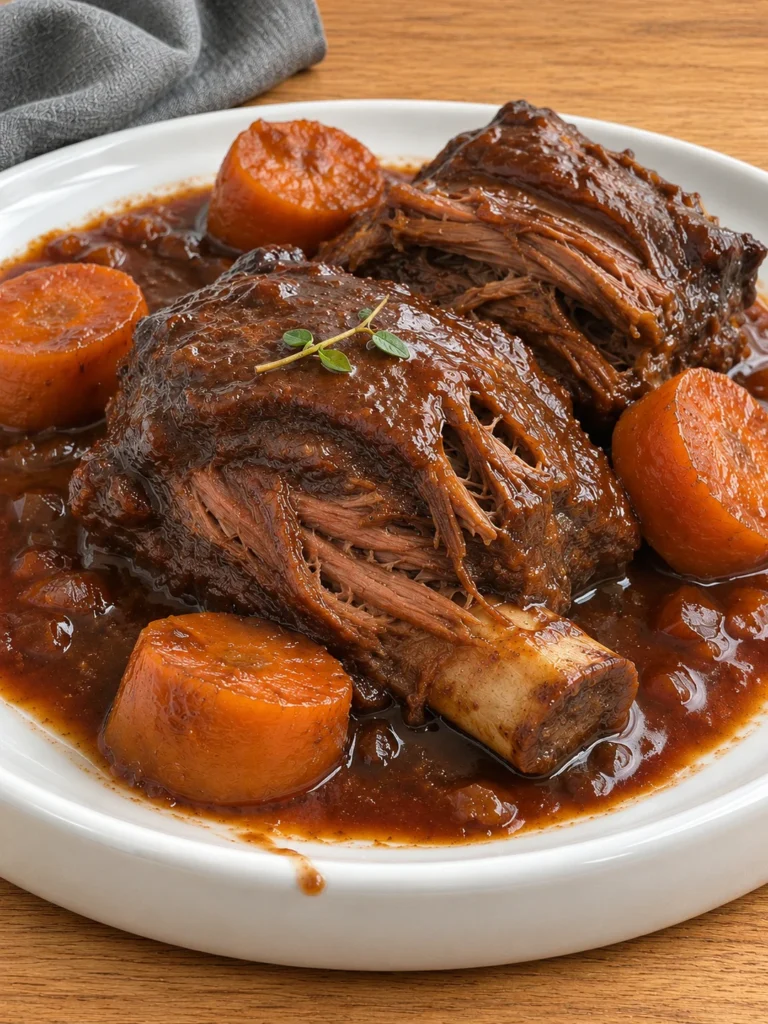
We ate around five. The ribs came out over mashed potatoes, still clinging to the bone, and the sauce was glossy enough to coat the back of a spoon with nothing thickening it but itself.
What Beef Short Ribs Actually Are
Worth clearing up, because I got it wrong for years. These are not barbecue ribs and they are not pork baby backs. Short ribs are a beef cut, a short section of rib bone with the meat sitting above it, taken from the chuck, plate, brisket or rib primals.
They were cheap for most of the last century. Bony, fatty, mostly ignored at American butcher counters except in Jewish-American cooking, where crosscut flanken went into soups and pot-roast braises, and in Korean-American kitchens as galbi. This red wine version is not galbi or galbi-jjim, which use thin flanken ribs with a soy, pear and sesame marinade. Different cut direction, different dish entirely.
The braise Americans now picture came out of restaurant kitchens in the 1990s and early 2000s, when chefs put wine-braised short ribs on fine-dining and wedding menus and the price of the cut climbed right along with its reputation. So it is a humble cut wearing a nice jacket. Which is exactly why it reads as generous when you put a platter of it down.
The cut direction is the part that will ruin you if you get it wrong. English cut means parallel to the bone, into thick three-inch blocks, and that is what you want. Flanken is cut across the bones into thin strips for fast grilling. I used flanken once because it was what the case had, and three hours later I had dry, stringy meat and a thin sauce. Ask for English cut by name.
What I Used
- About 5 lb bone-in English-cut short ribs, one bone per piece, three inches thick
- Kosher salt and a lot of freshly ground black pepper
- Olive oil for the sear
- One large yellow onion, diced
- Two stalks of celery, diced
- Four cloves of garlic, smashed flat with the side of the knife
- Two tablespoons tomato paste
- Two tablespoons all-purpose flour
- Three cups dry red wine, something you would actually drink
- Two cups low-sodium beef broth
- Six sprigs of fresh thyme and one bay leaf
- Four medium carrots, peeled, cut into thick inch slices
On the wine. You do not need anything expensive, but you do need it to be drinkable, because three cups reduce down to a few spoonfuls of concentrated flavor. Anything sold as cooking wine will come out harsh and salty at the other end. I used a Cabernet that cost eighteen dollars and drank the rest of the bottle with dinner.
Braising It Slow on a Rainy Sunday
I made it the first time on a grey Sunday in February, which is the correct weather for it. Rain on the kitchen window, oven at 325 with a rack in the lower third, Bill Evans on the speaker because something quiet suits a four-hour cook.
The searing is the only loud part. Twenty minutes of it, batches of three or four, deep mahogany on every face, my dutch oven with the chipped lid working harder than it does the rest of the year. I get the ribs from the butcher counter on Fairfax and I always ask them to cut the blocks a little thicker than they want to.
Then the pot went into the oven and there was nothing to do for two hours. Olives, the heel of yesterday’s bread, half the wine. I checked at the halfway mark the way Ray said to, looking for a lazy bubble rather than a real simmer. Carrots in at the two-hour mark, lid back on, another fifty minutes.
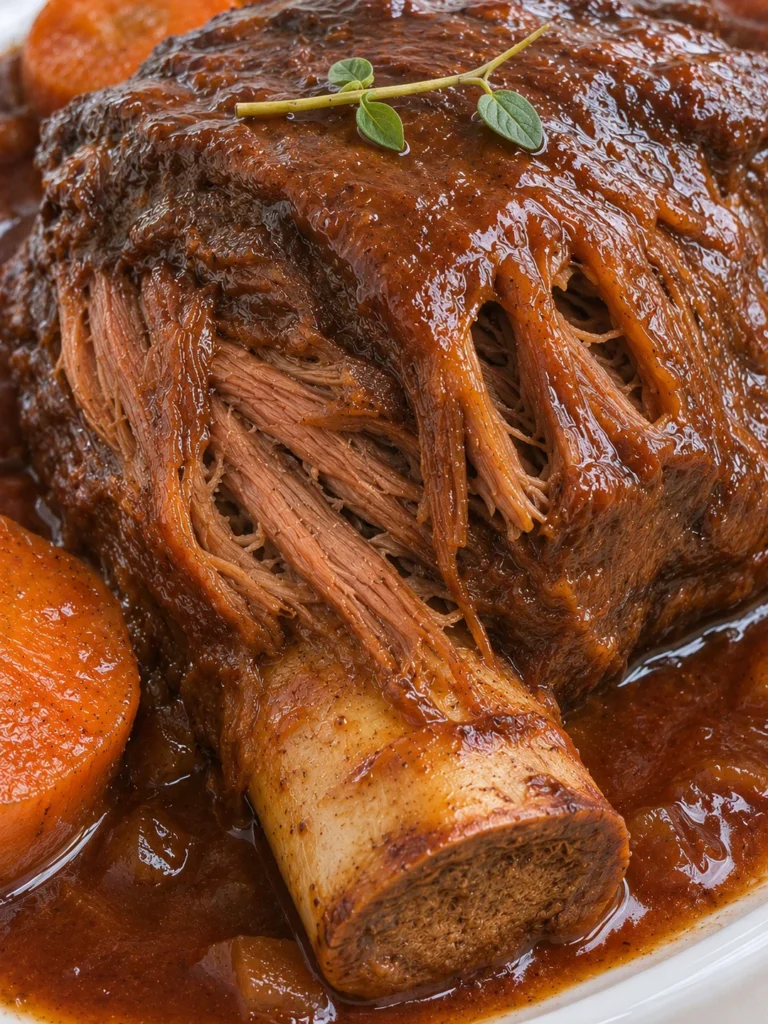
Here is the thing nobody tells you about red wine braised short ribs. Fall-off-the-bone is overcooked. You want a fork to slide in with almost no resistance while the piece still holds its shape, and if the meat shreds when you lift it, you went twenty minutes too far.
The other rule I did not believe until I broke it. Liquid only comes halfway to two-thirds up the meat. More does not mean more tender, it means boiled ribs and a washed-out sauce.
What I Changed, and the Overnight Trick
I changed almost nothing, which is rare for me. The one adjustment is timing. I now make it a day ahead every single time, chill the whole pot overnight, and lift the solid fat cap off in one sheet the next morning. Cleaner sauce, deeper flavor, and no skimming with a ladle while people are waiting to eat.
Reheat gently, pull the ribs out, reduce the strained liquid by about a third until it coats a spoon, then slide everything back in to glaze. No cornstarch. The collagen has already turned to gelatin and does the work for you.
Mashed potatoes are the obvious bed. Soft polenta is better. Buttered egg noodles are what I actually use most of the time because they take eight minutes and I have usually lost track of the clock by then.
Cold leftovers, eaten standing up at the counter. Honestly my favourite way.
I still think about that kitchen off Highway 12, the lunch smell burning off and the wine taking over. Ray never wrote the recipe down for us and I did not ask him to.
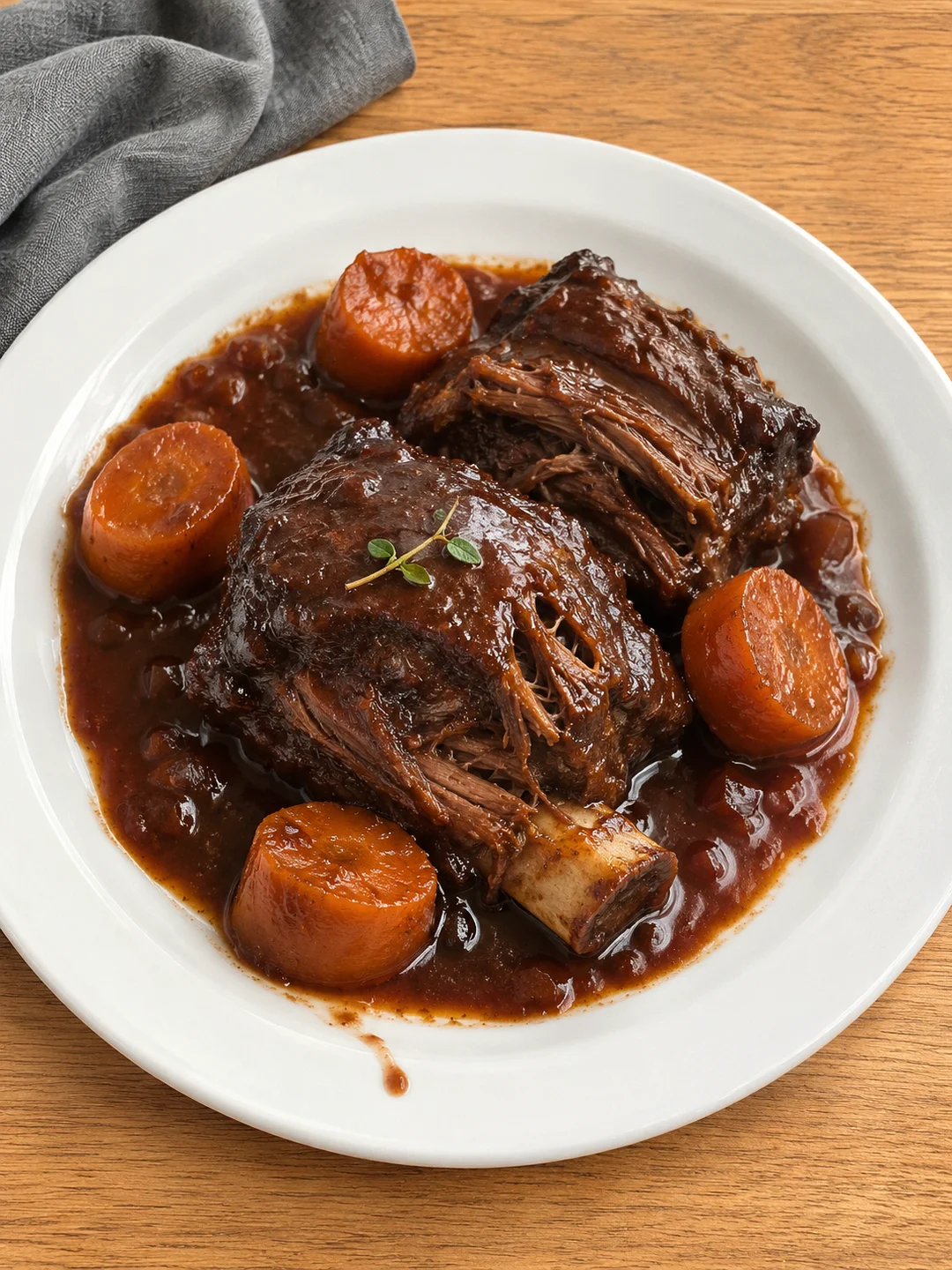
Beef Short Ribs
Ingredients
Equipment
Method
- Pull the short ribs out of the refrigerator 45 minutes before cooking. Pat every surface completely dry with paper towels, then season all over with the kosher salt and black pepper. A dry surface is the difference between browning and steaming.
- Preheat the oven to 325 F with a rack in the lower third.
- Heat the oil in a heavy Dutch oven over medium-high until it shimmers. Sear the ribs in batches of three or four pieces, leaving space between them, 3 to 5 minutes per side, until each face is deep mahogany. Do not crowd the pot. Transfer the seared ribs to a plate and work through the rest, about 20 minutes total.
- Pour off all but about 2 tablespoons of fat, leaving the browned fond stuck to the bottom. Lower the heat to medium and add the onion and celery. Cook, stirring and scraping, until softened and lightly golden, about 5 minutes.
- Add the garlic and cook 1 minute until fragrant. Stir in the tomato paste and cook 1 to 2 minutes, until it darkens from red to brick and smells sweet rather than raw. Sprinkle in the flour and stir to coat the vegetables, about 1 minute.
- Pour in the red wine and raise the heat to bring it to a boil, scraping the bottom of the pot with a wooden spoon to lift every bit of fond. Boil 5 to 6 minutes to cook off the raw alcohol edge and reduce it by about a third.
- Add the beef broth, thyme sprigs and bay leaf and return to a boil. Nestle the short ribs back in, bone side down, in a single snug layer. The liquid should come only halfway to two-thirds up the meat. If it sits higher, ladle some out, because fully submerged ribs boil instead of braise.
- Cover the pot and transfer to the oven. Braise for 2 hours, checking once at the halfway point to confirm the liquid is barely bubbling rather than boiling hard. Drop the oven to 300 F if it is simmering aggressively.
- Scatter the carrots around the ribs, cover again, and braise another 45 to 60 minutes. The ribs are done when a fork slides in with almost no resistance but the meat still clings to the bone and holds its shape. Total oven time is usually 2 1/2 to 3 hours.
- Lift the ribs and carrots out with tongs onto a platter and tent loosely with foil. Discard the thyme sprigs and bay leaf.
- Strain the braising liquid through a fine-mesh strainer into a measuring cup or fat separator, pressing the vegetables lightly to extract their body. Let it settle 5 minutes, then skim off the clear fat from the surface. For the cleanest result, refrigerate the strained liquid until the fat sets solid and lift it off in a sheet.
- Return the skimmed liquid to the pot and simmer over medium heat, 10 to 15 minutes, until it has reduced by about a third and coats the back of a spoon. The dissolved gelatin thickens it on its own, so no cornstarch is needed. Taste and add salt and pepper.
- Slide the ribs and carrots back into the sauce and warm through over low heat for 5 minutes, spooning the sauce over the meat to glaze it. Serve hot with plenty of sauce.