
The first roasted cornish hens I ever cared about came out of a dented oven in a hostel kitchen in Graça, the hill above Lisbon, on a Sunday in February. Rui Bastos ran the place, and he ran a class in that kitchen every Sunday for whoever was still around after the weekend crowd checked out.
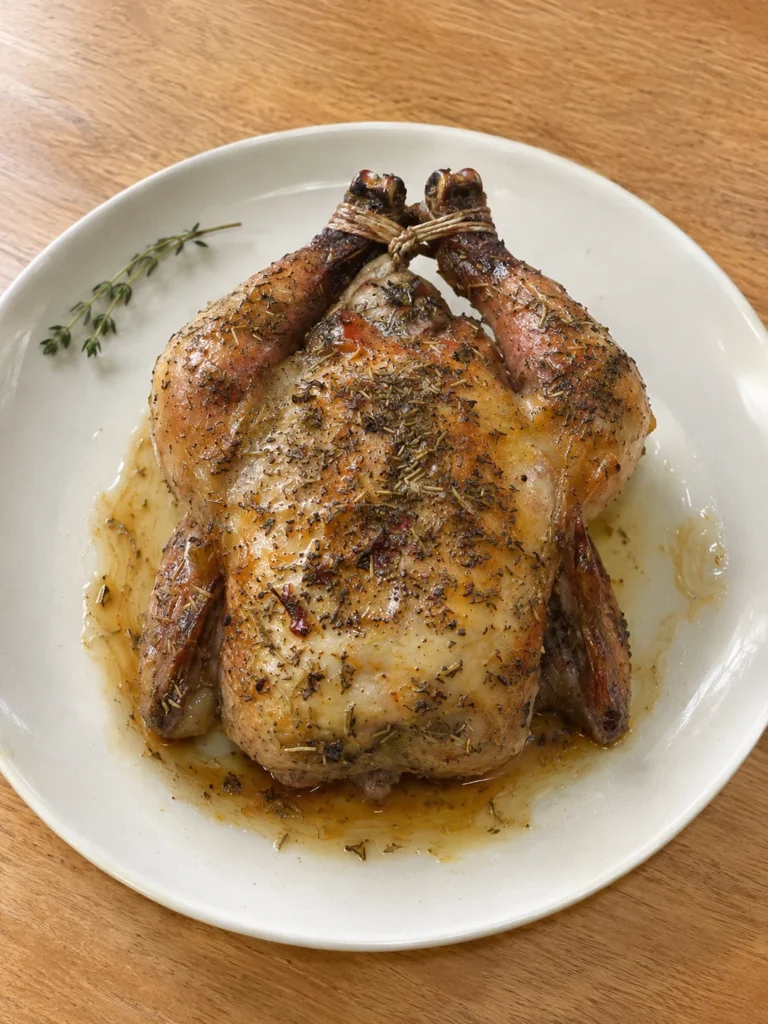
Four of us that day. A Dutch cyclist with a sunburnt neck, two sisters from Osaka, me.
The room smelled like three things at once. Hot butter, rosemary that Rui had crushed in his palm before he chopped it, and the burnt sugar drifting up the stairwell from the pastelaria below.
Rui’s Sunday Class in Graça
He bought the birds that morning from a butcher on Rua da Graça who sold them as frangos pequenos, small young chickens, one to a customer unless you asked nicely. Rui asked nicely. Four birds, one per student, which was the whole point of the lesson.
He had a specific way of doing things and no patience for shortcuts. He made us pat each bird dry with paper towels, then do it again with fresh ones, then once more inside the cavity. Somebody asked if that mattered. He said the difference between crisp skin and rubbery skin is about four minutes of work with a paper towel, and then he moved on.
The butter was mashed with rosemary and thyme and pushed under the breast skin with two fingers, which is the moment the whole thing stops feeling like roast chicken and starts feeling like a slightly stressful puzzle. The skin tears if you rush. Mine tore. Rui shrugged and said the butter stays where it lands either way.
Then lemon and crushed garlic into each cavity, legs tied with twine, onion wedges scattered under the rack so they would catch the drip. Oven very hot to start. He kept an instant-read thermometer in his shirt pocket like a pen and would not let anyone else hold it.
Roasted Cornish Hens Are Not English and Not Game
Rui told us the bird was English, from Cornwall. I believed him for about three weeks until I looked it up at my own kitchen table one morning and found out he was off by an ocean.
The cornish hen is an American invention. Jacques Makowsky, a Russian emigre who had run printing businesses in Paris and New York, bought Idle Wild Farm in Pomfret, Connecticut with his wife Therese in 1948. After a fire wiped out their game-bird stock they started crossbreeding, and in 1950 they crossed a white Cornish cock with a White Plymouth Rock hen and got a small, plump, broad-breasted bird they patented and sold as the Rock Cornish Game Hen.
Only the ancestral Cornish chicken breed is English, developed in Cornwall around 1820 and prized for its chest. Everything else about this bird happened in New England, with marketing attached. Therese wrote gourmet recipe pamphlets to move the product, and the pianist Victor Borge invested in it and promoted it, which is how a luxury restaurant item ended up in supermarket freezers. By 1956 around fifty-five farms near Pomfret were hatching over three million chicks a year.
Two more things worth knowing. Nothing about it is game, it is simply a young chicken harvested at roughly four to six weeks, and the USDA definition allows either sex, so plenty of hens are young males. The bird is defined by weight and age now, not breed at all.
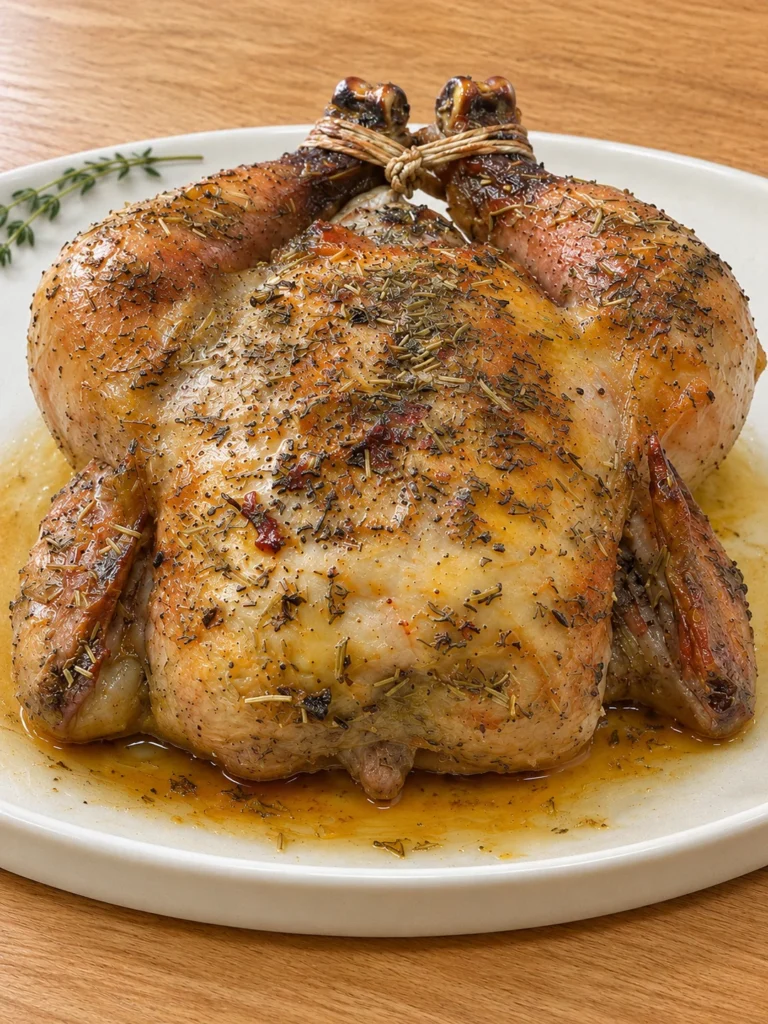
What I Used
- Four Cornish game hens, about a pound and a half each, giblets pulled out
- Kosher salt, a generous tablespoon, plus more for inside the birds
- Freshly ground black pepper
- Softened butter, six tablespoons, for the herb paste under the skin
- Fresh rosemary, chopped, plus whole sprigs for the cavities
- Fresh thyme, leaves stripped, plus sprigs
- Garlic, eight cloves, crushed with the skins still on
- Two lemons, one quartered and one for juice at the end
- Two onions in thick wedges, to sit under the rack
- Olive oil
- Low sodium chicken broth, a cup and a quarter, for basting and the sauce
- Two tablespoons cold butter, cubed, to finish the pan sauce
The Part Most Home Cooks Get Wrong
Timing. That is it. People treat these like miniature roast chickens and give them an hour and a half, which is what a four pound bird needs and about thirty minutes more than these can survive.
I know because I did it. The first time I made them at home I set a timer out of habit, got distracted on a call, and pulled four birds that were technically cooked and spiritually ruined. The breast was chalky. The pan sauce could not save it.
Fifty to sixty minutes total, and small ones get there early. Twenty-five minutes hot at 450 F to set and brown the skin, then down to 375 F for another twenty-five to thirty-five, basting every ten with the juices and a splash of broth. Start checking the thigh at forty-five minutes. 165 F to 170 F and out.
The other thing is the dry-brine, which Rui did not do and I always do. Salt the birds all over, leave them uncovered on a rack in the fridge overnight, pat them dry again before they go in. I buy mine at the butcher counter inside the Original Farmers Market on Fairfax and salt them the same afternoon so they have a full day.
I almost skipped the trussing once. Actually I did skip it, and the legs raced ahead of the breast and the wings went dark and papery. Tie them.
The sauce takes three minutes and is the best part. Pan over medium-high, broth in, scrape up the browned bits, then off the heat and whisk in cold butter a cube at a time with a squeeze of lemon until it turns glossy. I use the same small battered saucepan I use for everything, handle slightly loose.

Twists Worth Trying
If you want it faster and crisper, spatchcock them. Cut out the backbone with kitchen shears, press them flat, roast skin side up at 450 F for thirty to thirty-five minutes. You lose the theater of a whole little bird on each plate, which was Rui’s entire argument for the dish, so I only do it on weeknights.
For sides I lean on wild rice pilaf or roasted root vegetables. Mashed potatoes and green beans if it is a holiday table, and cranberry sauce if someone insists. A dry Chardonnay handles all of it.
Leftovers keep three days. Cold meat pulled off the bone standing at the counter, better than it has any right to be. The carcasses make a fast, rich stock in about an hour.
One Bird Per Plate
I make these when there are four of us and the evening needs a little ceremony without a four hour commitment. Last time the kitchen window was open and the rosemary on the sill smelled stronger than the butter did. Rui was wrong about Cornwall, and he was completely right about the paper towels.
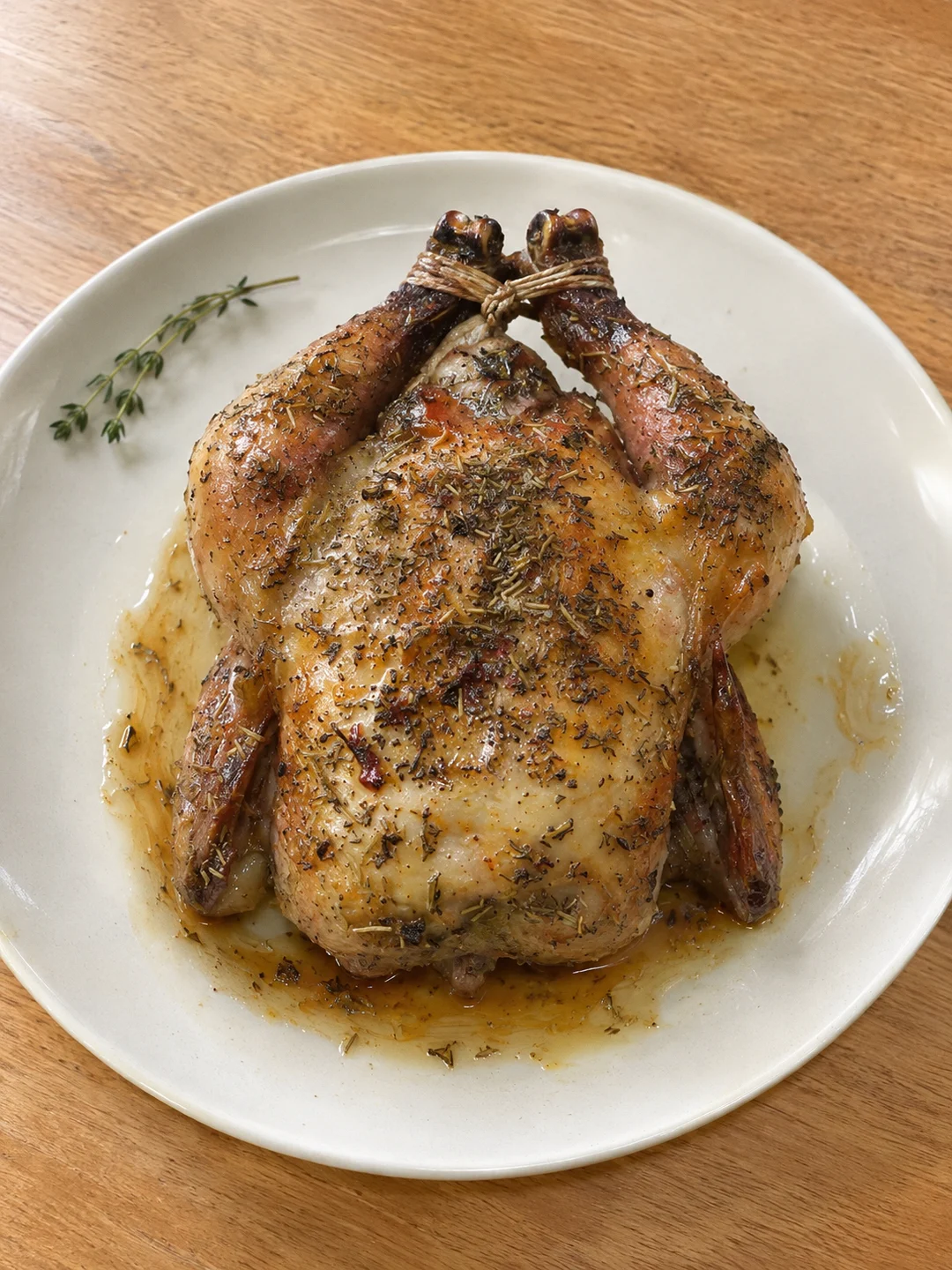
Roasted Cornish Hens
Ingredients
Equipment
Method
- Pat the hens completely dry inside and out with paper towels. Dry skin is the whole game here, so take your time and change paper towels as they dampen. Season all over and inside each cavity with the kosher salt and black pepper. For the best skin, set the seasoned hens on a rack and refrigerate uncovered 12 to 48 hours, then pat dry again before roasting.
- Take the hens out of the refrigerator 45 minutes before cooking. Preheat the oven to 450 F.
- Mash the 6 tablespoons of softened butter with the chopped rosemary and thyme leaves and a pinch of salt until evenly blended.
- Slide your fingers between the breast skin and the meat of each hen to loosen a pocket on both sides, working carefully so the skin does not tear. Push about 1 tablespoon of the herb butter under the skin of each bird and press from the outside to spread it over the breast.
- Stuff each cavity with a lemon quarter, 2 crushed garlic cloves, a rosemary sprig and 2 thyme sprigs. Season the cavities lightly with salt.
- Truss each hen: tie the ends of the legs together tightly with kitchen twine and loop the twine around the body to pin the wings against the sides. A trussed bird holds its shape and cooks evenly instead of drying out at the extremities.
- Scatter the onion wedges across the bottom of the roasting pan and set the rack on top, or simply sit the hens directly on the onions. Rub the hens all over with the olive oil and the remaining herb butter, breast side up, spaced at least 1 inch apart. Pour 1/2 cup of the chicken broth into the pan.
- Roast at 450 F for 25 minutes to set and brown the skin.
- Reduce the oven to 375 F. Continue roasting 25 to 35 minutes, basting with pan juices and a splash of the remaining broth every 10 minutes, until the thickest part of the thigh registers 165 F to 170 F and the juices run clear. Small hens can get there early, so start checking at the 45 minute mark.
- Transfer the hens to a warm platter or cutting board, tent loosely with foil and rest 10 minutes. Snip off the twine before serving.
- Set the roasting pan over medium-high heat on the stovetop, or scrape the juices and onions into a small saucepan. Add the remaining broth and simmer 3 to 4 minutes, scraping up the browned bits, until slightly reduced. Strain if you like a smooth sauce.
- Off the heat, squeeze in the juice of half the remaining lemon and whisk in the cold butter a cube at a time until the sauce turns glossy. Taste and adjust with salt, pepper and more lemon.
- Serve one hen per person, whole, with the pan sauce spooned over the top.