
Crockpot pork chops were not on the syllabus. I had booked a cooking class in Mérida, Mexico, three blocks off the Mercado de Santiago, to learn cochinita pibil and nothing else, and for three hours the kitchen smelled like achiote paste, sour orange, and habanero skin blistering on a dry comal.
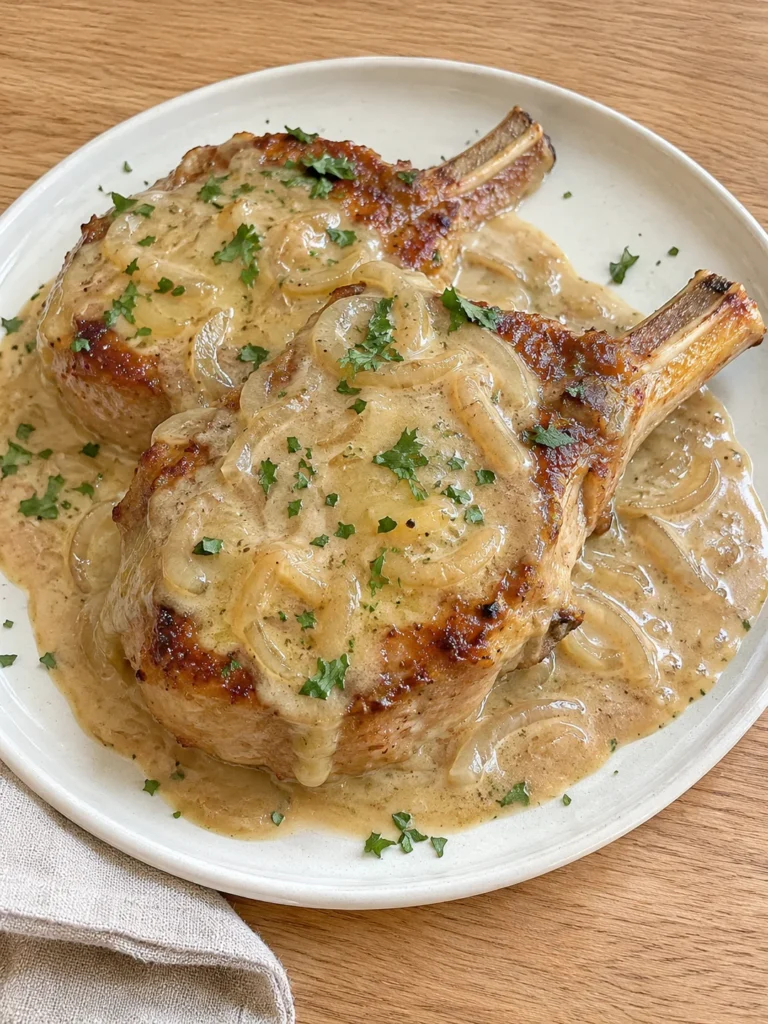
The instructor was a woman named Dana. She grew up outside Kansas City, has lived in Yucatán for nineteen years, and talks with her hands while she works.
Then, while the pork rested in its banana leaf and we all stood around drinking agua de chaya, she hauled a slow cooker out of a low cabinet and said she would show us what she actually cooks on a Tuesday. Nobody had asked. I am glad she did it anyway.
The Mérida Class Where Crockpot Pork Chops Stole the Afternoon
She lined up two cans of condensed soup on the tile counter like she was setting up a card trick. Cream of mushroom, cream of chicken, a foil packet of dry onion soup mix that she admitted she asks visiting family to bring down in their luggage.
The part that made me pay attention was that she seared the chops first. Hard, in a heavy pan, two batches, three minutes a side, until the fat edges went the color of strong tea. The kitchen flipped mood completely at that moment, out of citrus and smoke and into something browner and sweeter.
And she stood there with an instant-read thermometer in her hand the whole time, lecturing us gently about 145 F. Her line, roughly, was that the slow cooker will not save you here. A chop is lean. It is not a pot roast.
Smothering Came Long Before the Crock-Pot
I went down a reading hole about this when I got home, because Dana had called it smothered pork chops and I wanted to know why. Smothering is a real technique with a real lineage, rooted in African American and Louisiana Creole home cooking, where you brown the meat and then build a gravy out of the fond and onions and let long moist heat do the tenderizing on cuts nobody could afford to waste.
The appliance arrived much later and by a strange route. Irving Naxon, an engineer in Chicago, patented an electric crock-in-a-heater in 1936 after hearing how Jewish families in Vilnius carried pots of cholent to the town bakery to finish overnight in the cooling ovens. Rival Manufacturing in Kansas City bought his business in 1970, renamed the thing Crock-Pot, and launched it in 1971.
Sales went from two million dollars the first year to ninety-three million by 1975, which tells you everything about who was suddenly working outside the home and still expected to put dinner on the table. The condensed soup shortcut piggybacked on it, because Campbell’s had been selling cream of mushroom as a ready-made sauce since 1934.
So this is a modern American convenience dish. Beloved, genuinely, but a descendant of a Black Southern technique rather than the source of it, and worth saying out loud.
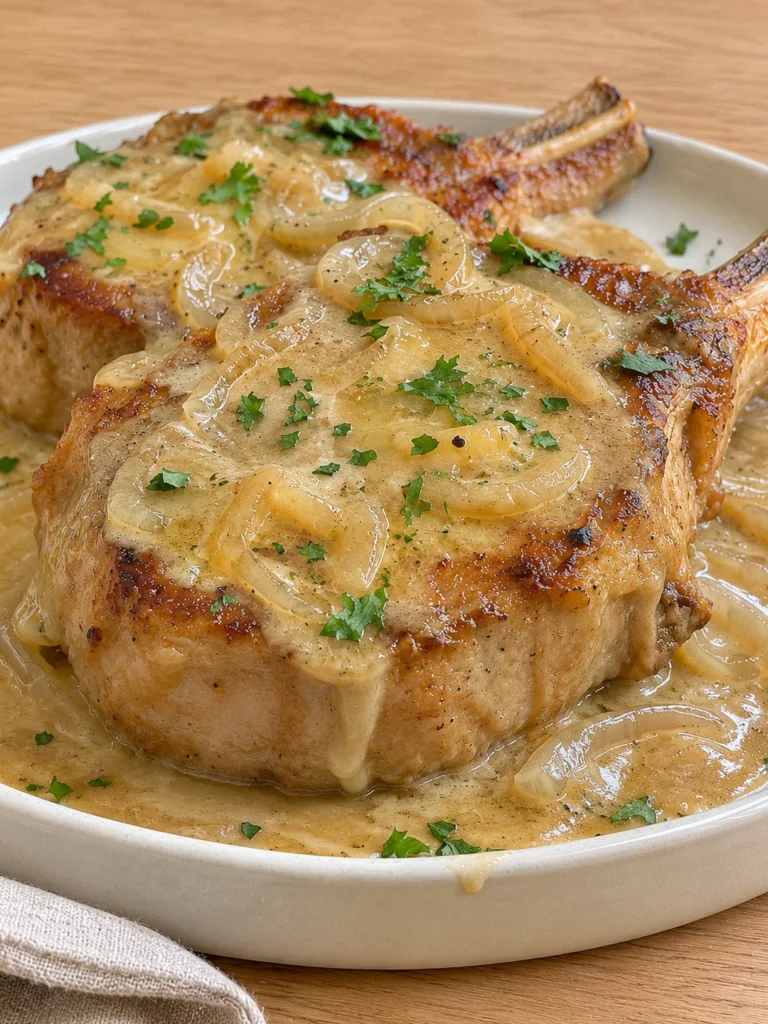
What I Used
- Six bone-in pork chops, 3/4 to 1 inch thick, about 3 lb total. Thickness matters more than anything else on this list.
- Black pepper, 1.5 tsp, split between the chops and the sauce
- Salt, only 1/2 tsp, because the soups and the packet are already salty
- Two tablespoons neutral oil for the sear, or butter if you want the smell
- One large yellow onion, sliced thin
- One can condensed cream of mushroom soup, undiluted
- One can condensed cream of chicken soup, undiluted
- One packet dry onion soup mix
- A cup of low sodium chicken broth
- A tablespoon of cornstarch and two tablespoons cold water for the finishing slurry
- Fresh parsley, chopped, about two tablespoons
Cooking Crockpot Pork Chops in My Own Kitchen
I get the chops from a butcher counter where the guy will cut them to an inch if you ask, and asking is the whole game. The supermarket thin-cut boneless ones are the wrong cut for this. They will be done in ninety minutes and they will still taste tight.
I pat them bone dry with paper towels, which feels fussy and is not. A wet chop steams and sulks and never browns. Then into my cast iron, the one with the slightly rough patch on the left side that I have given up on fixing, over medium-high until the oil moves like water.
Two batches. Never crowd it.
The onions go into the slow cooker first, a flat bed of them, and the seared chops sit on top in a single layer with every drop of plate juice poured over. I whisk the two soups with the packet and the broth in a bowl until there is not a single lump, then pour it on so the meat is actually submerged. Tuck down any corner sticking up above the liquid.
Lid on, LOW, and then leave it alone. Every time you peek you are giving away about twenty minutes of heat. Around hour four my whole apartment smells like browned onion and pepper, which is a dangerous smell to live inside of on a Sunday with nothing else going on.
The first time I made it at home I let it ride the full seven hours out of habit and the chops came out stringy, because I was thinking like a pork shoulder. Shoulder forgives you. Chops do not. Now I start thermometer checks at five hours and pull them the second the thickest part away from the bone reads 145 F.
Then the chops rest under loose foil while I whisk the cornstarch slurry into the cooker, turn it to HIGH with the lid off, and let it tighten for about fifteen minutes until it coats a spoon. Taste it before you salt it. It almost never needs any.
Swaps and the One Thing I Will Not Skip
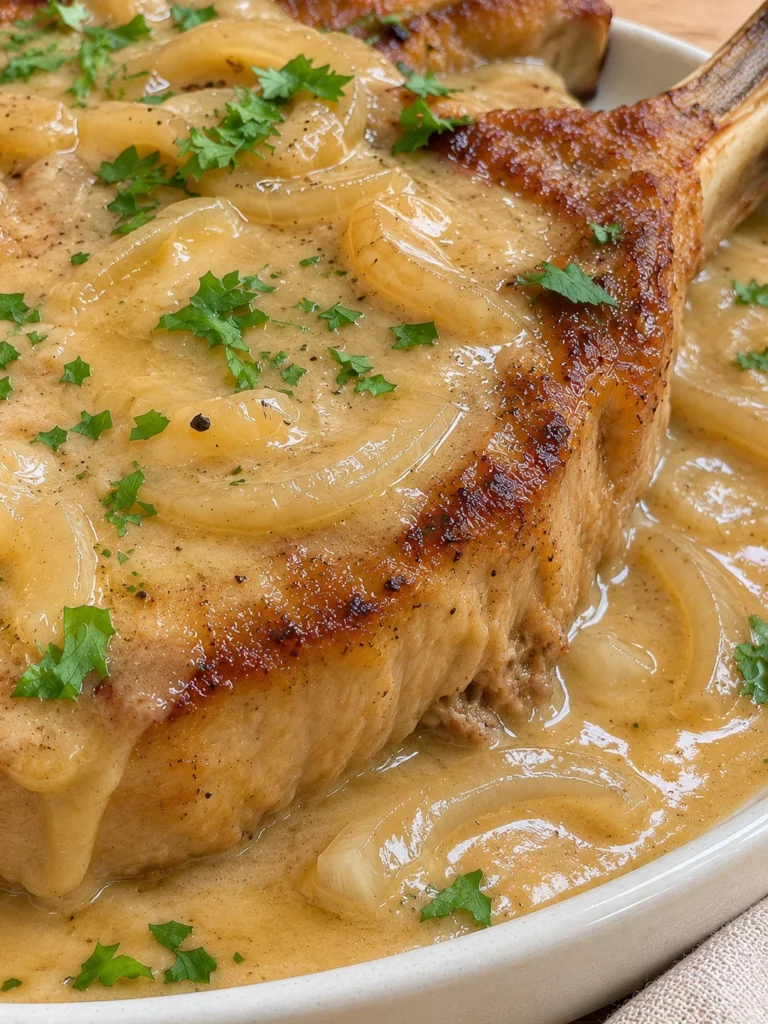
Dana’s tangier version swaps the onion soup packet for a dry ranch packet plus two minced garlic cloves, and I like that one better in winter. I serve it over mashed potatoes most of the time, buttered egg noodles when I am lazy, and once over plain white rice with green beans, which was honestly the best of the three.
You can skip the sear. People do. But you lose the fond, the gravy tastes flat and faintly canned, and it is a real tradeoff rather than a free shortcut, so I would rather get up earlier than skip it. Although, fine, I have skipped it once on a weeknight and I survived.
Leftovers hold three days and reheat best gently in their own gravy with a splash of broth. The microwave on high will toughen the meat, which I learned the hard way standing over the sink.
I did not expect the standout from a Yucatán cooking class to be a pan of smothered chops in a countertop crock. That is how travel works, I think. You go looking for one thing and a woman in Mérida hands you her Tuesday dinner instead.
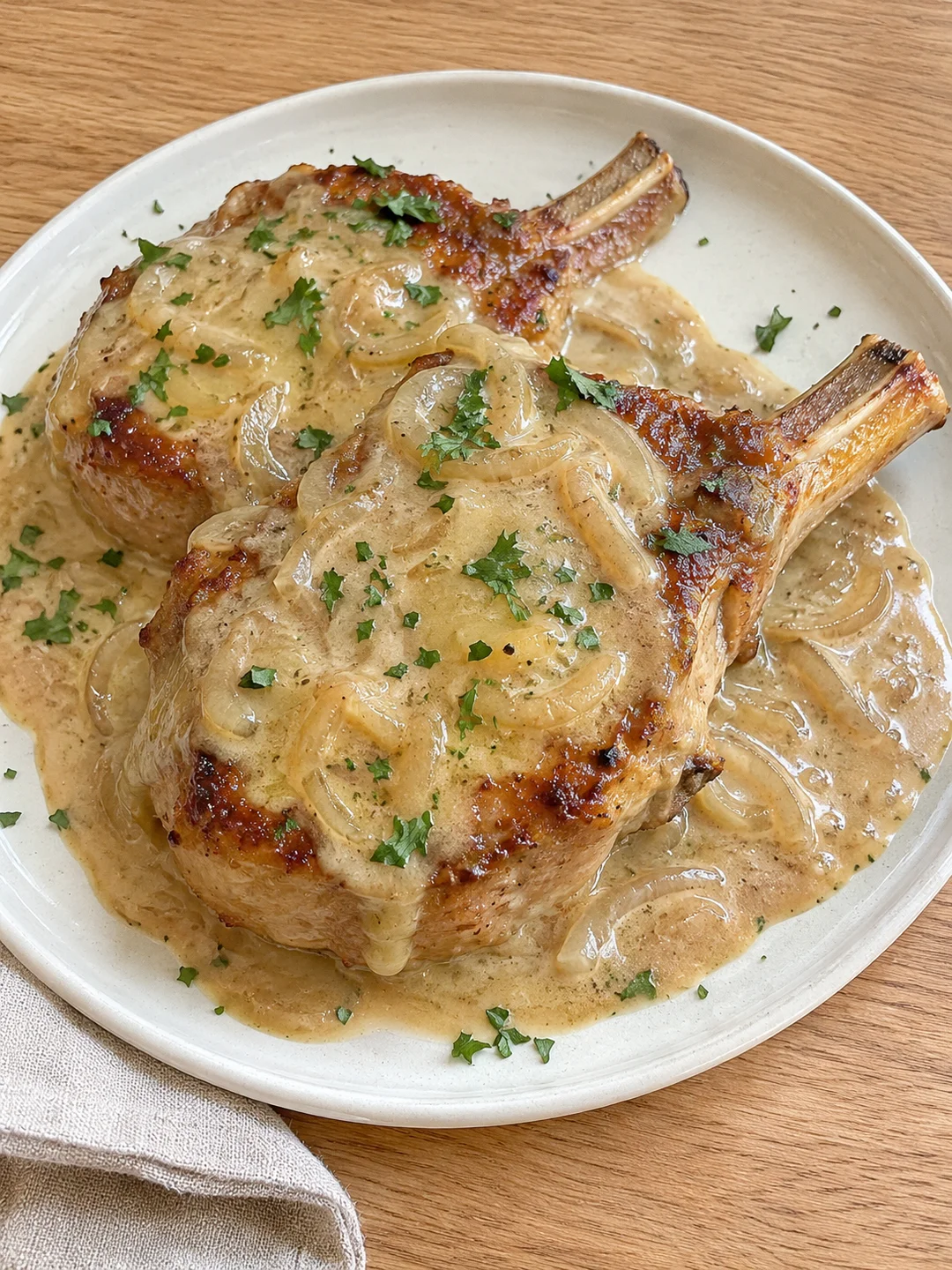
Crockpot Pork Chops
Ingredients
Equipment
Method
- Pat the pork chops completely dry on both sides with paper towels. A wet surface will steam instead of brown. Season them with 1 teaspoon of the black pepper and the salt.
- Heat the oil in a large skillet over medium-high heat until it shimmers. Sear the chops in batches, 2 to 3 minutes per side, until deeply browned. Do not crowd the pan and do not try to cook them through. Transfer to a plate.
- Lightly grease the slow cooker insert. Scatter the sliced onion across the bottom in an even bed.
- Lay the seared chops on top of the onions in a single even layer, overlapping as little as possible. Pour any juices from the plate into the cooker.
- In a medium bowl, whisk together the cream of mushroom soup, cream of chicken soup, onion soup mix, chicken broth, and the remaining 1/2 teaspoon black pepper until smooth with no lumps.
- Pour the sauce evenly over the chops so they are fully submerged. This is the single most important step for moisture. Tuck down any corners of meat sitting above the liquid.
- Cover and cook on LOW for 6 to 7 hours or on HIGH for 3 to 4 hours. Keep the lid on. Every peek costs you roughly 20 minutes of heat.
- Start checking at the 5 hour mark on LOW. The chops are done when an instant-read thermometer in the thickest part away from the bone reads 145 F. Past that they tighten and dry out, so pull them as soon as they hit it.
- Lift the chops out onto a warm platter, tent loosely with foil, and let them rest while you finish the gravy.
- Whisk the cornstarch into the cold water until completely smooth, then stir it into the liquid in the cooker. Turn to HIGH, uncovered, and cook about 15 minutes, stirring once or twice, until the gravy coats a spoon.
- Taste the gravy and adjust the pepper. It will likely need no extra salt. Spoon it generously over the chops and scatter the parsley on top. Serve hot.