
I ordered vegetable beef soup in Whitesburg, Kentucky because it was the only thing written on the whiteboard by the register, in blue marker, with the word soup underlined twice. Nine dollars, cornbread included.
The restaurant had six stools, a chest freezer humming against the back wall, and a hand-lettered sign about not taking cards after four. I took the stool closest to the kitchen door, which turned out to be the right decision.
The Counter in Whitesburg
Loretta owned the place with her son, who did the cornbread and nothing else, as far as I could tell. She came around the counter with her own bowl and ate standing up while I asked questions, which is how I learn most things on the road.
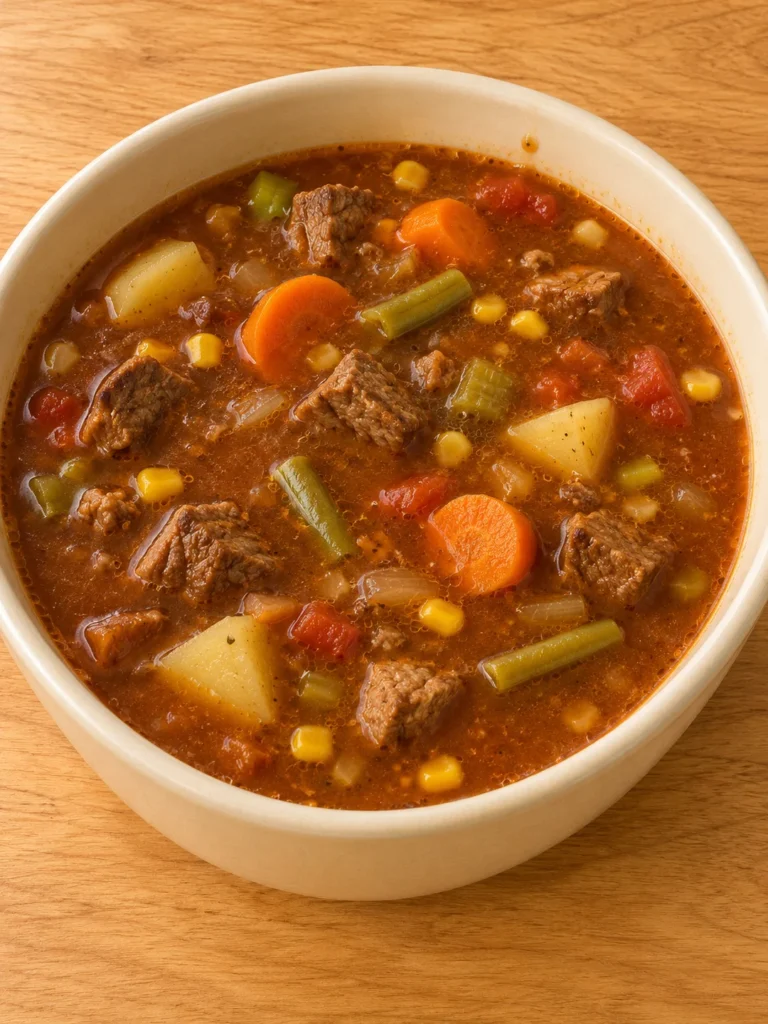
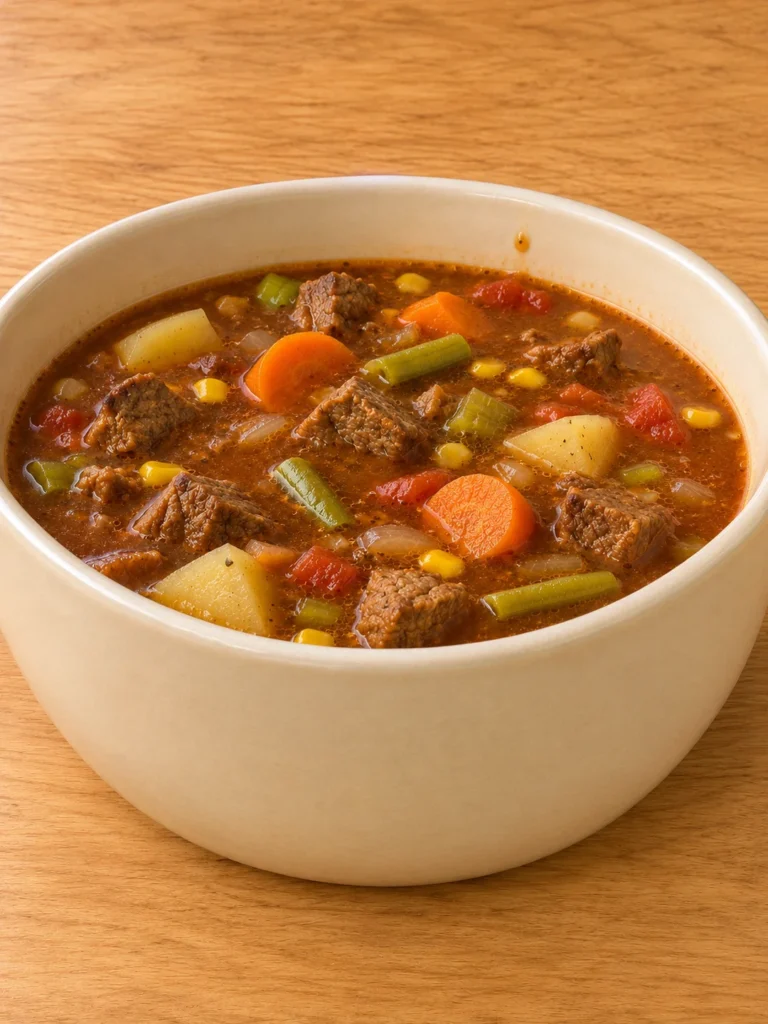
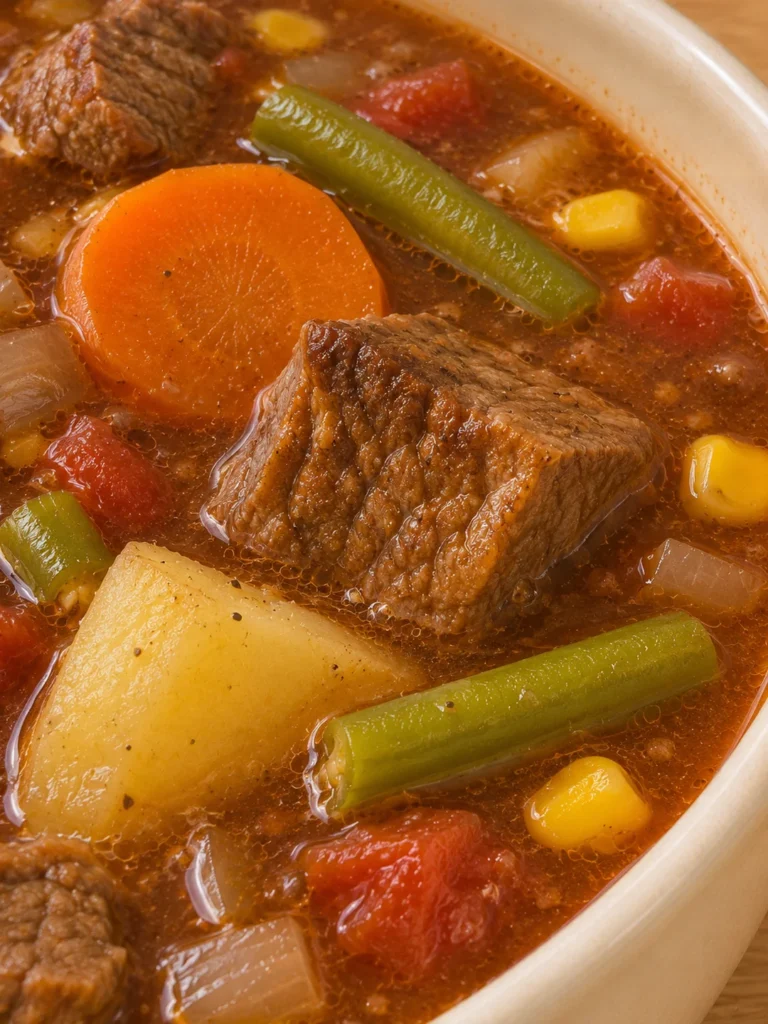
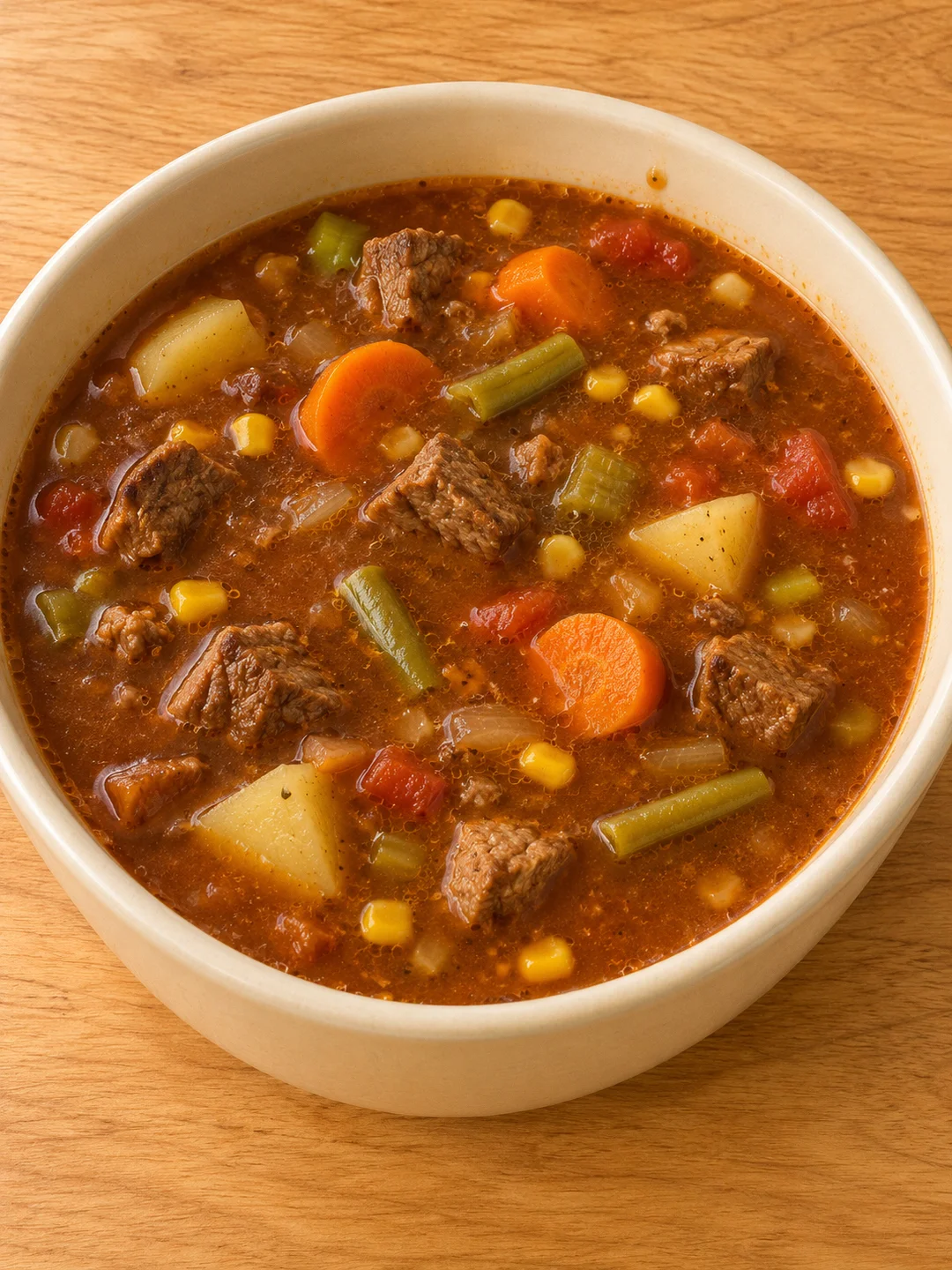
The broth was thin. That surprised me. I had expected something closer to a gravy and instead got a clear, dark, beefy liquid with potatoes and carrots sitting fully under it, green beans still holding a little snap.
“It’s soup,” she said, when I asked whether she thickened it. “Stew is when you’re stingy with the water.” She said the biggest mistake people make is dumping every vegetable in at once, then wondering why the carrots turned to paste while the beef was still chewy.
She also told me, without being asked, to stop buying good beef for it. Sirloin goes stringy. Chuck and shank have the collagen, and the collagen is what makes the broth taste like something.
What Vegetable Beef Soup Actually Is
I read up on it when I got back, because I wanted to know whether Loretta’s version was a local thing or a national thing. It’s both, sort of.
The one-pot practice of simmering meat and vegetables together is ancient, and there’s a forerunner of it in Apicius, the fifth-century Roman collection. But the American version took its shape in central and southern Appalachia and the rural South, where the soil was thin and rocky and a small amount of beef had to feed a lot of people.
In central Appalachia it has gone by “winter vegetable soup” and “country soup,” and it was a staple eaten hardest through December to February. Garden vegetables in the summer, home-canned jars of the same vegetables in the cold months. Which is why there is no fixed ingredient list. The mix was whatever the shelf had.
Two things I want to clear up because I believed both of them before. The homemade long-simmered version is much older than canned condensed soup, not a home copy of it. And when ground beef got cheap in the twentieth century, a faster ground-beef version spread, but that’s a cousin, not the original.
What I Used
- Beef chuck roast, about two pounds, cubed, fat left on. Shank works too and makes a better broth
- Vegetable oil or beef tallow for browning
- Salt and a lot of freshly ground black pepper
- One big yellow onion and three stalks of celery
- Four cloves of garlic, minced
- Tomato paste, two tablespoons
- Eight cups low sodium beef broth, plus more standing by
- A can of diced tomatoes with the juice
- Worcestershire sauce
- Bay leaves and dried thyme
- Three carrots in thick coins
- A pound and a half of potatoes, russet or Yukon Gold, in big chunks
- Green beans, snapped, about half a pound
- Corn kernels, a cup and a half. Fresh if it’s summer, frozen the rest of the year
Cooking It in My Kitchen
I made it on one of those rare grey rainy afternoons when the light through the kitchen window goes flat and nothing feels urgent. Perfect timing, honestly. This is a two-hour pot and you want to be happy about that.
Tyler Childers on the speaker, loud, then quieter once the lid went on. I put out a plate of saltines and a jar of bread-and-butter pickles for myself while the beef browned, because two hours is a long time to stand around hungry.
The browning is the whole thing. I do it in three batches in my Dutch oven, the one with the chip out of the lid rim, and I leave real space between the cubes. Crowd them and they steam instead of crusting. Dry the meat first with paper towels, which sounds fussy and is not.
After the onion and celery go in and soften, the tomato paste cooks down for two minutes until it darkens against the bottom. Then two cups of broth and a hard scrape with a wooden spoon. The liquid goes almost black as the fond lifts. That is the flavor of the entire pot, so get all of it.
Then beef back in, the rest of the broth, tomatoes, Worcestershire, bay, thyme, and an hour at a bare simmer. The first time I made this I ignored Loretta completely and added everything at the same time. Mush. Not even good mush.
So now it’s staggered. Carrots and potatoes at the hour mark, twenty-five minutes uncovered. Green beans and corn in the last ten or twelve. If the vegetables poke above the water line, add more broth. Submerged is the rule.
Swaps and Small Changes
I buy the chuck at the butcher counter at the Hollywood farmers market when I’m home on a Sunday, mostly because I can ask for it cut thicker than the supermarket does. But this soup was invented to use what you have, so I’m not precious about it.
Cabbage works. So does a handful of frozen peas at the very end, or barley if you want it heavier, though then you’re drifting toward a different dish and you will need extra broth. I’ve used canned green beans when that’s what was in the cupboard and it was fine, just softer.
Bone-in shank is the upgrade. Simmer it two hours before the vegetables go anywhere near the pot and the broth turns genuinely glossy.
One thing I will not do is thicken it. I almost did once, with a slurry, out of habit. Stopped myself. Loretta would have had something to say.
Eat It Tomorrow
It is better on day two. Not slightly better. Noticeably. The broth settles, the thyme stops shouting, the potatoes take on beef flavor all the way through.
Cold spoonfuls straight from the fridge, standing at the counter in a t-shirt before bed. That’s the version I like best, which I realize is not how anyone in Appalachia would eat it, with hot cornbread right there on the table.
It keeps four days and freezes for three months. I usually ladle half into containers before it’s even cool, then regret how little is left in the pot.
I went to Whitesburg for the mountains and came home with a soup. That trade keeps happening and I keep being glad about it. Nine dollars, six stools, and a woman who ate standing up while she explained why my carrots had always been wrong.
Vegetable Beef Soup
Ingredients
Equipment
Method
- Pat the beef cubes dry with paper towels and season all over with the salt and black pepper. Dry meat browns; wet meat steams.
- Heat the oil in a heavy Dutch oven over medium-high heat until it shimmers. Brown the beef in two or three batches, leaving space between the cubes, about 4 minutes per side until deeply crusted. Do not crowd the pot. Transfer the browned beef to a bowl and keep any juices.
- Lower the heat to medium. Add the onion and celery to the drippings and cook, stirring and scraping, 6 to 7 minutes until softened and the browned bits on the bottom begin to loosen. Add the garlic and cook 1 minute more.
- Stir in the tomato paste and cook 2 minutes, letting it darken slightly against the bottom of the pot.
- Pour in about 2 cups of the beef broth and scrape the bottom hard with a wooden spoon until every bit of fond lifts and the liquid turns dark. This is the flavor of the soup, so do not leave any behind.
- Return the beef and its juices to the pot. Add the remaining broth, the diced tomatoes with their juice, Worcestershire sauce, bay leaves, and thyme. The meat should be fully submerged with liquid to spare.
- Bring to a boil, then reduce to a bare simmer. Cover and cook 60 minutes, stirring occasionally, until the beef is nearly tender but not yet falling apart.
- Add the carrots and potatoes. Simmer uncovered 25 minutes, until a knife slides into a potato chunk with slight resistance. Add more broth if the vegetables poke above the liquid line.
- Add the green beans and corn. Simmer 10 to 12 minutes more, until the green beans are tender but still hold a little snap.
- Fish out the bay leaves. Taste the broth and correct with salt, pepper, and another splash of Worcestershire if it needs depth.
- Let the pot sit off the heat 10 minutes before ladling into bowls. If you can wait, cool the soup and reheat it the next day, when the flavor settles and deepens.