
The best shaved brussels sprout salad I have eaten came out of a storefront kitchen on Court Street in Brooklyn, made by a woman named Rosa who told me, kindly but very clearly, that I was slicing too thick.
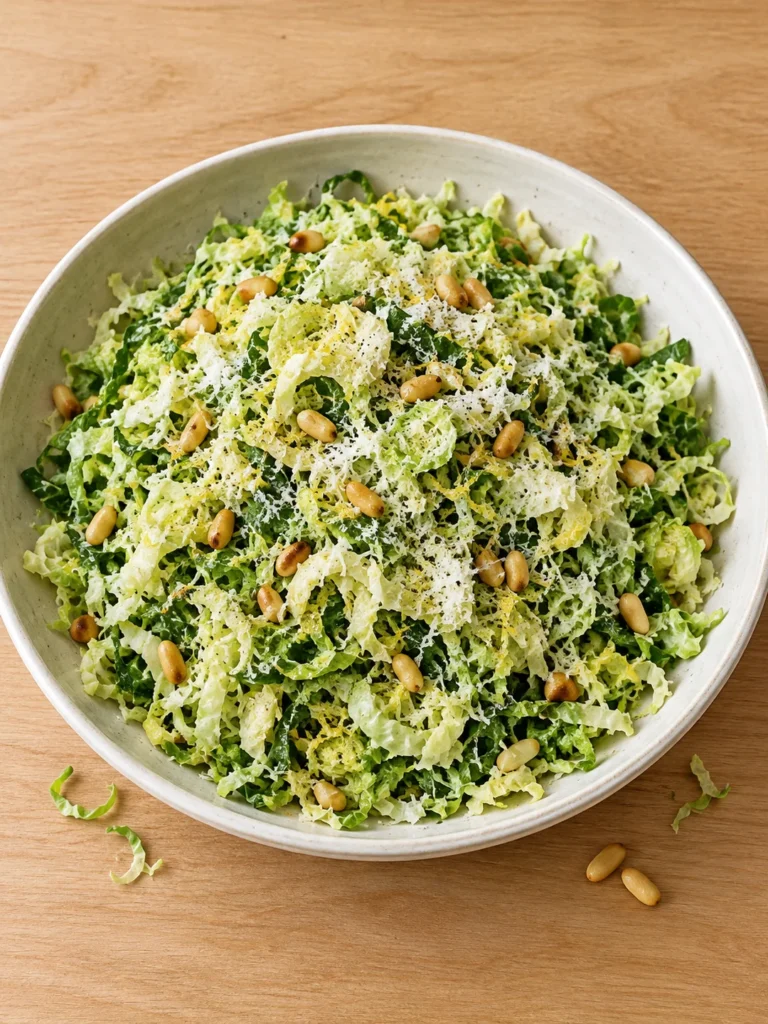
I had flown in for four days and signed up for her class on a whim. Four hours, six strangers, one long zinc table. I almost skipped it because of the price. I am glad I did not.
Four Hours with Rosa in Carroll Gardens
Rosa Avellino grew up in Carroll Gardens and never left it. She worked the counter at her uncle’s shop as a teenager, did fifteen years as a line cook, and now runs cooking classes out of a narrow rented kitchen with a tin ceiling and one very loud extractor fan.
The class started with the market, which was chaos. She walked us through the Sunday greenmarket at Carroll Park at a pace I could not keep, picking up sprouts, rejecting them, arguing cheerfully with a farmer about whether the first frost had hit yet. Then into Caputo’s on Court Street for the Pecorino, where she pressed a piece into my hand before I had agreed to anything.
Back in the kitchen she set out a mandoline and told us the whole dish lives or dies on the thickness of the slice. Raw sprouts are not bitter, she said, they taste like young cabbage. Bitter and tough come from cutting them fat and lazy.
She was right, and I have proved it the wrong way since.
Why the Shaved Brussels Sprout Salad Is Not a Belgian Dish
I assumed, before I asked, that this came out of the Low Countries somewhere. The vegetable does. Brassica oleracea var. gemmifera was cultivated near Brussels and documented there back in the thirteenth century, which is where the name comes from.
The salad is much newer and much more local to the block I was standing on. It is a mid-2000s Italian-American restaurant invention out of New York. Jonathan Waxman was serving raw shaved sprouts with Pecorino Romano and lemon at Barbuto in the West Village after it opened in 2004, and Frank Castronovo and Frank Falcinelli made their own lemon and olive oil version a signature at Frankies 457 Spuntino, a few minutes’ walk from Rosa’s kitchen.
Both versions borrow the same old Italian logic, which is that a cheap winter brassica needs nothing more than good oil, acid and a hard sheep’s-milk cheese. Rosa called it cucina povera with a Brooklyn accent. Food bloggers ate the Carroll Gardens version around 2010 and the thing spread, which is roughly how a vegetable that American kids used to push around their plates ended up on holiday tables as the brightest thing there.
And it is not the roasted sprouts with bacon and balsamic that menus keep confusing it with. No heat touches this salad. Cook a sprout and it turns sulphurous, which is the exact flavour most people think they hate.
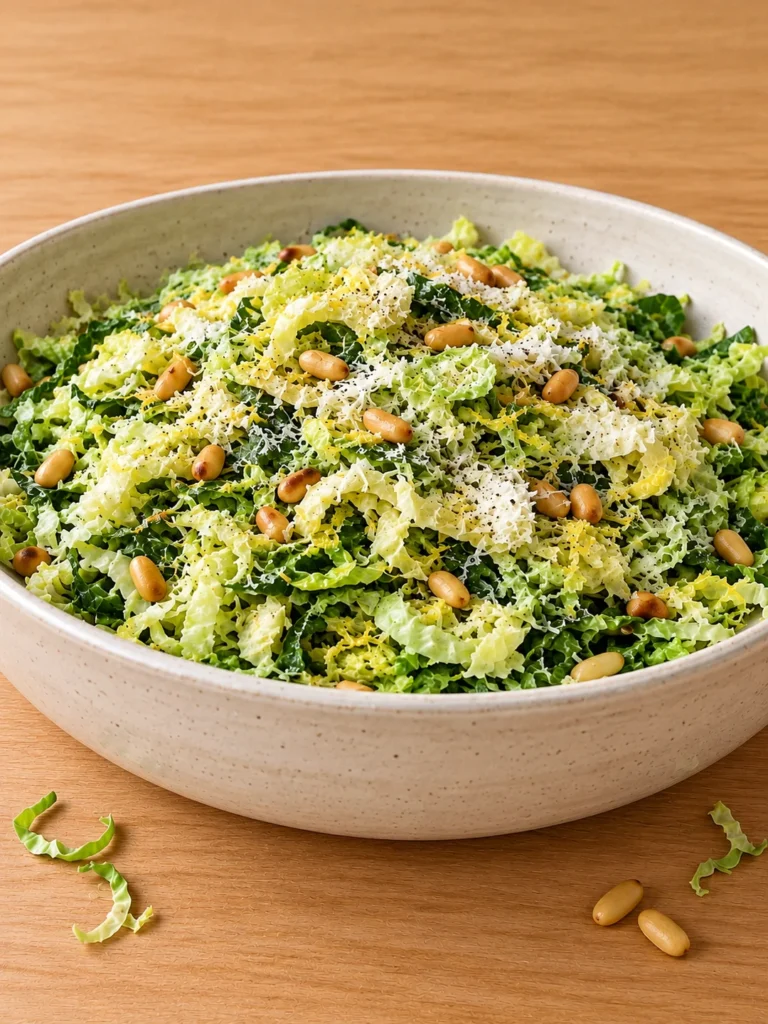
What I Used
- About a pound and a half of Brussels sprouts, firm and tightly closed, raw
- One lemon, zest and all the juice, roughly 3 tablespoons
- 5 tablespoons of extra-virgin olive oil, plus a little more at the end
- A teaspoon of sea salt, and then more, because raw sprouts swallow it
- Half a teaspoon of coarse black pepper
- Two and a half ounces of Pecorino Romano, finely grated
- A third of a cup of pine nuts, toasted, optional
Six ingredients and one maybe. That is the whole list, and the shortness of it is the point.
Making It at the Wooden Table in My Kitchen
I make this on Sunday mornings before anyone texts me back. The light comes across my wooden table at a low angle in November, the window stays open because it is still seventy degrees outside, and I usually have Bill Evans on low because the extractor fan in my own kitchen is nothing like Rosa’s.
The mandoline is a plastic Benriner I have had for years, set to the thinnest notch. I wear a cut-resistant glove, which I resisted for about a month and now would not touch the thing without. Trim the dry stem end shallow so the leaves hold together, pull off anything yellow, then shave stem-end first in batches.
The pile that builds up looks like confetti. Run your fingers through it and separate the ribbons, cutting up any rounds that stayed whole, because packed discs do not take dressing the way loose shreds do.
The first time I made this at home I thought I would save fifteen minutes with the food processor. Paste. Grey, bruised paste with no crunch in it at all, and I threw out two pounds of sprouts and felt sick about it.
Then the zest over the top, the juice, the oil, the salt and pepper, and a full minute of tossing with my hands, lifting from the bottom. You can feel the ribbons slump a little as the salt and acid get into them. Five to thirty minutes on the counter after that and they lose their raw edge.
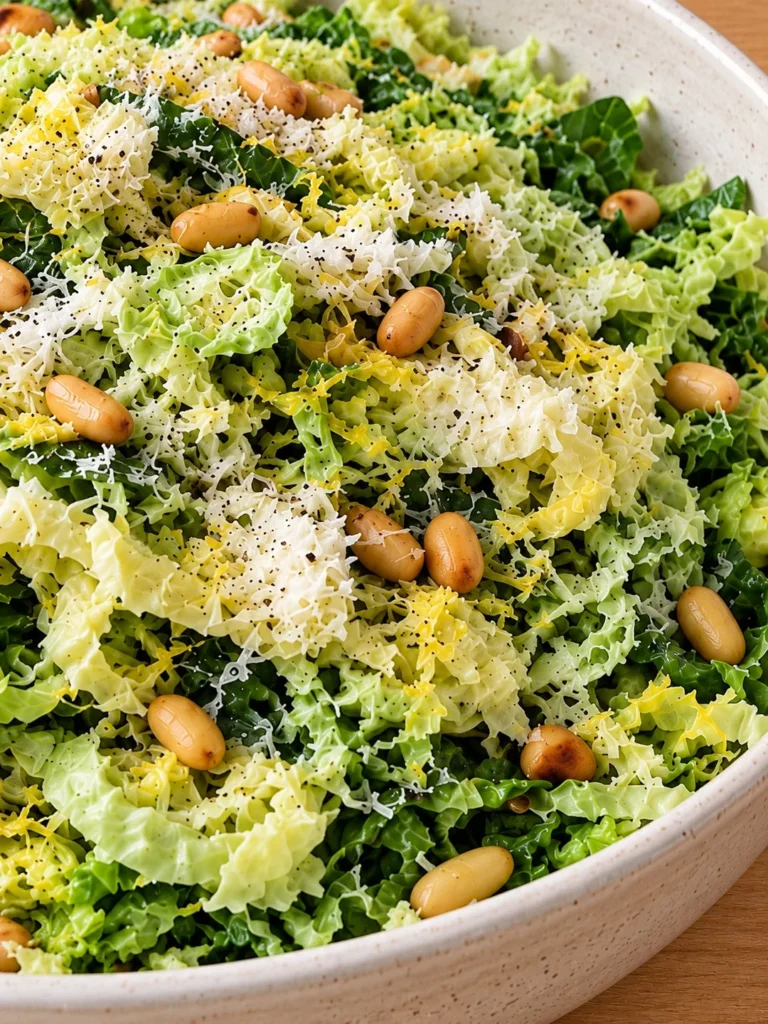
The Pecorino goes in last, in a snowfall, and the nuts after that so they stay crisp. Then taste it and be bold about correcting it. Under-seasoned is the only real way to fail here, and I have done it more than once by trusting my first guess.
What I Change, and What I Do Not Touch
I buy the Pecorino Romano at the Italian deli near the Hollywood farmers’ market on Sunday, which is also where I get the sprouts when they look tight and heavy. Parmigiano-Reggiano works and is softer in flavour. I prefer the sheep’s-milk sharpness, though I will say I have used whatever hard cheese was in the fridge on a Tuesday and nobody complained.
Toasted hazelnuts or Marcona almonds instead of pine nuts, both good, three or four minutes in a dry skillet and no longer. Skillet croutons in olive oil if I am making this the main thing on the table rather than a side next to roast chicken.
What I do not change is the timing. This brussel sprout salad needs those few minutes in the lemon, but leave it dressed over an hour and the ribbons go limp and sad. Shave ahead if you want, dress close to the table.
Cold leftovers the next morning, eaten standing at the counter. Softer, less crunch, still the thing I want.
Rosa still sends me voice notes, usually about what the market looked like that weekend and whether the sprouts were any good. I send her photos of mine and she tells me they are too thick, which they sometimes are. That class cost me a morning and changed how I think about a vegetable I had written off completely.
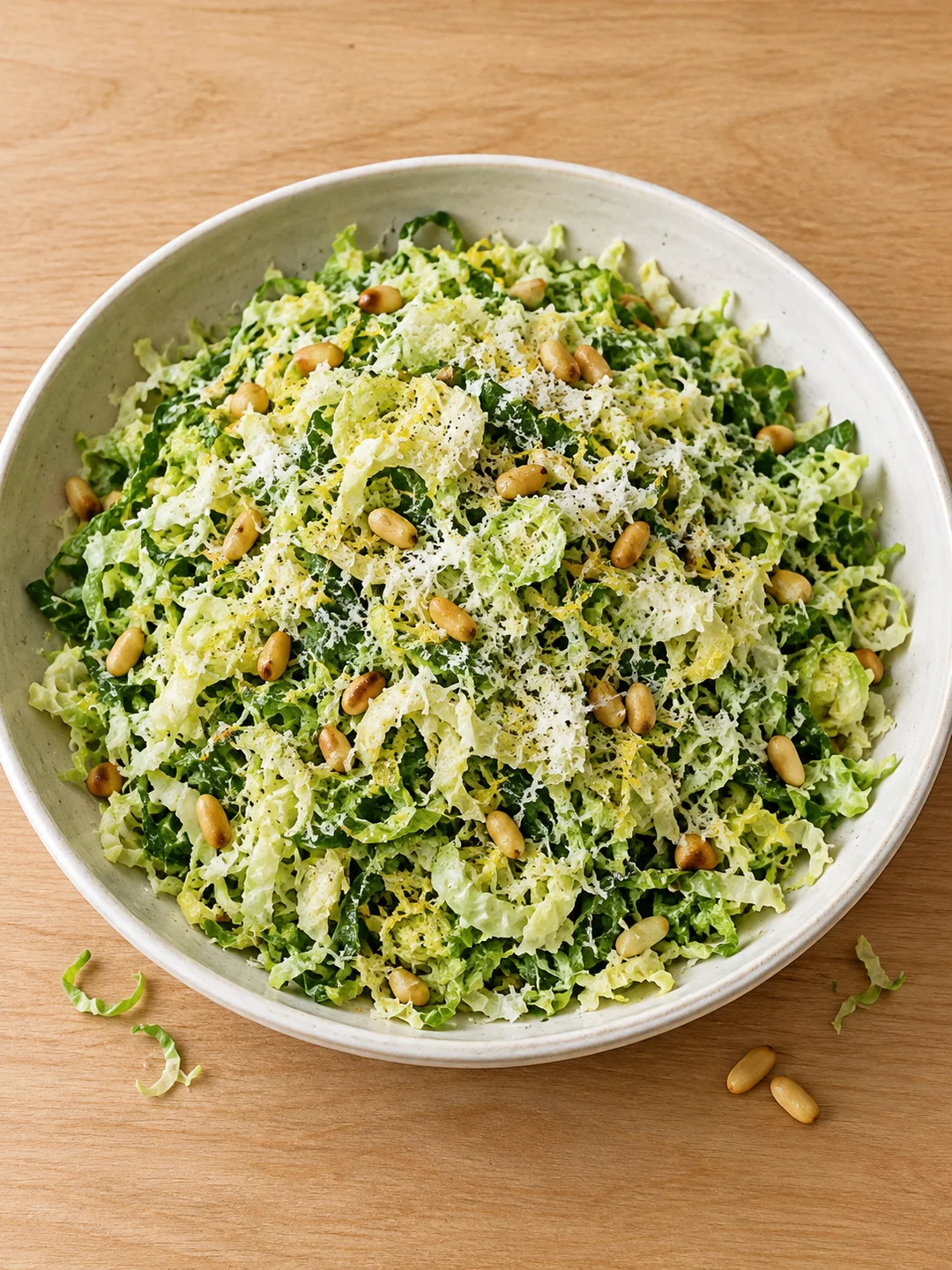
Shaved Brussels Sprout Salad
Ingredients
Equipment
Method
- Rinse the Brussels sprouts in cold water and dry them well. Wet sprouts slip on a mandoline and water dilutes the dressing.
- Trim the dry stem end off each sprout with a paring knife, cutting shallow so the leaves stay attached. Pull off any bruised or yellowed outer leaves.
- If using nuts, toast them in a dry skillet over medium heat for 3 to 4 minutes, shaking often, until fragrant and lightly golden. Tip them onto a plate to cool.
- Set a mandoline to 1/16 inch and shave the sprouts stem-end first into a large bowl, working in batches. Wear a cut-resistant glove. With a knife instead, halve each sprout and slice crosswise as thinly as you can manage.
- Run your fingers through the pile and separate the shreds, slicing up any whole rounds that stayed intact. You want loose fine ribbons, not packed discs.
- Grate the zest of the whole lemon over the sprouts, then squeeze in the juice, about 3 tablespoons. Add the olive oil, sea salt and black pepper.
- Toss hard with your hands for a full minute, lifting from the bottom, until every ribbon glistens. The sprouts will slump slightly as the salt and acid take hold.
- Let the salad sit at room temperature for 5 to 30 minutes to macerate. The leaves soften, lose their raw edge and take on the lemon.
- Fold in the grated Pecorino Romano and the toasted nuts, if using, tossing just enough to distribute them.
- Taste and correct. Raw sprouts absorb seasoning, so add more salt, more lemon or more cheese until the salad tastes bright and savory. Finish with a last drizzle of olive oil and a grind of pepper, and serve the same day.