
Sausage Balls were not what I expected to be handed on the deck of a shrimp boat tied up at Shem Creek. I had come to Mount Pleasant, South Carolina for shrimp. Nothing else.
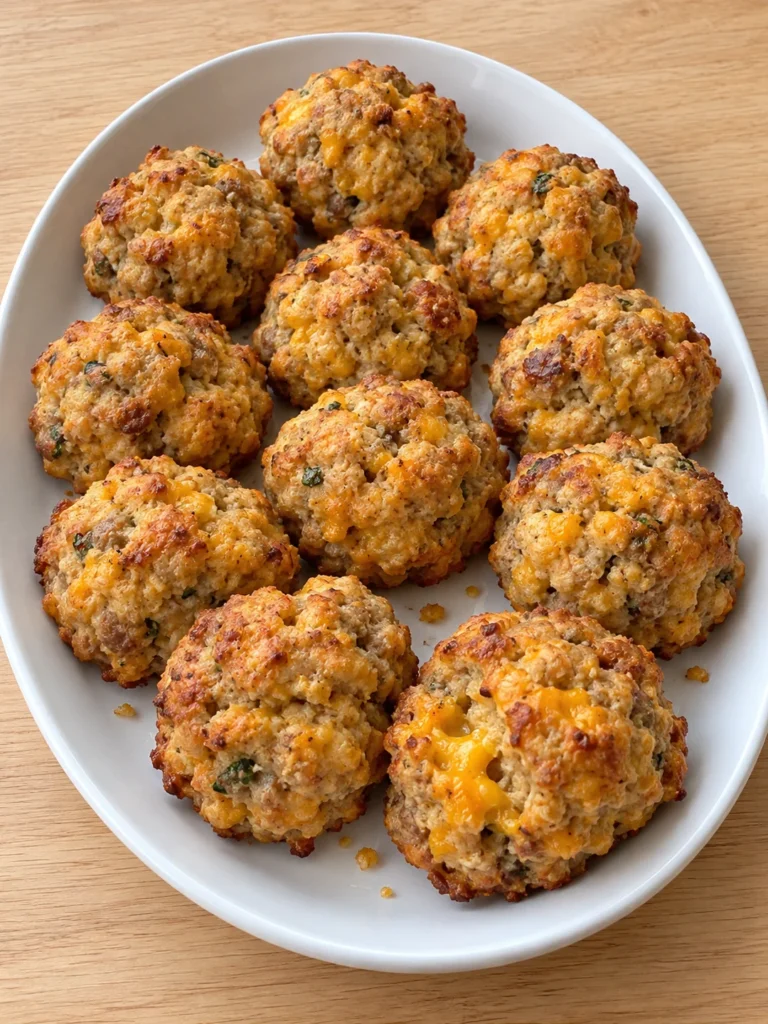
Curtis had been out since four that morning and was hosing down the deck when I asked one question too many about his nets. He told me to sit on an upturned bucket and then disappeared into the galley without explaining anything.
The Galley at Shem Creek
That galley was roughly the size of a phone booth. A propane oven barely bigger than a bread box, one dented sheet pan, a box grater hanging off a nail beside the sink.
He was in white rubber boots and a Clemson shirt gone soft at the collar, and he grated a whole brick of sharp cheddar standing up, no bowl, cheese dropping straight onto the pan. Then a pound of bulk pork sausage squeezed out of its paper and onto the pile of it.
I reached for the box of biscuit mix to be useful and he slid it out of my reach. The cheese goes in with the meat first, he said, and the mix goes in dead last or you end up with gravel. He was right. I have not done it another way since.
Twenty minutes later I was eating them off a paper towel with my fingers while the gulls worked over the dock. He told me he makes a double batch every Christmas Eve and eats the cold ones with coffee the next morning, which struck me as deeply sensible.
Sausage Balls Are Older Than the Bisquick Booklet
I assumed this was a brand recipe. It is not, or at least not originally. General Mills launched Bisquick in 1931, and Southern home cooks were the ones who figured out that the mix would bind pork sausage and grated cheddar into something you could pass around a room.
Jean Anderson’s American Century Cookbook puts the nippy little hors d’oeuvre around the 1960s, spreading by word of mouth through church cookbooks, community fundraiser collections and newspaper food pages. Bisquick printed its own version decades later in a 1990s anniversary booklet, and Betty Crocker followed with Original Sausage-Cheese Balls in a 1999 holiday magazine. The home cooks got there first by a long way.
The other thing worth correcting is the idea that these are a lazy three-ingredient cheat. Look at the ratio. A full pound of cheese against a pound of sausage, which is lopsided on purpose and is the entire reason they come out tender with molten pockets instead of dry little meatballs.
And they are not only a Christmas thing. Showers, wedding receptions, Easter, tailgates, brunch. Curtis said he has taken them to all of the above.
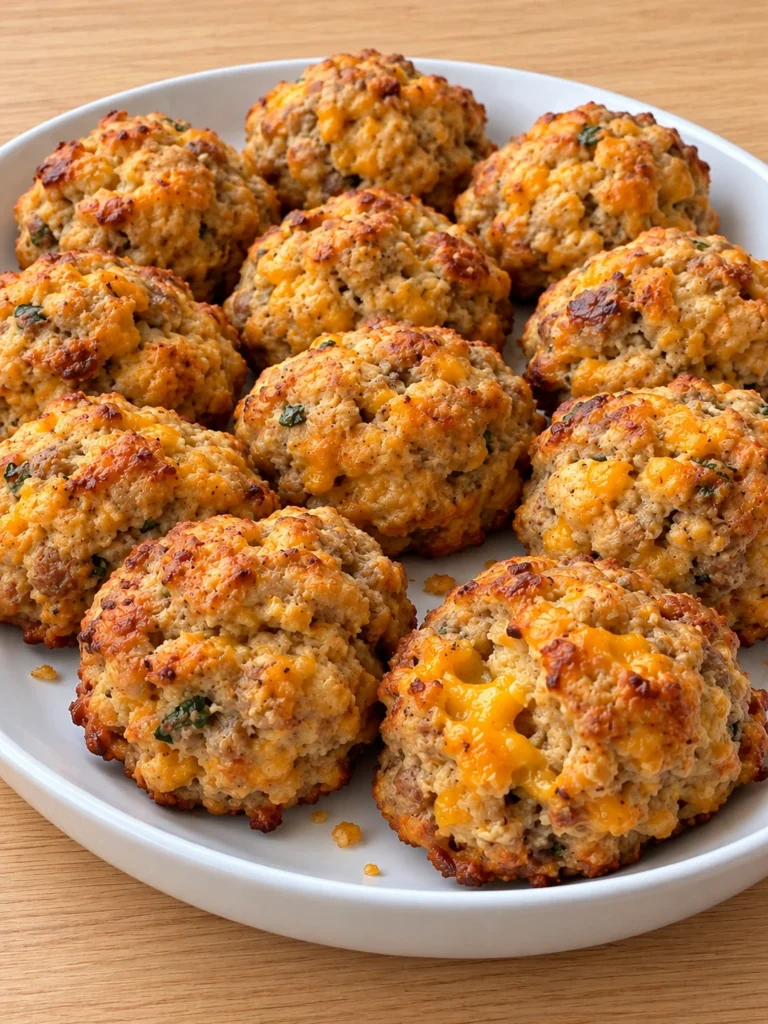
What I Used
- 1 lb bulk pork breakfast sausage, out of the fridge a good half hour before I start
- 1 lb sharp cheddar, in a block, grated by hand and no arguing about it
- 2 cups biscuit baking mix, spooned into the cup and leveled
- About 3 tbsp whole milk, only if the dough refuses to come together
- 1/2 tsp paprika, optional but I always
- 1/4 tsp cayenne if the sausage is mild
- 1/2 tsp black pepper, ground fresh
- Honey mustard or pepper jelly for dipping
Where Sausage Balls Punish You for Rushing
Back home, I made them on a Sunday morning before anyone in the building was awake, dough on the wooden table that gets the early light. First attempt, I used a bag of pre-shredded cheddar because I could not face the grating. Crumbs. Sandy, sad crumbs that fell apart on the spatula.
The cellulose coating on bagged cheese exists to stop it caking, and it blocks the moisture that is supposed to bind everything. So now I grate the whole pound on my box grater, the one with the bent corner from a move, and it takes six or seven minutes and that is simply the tax.
Cold sausage is the next trap. Straight from the fridge it will not blend into the cheese, so you overwork the dough fighting it and the balls turn tough. Let it sit out 30 to 45 minutes. Go do something else.
Then the part where everyone panics. You add the biscuit mix and for the first minute or two it looks like a hopeless dry mess, nothing holding, and the temptation is to dump in milk immediately. Do not. Keep the paddle on low for the full two or three minutes and the cheese warms up and binds it all on its own.
Only after that, if a pinch squeezed in your palm still will not hold, add milk a tablespoon at a time. The dough should be stiff and slightly tacky. Never wet.
Measure the mix properly too. Scooping straight out of the bag packs in up to a quarter more than you want, and that, far more than lean sausage, is why people end up with dry ones.
The last bit of patience is actually the opposite of patience. Pull them at 15 to 20 minutes, the moment the bottoms go golden and the tops are just set, because overbaking is the one genuine way to wreck them. I rotate the pans halfway and then I hover.
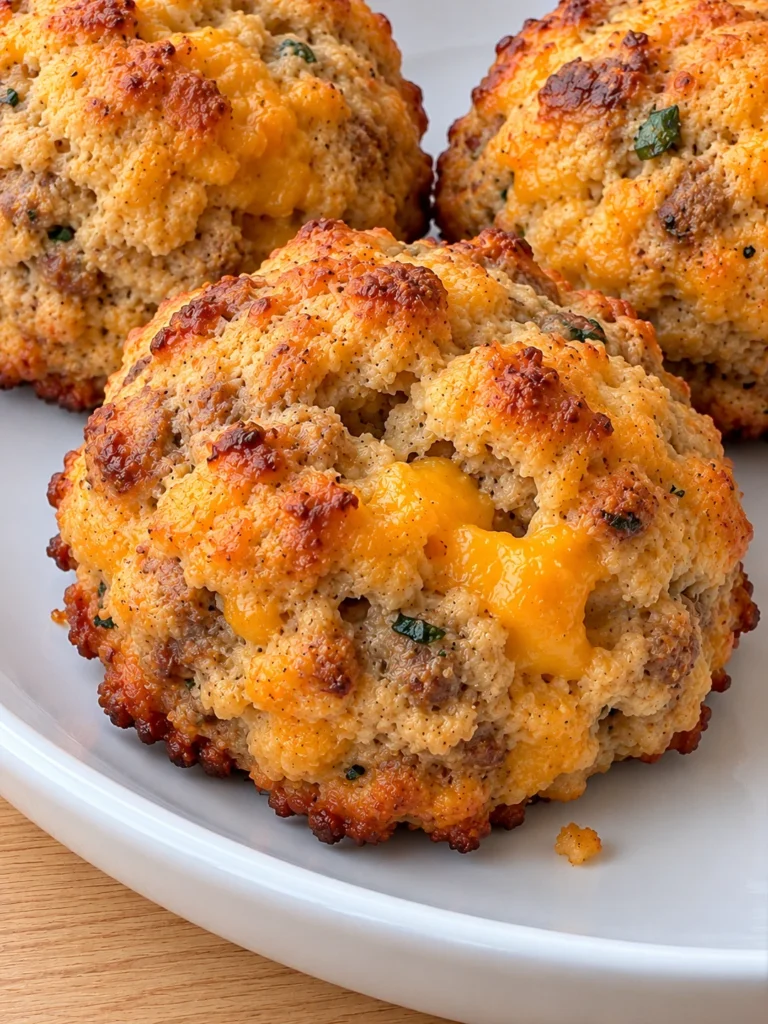
Twists Worth Trying
Deep South cooks often make sausage balls with cream cheese, working 8 oz of softened cream cheese into the mixture for a richer, softer middle, and it is a real improvement if you like them almost spoonable. I go back and forth. Most days I prefer the plainer Shem Creek version with hot sausage and the cayenne left out.
Sage sausage is lovely in autumn. I almost added chopped jalapeno once and then thought better of it, because the cheddar is already doing plenty and tradition here frowns on dressing them up. Nothing artisanal, nothing clever.
Best trick I stole from Curtis is freezing them raw. Roll, freeze solid on the sheet pan, bag them, then bake straight from frozen with about five extra minutes. I keep a bag going for whenever someone turns up.
Cold the Next Morning
I thought I would make these once, as a souvenir from a boat deck. I make them most months now, usually on a pan that has lost its shine, usually with the radio on.
Curtis was right about the leftovers too. Cold, straight from the fridge, standing at the counter with coffee. Somehow better than the first warm one.
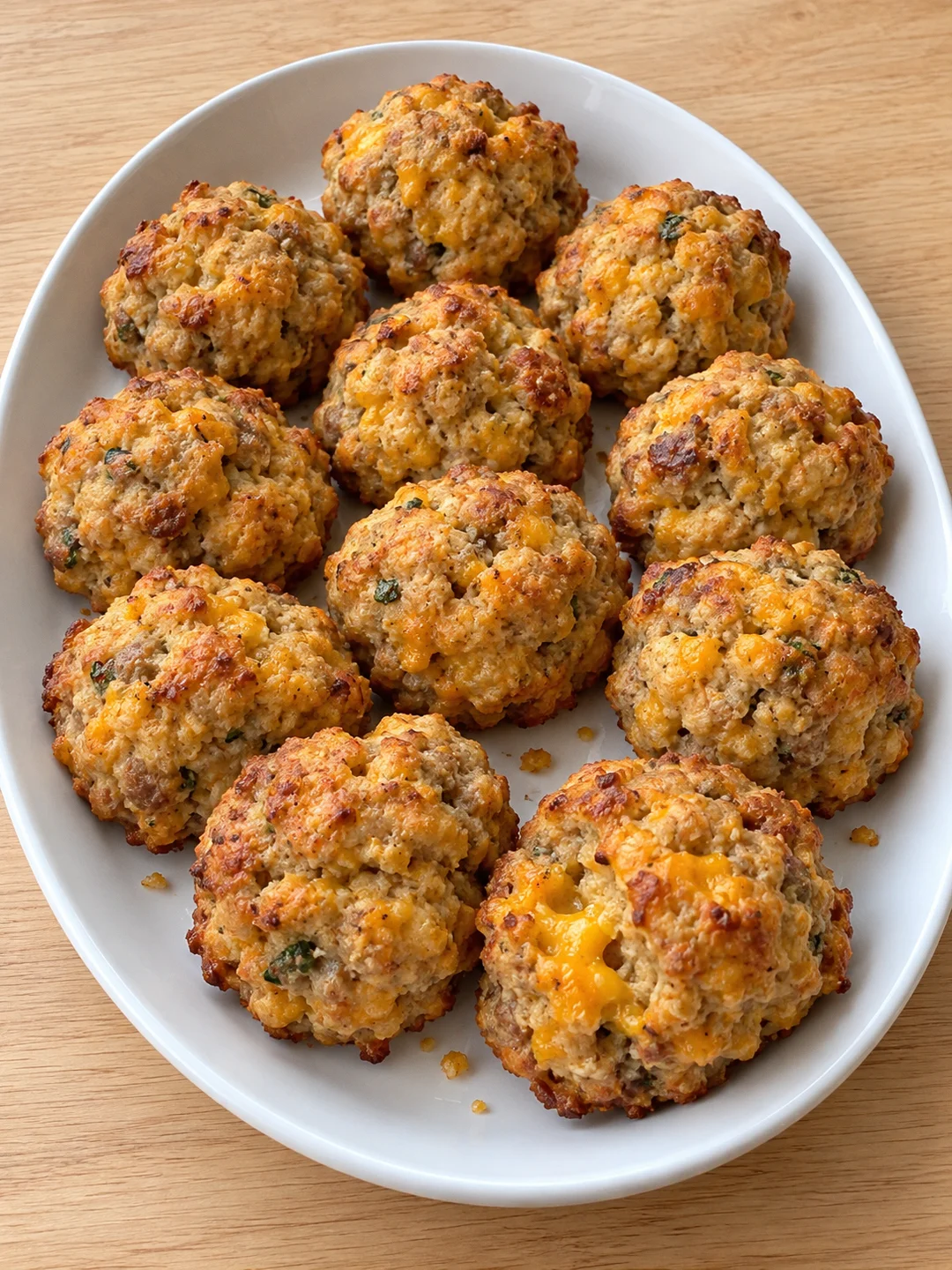
Sausage Balls
Ingredients
Equipment
Method
- Take the sausage out of the refrigerator 30 to 45 minutes before you start. Cold sausage will not blend with the cheese and you will end up overworking the dough trying.
- Preheat the oven to 350 F. Line two rimmed baking sheets with parchment paper, or leave them bare if you want the bottoms extra crisp.
- Grate the full pound of sharp cheddar on the large holes of a box grater. Do not skip this for a bag of pre-shredded cheese, the anti-caking coating will fight the moisture and give you crumbs instead of balls.
- Put the room-temperature sausage and the grated cheddar in the bowl of a stand mixer fitted with the paddle. Add the black pepper and the paprika and cayenne if using. Mix on low for 1 to 2 minutes until the cheese is evenly distributed through the meat with no clumps. By hand, squeeze and fold the mixture until it looks uniform.
- Spoon the biscuit mix into a dry measuring cup and level it off with a knife, never scoop it from the bag. Add it to the bowl and mix on low for 2 to 3 minutes. It will look hopelessly dry at first, then suddenly come together as the cheese warms and binds it.
- If it still refuses to hold together, add milk one tablespoon at a time, mixing after each. Stop when a pinch of dough squeezed in your palm holds its shape. The dough should be stiff and slightly tacky, not sticky or wet.
- Roll the dough into walnut-size balls about 1 1/2 inches across, roughly 1 heaping tablespoon each. A cookie scoop keeps them even. Space them about 1 inch apart on the baking sheets. You should get about 40.
- Bake for 15 to 20 minutes, rotating the pans halfway through, until the bottoms and edges are golden brown and the tops are just set. Pull them the moment they look done, overbaking is the one thing that ruins sausage balls.
- Let them rest on the pan for 5 minutes, then move to a platter with a spatula. Serve warm or at room temperature. Leftovers keep covered in the refrigerator for 4 days and reheat at 325 F for 8 minutes.