
The best Honey Glazed Carrots I have eaten came off a hotplate at a roadside stop on the N7, somewhere between Moulins and Varennes-sur-Allier. I was four hours into a drive I had planned badly.
I skipped lunch because I was sure I would reach Clermont-Ferrand by three and eat properly there. Wrong on both counts. The place had a gravel lot, a coffee machine that groaned like it resented me, and a plat du jour chalked up in handwriting I could barely read.
The Roadside Counter Outside Moulins
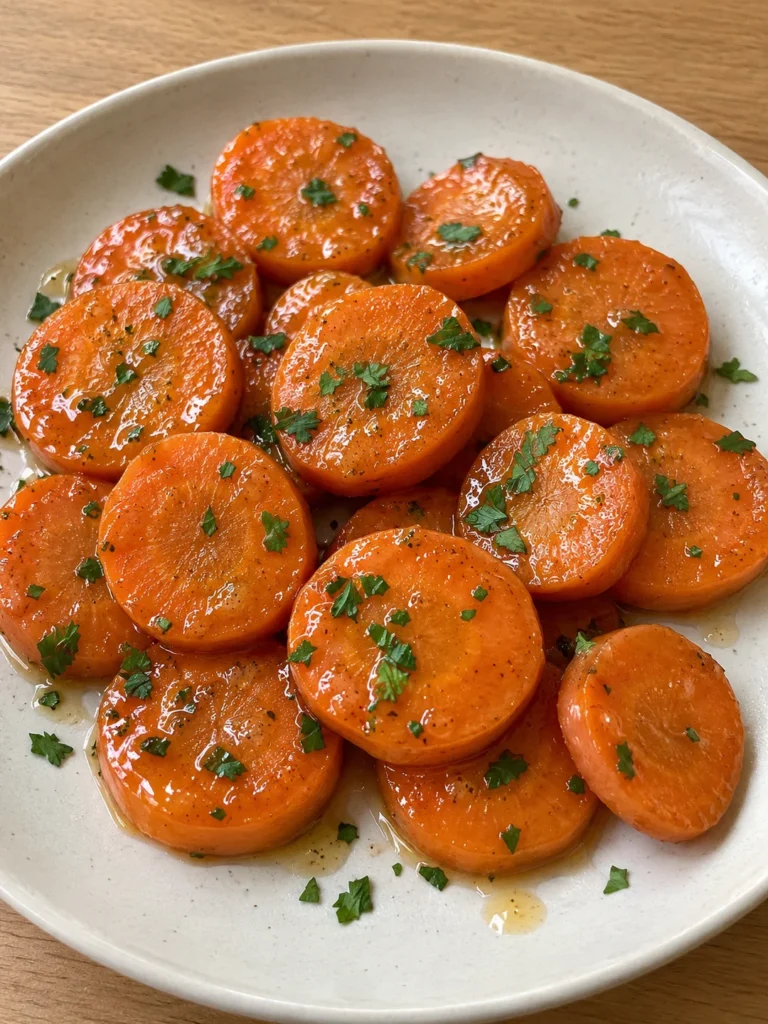
What arrived was roast pork, a scoop of mash, and carrots. That was it. No garnish, no arrangement, just a shallow pile of carrot rounds sitting in a shine so thin it looked wet rather than sauced.
I remember being annoyed about the carrots before I tasted them. Carrots are what gets added to a plate when nobody could think of a vegetable. Then I ate one and sat there with my fork in the air like an idiot, because it tasted more like carrot than any carrot I had eaten, plus butter, plus a sweetness that stopped just short of dessert.
The woman working the counter told me the liquid in the pan was the whole trick and that she had learned it at home, not in a kitchen job. She also told me to stop apologising for my French, which was kind of her.
Later that week I was staying with a host family in Clermont-Ferrand, and I described the plate to Odile over breakfast. She laughed, said that is just carottes glacées, and wrote the method on a paper napkin while her coffee went cold. Butter, honey, water halfway up, no draining. The napkin had a grease spot on one corner by the time she handed it over and I still have it, flattened inside my passport wallet.
Why Vichy Owns Honey Glazed Carrots
Odile pointed out that I had been eating within an hour’s drive of Vichy, which is the spa town the classic version is named for. Escoffier wrote the technique down as carottes à la Vichy in Le Guide Culinaire in 1903, and the original cooking liquid was the town’s saline mineral water, which was thought to be gentle on the stomach.
The honey is not historical. Escoffier’s version uses butter, a little sugar and that mineral water, and the honey crept in later as home cooks across Europe and North America swapped in whatever sweetener was in the cupboard. Brown sugar and maple syrup got the same treatment.
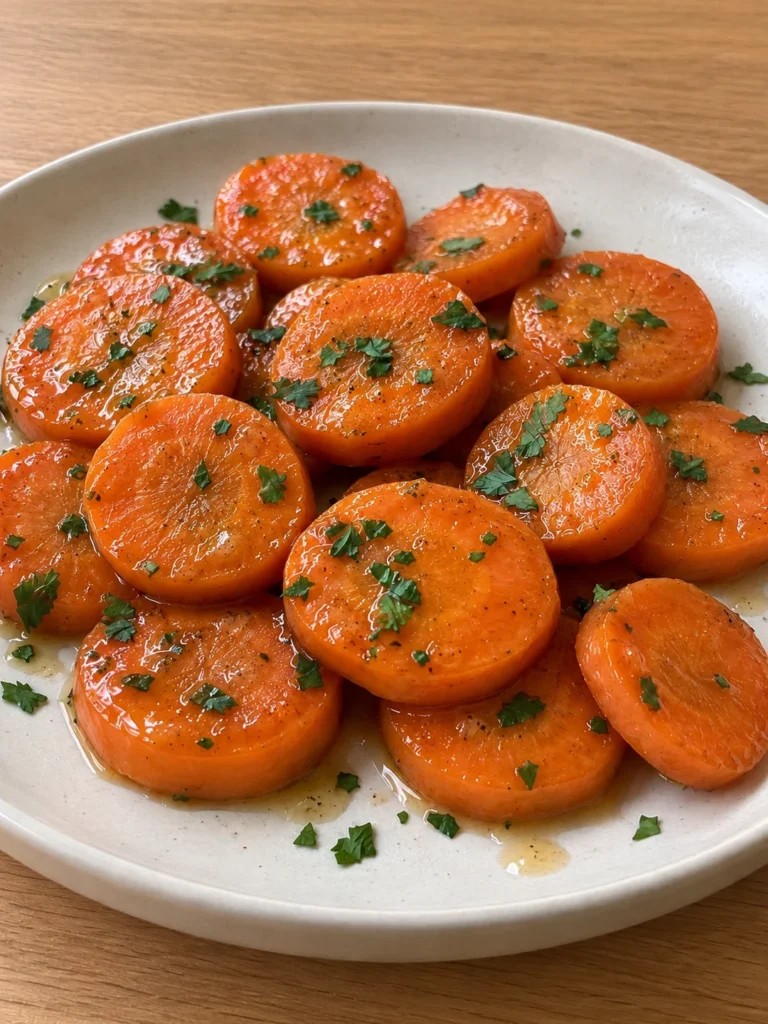
The other thing worth knowing is that this is not roasted carrots, and it is not boiled carrots with a sauce spooned over them. The carrots simmer in a shallow bath, nothing gets poured off, and the glaze is literally the cooking water reduced down to butter, honey and carrot juice. Drain the pan and you have thrown the dish away.
What I Used
- 2 lb carrots, peeled, cut into quarter-inch rounds or two-inch batons
- 3 tbsp unsalted butter, cut up so it melts evenly
- 2 tbsp mild honey, acacia or clover
- About 3/4 cup water, enough to come halfway up the carrots
- 3/4 tsp salt
- 1/4 tsp black pepper, ground fresh over the top at the end
- 2 tbsp parsley, chopped
- A teaspoon of orange juice or sherry vinegar, optional, for balance
Making Them in My Own Kitchen
The carrots come from the Wednesday farmers’ market, the stand that sells them with the greens still attached and dirt in the crevices. Those carrots taste like something. Supermarket bagged ones work but you will notice you are tasting mostly honey.
On the honey, learn from me. My first attempt back home used a buckwheat honey I had brought back from a trip, dark and almost molasses-like, and it bulldozed everything. The carrots tasted like cough syrup. Mild honey only.
I use a 12 inch sauté pan with a rivet that has been working itself loose for two years. Width matters more than anything else here. Carrots piled two deep steam in their own moisture and come out pale and slack, which is the single most common way this goes wrong, and I know because I did it in a 10 inch skillet and served it anyway.
Once the lid goes on there is about ten minutes of nothing to do, so this is where the cooking turns into an event in my apartment. Françoise Hardy on the speaker, because I am not subtle. A piece of bread and three cornichons standing at the counter, which is less a snack than a stalling tactic. Last time it was raining, properly raining, and the kitchen window was fogged at the corners, and I missed the Allier valley more than I expected to.
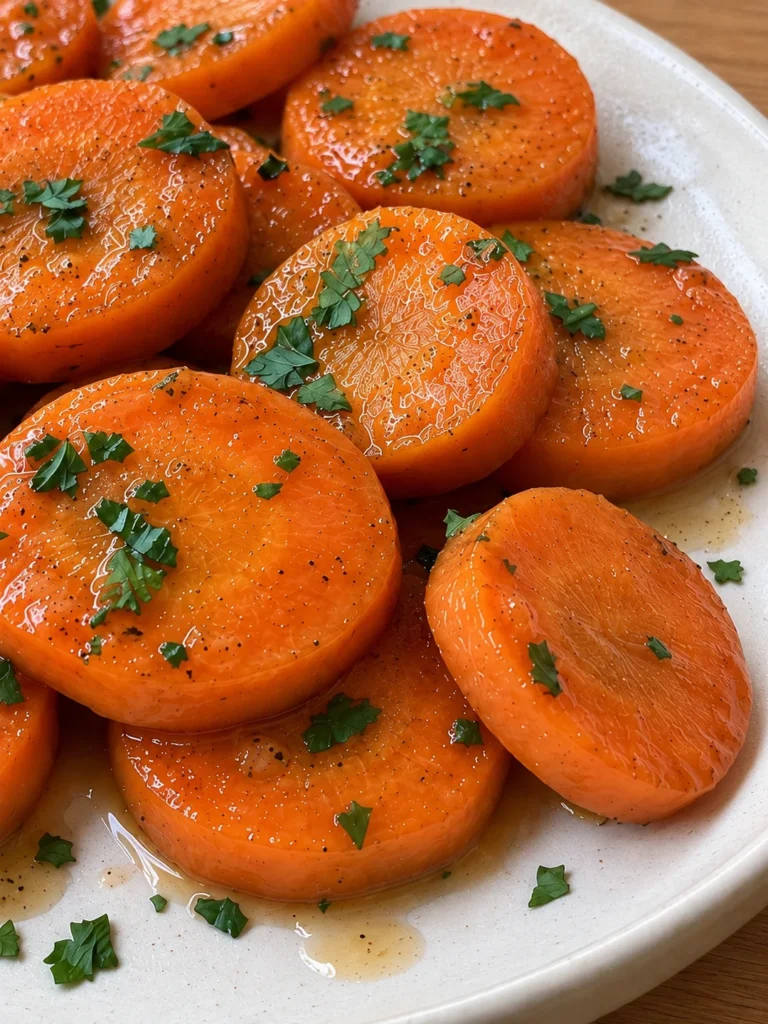
Then you uncover the pan and listen. A steady boil means there is still water in there. When the sound shifts to a crackle and a sputter, the water is gone and you are down to fat and sugar, which is the moment to drop the heat to medium and start swirling. One or two minutes of rolling the carrots through that syrup and every piece carries a thin film that catches the light. If it tightens up too far, a tablespoon of water and another swirl brings it back.
Do not walk away during that part. Honey scorches fast and it takes the butter down with it, and burnt butter and burnt honey is a smell that stays in a kitchen for days.
Twists, and the Version Without Honey
For the classical Vichy version, leave the honey out entirely and use two teaspoons of sugar. It is cleaner, more vegetal, and honestly closer to what I ate off that roadside plate. I go back and forth on which I prefer. Most nights honey wins because it is already on the shelf.
The splash of sherry vinegar at the end is the most bistro thing you can do to this dish and it is worth trying once, especially if you are serving it next to something fatty like pork belly or baked ham. Orange juice does something similar but softer. This has also quietly become the pan of glazed carrots for thanksgiving that I bring when somebody else is hosting, mostly because it takes one burner and finishes in half an hour while the oven is fully booked.
Leftovers keep three days. Cold, eaten standing in front of the open fridge. Better than they have any right to be, although a teaspoon of water in a skillet loosens the glaze back up if you want them warm.
I have made these dozens of times now and they have never tasted exactly like that first plate, which I have made peace with. Four hours of driving and no lunch is a seasoning I cannot buy. Odile’s napkin gets me about ninety percent of the way there, and ninety percent is plenty on a rainy Tuesday.
Honey Glazed Carrots
Ingredients
Equipment
Method
- Peel the carrots and cut them into even 1/4 inch rounds or 2 inch batons. Even pieces matter more than shape, since uneven cuts finish at different times and some will go soft before others are tender.
- Lay the carrots in a 12 inch sauté pan in a single layer. If they pile up, use a wider pan or cook in two batches. Crowding is what keeps carrots from glazing.
- Add the butter, honey and salt, then pour in just enough water to come about halfway up the carrots, roughly 3/4 cup. Do not cover them completely.
- Bring to a simmer over medium heat, cover with a lid, and cook 10 to 12 minutes until the carrots are barely tender and a knife tip slides in with slight resistance.
- Uncover and raise the heat to medium-high. Let the liquid reduce 6 to 10 minutes. Do not drain it off, this liquid is the glaze.
- Listen for the sound to change from a steady boil to a crackle as the water evaporates and only butter, honey and carrot juices remain in the pan.
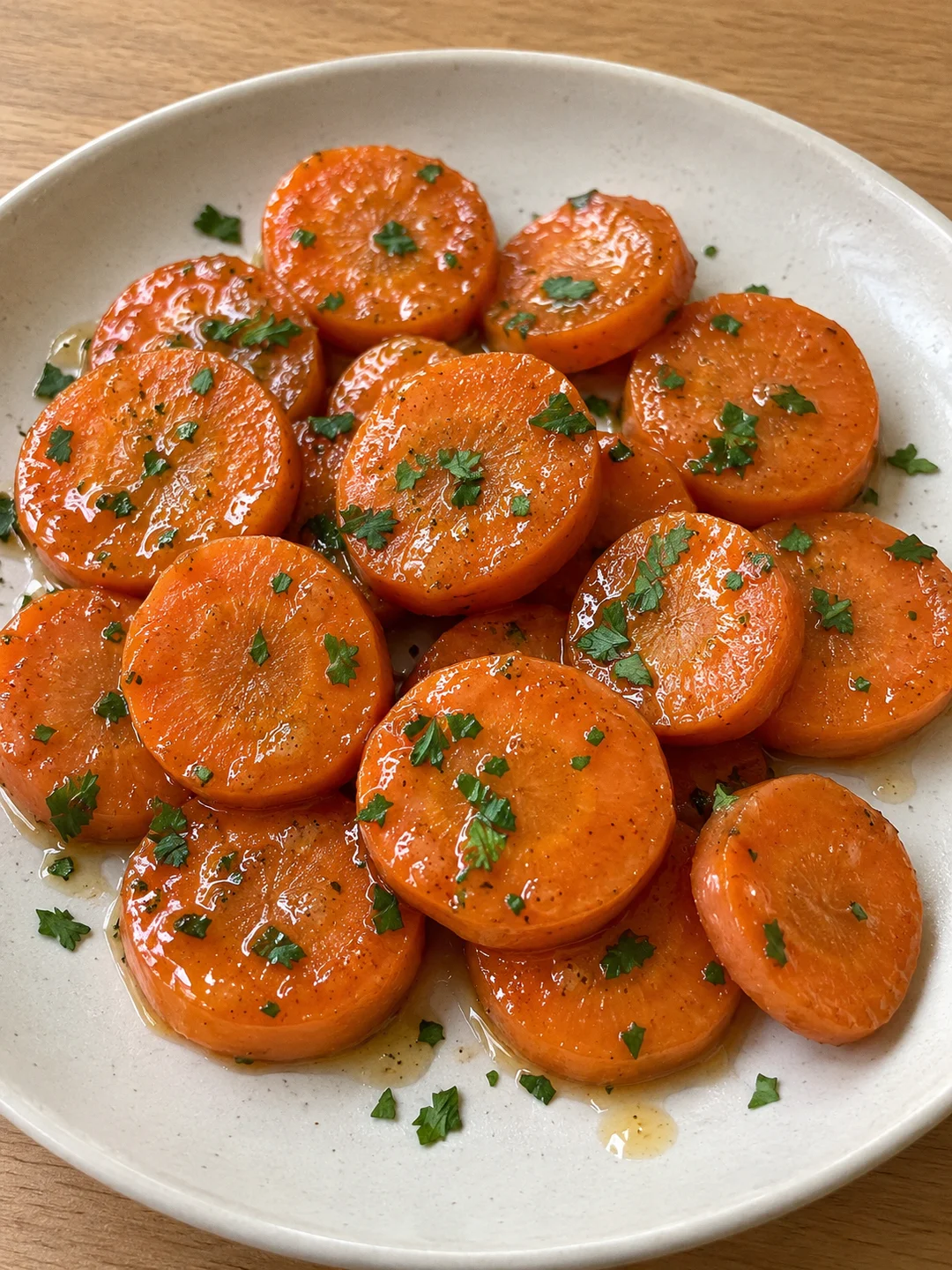
- Lower the heat to medium and swirl the pan, rolling the carrots through the syrup until each piece is coated in a thin, shiny film, about 1 to 2 minutes. If the glaze tightens too much, add a tablespoon of water and swirl again.
- Take the pan off the heat. Stir in the orange juice if using, grind over the black pepper, and scatter the chopped parsley on top.
- Serve hot, straight from the pan, scraping out any glaze left behind.