
The homemade hot cocoa mix in my cupboard right now exists because of a paper cup I drank standing up in Tallinn, in a crowd, in December, with my gloves wedged under one arm.

It was the Christmas market on Raekoja plats, the one that fills the old town square under the tree, and there was a brass band working through something in a minor key about twenty metres away. The queue I was in was four deep and nobody was in a hurry, which in that cold is its own small act of faith.
The Queue on Raekoja Plats in Tallinn
The stall was mostly selling glogi, the spiced wine, and the cocoa was almost an afterthought on the chalkboard. I ordered it because I had an early train and did not want to be tipsy at a train station. I almost ordered the wine anyway. Glad I did not.
The woman working the stall was called Kristiina and she scooped the powder from a steel tub, put a splash of hot milk in the cup first, and beat it with a tiny whisk into a dark paste before topping it up. I watched her do it maybe six times while the queue moved. Every cup came out glossy. No grit at the bottom, which is the thing that ruins most cocoa handed to you outdoors.
When the crowd thinned I asked her about the whisking. She said the paste was the whole job, that her mother did it that way, and that people pour boiling water straight onto powder and then blame the powder. She was friendly about it but she clearly had opinions.
Cold wind, hot cup. I have thought about that combination roughly once a week since.
Cocoa Is Not Hot Chocolate, and the Swiss Had Nothing to Do With It
When I got home I went digging, because I had assumed the whole instant-mix format was European and old. It is neither, really. The powder itself is Dutch, and we can date it: in 1828 Coenraad Johannes van Houten patented a hydraulic press that squeezed most of the cocoa butter out of cacao, leaving a fine powder that would actually disperse in liquid instead of floating in a greasy slick.
The packet-of-mix idea came much later and from Wisconsin. Instant hot cocoa mix arrived in the 1950s, and in 1961 Sanna Dairies in Menomonie started selling the one that became Swiss Miss. Nothing Swiss about it. The name was marketing.
The other thing worth knowing is that hot cocoa and hot chocolate are two different drinks, even though supermarket boxes use the words interchangeably. Hot cocoa is built from defatted cocoa powder plus sugar. True drinking chocolate is melted solid chocolate, cocoa butter and all, which is why it coats the spoon. And behind both of them sits a very long line going back to Maya and Aztec cacao drinks, bitter and often chili-spiked, carried to Europe by Spanish colonists who added the sugar and the milk. A jar of powder in my cupboard is the most democratic possible version of something that was once poured in aristocratic chocolate houses.
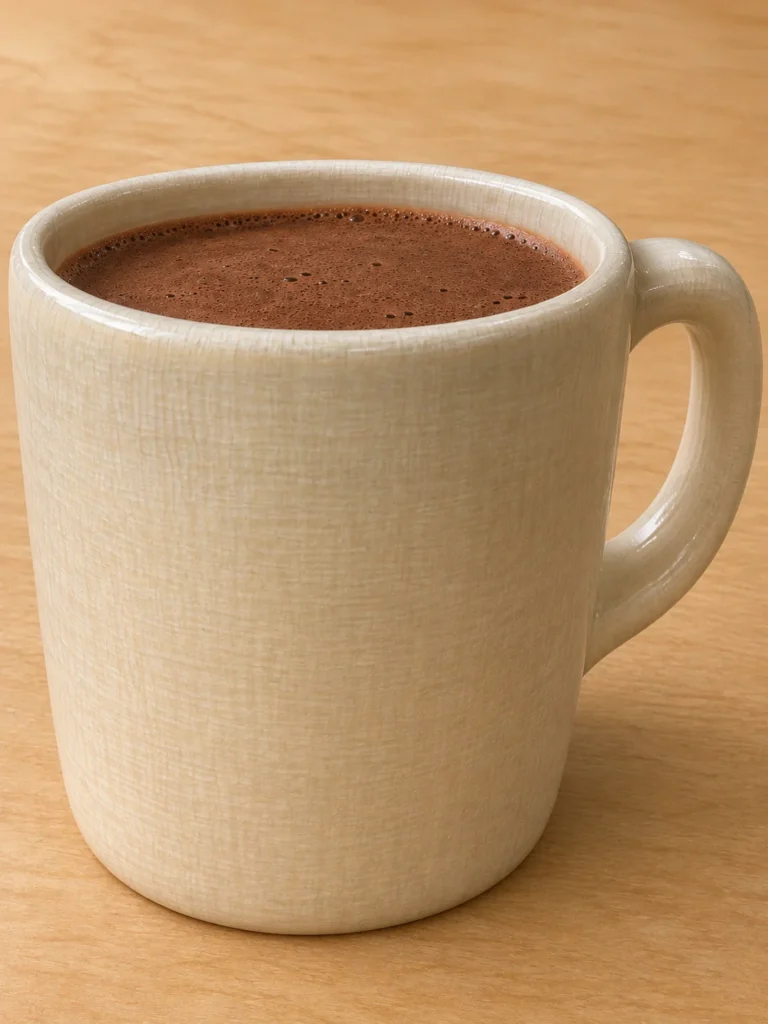
What I Used
- Unsweetened cocoa powder, Dutch-process, one cup
- Confectioners’ sugar, a cup and a half, and please do not swap it
- Nonfat dry milk powder, a cup and a half, from the bulk bins at the co-op down the street
- Cornstarch, two teaspoons, for body and to keep the mix loose
- Fine salt, half a teaspoon
- A fine-mesh sieve with a slightly bent rim from being dropped
- A balloon whisk, the big one
- A four-cup jar with a clamp lid
- Hot milk or water, about a cup per mug
Making the Homemade Hot Cocoa Mix in My Kitchen
I did the first batch on a grey Sunday morning before anyone in the building was awake, marine layer still sitting on the street, the wooden table getting that flat early light that makes cocoa look almost purple. I had the Blue Nile on, which is music for exactly this weather and nothing else.
It is a dusty job. Cocoa gets everywhere. By the time everything had gone through the sieve there was a fine brown film on the table, on the jar, on my forearm, and a faint one on the window.
The sieving matters more than it sounds like it should. Cocoa and milk powder both form hard little pebbles in the bag, and those pebbles never dissolve, they just sit at the bottom of the mug and ruin the last mouthful. I always sift. Except once when I did not, and I found a dark pellet in the bottom of the cup like a small accusation.
Then a full minute of whisking, scraping the sides, until the colour is one single shade with no pale streaks of sugar and no dark pockets. A minute feels long. Do it anyway.
What I Got Wrong, and What I Changed
First attempt, I used granulated sugar because that is what was open. Within a week the jar had sorted itself into layers, sugar at the bottom, cocoa and milk powder above, and every scoop tasted different. The crystals are heavier than the powders, and they pull in moisture, so the mix clumps. Confectioners’ sugar is not a fussy upgrade here, it is structural.
The other change was heat. I used to pour water straight off the boil. That seizes the milk proteins and gives you lumps no amount of stirring fixes. Now I take it to steaming and stop, make Kristiina’s paste with about two tablespoons, then pour the rest in slowly.
On the variations, the one I keep coming back to is toasting the dry milk powder, spread on parchment at 300 F for twenty minutes until it goes pale gold, then breaking the lumps up in the food processor before blending. It adds a caramelised dairy note that tastes like something simmered rather than something stirred. There is also a Southwest version with a teaspoon of cinnamon and a quarter teaspoon of cayenne in the full batch, which is closer to where this drink started than my sweet version is.
Marshmallows I skip. Unpopular, I know. A spoonful of whipped cream and some shaved chocolate does more, and a cinnamon stick as a stirrer does the most.
Why the Home Version Still Works
What I cannot recreate is the rest of it. The brass band, the smoke off the grill stall next door, the cold coming up through my boots, the fact that four hundred people were all drinking the same thing in the same square at the same time. The cup in my kitchen is quieter and the light is wrong and nobody is playing anything in a minor key.
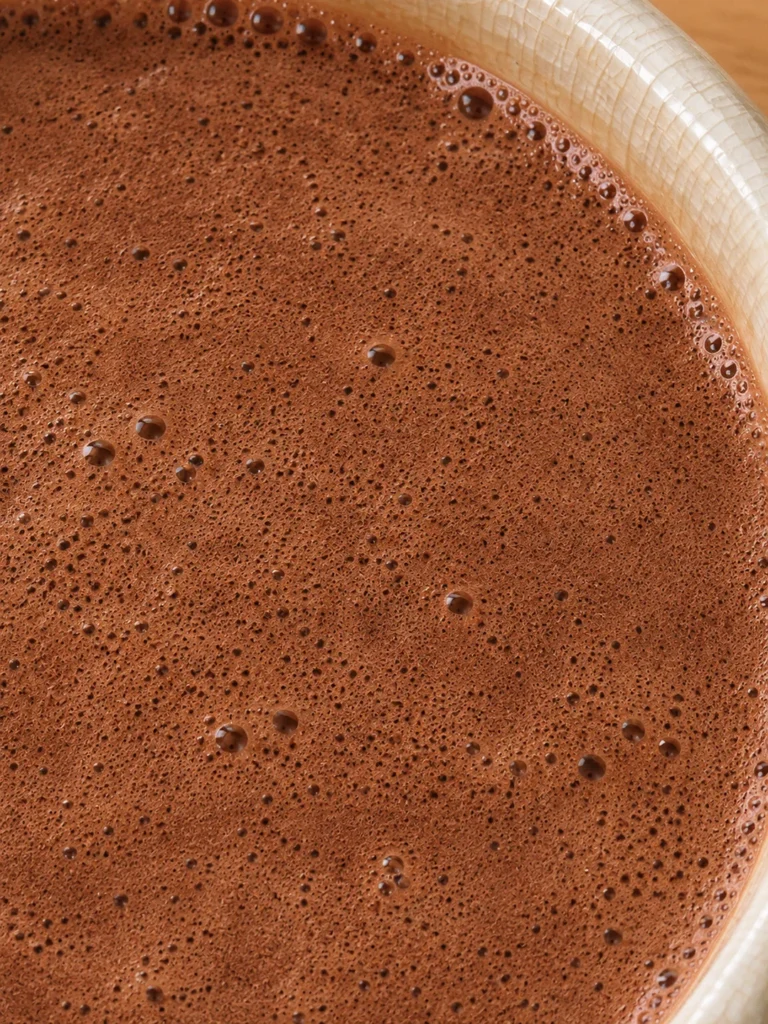
But it is the same drink, properly dark, thick enough to coat the spoon a little after it stands for a minute.
The jar keeps six months in a cool cupboard, away from the stove and any steam, and mine never lasts that long. I gave two jars away last December with ribbons on them, which is apparently the oldest tradition attached to this stuff. I kept the third and drank it alone on a Tuesday, thinking about a square in Tallinn.
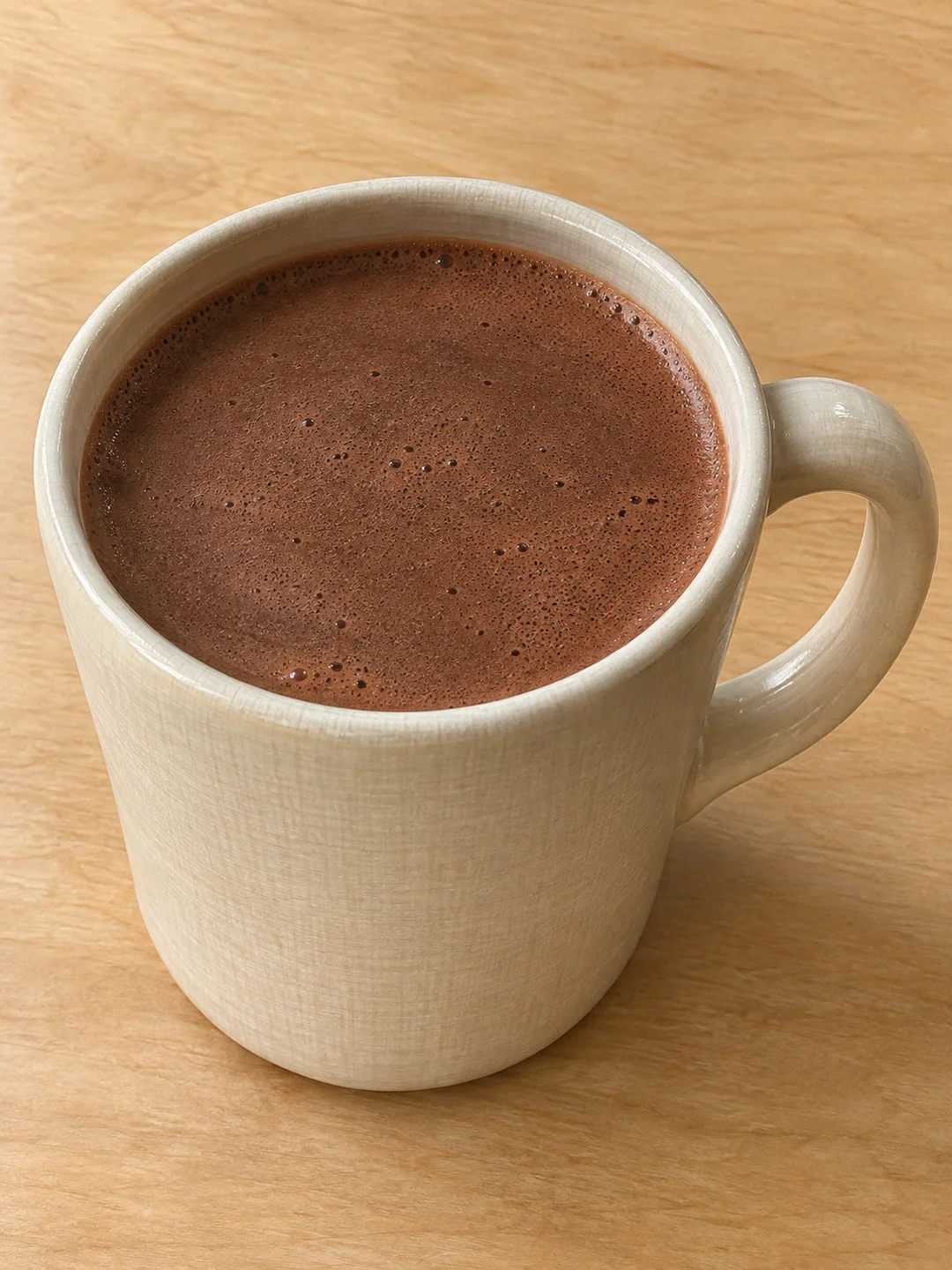
Homemade Hot Cocoa Mix
Ingredients
Equipment
Method
- Set a fine-mesh sieve over a large mixing bowl. Measure the cocoa powder, confectioners' sugar, dry milk powder, cornstarch and salt into the sieve in that order.
- Tap and stir the ingredients through the sieve with your fingers or a spoon, breaking up any hard lumps of cocoa or milk powder against the mesh. Discard nothing. Everything should pass through.
- Whisk the sifted powders with a balloon whisk for a full minute, scraping around the sides of the bowl, until the color is completely uniform with no pale streaks of sugar or milk powder and no dark pockets of cocoa.
- Transfer to an airtight jar, seal, and store in a cool, dry cupboard. Shake the jar before each use. This makes about 3 cups of mix, enough for 12 mugs.
- To make one mug, heat 1 cup water or milk until steaming but not at a rolling boil. Furiously boiling liquid curdles the milk proteins in the mix.
- Put 1/4 cup of the mix in a mug. Add about 2 tablespoons of the hot liquid and whisk or stir hard into a smooth, glossy paste with no dry pockets. This step is what keeps the cup lump-free.
- Pour in the remaining hot liquid in a slow stream, whisking as you go, until the cocoa is smooth and slightly frothy on top.
- Let the mug stand for 1 to 2 minutes so the cocoa solids and cornstarch fully hydrate and the drink thickens a little, then stir once and serve.