Go Back
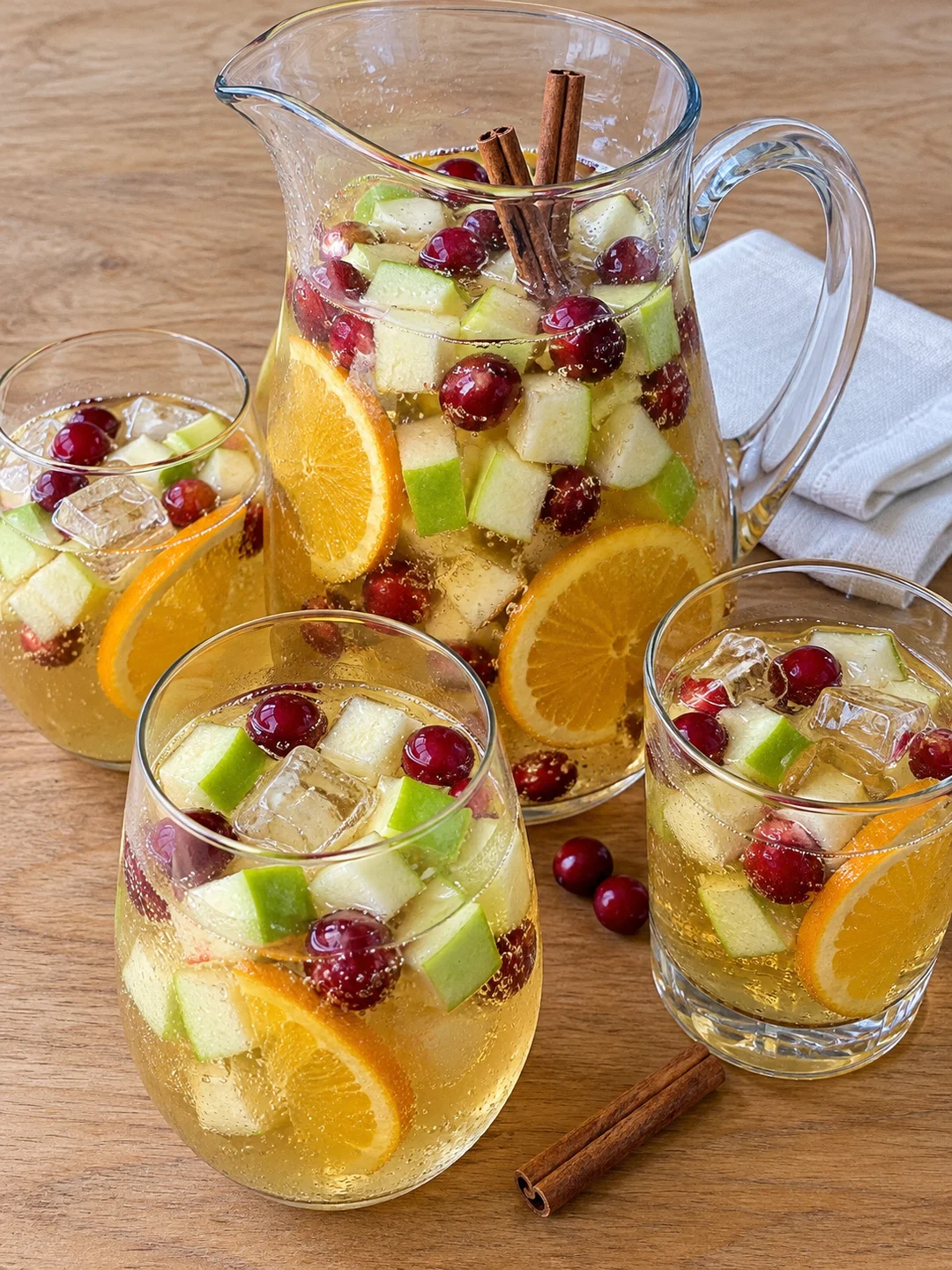
Apple Cider Sangria (Sangría de Sidra de Manzana), New England Orchard Style

Apple Cider Sangria

This is autumn in a pitcher: cloudy pressed orchard cider, a crisp dry white wine, Calvados and a whisper of orange liqueur, all steeped overnight with diced Granny Smith and Honeycrisp apples, cranberries and cinnamon. Reducing part of the cider first concentrates the apple without watering down the wine, so every glass tastes like a bite of fruit rather than sweet juice.
Prep Time 20 minutes
Cook Time 15 minutes
Total Time 4 hours 35 minutes
Servings: 8 Glasses
Course: Drinks
Cuisine: Spanish
Calories: 225

Ingredients
  

  • 4 cups fresh unfiltered apple cider cloudy pressed, non-alcoholic; 1 cup gets reduced
  • 1 bottle dry white wine 750 ml sauvignon blanc, pinot grigio or albariño, chilled
  • 0.5 cup apple brandy or Calvados
  • 0.25 cup triple sec or another orange liqueur
  • 1 medium tart apple Granny Smith, cored and diced small
  • 1 medium sweet apple Honeycrisp, cored and diced small
  • 0.5 cup fresh cranberries or pomegranate seeds
  • 1 medium orange half sliced into rounds, half juiced
  • 3 sticks cinnamon plus more for garnish
  • 3 tbsp sugar or 3 tablespoons simple syrup, to taste
  • 1 cup sparkling water or sparkling cider, well chilled, to top at serving

Equipment

  • 1 large glass pitcher at least 2.5 quart capacity
  • 1 Small saucepan for reducing the cider
  • 1 medium bowl for the ice bath
  • 1 Wooden spoon for muddling the fruit
  • 1 Slotted spoon for serving

Method
 

  1. Pour 1 cup of the apple cider into a small saucepan and bring to a hard boil over high heat. Boil 10 to 15 minutes, until it reduces to about 1/4 cup and looks glossy and syrupy. Watch the last few minutes closely so it does not scorch.
  2. Set up an ice bath in a medium bowl. Set the saucepan in the ice water and stir the reduced cider until it is cold, about 3 minutes. Chilling it fast keeps it from cooking any further.
  3. Put the diced tart apple, diced sweet apple, cranberries, orange slices, cinnamon sticks and sugar in the bottom of a large pitcher. Press and bruise the fruit gently with a wooden spoon about 10 strokes, just enough to release juice and dissolve the sugar. Do not mash it to pulp.
  4. Pour in the remaining 3 cups apple cider, the cooled cider reduction and the fresh orange juice. Stir until no sugar grit remains on the bottom.
  5. Add the full bottle of dry white wine, the apple brandy and the triple sec. Stir once, gently, from the bottom up.
  6. Cover and refrigerate at least 4 hours, ideally overnight, and no more than 24 hours. The fruit softens and perfumes the wine; past a day the apples brown and the drink turns bitter.
  7. Taste before serving. If the cider was very tart, stir in another tablespoon of sugar or simple syrup until the edge rounds off.
  8. At the moment of serving, pour in the chilled sparkling water or sparkling cider and stir once. Fill glasses with ice and ladle the sangria over, using a slotted spoon so the fruit stays behind until the end.

Notes

  • Serve over plenty of ice in stemless wine glasses or tumblers, using a slotted spoon to hold the fruit back.
  • Garnish with a cinnamon stick and a thin apple slice; for a party, rim the glasses with cinnamon sugar.
  • Put out marcona almonds, olives and manchego alongside — the salt makes the drink taste drier and brighter.
  • Use fresh unfiltered cider, not filtered sweetened apple juice, which tastes flat and candy-like.
  • Keep the wine dry. Sauvignon blanc, pinot grigio and albariño all work; moscato plus cider plus liqueur is cloying.
  • Do not macerate longer than 24 hours — the apples brown and turn mealy and the drink gets bitter.
  • Add the sparkling top only as you pour, never in advance, or it goes flat.
  • For a hard cider version, replace the sparkling water with chilled dry hard cider. For a non-alcoholic version, use sparkling cider and apple juice in place of the wine, brandy and triple sec.