Go Back
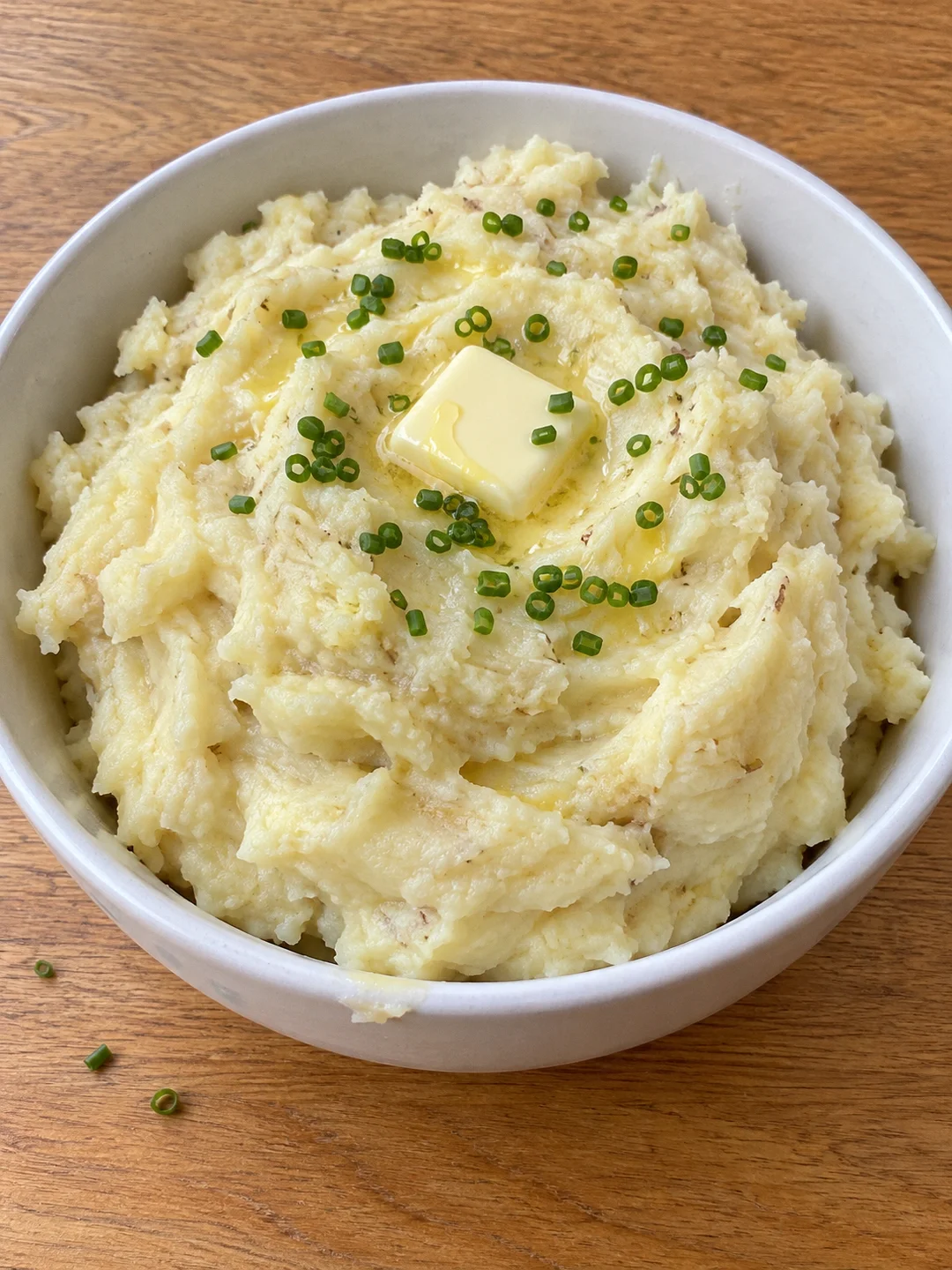
Crockpot Mashed Potatoes with Garlic, Butter and Sour Cream

Crockpot Mashed Potatoes

No boiling pot, no colander, no draining. The potatoes cook straight in the slow cooker in a splash of chicken broth, so every bit of starchy liquid goes back into the mash instead of down the sink. Garlic turns sweet and mellow over the hours, butter and sour cream go in at the end, and the whole thing holds on Keep Warm while the roast rests.
Prep Time 15 minutes
Cook Time 6 hours
Total Time 6 hours 15 minutes
Servings: 10 People
Course: Side Dish
Cuisine: American
Calories: 320

Ingredients
  

  • 5 lb Yukon Gold potatoes peeled and cut into 1-inch chunks
  • 0.75 cup chicken broth low sodium
  • 6 cloves garlic peeled, left whole
  • 1.5 tsp salt plus more to taste
  • 8 tbsp unsalted butter cut into pieces, room temperature
  • 0.75 cup sour cream full fat, room temperature
  • 4 oz cream cheese softened
  • 0.75 cup whole milk warmed, plus more as needed
  • 0.5 tsp freshly ground black pepper to taste
  • 3 tbsp fresh chives thinly sliced, for finishing

Equipment

  • 1 6-quart slow cooker 4-quart works for a half batch
  • 1 potato masher or ricer
  • 1 Small saucepan for warming the milk
  • 1 vegetable peeler

Method
 

  1. Peel the potatoes and cut them into even 1-inch chunks. Even sizing matters here, because the slow cooker gives you no way to fish out the pieces that finish early.
  2. Put the raw potato chunks straight into the slow cooker. Add the chicken broth, whole garlic cloves and 1.5 teaspoons salt, then toss with your hands so the broth coats everything. Do not add water and do not cover the potatoes with liquid; three quarters of a cup is all they need.
  3. Cover and cook on LOW for 6 to 7 hours, or HIGH for 3 to 4 hours. Lift the lid and give the potatoes a brief stir roughly once an hour, then close it again right away. Keeping the lid on between stirs traps the steam that actually cooks them.
  4. The potatoes are ready when a fork slides in with no resistance and the chunks are starting to collapse on their own. If there is any firmness at the center, keep cooking. Undercooked potatoes will never mash smooth, no matter how hard you work them.
  5. Warm the milk in a small saucepan over low heat until it steams, then pull it off the burner. Cold dairy straight from the fridge chills the potatoes and gives you a pasty mash.
  6. Turn off the slow cooker. Mash the potatoes and the softened garlic cloves directly in the crock with a potato masher, working through the starchy broth at the bottom rather than draining it off. Stop as soon as the big lumps are gone. Over-working the starch is what makes a mash gluey.
  7. Add the butter, sour cream and cream cheese and stir until melted and absorbed. Then add the warm milk a splash at a time, stirring after each addition, until the mash is just creamy and loose enough to fall from a spoon. You may not need all of it.
  8. Season with the black pepper and more salt to taste, tasting as you go. Mashed potatoes take more salt than you expect.
  9. Scatter the chives over the top and switch the cooker to Keep Warm until serving, up to 2 hours. If the mash tightens while it sits, stir in another splash of warm milk to bring it back.

Notes

  • Yukon Gold gives a creamy, buttery mash; Russet gives a fluffier one. Avoid red or fingerling potatoes, which turn gummy over long cooking.
  • Mash by hand with a masher or ricer. A hand mixer works only in short bursts, and a food processor will turn the potatoes into glue.
  • Always warm the milk or cream before it goes in. Cold dairy cools the potatoes and makes them pasty.
  • Hold on Keep Warm for up to 2 hours, stirring in a splash of warm cream if it tightens. Russets especially will absorb liquid and go gummy if held much longer.
  • Serve alongside roast turkey and pan gravy, pot roast, roast chicken, or meatloaf. For a loaded version, set out bowls of shredded cheddar, crumbled bacon and sliced green onions at the table.
  • Leftovers keep 4 days refrigerated. Reheat gently with a little warm milk, stirring, over low heat.