Ingredients
Equipment
Method
- Put the flour in a large bowl. Pour in 1 cup cold water in a steady stream while stirring with chopsticks or your fingers until the flour gathers into shaggy lumps. Add another tablespoon or two of water only if dry flour remains at the bottom.
- Knead the dough on an unfloured counter for 8 to 10 minutes, until it is smooth, firm and no longer tacky. It should feel stiffer than bread dough. Cover the bowl with a damp towel or plastic wrap and rest at room temperature at least 30 minutes, up to 1 hour.
- While the dough rests, halve the napa cabbage lengthwise, cut out the dense core, slice the leaves into fine shreds, then chop the shreds very finely until the pieces are no bigger than a grain of rice. Toss in a colander with 1.5 tsp salt and leave 20 minutes over a bowl or the sink.
- Take the cabbage up by the handful and squeeze hard, wringing out as much liquid as you can. Keep squeezing until no more water comes out. You should end up with a tight, barely damp mass of about 1 cup. Loosen it with your fingers and set aside.
- Put the ground pork in a bowl with the ginger, soy sauce, Shaoxing wine, sesame oil, white pepper, sugar and 0.75 tsp salt. Stir vigorously in one direction only with chopsticks or a wooden spoon for 2 minutes.
- Still stirring in the same direction, add the 6 tbsp cold water or shiitake soaking liquid a splash at a time, letting the meat absorb each addition before the next. Keep going 3 to 5 minutes until the pork turns pale, sticky and holds together as a cohesive paste.
- Fold the squeezed cabbage, the scallions and the chopped shiitake if using into the pork, stirring in the same direction just until evenly combined. Cover and refrigerate while you roll the wrappers.
- Divide the rested dough in half. Roll each half into a rope about 1 inch thick, then cut crosswise into pieces about 0.75 inch long, roughly 40 to 44 pieces total. Keep them under a towel and press each into a small disc with your palm.
- Roll each disc into a round about 3.5 inches across, pressing down and out with the pin while turning the dough with your other hand. Work the rim thinner than the center so the base survives boiling. Dust lightly with flour only if the dough sticks.
- Hold a wrapper in your cupped palm and place about 1 tablespoon of filling in the center. Fold into a half-moon and press the edges together firmly from the middle outward, pleating the front edge if you like, squeezing out all air. Set the finished dumplings on a floured tray, not touching.
- Bring a large stockpot of water to a vigorous boil. Slide in half the dumplings, nudging them gently with the back of a slotted spoon so they do not stick to the bottom or each other.
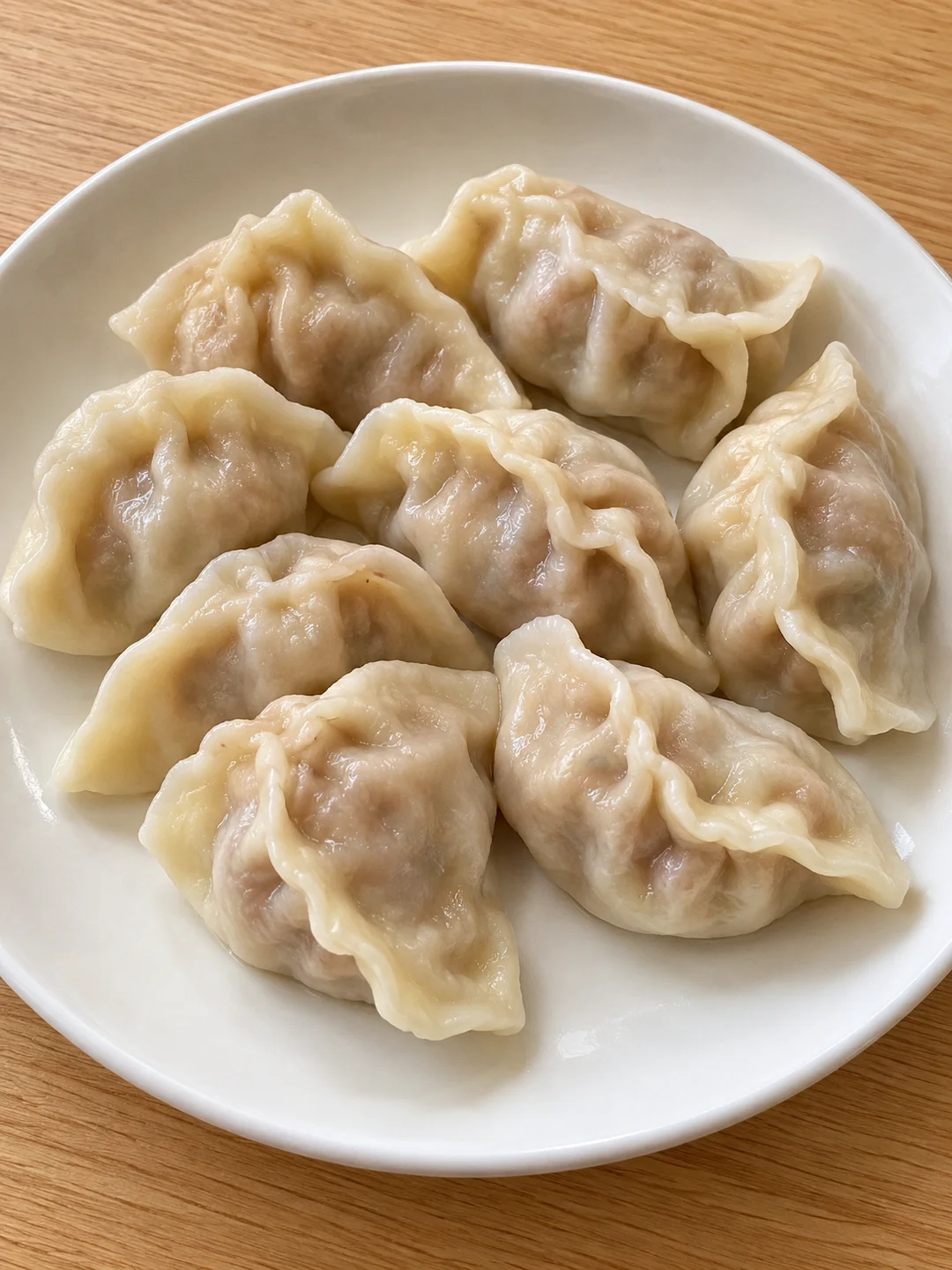
- When the water returns to a full boil, splash in about 1 cup of cold water. Repeat twice more as the pot comes back to a boil, three splashes in all. The dumplings are done when they float, the skins look taut and translucent and the filling is firm, 6 to 10 minutes total.
- Lift the dumplings out with a slotted spoon, letting them drain, and serve immediately while the second batch cooks. Reserve a little of the starchy cooking water to sip at the end of the meal.