Ingredients
Equipment
Method
- Make the syrup first. Combine the sugar and water in a heavy saucepan over medium heat. Stir until the sugar dissolves, then add the crushed cardamom pods and saffron strands.
- Simmer the syrup 5 to 7 minutes, until it is just slightly sticky but still runny. This is one-string consistency: a drop pressed between finger and thumb pulls a single short thread. Do not reduce it further or the jamuns will never drink it in.
- Stir in the lemon juice and rose water, then turn off the heat and set the pan aside uncovered. You want the syrup at 100 to 130 F when the jamuns go in, warm to the finger but nowhere near boiling.
- Grate the cold khoya on the large holes of a box grater into a wide bowl. Grate or crumble in the paneer if using. Sprinkle the flour and baking soda over the top.
- Bring the mixture together with the heel of your hand, pressing and folding for about 3 minutes until it turns into a smooth, soft dough with no visible grains. Add milk 1 teaspoon at a time only if it feels dry. Stop as soon as it is smooth. Over-kneading is what makes hard jamuns.
- Grease your palms lightly with ghee. Divide the dough into 20 pieces and roll each into a perfectly smooth, seamless ball about 1 inch across. Any crack or seam will split open in the ghee. Keep them under a damp cloth as you work.
- Heat the ghee in a deep kadai to 300 to 325 F. Test with one ball: it should sink, then rise slowly within 30 to 40 seconds without browning fast. If it browns immediately the ghee is too hot, so pull the pan off the heat and let it drop.
- Slide in 5 or 6 balls at a time. Do not touch them for the first minute, then keep them moving gently by swirling the ghee with the back of the slotted spoon so they roll and color evenly.
- Fry 6 to 8 minutes total, until a deep even golden-brown, almost mahogany. They will puff and float. Patience here is the whole recipe: slow frying sets the center so it can absorb syrup.
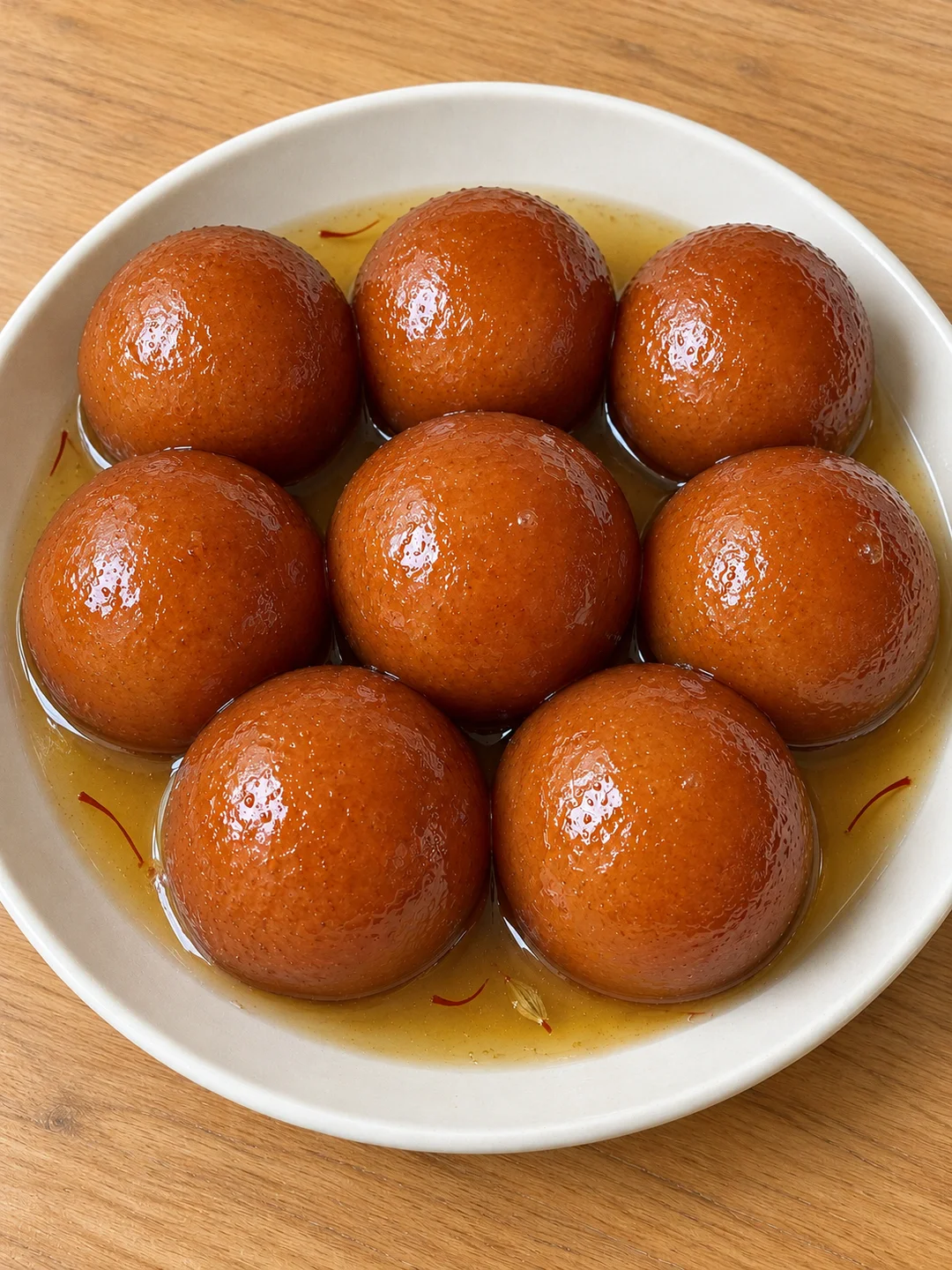
- Lift the jamuns out, drain them for a few seconds, then drop them straight from the ghee into the warm syrup. Repeat with the remaining batches, checking the ghee temperature between each.
- Let the jamuns soak at least 2 hours, turning them once midway so both sides swell evenly. They are ready when they have nearly doubled, feel heavy and spongy, and a cut one is saturated right to the center.
- Serve warm or at room temperature, two or three per bowl with a few spoonfuls of the syrup clinging to them.