
The Tartiflette came out last, after two hours of chopping, in a low-ceilinged kitchen three streets back from the canals in Annecy. I had booked the class mostly to get out of the rain.
Our instructor was a woman named Helene who had firm opinions about potatoes and no interest in softening them. The room smelled like rendering pork fat and warm washed-rind cheese, which is a smell that gets into your coat and stays there through the train ride.
The Annecy Class Where the Cheese Stayed Whole
There were six of us, two Belgians, a very quiet German couple, me, and a man from Lyon who kept insisting he already knew how to do this. Helene let him talk and then handed him a knife and a whole Reblochon and told him to split it horizontally.
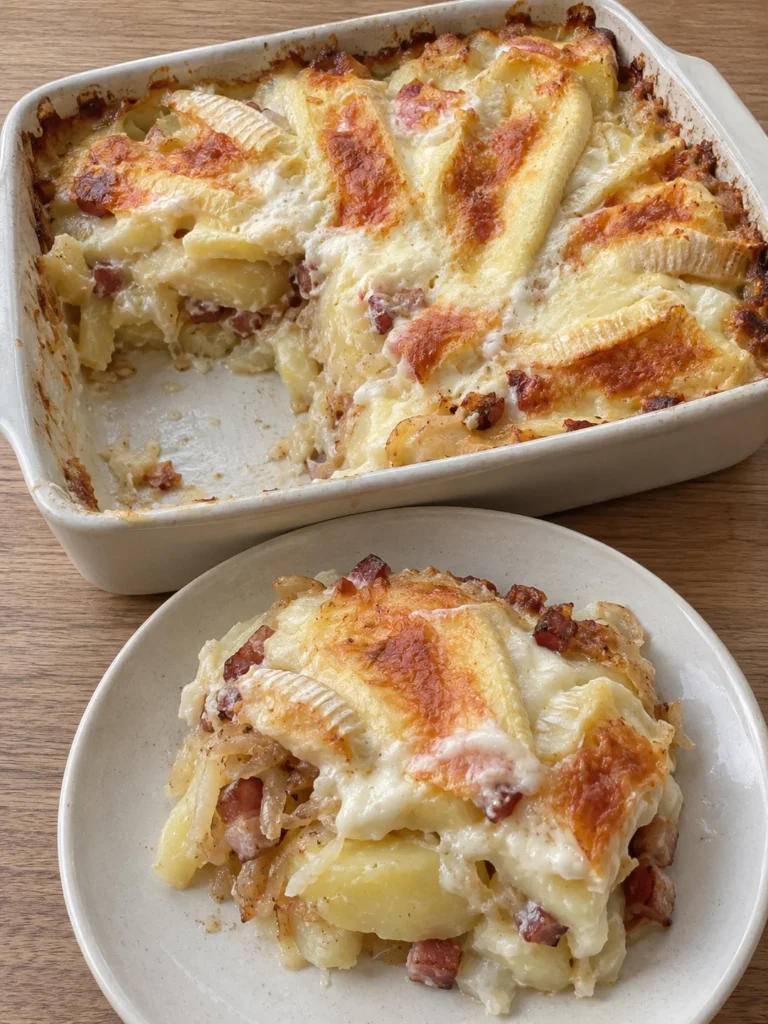
He went to cube it. She stopped his hand flat. The cheese goes on in two discs, rind-side up, soft side pressed down into the potatoes, and the rind is the entire point because the rind is what blisters and browns.
That was the moment the dish made sense to me. Everything else in the pan was mountain food logic, waxy potatoes, smoked lardons, onions gone sweet and golden, a splash of Apremont to scrape the pan clean. The cheese was not an ingredient stirred through. It was a lid that melted.
She also said, with a shrug, that grated Emmental on top is something tourists do. I wrote that down.
Tartiflette Is Younger Than It Looks
Here is the part I did not expect. Tartiflette is not an ancient peasant dish, whatever the earthenware and the candlelight suggest. The genuinely old Savoyard dish is la pela, potatoes and onions and Reblochon cooked in a long-handled pan over the fire, named for tartifla, the Arpitan word for potato.
The version we all know, with lardons and white wine, was codified in the 1980s by the Reblochon producers’ trade body in Savoie and Haute-Savoie, partly to move wheels that had gone too soft to sell as table cheese. Clever marketing built on real regional technique. Then the ski resorts in the Aravis put it on their apres-ski menus and it went everywhere within ten years.
I like it more knowing that. A dish does not need a medieval pedigree to be real. Reblochon itself carries the older story anyway, its name coming from re-blocher, to milk again, because sixteenth-century tenant farmers only part-milked their cows before the landlord’s inspector came through, then made cheese from the richer second milking.
Helene’s version is as close to an authentic tartiflette recipe with reblochon as I know how to make outside Savoie, and I have not changed much about it.
What I Used
- Waxy potatoes, about two and a half pounds, peeled and left whole to boil. Charlotte or Roseval if the market has them
- Smoked lardons, roughly ten ounces, cut in quarter-inch dice
- Two large onions, sliced thin
- Half a cup of dry Savoie white, Apremont or Chignin or Roussette
- One whole Reblochon de Savoie AOP, about a pound, rind on, fermier if you can get it
- A garlic clove, halved, for rubbing the dish
- Salt, a lot of black pepper, a quarter teaspoon of freshly grated nutmeg
The Reblochon is the only hard part at home. I get mine from the cheese counter at the Original Farmers Market on Fairfax, and if they are out I wait a week rather than substitute. Camembert and Brie make a perfectly fine potato bake. They do not make this.
What Happens Inside the Dish
Start the lardons in a cold skillet. Mine is a cast iron that was my first real pan purchase and still has a slightly rough patch near the handle I have never managed to season out. Cold pan, medium heat, and the fat walks out of the pork slowly instead of seizing up, five or six minutes before you push the heat up and let the edges crisp.
No oil. None. The pork gives you a shallow pool of smoky fat and the onions go straight into it, heat down, ten or twelve minutes, until they slump and turn gold and taste sweet rather than sharp. Most recipes rush this into hard browning. Do not. You want soft, not caramel.
Then the wine, which hits the hot pan and lifts every brown stuck bit off the bottom in about four seconds. Let it cook until the pan is nearly dry. Pepper, nutmeg, taste before you salt because the lardons already did that job for you.
Potatoes boiled whole, twelve to fifteen minutes, then drained and left to steam dry in the colander. That five minutes of standing matters more than it sounds. Wet potato surfaces go gluey when the cheese comes down over them.
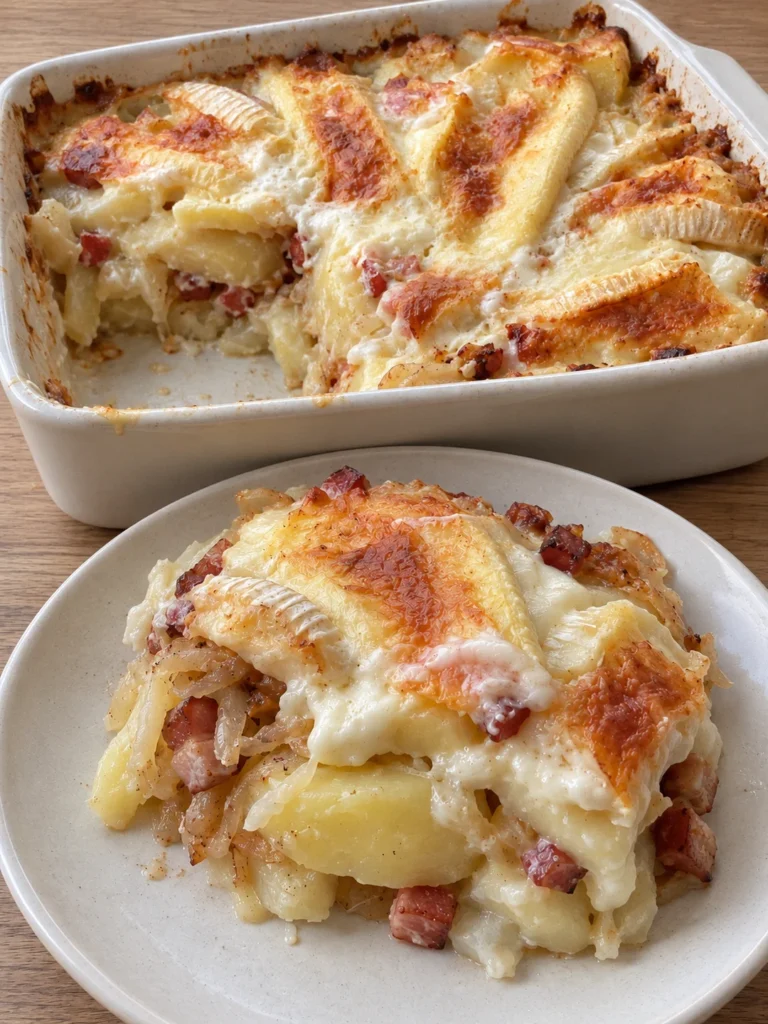
Slice them thick, half an inch, layer them with the onions and lardons and their juices, press the top flat with the back of a spoon. Both halves of the Reblochon go on rind-up. Four hundred degrees, twenty-five to thirty minutes.
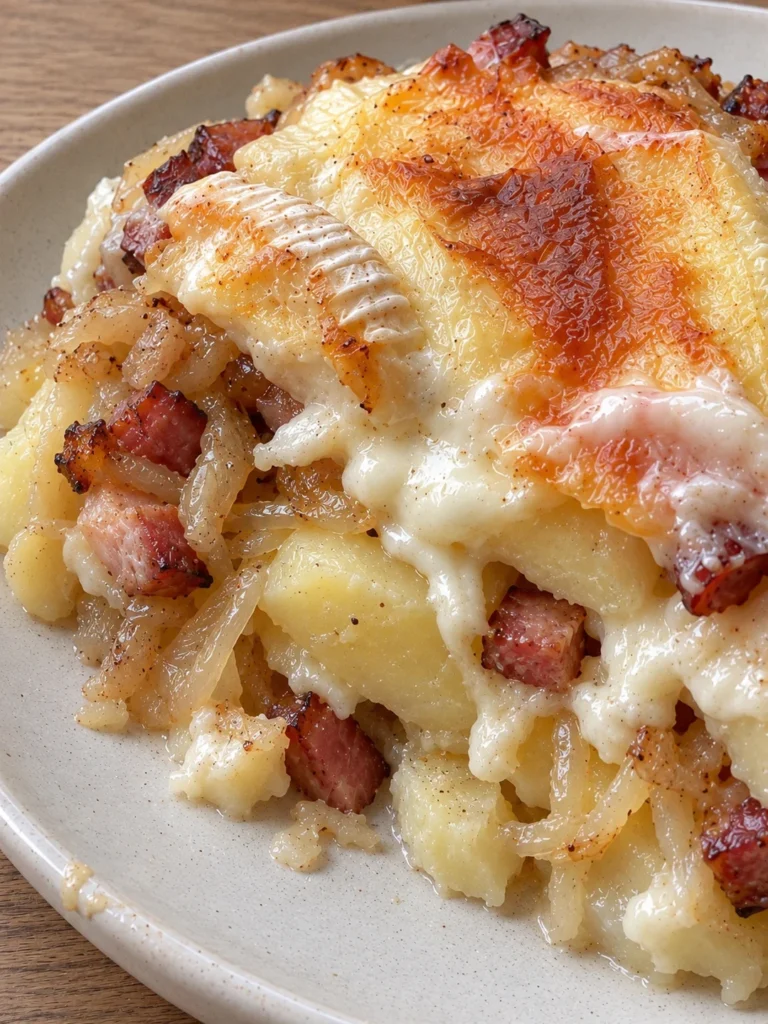
What happens in there is simple and a little dramatic. The soft paste under the rind liquefies and runs down between the potato slices while the rind itself dries out, tightens and blisters into brown patches. The edges of the dish bubble and crust. Five minutes of rest, no more, and then you break through the top with a spoon and the inside is molten.
Swaps I Will and Will Not Make
Creme fraiche is the one real variable. A third of a cup dotted between the layers gives you the soupier version you get in ski-resort restaurants, and Helene said plenty of Savoyards skip it entirely. I skip it. I have added it twice when I had guests who like things rich, and nobody complained either way.
Floury potatoes are a genuine mistake, not a preference. I made it with russets the first time I tried this at home, on a cold rainy February night with the kitchen windows fogged, and the whole thing collapsed into a smoky mash. Edible. Not tartiflette.
And it is a main course, not a side. You serve it with a sharp green salad in mustard vinaigrette, cornichons, bread, and a cold glass of Apremont. Not alongside a roast.
Leftovers reheat covered at three twenty-five for twenty minutes and look considerably worse the second day. They taste better. Cold straight out of the dish, standing at the counter, is also an option I have taken more than once.
I make this maybe four times a winter, always on a night when the thought of going out is unappealing. Helene told us a tartiflette is one dish in the middle of the table and everyone’s spoon going into it, and that part does not travel badly at all.
Tartiflette
Ingredients
Equipment
Method
- Take the Reblochon out of the refrigerator and let it sit at room temperature while you work. It melts far more evenly when it is not fridge-cold.
- Put the peeled potatoes whole into a large pot, cover with cold water, salt it well, and bring to a boil. Cook 12 to 15 minutes, until a knife slides into the center with only slight resistance. They should be just tender, never falling apart. Drain and let them steam dry in the colander for 5 minutes.
- Preheat the oven to 400 F.
- While the potatoes cool, put the lardons in a cold heavy skillet and set it over medium heat. Let the fat render out slowly for 5 to 6 minutes, then raise the heat and cook until the edges are browned and crisp, about 4 minutes more. Add no oil or butter: the pork gives you all the fat you need.
- Add the sliced onions to the skillet with the lardons and their fat. Lower the heat and cook 10 to 12 minutes, stirring now and then, until the onions are soft, golden and sweet. Do not rush this into a hard browning.
- Pour in the white wine, scrape the bottom of the pan clean, and let it bubble down until the pan is nearly dry, about 3 minutes. Season with the black pepper and nutmeg. Taste before adding salt, as the lardons are already salty.
- Slice the drained potatoes into thick rounds, about 1/2 inch. Rub the inside of the gratin dish all over with the cut garlic clove.
- Lay half the potatoes across the bottom of the dish in an even layer. Spoon over half the onion and lardon mixture with its juices. Repeat with the remaining potatoes and the rest of the onions and lardons, and press the surface flat with the back of a spoon.
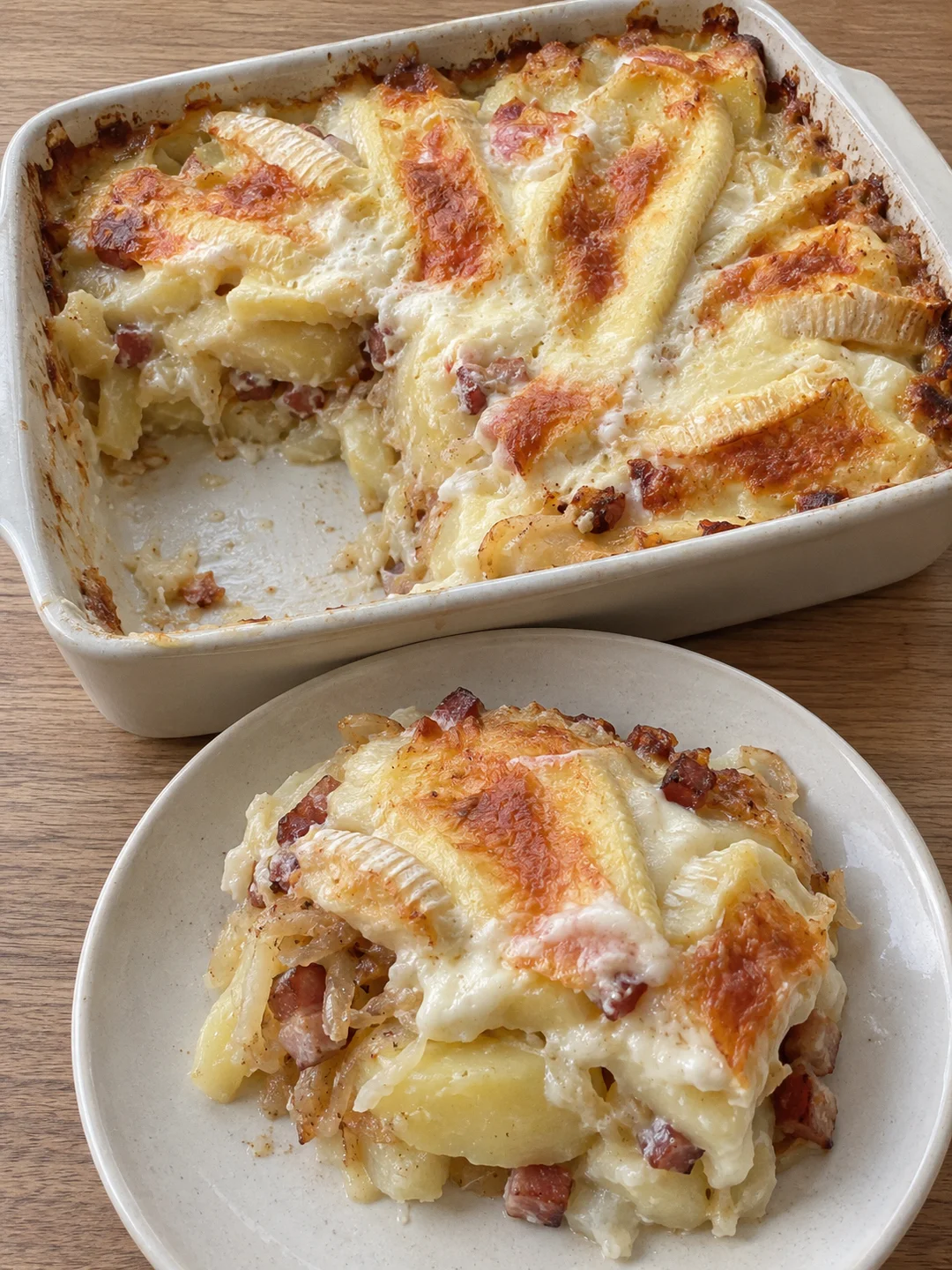
- Lay the Reblochon flat on a board and slice it horizontally through its thickness, so you have two discs each with one rind side and one soft, exposed side. Place both halves on top of the gratin, rind-side up, soft side down onto the potatoes. Do not grate or cube the cheese.
- Bake for 25 to 30 minutes, until the cheese has melted down through the potatoes, the edges of the dish are bubbling, and the rind on top is blistered and deep golden brown.
- Let the tartiflette rest 5 minutes, no longer, then bring the dish straight to the table and serve it molten, spooning down through the browned rind into the potatoes beneath.