
Pumpkin Cinnamon Rolls in Bergen, Norway. Not a sentence I expected to write either, but Gudrun Fjeldstad does not much care about my expectations.
She is seventy-eight, retired off the ferry ticket desk at Strandkaiterminalen, and she lives on the third floor of a narrow white house in Sandviken with a view of other people’s roofs. Her grandson Håkon cooks at the restaurant on the ground floor. That is the whole geography of the story.
I met Håkon first, sitting alone at his bar on a Tuesday with a bowl of fish soup. He asked where I had flown in from, I said California, and he put down the towel he was holding and told me his grandmother spent eleven years in Seattle and had never stopped baking like it. Come at nine tomorrow, he said. She will be awake at six anyway.
Gudrun’s Kitchen Above the Restaurant in Bergen
It was raining the way it rains in Bergen, which is to say constantly and without drama. Her kitchen smelled like coffee and warm squash before I had my shoes off.
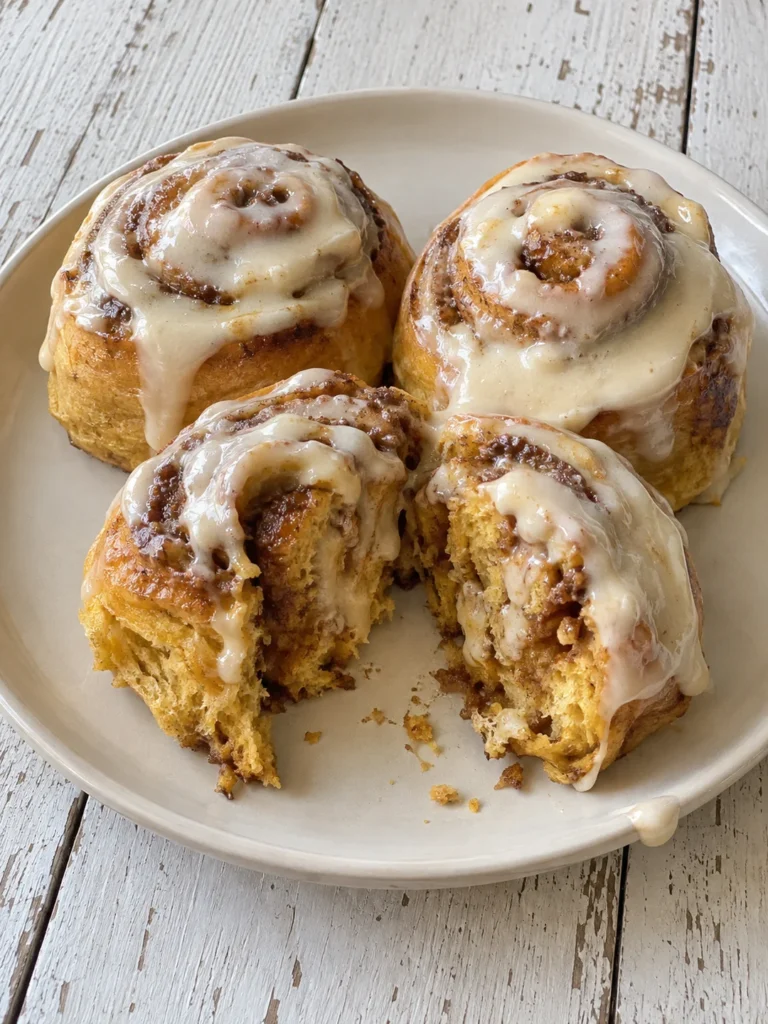
The pan was already in the oven. She had roasted her own pumpkin the day before, a lumpy grey-green thing she got down at the Torget market, and she had mashed it into the dough rather than hiding it in the spice tin. That is the part that surprised me. The dough itself was orange.
She sliced the log with a length of white sewing thread, sliding it under, crossing the ends, pulling. Twelve rounds, none of them squashed. I have never gone back to a knife.
Downstairs Håkon does a dinner version, a savoury pumpkin bun split and filled with cured lamb, and he is quietly smug about it. Upstairs his grandmother makes the sweet ones and pretends not to know. We still trade voice notes on WhatsApp, mostly her telling me the weather and me telling her the weather.
Where Pumpkin Cinnamon Rolls Actually Come From
Here is the joke I did not understand until I got home and started reading. The oldest recorded cinnamon roll recipes come out of sixteenth-century Germany, and the pastry travelled north with Hanseatic traders through the port of Bergen, where it became the skillingsbolle. So I learned a cinnamon bun in the exact town the cinnamon bun landed in.
The Swedish cousin, the kanelbulle, went a different direction. Cardamom instead of heavy cinnamon, less sugar, pearl sugar on top instead of icing, and it only became a national habit in the 1950s once the ingredients stopped being scarce.
Pumpkin is the New World half. Seeds have been dated to roughly 5,500 B.C. in the Americas, and early New England settlers used to bake milk, honey and spices inside a hollowed-out pumpkin set in hot ashes. The spice blend came much later, out of Amelia Simmons’s 1796 Pompkin Pie with its ginger, nutmeg and allspice, and McCormick only put prepared pumpkin pie spice on shelves in 1934.
Which means the jar contains no pumpkin at all. It never has.
What I Used
- Active dry yeast, proofed in warm water with a spoonful of sugar
- Whole milk, warmed to about 110 F
- Canned pumpkin purée, the plain kind with one word on the ingredient list
- One egg, room temperature
- Melted unsalted butter for the dough, softened butter for the filling and more for the icing
- Granulated sugar and plenty of salt
- Bread flour, and a little extra on standby
- Packed light brown sugar
- Ground cinnamon, more than feels reasonable
- Pumpkin pie spice
- Cream cheese
- Confectioners’ sugar, sifted
- Pure maple syrup and vanilla
What I Changed in My Own Kitchen
Gudrun roasts her own squash. I do not, and I will defend that. Canned purée has a consistent water content, and a wet dough is the one variable in this whole thing that can actually ruin you.
Check the label though. Canned pumpkin purée and canned pumpkin pie filling are two different products, and the filling is already sweetened and spiced. I grabbed the wrong can once at the market on Fairfax and the rolls came out tasting like a candle.
Second change, bread flour. Her Norwegian flour behaved differently in her kitchen than anything I could buy here, and my first batch was slack and sad. Bread flour gives the dough enough backbone to hold a spiral without me adding half a cup of extra flour in a panic.
That panic is the real enemy. The first time I made this pumpkin cinnamon rolls recipe on my own I dumped flour in by the cupful because the dough kept gluing itself to my hands, and what came out was bready and dense and honestly a bit grim. Now I butter the counter, butter the rolling pin, butter my palms, and add flour a tablespoon at a time if at all.
Third, the oven. She bakes low and slow because her oven is ancient and runs cool. Mine does not, so I go hot at 400 F for fifteen to twenty minutes, pull them at 190 F in the centre, and the crumb stays wet.
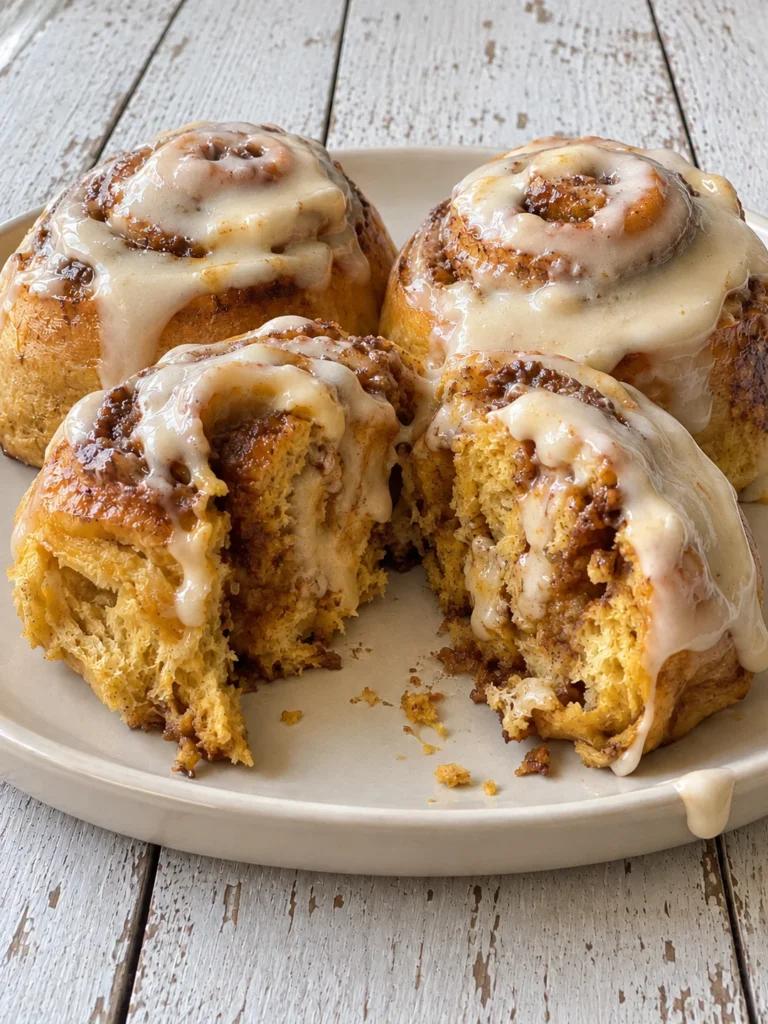
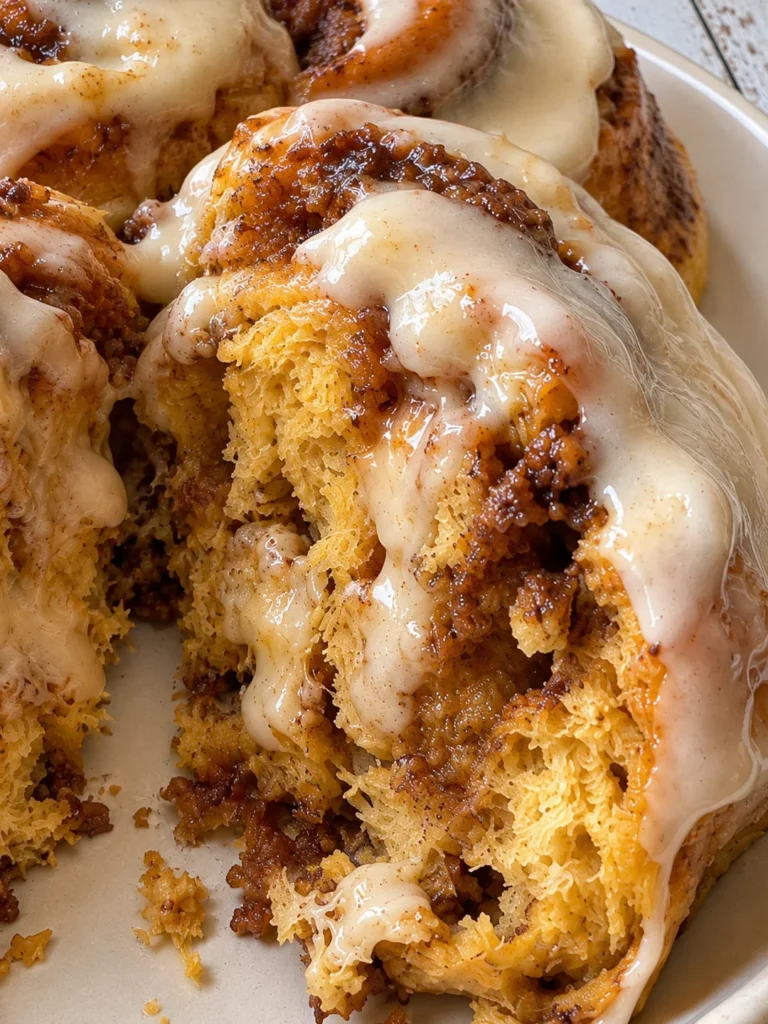
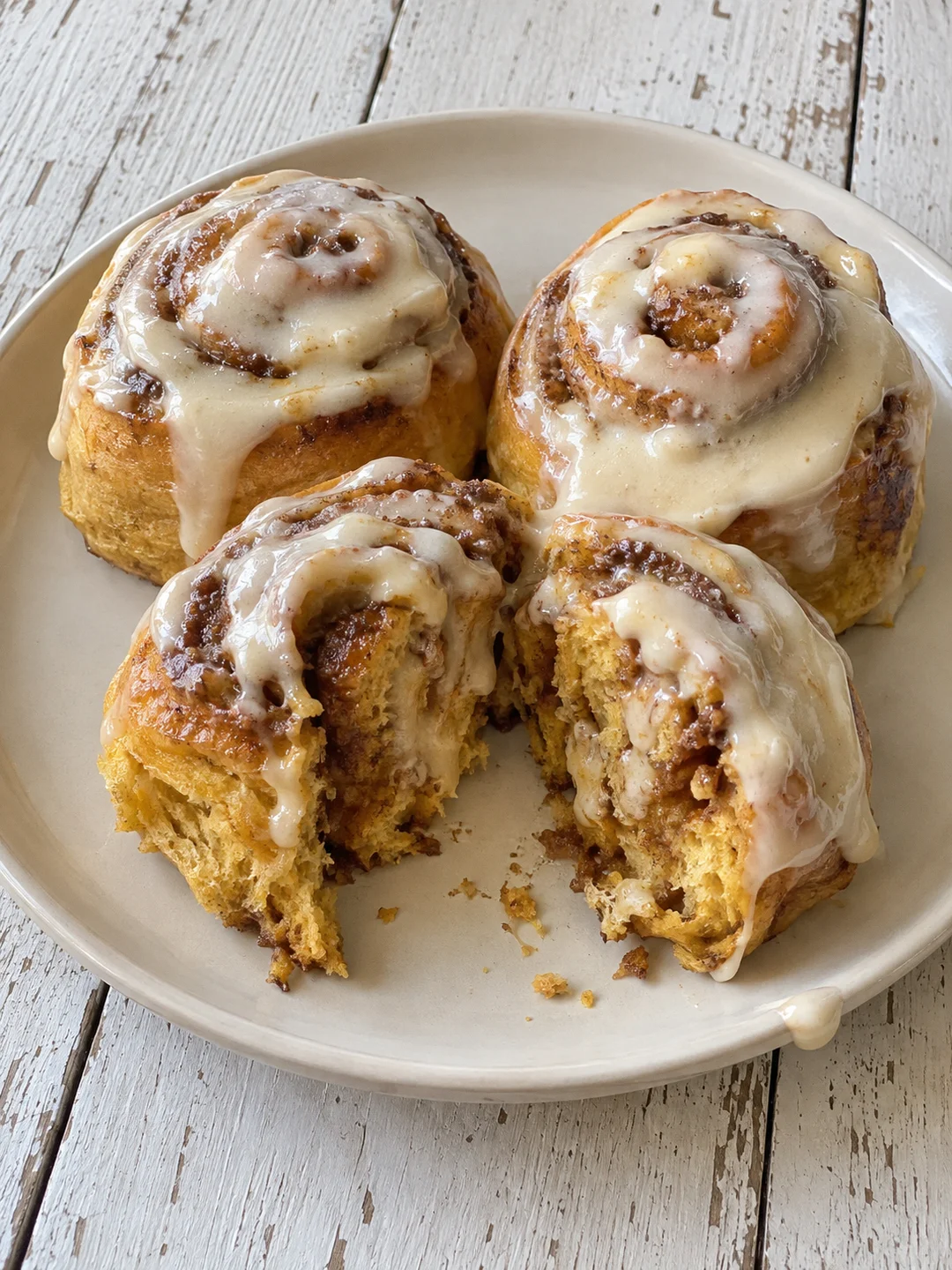
The icing is mine, not hers. She uses a thin sugar glaze. I beat cream cheese with butter, confectioners’ sugar, maple syrup and a pinch of salt, and I pour it on while the pan is still too hot to touch so it sinks down into every turn instead of sitting on top like a hat.
I tried cardamom in the filling once, out of loyalty to where I learned it. It fought the cinnamon and lost. Left it out ever since.
Small Twists Worth Trying
Toasted pecans scattered over the filling before you roll are the only addition I make regularly, and only in November. Orange zest in the icing is good if you like that sort of thing. I mostly do not.
For a morning bake, shape the rolls the night before, cover the pan tightly and refrigerate, then let it sit on the counter forty-five minutes before it goes in. I always plan to do this. I almost never remember, and same-day works fine.
The Pan, Sunday, Before the Street Wakes Up
My 9×13 pan has a scorch mark on one corner from something unrelated and I refuse to replace it. Marine layer outside, coffee on, the tapered rolling pin I bought in a hardware store in Oaxaca doing work it was never intended for.
Gudrun sent me a photo of her own pan last October with no message attached, which I took as a challenge. Mine were close. Hers had better edges, and I told her so.
Pumpkin Cinnamon Rolls
Ingredients
Equipment
Method
- Stir the warm water, yeast and 1 teaspoon granulated sugar together in the bowl of a stand mixer. Let it sit 5 to 10 minutes until foamy and smelling of bread. If nothing happens, the yeast is dead. Start over.
- Add the warm milk, pumpkin purée, egg, 6 tablespoons melted butter, 1/3 cup granulated sugar and 1 1/2 teaspoons salt. Mix on low with the dough hook until combined.
- Add the bread flour 1 cup at a time with the mixer running on low. Once it comes together, knead on medium-low for 7 to 8 minutes. The dough should pull away from the sides but still feel tacky and soft. Add extra flour only a tablespoon at a time, and only if it is soupy rather than sticky.
- Scrape the dough into a buttered bowl, turn it once to coat, cover and let rise in a warm spot for 60 to 90 minutes, until doubled.
- Butter a 9x13 inch baking pan. Mash the 6 tablespoons softened butter with the brown sugar, cinnamon and pumpkin pie spice until it forms a spreadable paste.
- Rub butter over your work surface and rolling pin instead of flouring them. Turn the dough out and roll it into a rectangle about 16 by 21 inches and a quarter inch thick.
- Spread the filling all the way to the edges. Starting from the long edge, roll the dough up tightly into a log, pinching the seam closed.
- Slice the log into 12 even rounds using dental floss: slide it under the log, cross the ends over the top and pull. Set the rolls cut side up in the buttered pan, leaving a little space between them.
- Cover the pan and let the rolls proof 30 to 40 minutes, until puffed and nearly doubled and touching one another. Meanwhile, heat the oven to 400 F.
- Bake 15 to 20 minutes, until the tops are golden and the centers read 190 F. If they brown too fast, tent the pan with foil for the last 5 minutes.
- While they bake, beat the cream cheese and 3 tablespoons softened butter until smooth. Add the confectioners' sugar, maple syrup, vanilla and pinch of salt, and beat until glossy and pourable.
- Spread the icing over the rolls while the pan is still hot so it melts down into the spirals. Let them sit 10 minutes, then pull them apart and serve warm.