
I ate Funeral Potatoes for the first time at a stall at the back of the Downtown Farmers Market in Salt Lake City, on a Saturday morning in September when the air already smelled like it wanted to snow. The guide running the food walk, a woman named Corinne who talked with her hands, had spent forty minutes on peaches and honey and cheese curds.
Then she stopped at a folding table under a green canopy and said, quietly, that this was the actual reason she ran the tour.
The Stall Corinne Saved for Last
The man behind the table was scooping out of two enormous foil pans that had clearly come straight out of somebody’s home oven. No branding. A handwritten sign that said POTATOES, $4, and nothing else.
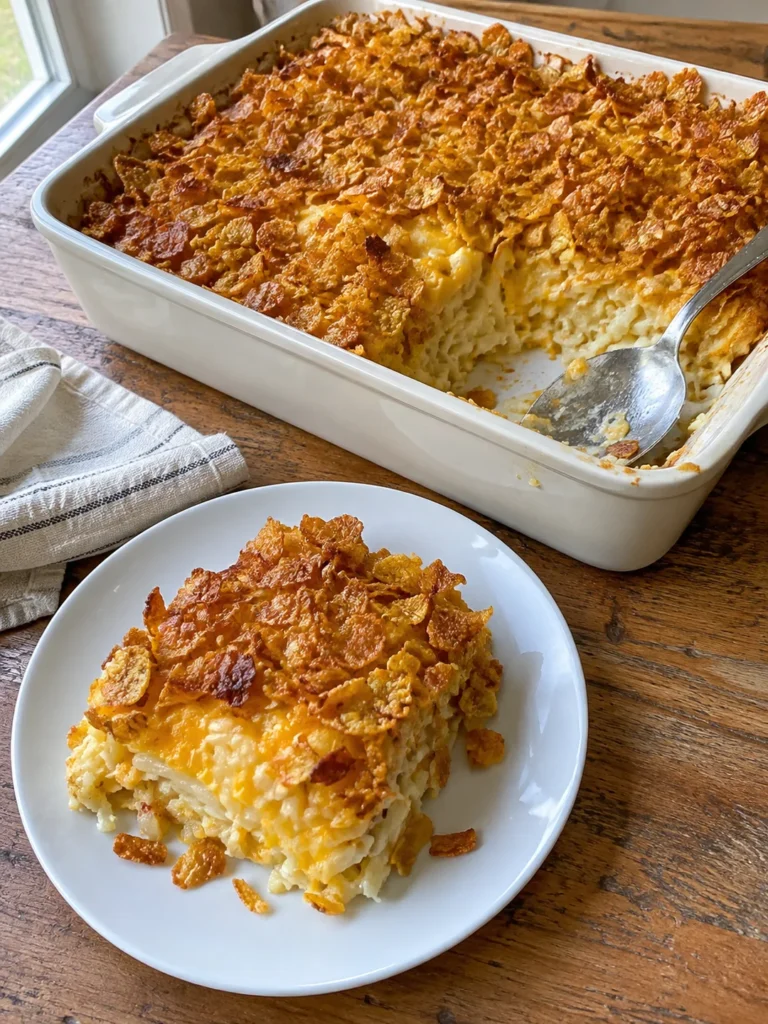
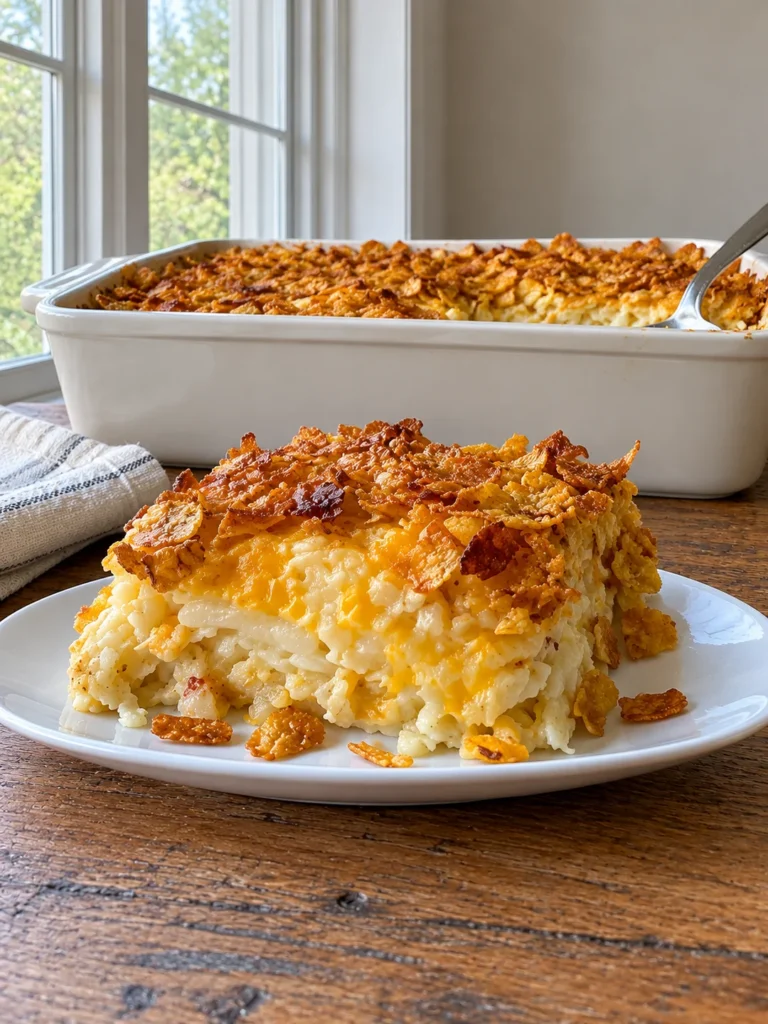
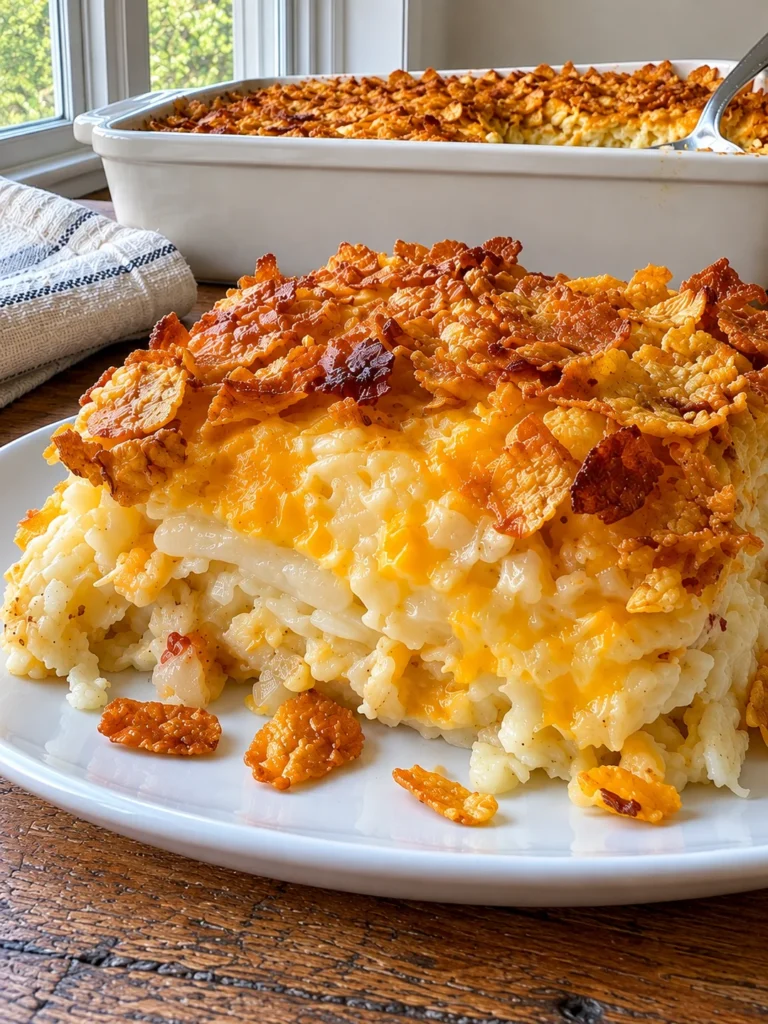
The smell was sour cream and browned butter and something toasted on top. He handed me a paper boat and I ate it standing in the middle of the aisle, blocking traffic, not caring. Tangy and soft underneath. The top shattered under the plastic fork.
Corinne told me it was called Funeral Potatoes and I laughed, because I assumed she was joking. She was not joking. She then explained, with the patience of somebody who explains this weekly, that the name is not morbid so much as descriptive of the job the dish does.
Why It Is Called That
The casserole comes out of Utah and the wider Intermountain West, where the Relief Society, the Latter-day Saint women’s organization responsible for looking after families in crisis, served enormous pans of it at post-funeral luncheons. Cheap, made from pantry staples, easy to multiply, sturdy enough to survive the drive to a church hall.
Corinne said a lot of families keep an unbaked pan in the freezer at all times. Not for a party. For the phone call. That detail stuck with me more than anything else on the tour.
The origin is genuinely murky, which I appreciate. Food writers point out that nearly identical casseroles show up across the Midwest under the names cheesy potatoes or party potatoes, and there is no canonical recipe, no official church version. Just a lot of families who each think theirs is the correct one.
The Napkin
I was staying two nights with a homestay host in Sugar House, a woman called Dee who had a golden retriever with an opinion about everything. When I got back from the market still talking about the potatoes, she pulled out a pen without a word.
She wrote the whole thing on a napkin that already had a grease stain in one corner from breakfast. Amounts, no method. She assumed I would figure the method out, which felt like a compliment and a mild challenge.
That napkin is in a drawer in my kitchen now, under the takeout menus, gone soft as tissue.
What I Used
- Frozen shredded hash brown potatoes, thawed properly and blotted dry
- Full fat sour cream, the whole tub
- One can of condensed cream of chicken soup, undiluted
- Sharp cheddar, grated off a block, never the bagged stuff
- Unsalted butter, melted, half for the mixture and half for the top
- A yellow onion, finely diced
- Salt and freshly ground black pepper
- Corn flakes, lightly crushed
Making Funeral Potatoes in My Own Kitchen
First attempt was a Sunday afternoon, which is the correct slot for this because it takes ninety minutes and most of that is waiting. I put on the Highwaymen because it felt geographically honest, and ate cold green olives out of the jar while the oven came up to temperature.
The one thing that will ruin this is water. I did not blot the potatoes properly the first time and ended up with something closer to soup with a crust on it, which we ate anyway, but nobody asked for the recipe. Now I spread them on a kitchen towel and press down hard like I am mad at them.
Grate the cheddar yourself. Pre-shredded cheese is coated in starch so it does not clump in the bag, and that starch melts thick and slightly grainy instead of smooth. This is the one place I am completely inflexible.
I fold everything with a rubber spatula, not a spoon, and I stop the second the potato strands are coated. Overworking it breaks the shreds down and you lose the texture that makes this different from mashed potatoes with cheese in them. It goes into a 9×13 glass dish, foil on tight, and then you leave it alone for the better part of an hour.
The corn flakes get tossed with the reserved melted butter until they look glossy, then scattered over the top for the last fifteen minutes uncovered. That is when the kitchen starts smelling like the market stall did.
What I Changed and What I Refuse To
Almost nothing, honestly. I buy the hash browns at the Ralphs on my corner and the cheddar from the cheese counter at the Hollywood farmers market on Sundays, which is the only real upgrade I have made. Everything else is exactly as Dee wrote it.
People will tell you the frozen potatoes and the canned soup are lazy shortcuts. They are not. They are the actual mid-century components that turned this into the dish it is, when condensed soups and frozen hash browns made feeding forty people suddenly possible in a home kitchen. Swapping in a scratch béchamel does not make it more authentic, it makes it au gratin, which is a different thing entirely and lacks both the sour cream tang and the crunch.
The topping is the only place I would say do whatever you want. Corn flakes are the Utah standard, but crushed potato chips, Ritz crackers, and French fried onions are all defended fiercely by somebody’s family. I have done all three. The chips are better than they have any right to be.
I have brought this cheesy potato casserole to two birthdays, one housewarming, and a Tuesday where a friend was having a rough week and did not want to talk about it. That last one is the version of the dish I understand best now.
One Last Thing
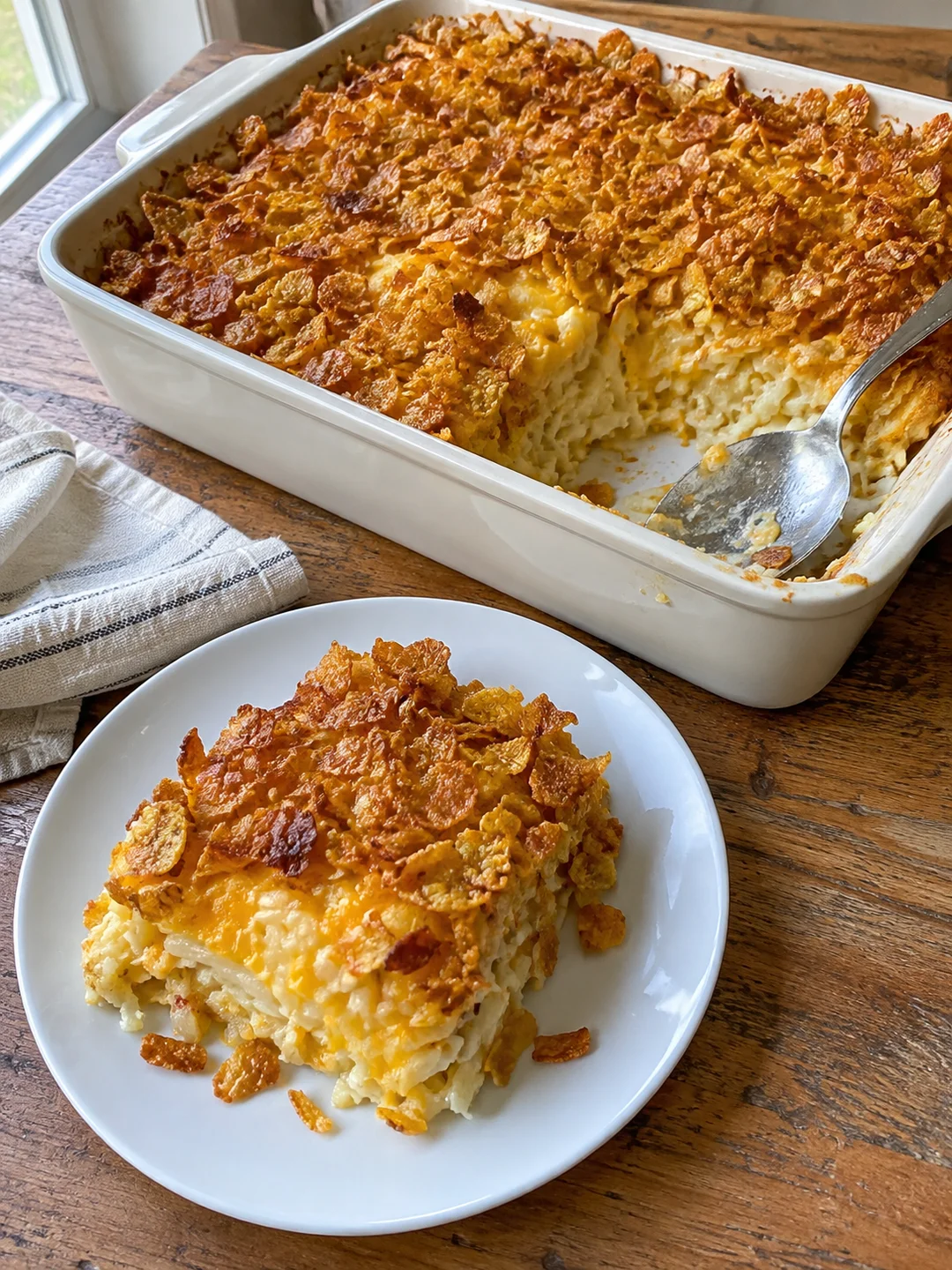
Let it rest ten minutes before you cut it or the squares slide apart on the serving spoon. I know that is annoying. Do it anyway.
Leftovers keep four days and reheat uncovered at 350 F to bring the crust back, though I will confess I mostly eat them cold, standing at the counter, straight out of the fridge. Better than it should be. Dee would probably have something to say about that.
Funeral Potatoes
Ingredients
Equipment
Method
- Heat the oven to 350 F. Butter a 9x13 inch baking dish generously, including the corners.
- Spread the thawed hash browns on a clean kitchen towel or a double layer of paper towels and press firmly to pull out the moisture. Wet potatoes make a loose casserole, so take the extra minute here.
- Melt the butter in a small saucepan. Measure out 4 tablespoons for the potato mixture and set the remaining 4 tablespoons aside for the topping.
- In a large bowl, stir together the sour cream, condensed cream of chicken soup, shredded cheddar, 4 tablespoons melted butter, diced onion, salt, and pepper until evenly combined.
- Add the dried hash browns and fold with a rubber spatula until every strand is coated. The mixture will be thick and heavy. Do not overwork it or the potatoes will break down.
- Scrape the mixture into the buttered dish and spread it level, pushing it into the corners. Cover tightly with foil.
- Bake covered for 50 to 60 minutes, until the casserole is hot through and bubbling visibly around the edges. A knife inserted in the center should come out steaming.
- While it bakes, toss the crushed corn flakes with the reserved 4 tablespoons melted butter in a medium bowl until the flakes look glossy and evenly coated.
- Remove the foil and scatter the buttered corn flakes evenly across the surface. Return the dish to the oven uncovered.
- Bake 15 minutes more, until the crust is deep golden and audibly crisp when tapped with a spoon.
- Rest 10 minutes before serving. The casserole firms up as it cools and cuts into clean squares instead of sliding apart.