
Cheeseburger Casserole was the last thing I expected to fall for in a Minneapolis cooking class. I signed up for the class because a flight got moved and I had a spare Tuesday. That is genuinely the whole reason.
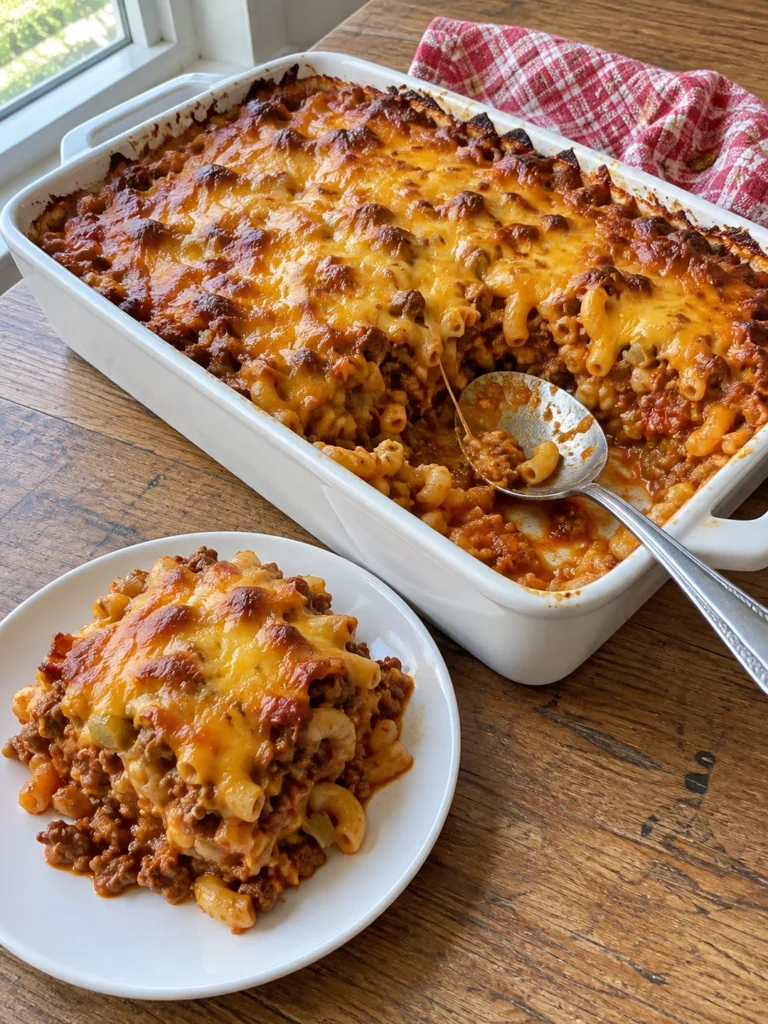
The instructor was a woman named Deb Halvorsen, mid-sixties, forearms like a person who has stirred a lot of pans. She ran the class out of a rented kitchen space off Nicollet with six of us crowded around a steel table. The room smelled like browning beef and warm tomato paste before she had even finished saying hello.
What Deb Told Us in That Minneapolis Kitchen
She was blunt about one thing right away. This is not a deconstructed burger in a pan, she said, and it is not the scratch version of a boxed dinner either, even if people write it up that way.
What it actually is, she explained, is the modern child of the Midwestern hotdish. The first published hotdish recipe showed up in a 1930 Grace Lutheran Church cookbook out of Mankato, Minnesota, and it was hamburger, canned tomato soup, peas, elbow macaroni, and celery. Look at that list and then look at this casserole. Same bones.
The cheeseburger half of the name has its own paper trail. Lionel Sternberger, a teenager at The Rite Spot in Pasadena, is credited with the first one around 1924. Louis Ballast in Denver trademarked the word in 1935. Two American things, colliding in a nine by thirteen pan sometime in the middle of the last century, with no single inventor and no ceremony attached to it.
Deb kept coming back to the economics. One pan, cheap beef stretched with pasta and dairy, feeds a crowd. Church basements. Funeral luncheons. School fundraisers. That is where this dish lives.
Bringing It Back to My Kitchen
I got home on a Thursday, dropped the suitcase in the hallway, and made it Friday night after work without unpacking anything. Priorities.
I changed almost nothing. Deb cooked the macaroni directly in the sauce and I was skeptical of that until I did it myself. The starch the pasta throws off is the entire thickening mechanism. Cook it separately in salted water and you get a watery casserole with sad noodles sitting in it.
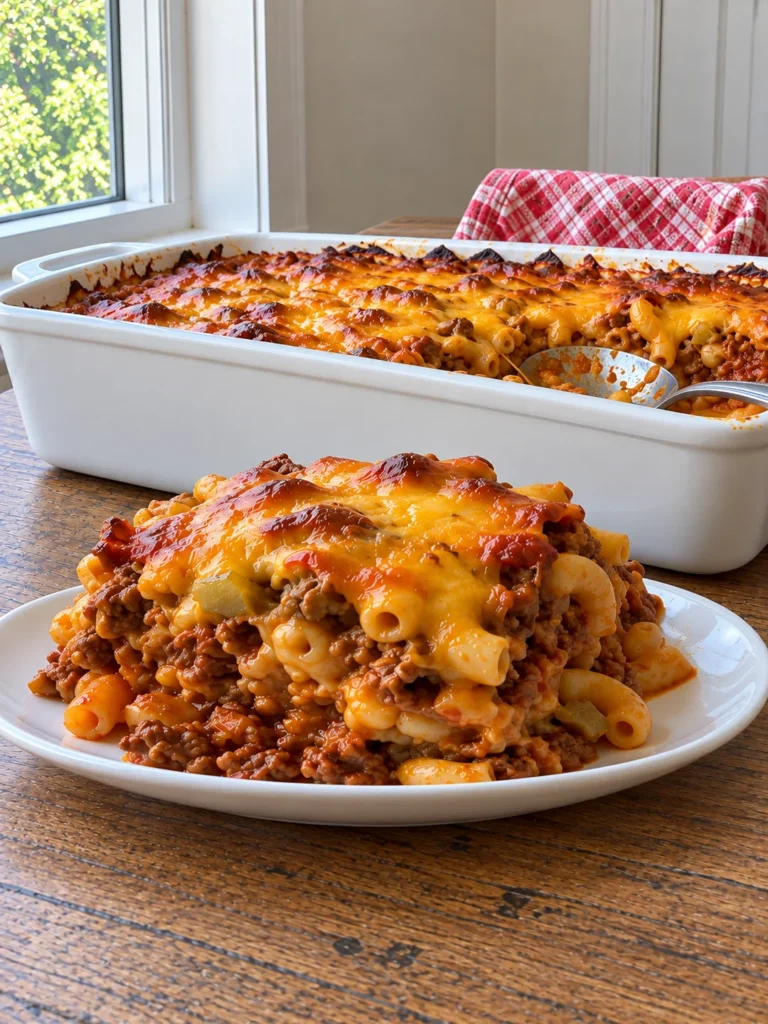
The one thing I fussed over was the cheese. I shred a full pound off a block with the box grater my mum gave me, the one with the loose handle that swivels if you push too hard. Bagged shreds are dusted with starch so they melt greasy instead of glossy. I buy the sharp cheddar from the cheese counter at the Silver Lake farmers market on Saturdays, and yes, that is a fussy sourcing decision for a casserole named after a burger. I do not care.
What I Used
- 2 lb ground beef, 80/20, and do not go leaner
- 1 large yellow onion, diced small
- 4 cloves garlic, minced
- 3 tbsp tomato paste
- 2 tbsp Worcestershire sauce
- 2 tbsp yellow mustard, the cheap bright yellow kind
- 1 tsp smoked paprika, optional but I always add it
- 2 cups low sodium beef broth
- 1 cup whole milk
- One 14.5 oz can crushed tomatoes
- 12 oz dry elbow macaroni
- Half a cup dill pickle relish, drained well
- 1 lb sharp cheddar, shredded from a block
- 2 tsp salt and 1 tsp black pepper
The Night I Actually Got It Right
Second attempt. First one I scorched the bottom because I walked away during the pasta stage to answer a text, and the burnt taste got into everything. Stir it every two minutes. She said that four times in the class and I still ignored her.
The second time I set myself up properly. Put on a Khruangbin record, poured a beer, and put a bowl of dill pickle chips on the counter to eat while I waited. The waiting is the whole job here. Twelve to fourteen minutes of stirring, then twenty-five in the oven, and the kitchen smells like a diner griddle the entire time.
The step that matters most is the two minutes after the tomato paste goes in. Scrape it around with the mustard and Worcestershire until the paste turns brick red and coats the meat. Skip that and you have a bland skillet dinner with cheese on it.
My apartment window faces west and the late sun was coming in sideways across the counter while it baked. I remember that specifically because I burnt my thumb pulling the pan out and stood there swearing in very good light.
Small Things Worth Changing
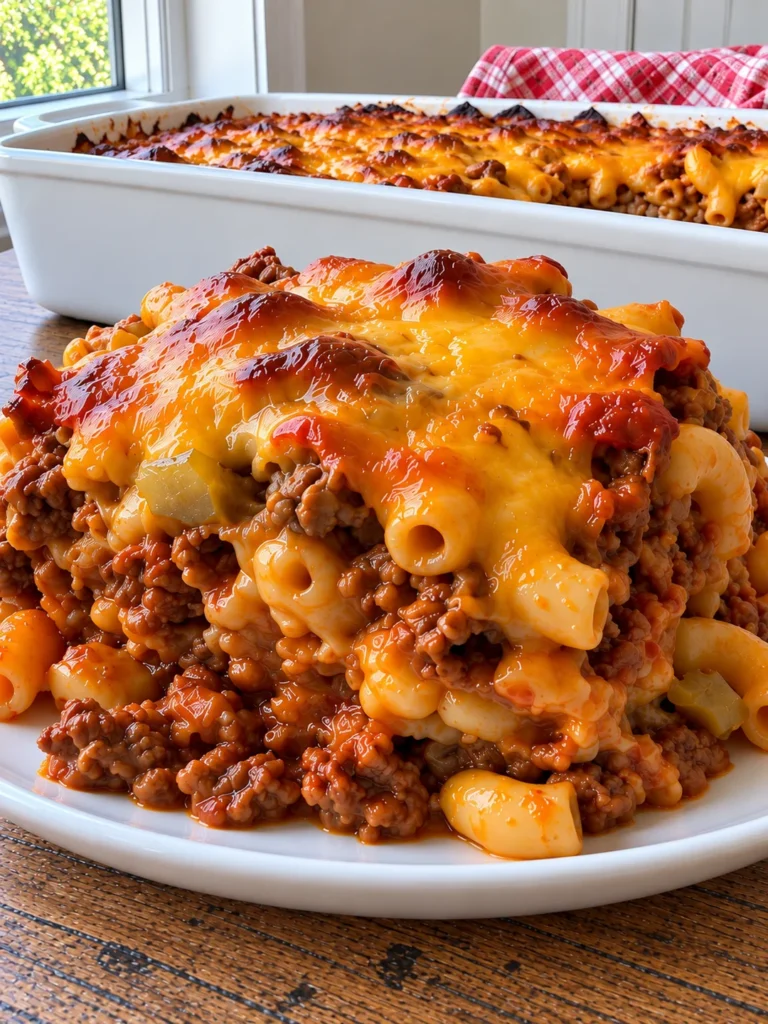
Deb served hers with a bowl of shredded lettuce, sliced red onion, extra pickle chips, and squeeze bottles of ketchup and mustard on the table. Nobody cooks those into it. They go on at the plate, burger-style, and it makes more sense once you see people doing it.
I have started scattering toasted sesame seeds over the top before it goes in the oven. It sells the bun idea in a way I did not expect. A bacon cheeseburger casserole version works too, with chopped bacon crisped and folded in at the end, though it is not the same thing as the tater tot hotdish some people mean when they say that.
If you use leaner beef, hold back a tablespoon of the drained fat and put it back in the pan. I almost always drain everything out of habit. Actually no, I stopped doing that after the first batch came out dry.
Leftovers keep four days. Reheat covered at 325 with a splash of milk stirred through to loosen the sauce back up.
Why I Keep Making Cheeseburger Casserole
I thought I would make this once as a souvenir and move on. It is now in the weeknight rotation, which is not a thing I say about many dishes I have picked up abroad or otherwise.
The honest truth is I like it better on day two. Cold, straight from the fridge, standing at the counter with a fork. The pickle relish comes forward once everything has settled and the cheese has gone firm on top.
Deb, if you ever read this, I did finally learn to stir every two minutes. Took me one ruined pan to get there. Worth it.
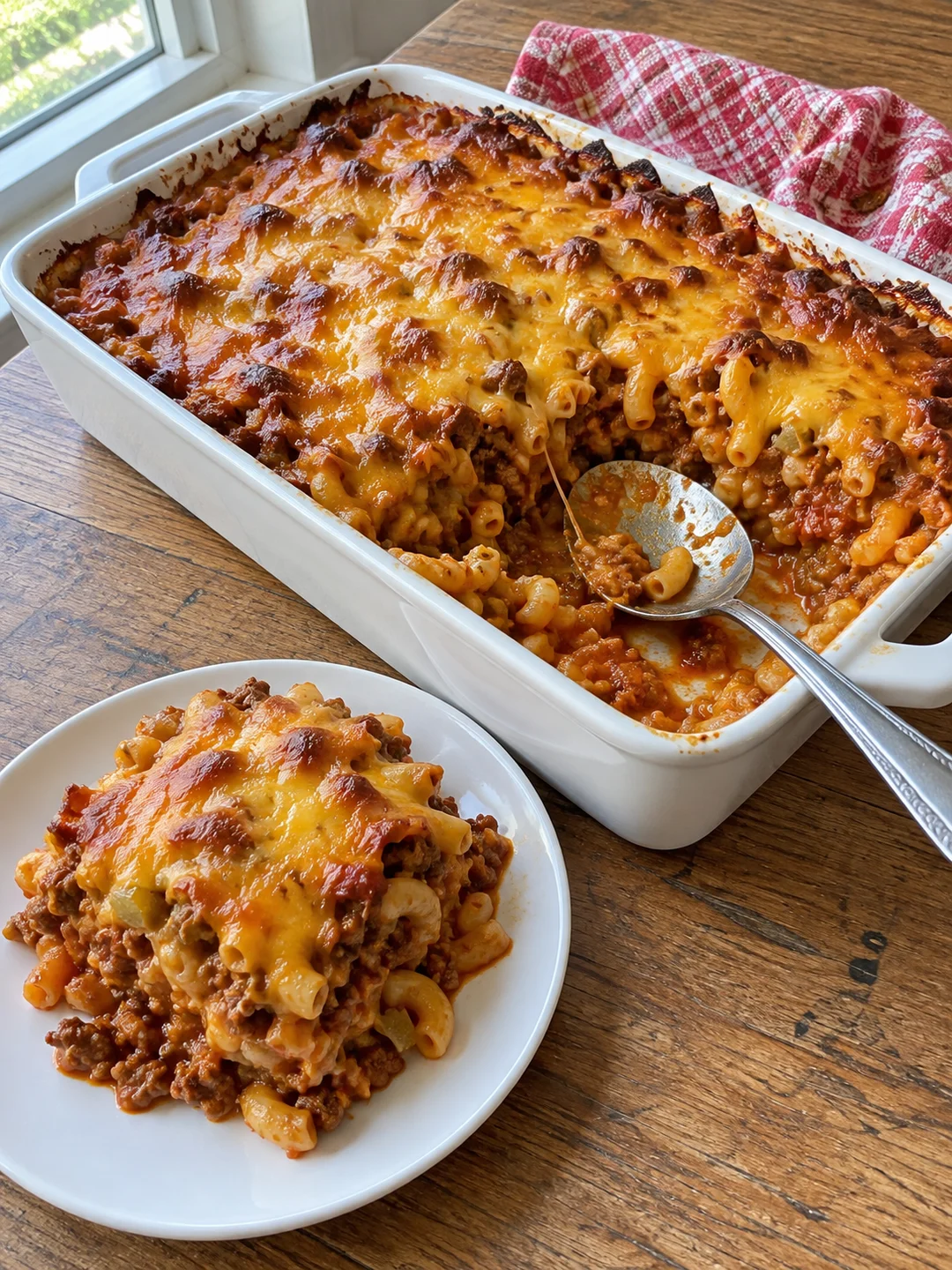
Cheeseburger Casserole
Ingredients
Equipment
Method
- Preheat the oven to 375 F and position a rack in the upper third.
- Set a large oven-safe Dutch oven over medium-high heat. Add the ground beef and diced onion together and cook 8 to 10 minutes, breaking the meat into small crumbles, until the beef is browned in spots and the onion has softened.
- Add the minced garlic and cook 45 seconds, just until fragrant. Tip the pan and spoon off all but about 1 tablespoon of the rendered fat.
- Stir in the tomato paste, Worcestershire sauce, yellow mustard, smoked paprika, salt, and black pepper. Cook 2 minutes, scraping constantly, until the paste darkens to brick red and coats the meat. This step blooms the seasoning and is what separates this from a bland skillet dinner.
- Pour in the beef broth, milk, and crushed tomatoes. Scrape the bottom of the pan to lift every browned bit, then bring to a steady simmer.
- Add the dry elbow macaroni directly to the simmering sauce. Stir well, reduce heat to medium-low, and cook uncovered 12 to 14 minutes, stirring every 2 minutes so the pasta does not stick or scorch on the bottom. The macaroni should be just tender and the sauce thickened enough to coat the spoon.
- Pull the pan off the heat. Fold in the dill pickle relish and half of the shredded cheddar, stirring until the cheese melts into the sauce. Taste and adjust salt.
- Level the surface with the back of the spoon. If your pan is not oven-safe, transfer everything to a 9x13 inch baking dish now.
- Scatter the remaining cheddar evenly over the top, all the way to the edges.
- Bake 20 to 25 minutes, until the cheese is fully melted, bubbling around the rim, and lightly browned in patches.
- Rest 5 to 10 minutes before serving. The casserole sets during this time and will scoop into clean squares instead of sliding across the plate.