
Japanese Okonomiyaki was the first thing I ever cooked at a stranger’s teppan. The kitchen smelled like cabbage and hot oil and Sapporo before eleven in the morning. I was in Osaka, staying at a small hostel two streets back from Namba, and the owner Hiroko ran a Sunday cooking class for anyone still in the common room by ten.
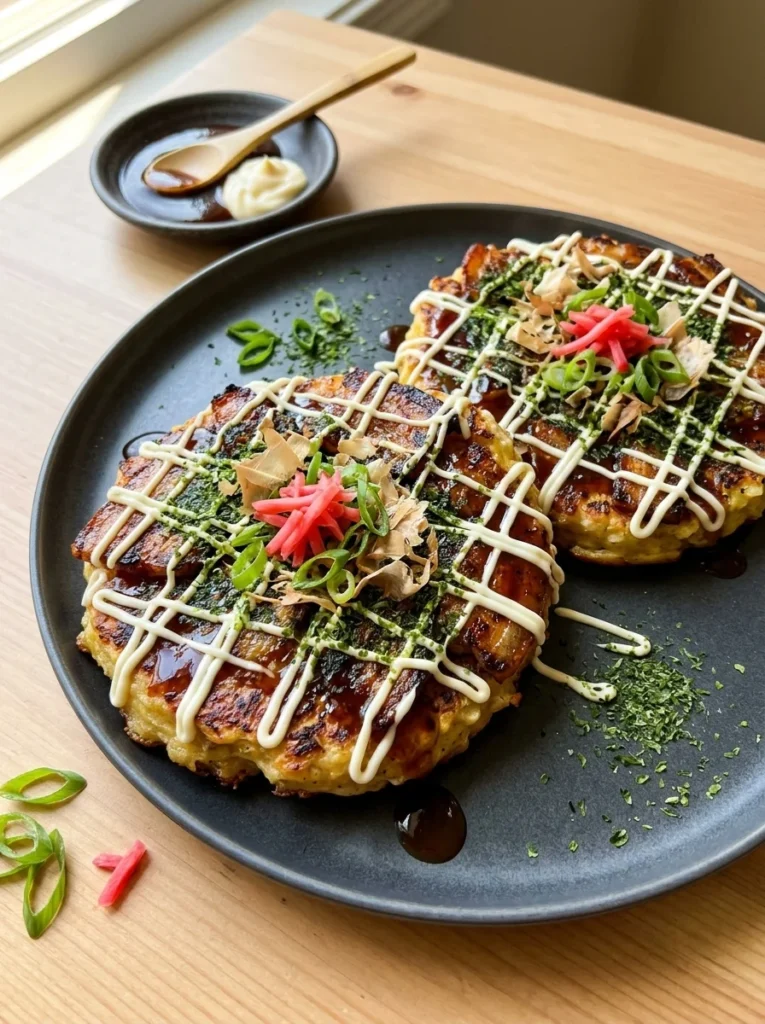
She had run the Sunday class for six years. She said okonomiyaki was the easiest way to teach a room full of strangers to eat together, and she was right.
The Sunday Cooking Class in Namba
Hiroko is not a chef. She is a hostel owner with a cast-iron teppan bolted into her kitchen counter and very strong opinions about cabbage thickness. She shredded it thinner than I would have thought possible. When I asked why, she shrugged. ‘Otherwise it is a salad.’
Six of us crowded around her that morning. A German cyclist. Two sisters from Manila. A quiet architecture student from Kyoto who had grown up eating this dish and still wanted the class. The kitchen was small enough that the steam fogged Hiroko’s glasses within ten minutes and she kept wiping them on the corner of her apron.
What Japanese Okonomiyaki Actually Is
I want to be clear about something. Okonomiyaki is often called a ‘Japanese pancake’ in English, which does it no favors. It is not sweet. It is not breakfast. It is a savory japanese cabbage pancake bound with a dashi-heavy batter, cooked hot on a flat iron until the outside crisps and the inside stays almost custardy in the middle.
Its ancestor is funoyaki, a thin tea-ceremony sweet from the 16th century that the tea master Sen no Rikyū wrote about. By the 1930s an Osaka shop was calling the modern version okonomiyaki, which just means ‘grilled as you like.’ After the war, rice was scarce and cabbage was not, so cooks stretched a bit of wheat flour into a mountain of shredded cabbage. Something great was born out of not having much.
Hiroko told all this while grating a slippery Japanese mountain yam called nagaimo with her bare hands. Her hands were fine. Mine, later, itched for an hour. If you take one thing away from this recipe it is this. Do not skip the nagaimo. Grated fine it turns into a foamy pulp that looks alarming, but whisked into the batter it traps air and the pancake puffs almost like a soufflé. Without it you get a sad cabbage fritter. Wear gloves when you peel it.

What I Used
- All-purpose flour and cold dashi stock for the batter
- Grated nagaimo, the whole point of the exercise
- A pound of finely shredded green cabbage. Not napa. Hiroko was firm on this
- Scallions, whites and greens kept separate
- Tenkasu, the little crunchy tempura bits
- Two eggs and a pinch of fine sea salt
- Thinly sliced pork belly, cut into long strips
- Otafuku okonomiyaki sauce, Kewpie mayo, katsuobushi flakes, aonori seaweed, beni shoga pickled ginger
- Neutral oil for the pan
I get the pork belly and the Otafuku from the Japanese grocery on Sawtelle in LA. The nagaimo lives in the produce cooler at the same place. Everything else was already in my kitchen.
Cooking It Back Home in My Kitchen
I have made this a handful of times since. My kitchen has no teppan. I use my old cast iron, the one my mother gave me when I moved out that still refuses to rust properly.
Sunday morning is when I make it. There is something about that Namba class that stuck to Sundays for me. I put on some low music, usually Haruomi Hosono, and I let the batter rest in the fridge for a full hour. The first time I tried without resting the batter, the pancake felt tight and gluey. The rest matters.
Inside the pan the cabbage collapses slowly. You hear it before you see it, a soft hiss as the moisture starts moving. The bottom sets first, going from pale to deep amber over about six minutes. The pork belly on top starts to render, its fat sliding down through the cabbage and salting everything from within. When I flip it, the pork sears against the hot iron and the whole kitchen smells like a night market.
The rule I still remember from Hiroko is do not press. Every instinct says press. She would swat your hand away. Pressing squeezes out the air the nagaimo worked so hard to build, and you lose the whole point.

The Finishing and What I Kept the Same
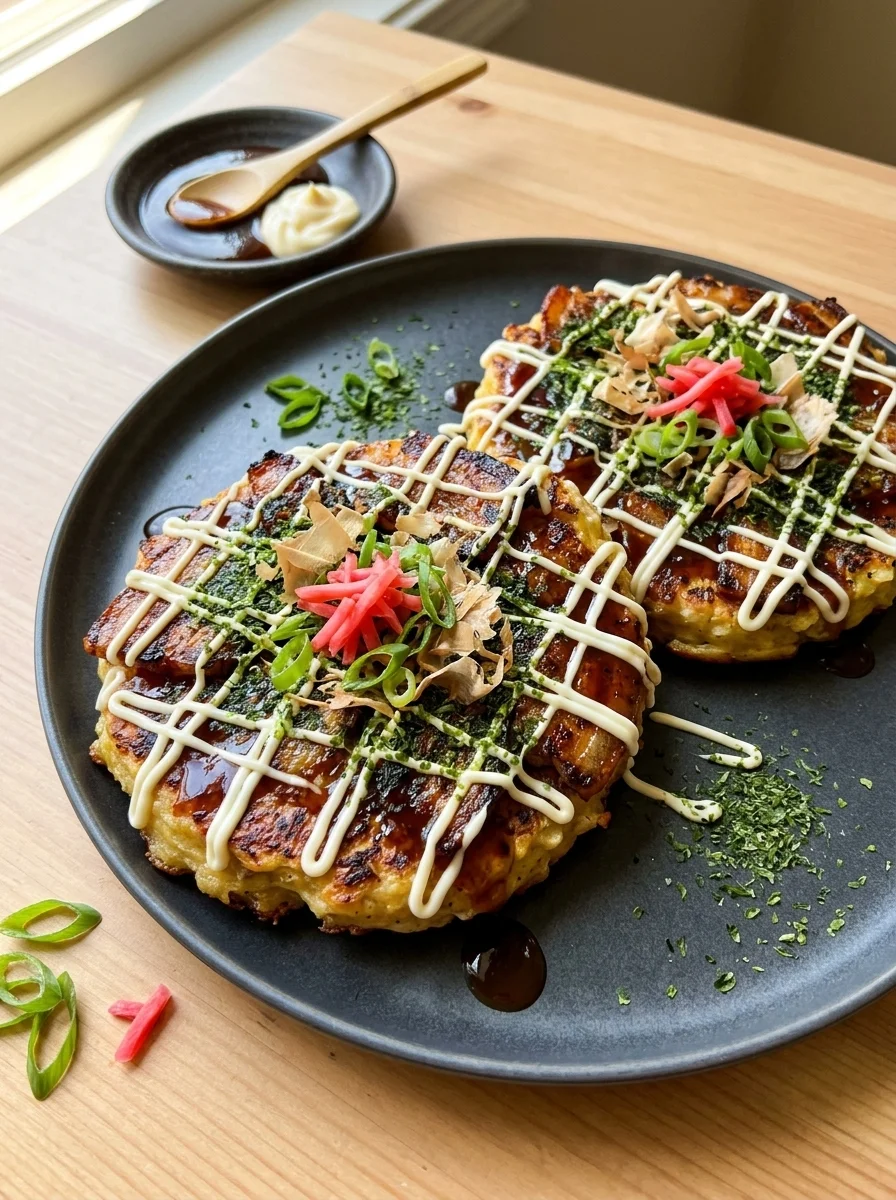
Once it is off the heat, the fun starts. Otafuku sauce brushed across the top in thick strokes. Kewpie mayo drizzled back and forth in a tight zigzag. A shower of katsuobushi flakes that visibly dance from the residual heat, which I still find delightful every time. A pinch of aonori. A small pile of beni shoga at the edge for that sharp, sour bite.
A note about the sauce. Do not substitute. Otafuku okonomiyaki sauce was invented in Hiroshima in 1952 and it is not the same as tonkatsu sauce or generic Japanese barbecue sauce. It is sweeter, thicker, and specifically tuned for this pancake. Use the real thing.
I did not change much of what Hiroko taught me. I use slightly less oil because my cast iron holds heat differently than her teppan did. I sometimes cheat on the dashi and use good instant dashi powder instead of building the stock from kombu and katsuobushi, especially on a weeknight. The pancake does not seem to mind. I also stopped trying to make one giant pancake at a time. Two smaller ones fit my pan better and cook more evenly. Hiroko would probably approve.
The first time I ate this at Hiroko’s counter I was tired from a long overnight bus. The second time, in my own kitchen months later, was quiet and slow and Sunday. Both were good. Grilled as you like.
Japanese Okonomiyaki
Ingredients
Equipment
Method
- In a large bowl, whisk together the flour, cold dashi stock, and 1 egg until smooth. Cover and rest in the refrigerator for at least 1 hour, or up to overnight. This step develops flavor and lightens the texture.
- Peel the nagaimo carefully and grate it on the fine side of a box grater or with a Microplane into a slippery, foamy pulp. Whisk the grated nagaimo and salt into the rested batter until fully incorporated.
- Add the finely shredded cabbage, scallion whites, and tenkasu to the bowl. Using your hands or a spatula, gently fold everything together with a lifting motion until the cabbage is evenly coated. Do not overmix or the cabbage will weep.
- Divide the mixture visually in half. Heat 1 tablespoon of the neutral oil in a large cast-iron or nonstick skillet over medium heat until it shimmers.
- Mound half of the cabbage mixture into the center of the skillet. Shape it into a round about 6 inches across and 1.5 inches thick with your spatulas. Do not press down. Lay half of the pork belly strips flat across the top, overlapping slightly to cover the surface.
- Cook undisturbed for 5 to 7 minutes, until the bottom is deep golden brown and the edges look set. Slide both spatulas underneath from opposite sides, commit, and flip in one confident motion so the pork side is now against the pan.
- Cook the pork side for another 5 to 7 minutes, until the pork is crisp at the edges and the pancake feels springy in the center. Do not press. Flip once more so the pork side faces up and cook for a final 1 minute.
- Transfer the pancake to a warm plate. Repeat with the remaining oil and cabbage mixture to cook the second pancake.
- Brush the top of each pancake generously with okonomiyaki sauce. Drizzle Kewpie mayonnaise back and forth in a tight lattice pattern.
- Shower the top with katsuobushi flakes, watching them dance from the residual heat, then sprinkle with aonori. Finish with a small pile of beni shoga and the reserved scallion greens. Cut into wedges at the table and serve immediately.