
Moroccan Harira Soup was not on my list the morning I ducked into a bakery in the Fes medina at five in the morning. I was there for the bread. I left with a recipe.
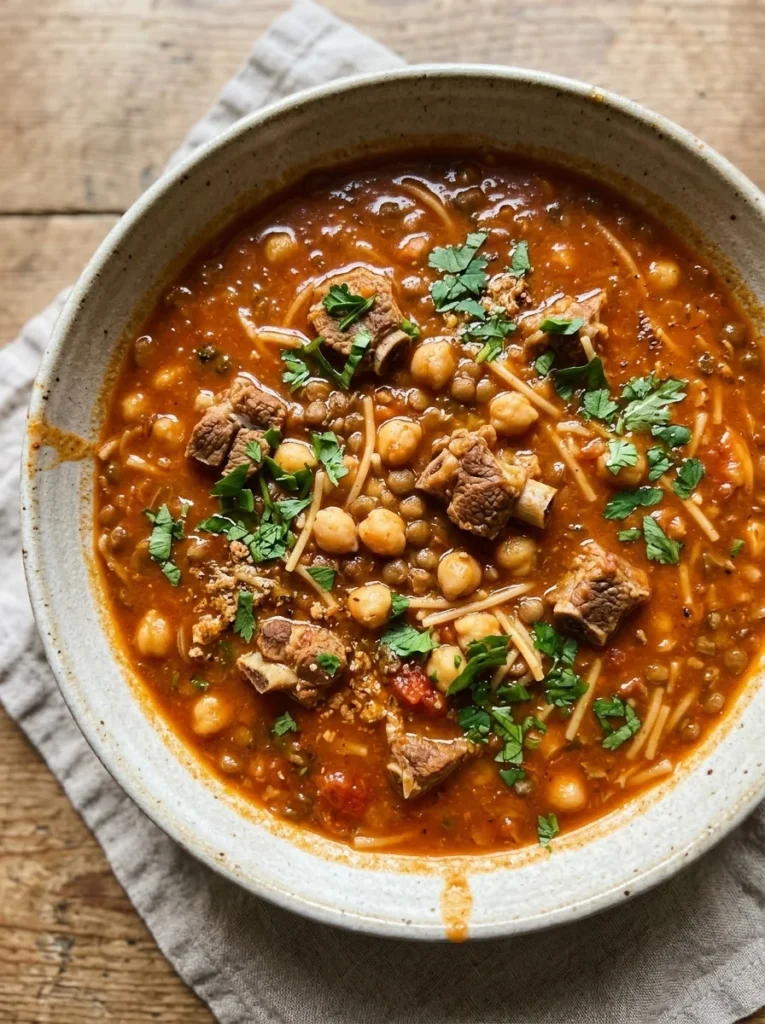
The baker’s name was Younes. He was pulling khobz out of a wood-fired oven that had been going since three, and when he noticed me lurking near the doorway with a notebook, he laughed and waved me in. He was wearing a flour-dusted grey djellaba and rubber sandals, and he had one of those quiet smiles that make you feel like you are not intruding, even when you clearly are.
The Morning in the Fes Medina That Changed My Soup Game
His wife Salma was in the back, tending a huge blackened pot on a single gas ring. That was the harira. She had started it the night before, she said, because a proper one needs time and attention, and because during Ramadan the whole neighbourhood would come by after sunset with empty containers.
She let me stir. She corrected my wrist. Too fast, she said, and the tedouira will clump. Figure eights. Slow. Like you are drawing on the surface of the soup, not fighting it.
I stayed until seven, watching her ladle bowls for the men who wandered in one by one from morning prayers. She sent me back to my riad with a warm loaf under one arm and a scrap of paper with her measurements scribbled in French. I have that scrap somewhere still. It is stained with something orange.
What Harira Actually Is (and What It Is Not)
Harira gets called a Ramadan soup, and that is fair, but it is not the whole picture. Moroccans eat it year round. It shows up at weddings, at funerals, at births, and any time a guest walks through the door and someone needs to feed them properly.
The name comes from the Arabic word harir, which means silk. That silk texture does not come from a blender. It comes from the tedouira, a slurry of flour and cold water that gets whisked into the pot at the very end. Salma told me this like she was telling me a secret. I have since read it in a dozen places, so it is not really a secret. But it felt like one at the time.
A few other things worth knowing. Harira has deep Amazigh roots, the indigenous Berber grain-and-legume cooking that predates the Arab spice trade by centuries. The saffron and ginger and cinnamon came later, folded in by traders. The tomatoes came later still, from the New World. And the classic version is not vegetarian. It is built on a slow lamb or beef stock. Skipping the meat is a modern move, and a fine one, but Salma would raise an eyebrow.
What Goes Into It
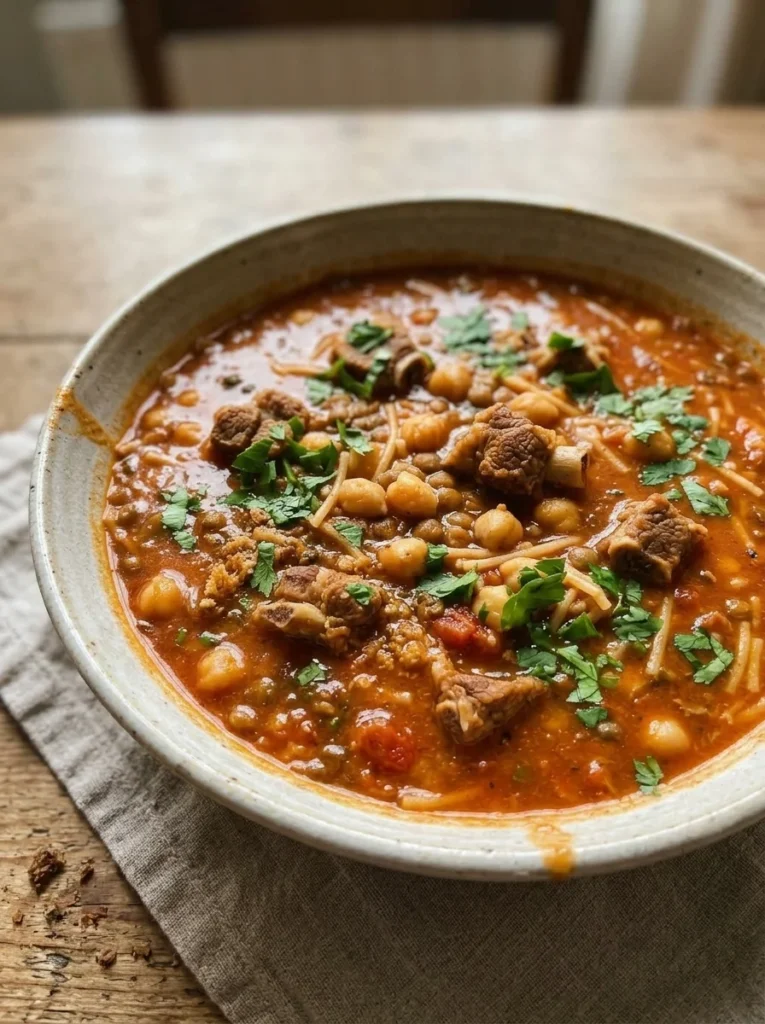
- Lamb shoulder on the bone, cubed small, bones reserved for the broth
- Olive oil and a spoonful of smen if you can get it (unsalted butter works)
- One yellow onion, grated so it dissolves into the base
- Celery with the leaves attached, chopped fine
- Turmeric, ground ginger, cinnamon, black pepper, and a real pinch of saffron
- Dried chickpeas soaked overnight (I add a pinch of baking soda to the soaking water for creamier chickpeas)
- Ripe tomatoes, peeled and puréed, plus tomato paste for depth
- Fistfuls of cilantro and flat-leaf parsley
- Brown lentils, rinsed
- Broken vermicelli, snapped short
- All-purpose flour and cold water for the tedouira
- A lemon, cut into wedges, for the table
I get my saffron from a spice stall in Silver Lake run by a woman who imports it from Iran directly. Overpriced supermarket saffron is a waste. And the lamb comes from the halal butcher on Vermont, who cuts the shoulder to order and hands over the bones without me having to ask.
Cooking Moroccan Harira Soup at Home in My LA Kitchen
I always make this on a Sunday. Something about a soup that needs two and a half hours does not belong to a weeknight, no matter what anyone says.
The kitchen starts to smell like Fes about fifteen minutes in. The onion and celery hit the fat, the spices bloom, and there is this warm, sweet, slightly medicinal note that is unmistakably ginger and saffron together. I always stop what I am doing at that point. It is my favourite part.
I brown the lamb gently, not aggressively. This is not a stew where you want a crust. You just want colour and rendered fat. Then in go the onion and celery, and after they soften, the spices. One minute of stirring, no more. Long enough for them to smell round instead of dusty.
The tomatoes go next, along with the tomato paste and the soaked chickpeas. Everything bubbles together for about five minutes until the raw tomato edge softens and the pot goes a deep brick red. Half the cilantro and parsley go in here, then nine cups of water, and the whole thing simmers gently for an hour and fifteen. Covered, mostly. The kitchen window fogs up.
Lentils go in for the last twenty-five minutes. Vermicelli after that, for eight. Then the tedouira, which is where most people get scared. Do not. Whisk the flour into cold water until it is completely smooth, then pour it into the simmering pot in a thin steady stream while stirring in Salma’s figure eights. Let it cook out for at least ten minutes so the raw flour taste disappears. The soup goes glossy. That is the moment.

A Chickpea and Lentil Soup That Rewards Patience
Harira is a chickpea and lentil soup with a personality, and that personality only shows up if you do not rush it. I made it once in ninety minutes flat, cutting corners on the simmer, and it was fine. Just fine. Not what Salma made.
A note on the next day. Harira thickens overnight into something almost stew-like. Thin it with a splash of water when you reheat, taste for salt again, and it will be better than the day you made it. Cold leftovers, eaten standing up at the counter. Do not tell anyone I said that.
Serve it steaming, with lemon wedges and soft Medjool dates on the side. During Ramadan you would add chebakia, the sesame honey pastries. I usually just tear off a piece of khobz and go quiet for a while. Salma would approve, I think. She struck me as someone who understood the value of eating without talking.
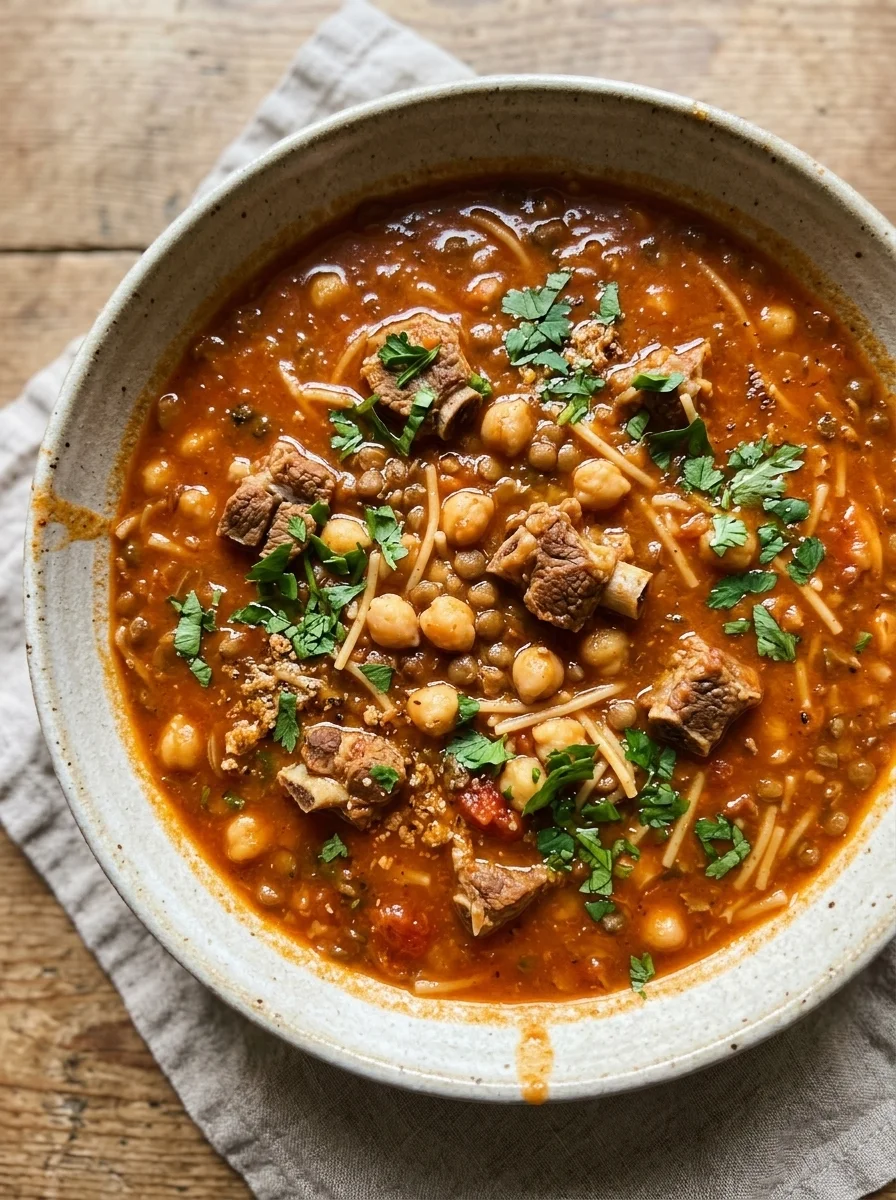
Moroccan Harira Soup
Ingredients
Equipment
Method
- Warm the olive oil and smen in a large heavy stockpot over medium heat. Add the lamb and reserved bones and brown gently for about 5 minutes, turning to color all sides without letting the fat scorch.
- Stir in the grated onion and chopped celery with its leaves. Cook for 4 to 5 minutes until the onion softens and turns translucent.
- Add the turmeric, ginger, cinnamon, black pepper, crumbled saffron, and salt. Stir constantly for 1 minute so the spices bloom in the fat and coat the meat.
- Add the soaked chickpeas, puréed tomatoes, and tomato paste. Stir well and let the mixture bubble for about 5 minutes so the tomatoes lose their raw edge and deepen in color.
- Stir in half of the cilantro and half of the parsley, then pour in the 9 cups of water. Bring to a boil, then reduce the heat to low, cover partially, and simmer gently for 1 hour and 15 minutes, until the lamb is fully tender and the chickpeas are creamy.
- Add the rinsed lentils and continue to simmer, uncovered, for 25 minutes, until the lentils are soft but still hold their shape. Fish out and discard the bare bones.
- Add the broken vermicelli and the remaining cilantro and parsley. Simmer for another 8 minutes until the pasta is tender. Taste and adjust the salt.
- Meanwhile, prepare the tedouira. In a small bowl, whisk the flour into the 1.5 cups of cold water until completely smooth with no lumps.
- Slowly pour the tedouira into the simmering soup in a thin, steady stream while stirring the pot constantly with a wooden spoon in a figure-eight motion. This is what gives harira its signature silky body.
- Continue to simmer gently, stirring often to prevent sticking, for 10 to 12 minutes, until the soup has thickened to a velvety, slightly glossy consistency and the raw flour taste is gone.
- Ladle into warm bowls and serve immediately with lemon wedges on the side for squeezing at the table.