
The first Apple Cider Sangria I ever tasted was poured at half past nine in the morning, in the back of a bakery in Gijón, by a woman who had been awake since four.
Nieves had let me in at five to watch the dough come together. I asked the night before, half expecting a polite no, and she shrugged and said the door would be open.
Nieves and the Bakery in Gijón
She is the third baker that shop has had. She took it over when the previous owner’s hands gave out, and she has run it with two part-timers and a radio ever since.
Her forearms were flour to the elbow by six. She talks constantly while she works and almost never looks up at you while she does it.
What I remember most is how slow the dough was. It sat there shaggy and unpromising for what felt like forever, and every time I leaned in to poke it she said espera, wait, it is not ready to be touched yet. Rain on the loading door the whole time. Asturias in October does that.
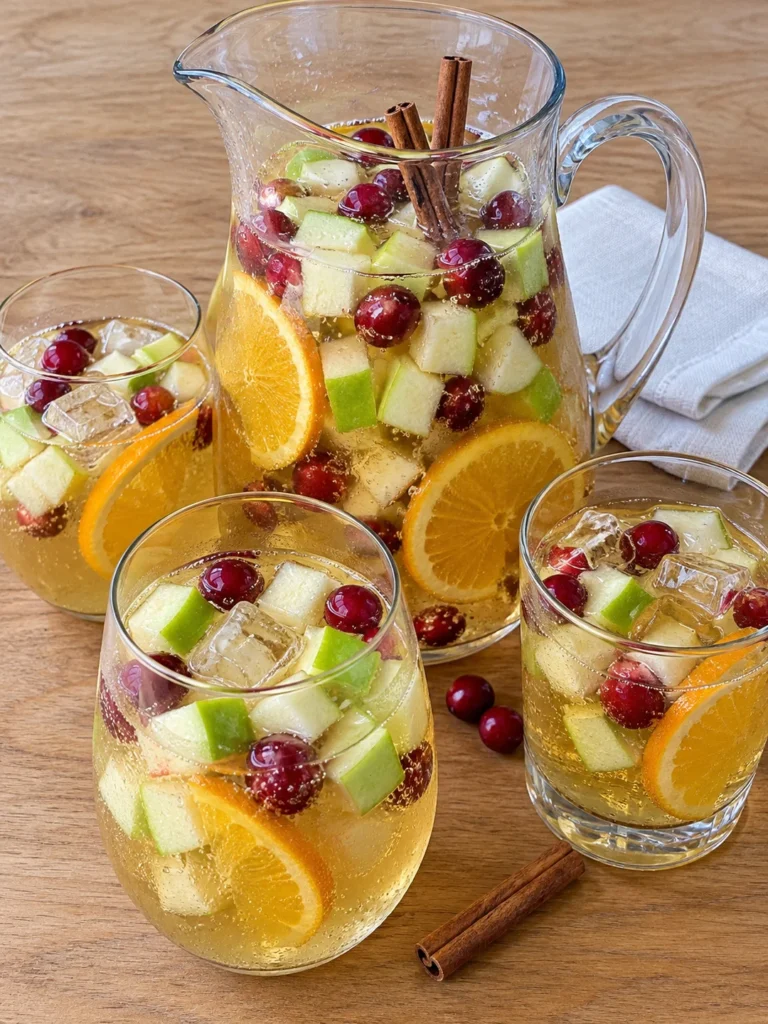
When the first trays went in she pulled a glass pitcher out of the fridge, apple cubes and cranberries and cinnamon sticks drifting in it, and poured two short glasses. Breakfast sangria, she called it, laughing at her own joke. Her daughter Marta lives in Portland and had described the idea to her over the phone a few autumns earlier.
Nieves made hers with sidra dulce, the sweet unfermented pressed juice, carried down from a llagar up the valley. I almost did not go that morning. Setting an alarm for four thirty on a holiday felt ridiculous, and I am glad I did it anyway.
We still trade voice notes. Hers are mostly bread. Mine are mostly questions.
Apple Cider Sangria Is Not Actually Spanish
I want to be honest about this, because Nieves was. Sangría is Iberian, with roots in a medieval drink of the Kingdom of León, wine steeped with oranges, lemons, sugar and spices, and the name comes from sangre for the deep red of the wine. The apple cider version is not part of that lineage at all.
It is a 21st-century North American autumn riff that spread through food blogs and magazines in the 2010s, and it sits closer to the newer white-wine sangría blanca than to anything Rioja-based. There is even a legal line around the word. Under EU Regulation 251/2014, only aromatized wine drinks actually produced in Spain or Portugal can be sold labeled plainly as sangria.
The other thing worth untangling is the word cider. In the United States it means the cloudy, unfiltered, non-alcoholic pressed juice you buy by the half gallon in autumn. In Asturias, cider means the fermented stuff poured from a height into a wide glass, and that is a different drink and a different variation.
What I Used
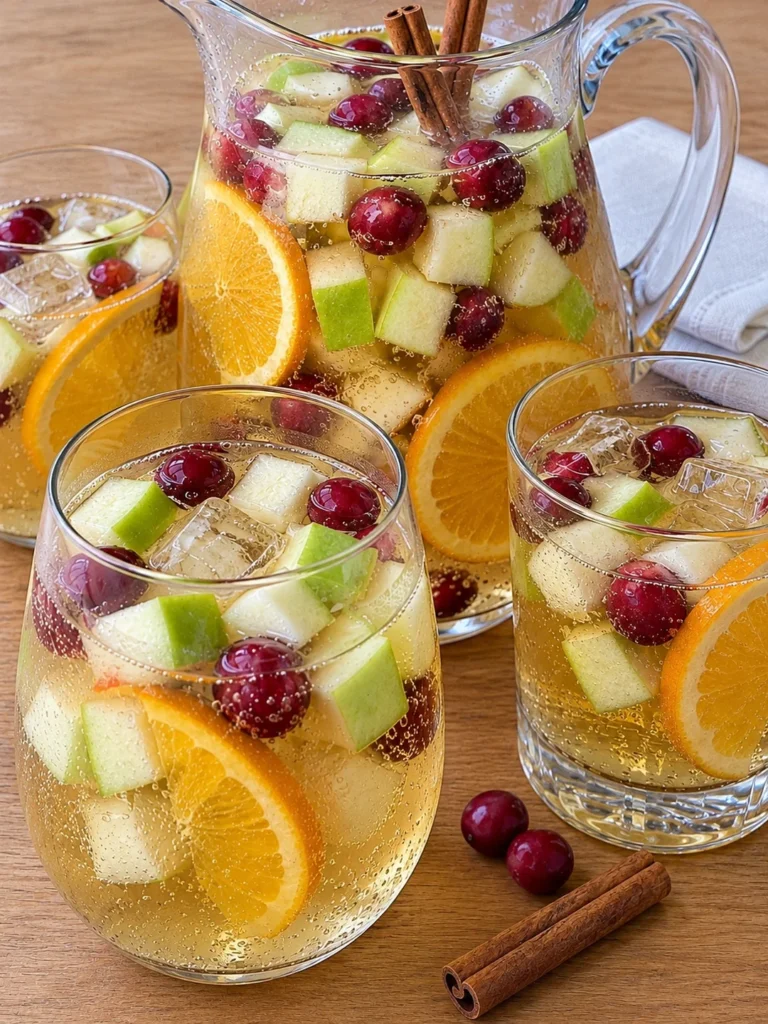
- Fresh unfiltered apple cider, four cups, one of which gets boiled down
- A bottle of dry white wine, chilled. Sauvignon blanc, pinot grigio or albariño
- Calvados, half a cup. Apple brandy works the same
- Triple sec, a splash, for the orange edge
- One Granny Smith and one Honeycrisp, cored and diced small
- Fresh cranberries, half a cup, or pomegranate seeds if the market has them
- One orange, half in rounds and half squeezed
- Three cinnamon sticks, plus more for the glasses
- Sugar, three tablespoons, adjusted after it has sat
- Sparkling water or sparkling cider, cold, added only at the pour
Where This Pitcher Punishes Impatience
Everything that can go wrong here is a timing problem. The first is the reduction. You boil one cup of the cider down to about a quarter cup, and for eight minutes nothing seems to happen, then in the last two it goes glossy and then it goes burnt.
I scorched mine the first time because I walked off to answer the door. Now I stand there with the small saucepan, the one with the slightly dented rim, and I pull it the second it coats the spoon.
Then straight into an ice bath. It keeps cooking in a hot pan otherwise, and you want it cold before it meets the wine.
The fruit gets pressed in the bottom of the pitcher with a wooden spoon, maybe ten strokes, enough to release juice and dissolve the sugar grit. Not mashed. You are bruising it, not making apple sauce.
Then the waiting, which is the part people skip. Four hours minimum, overnight is better, and no more than a day. I pushed it to two days once for a party I had moved, and the apples went brown and mealy and the whole pitcher turned faintly bitter. That one went down the sink.
And this is never mulled wine. The wine does not go near heat. Only the cider gets boiled, and only before the wine arrives, because simmering wine drives off the alcohol and everything that smells good about it.
Making It in My Own Kitchen
I get the cider on Sunday mornings at the farmers’ market, the cloudy unfiltered kind that has a date written on the jug in marker. Filtered sweetened apple juice is not the same thing and it never will be. It tastes flat and candied, like a juice box with ambitions.
Keep the wine dry. Moscato plus cider plus liqueur plus sugar is a headache in a glass, and I say that as someone who has made exactly that mistake and served it to people who were too kind to say so.
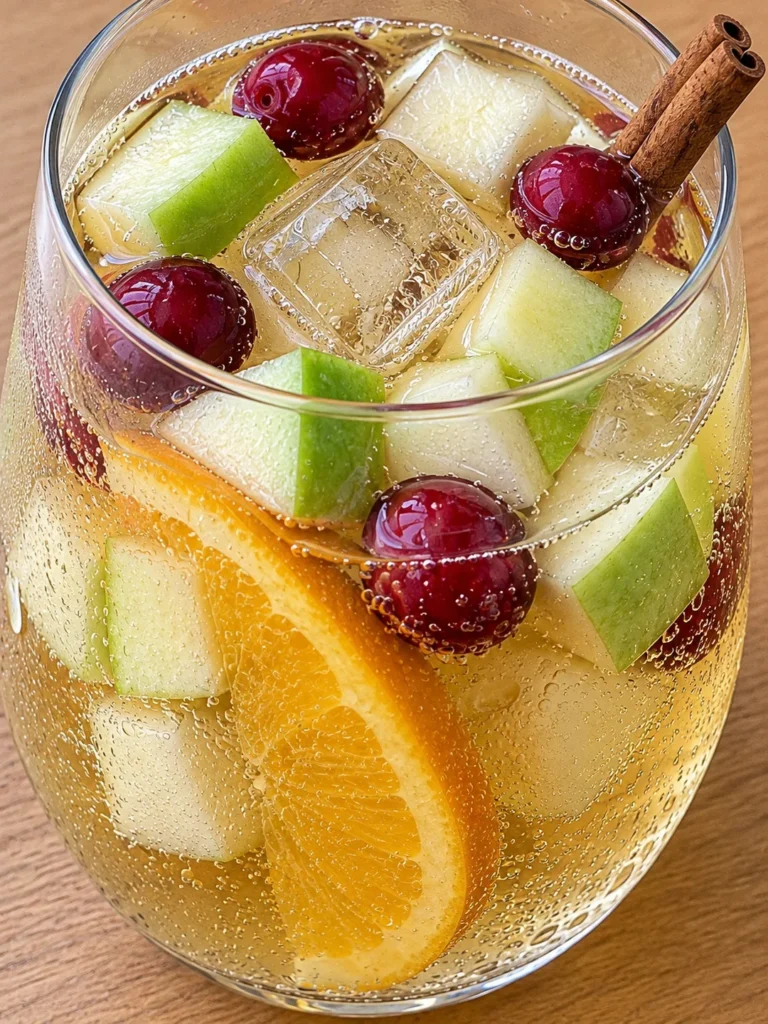
The Calvados came back with me in a duty-free bag and has been the one bottle I replace every autumn. The sparkling goes in at the last second, stirred once, never in advance, or the whole pitcher goes slack. Ice in the glasses, sangria ladled over with a slotted spoon so the fruit stays behind until the end.
I put out marcona almonds and a wedge of manchego with it, which is Nieves’s doing. The salt makes the drink read drier and brighter than it actually is.
Hard Cider, No Alcohol and Other Swaps
Swap the sparkling water for chilled dry hard cider and you get a sharper, drier pitcher that I honestly prefer late in the season. For a version with nothing in it, use sparkling cider and apple juice in place of the wine, brandy and triple sec, and lean harder on the cinnamon and cranberry so it still tastes like something.
It has quietly become my thanksgiving sangria, which is funny given that I learned it in a bakery in northern Spain at five in the morning. Pomegranate seeds instead of cranberries if you want it prettier. Cinnamon sugar on the rims if there are more than six people and you are showing off a little.
Nieves sent me a photo last October of her pitcher next to a tray of cooling loaves, no message, just the picture. I made mine that same week, on the wooden table that gets the morning light, and drank one glass standing up before anyone else arrived. Still the best way to have it.
Apple Cider Sangria
Ingredients
Equipment
Method
- Pour 1 cup of the apple cider into a small saucepan and bring to a hard boil over high heat. Boil 10 to 15 minutes, until it reduces to about 1/4 cup and looks glossy and syrupy. Watch the last few minutes closely so it does not scorch.
- Set up an ice bath in a medium bowl. Set the saucepan in the ice water and stir the reduced cider until it is cold, about 3 minutes. Chilling it fast keeps it from cooking any further.
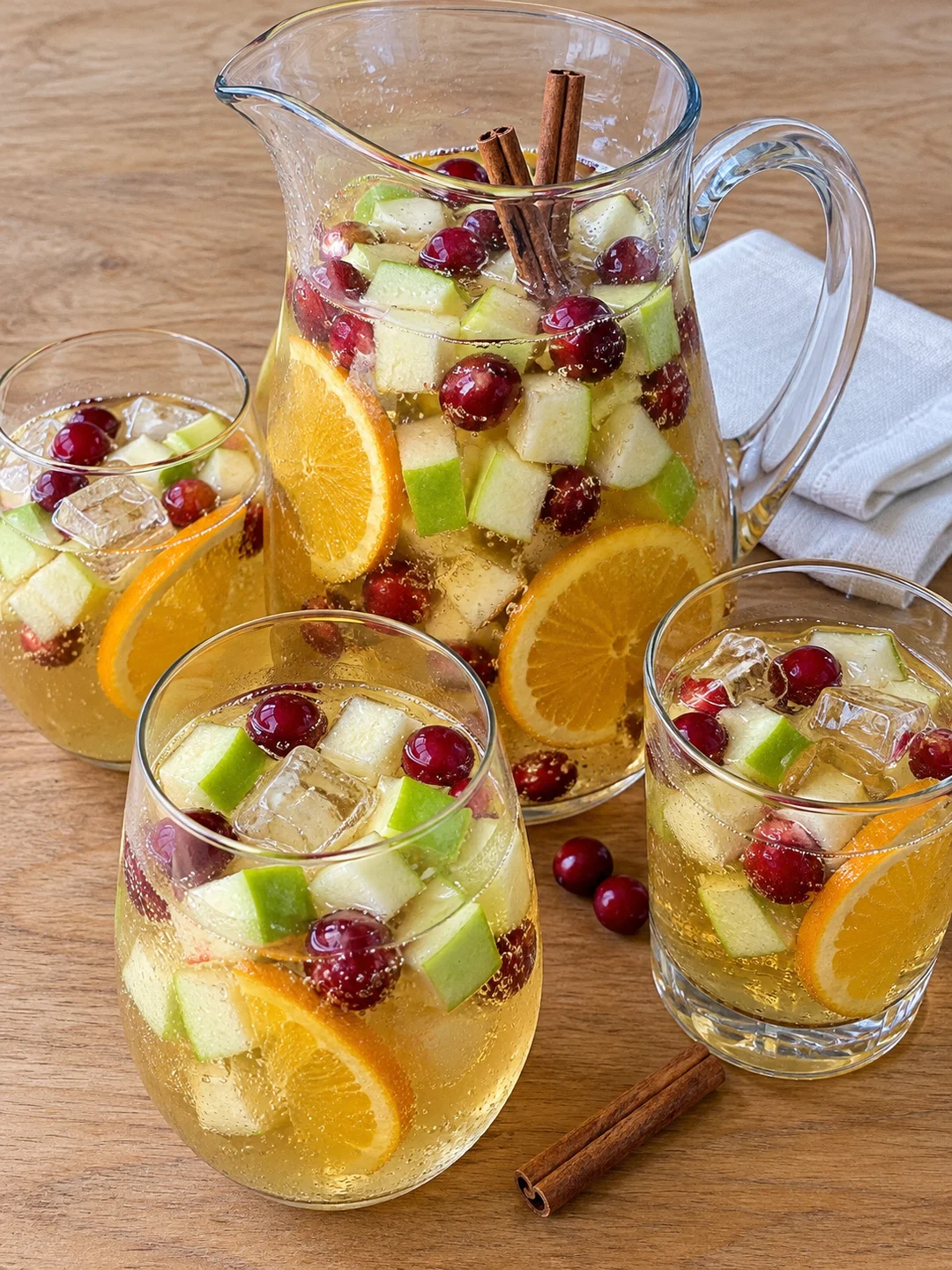
- Put the diced tart apple, diced sweet apple, cranberries, orange slices, cinnamon sticks and sugar in the bottom of a large pitcher. Press and bruise the fruit gently with a wooden spoon about 10 strokes, just enough to release juice and dissolve the sugar. Do not mash it to pulp.
- Pour in the remaining 3 cups apple cider, the cooled cider reduction and the fresh orange juice. Stir until no sugar grit remains on the bottom.
- Add the full bottle of dry white wine, the apple brandy and the triple sec. Stir once, gently, from the bottom up.
- Cover and refrigerate at least 4 hours, ideally overnight, and no more than 24 hours. The fruit softens and perfumes the wine; past a day the apples brown and the drink turns bitter.
- Taste before serving. If the cider was very tart, stir in another tablespoon of sugar or simple syrup until the edge rounds off.
- At the moment of serving, pour in the chilled sparkling water or sparkling cider and stir once. Fill glasses with ice and ladle the sangria over, using a slotted spoon so the fruit stays behind until the end.