
The best Crockpot Mashed Potatoes I have ever eaten came out of a dented slow cooker sitting at the end of a counter in Lunenburg, Nova Scotia. Canadian Thanksgiving. I had booked the trip badly and did not realise the whole town would be shut.
Six tables, one counter, a chalkboard by the door with the day’s dinner written on it and nothing else. I took the counter stool because it was the only seat left.
The Counter Seat in Lunenburg
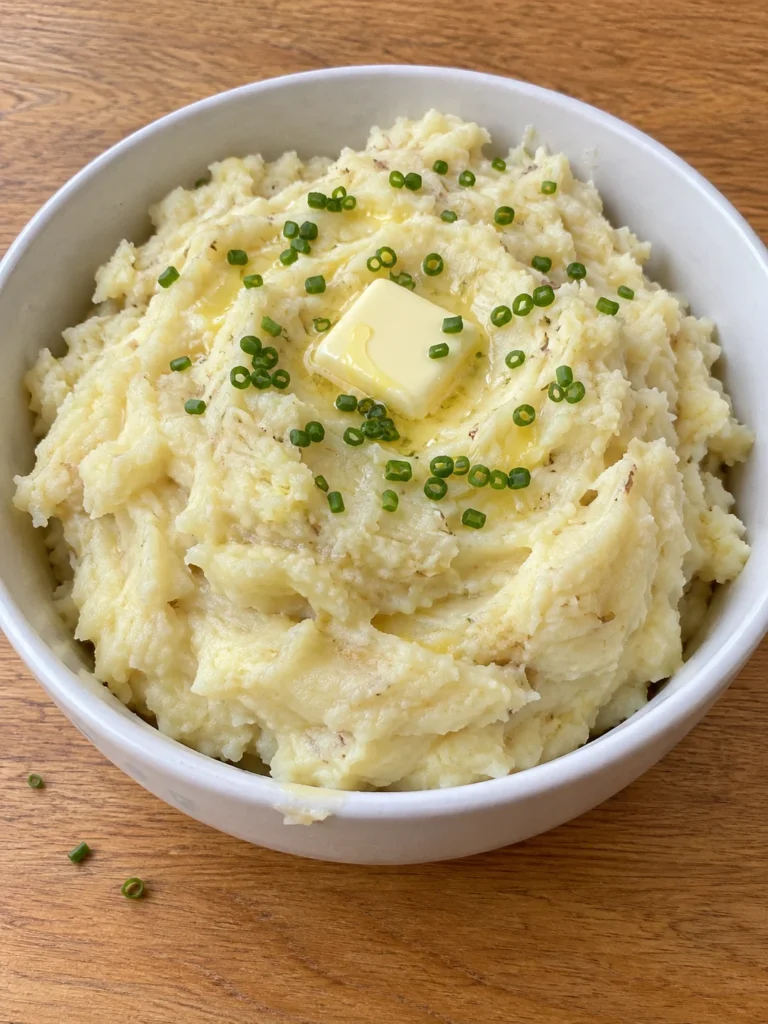
The woman running the place was called Donna and her son was carrying plates. Turkey, pan gravy, carrots, a scoop of mash that held its shape on the plate but gave way under the fork immediately.
I asked what she did to the potatoes. She pointed at the slow cooker with her chin and said she had not boiled a potato in about fifteen years. Raw chunks, a splash of chicken broth, whole garlic cloves, lid on, and she leaves it alone most of the morning.
The part she was actually proud of was that nothing gets drained. “Why would I throw the good water away,” she said, which is one of those sentences you think about on the plane home. All that starchy broth stays in the crock and goes back into the mash.
She also told me, slightly sternly, that she stirs it once an hour and does not leave it on Warm all afternoon. The machine is not babysitting the potatoes for you. It just moves them off the stove.
Crockpot Mashed Potatoes Are Newer Than Everyone Assumes
People talk about mashed potatoes like they arrived with somebody’s Irish great-grandmother. They did not. The potato is native to the Andes, where Indigenous cultivation goes back thousands of years and the Inca were already eating theirs mashed long before Spanish ships carried the plant to Europe around 1536.
The first written mashed potato recipe we know of is English, printed in Hannah Glasse’s cookery book in 1747, and it already said what we say now. Boil, mash, milk, butter, salt. The first American one turned up in Mary Randolph’s Virginia book in 1824.
The crock part is barely older than my parents. Irving Naxon patented an electric bean simmerer in 1940, inspired by the cholent his Lithuanian mother used to make, and Rival of Kansas City bought the design and relaunched it as the Crock-Pot in 1971.
Everything after that is pure American holiday logistics. The turkey owns the oven, the casseroles own the rest of it, so the potatoes got exiled to an appliance on the counter. Which is also exactly why this works as make ahead mashed potatoes for a crowd, and why it is the default at church suppers and potlucks where the dish travels in its own pot.
What I Used
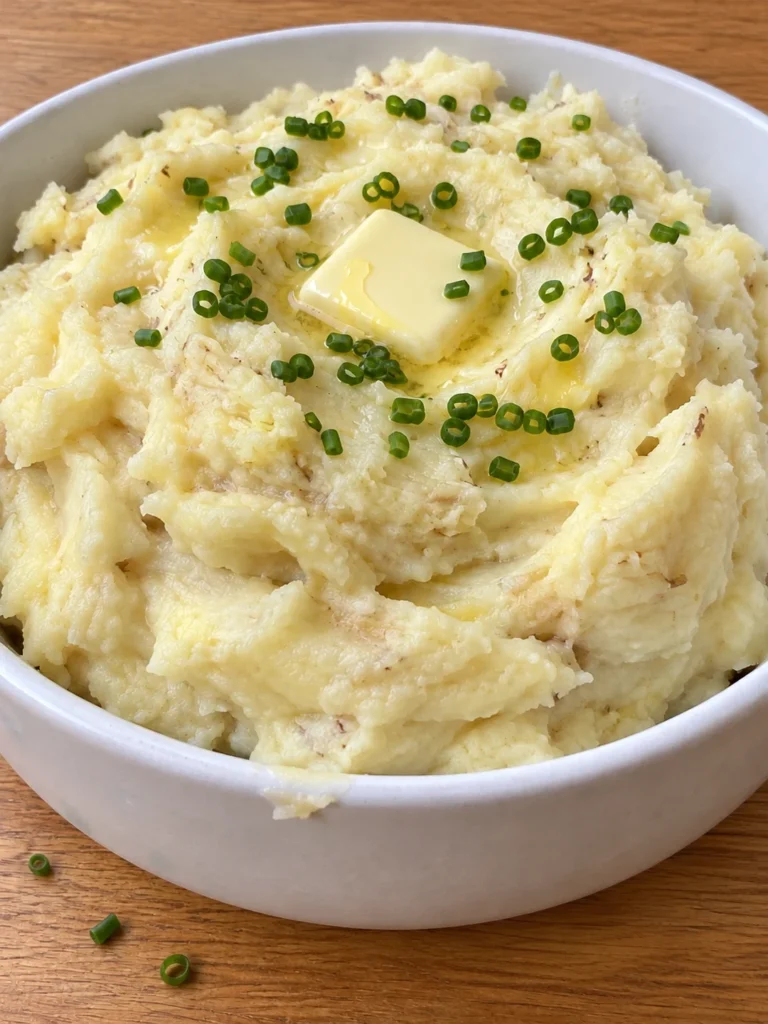
- Five pounds of Yukon Gold potatoes, peeled, cut into one-inch chunks
- Three quarters of a cup of low sodium chicken broth, and no water on top of that
- Six whole garlic cloves, peeled, left whole so they go sweet and soft
- A teaspoon and a half of salt to start, plus more at the end than you think
- A full stick of unsalted butter, room temperature, cut up
- Three quarters of a cup of full fat sour cream
- Four ounces of cream cheese, properly softened
- Three quarters of a cup of whole milk, warmed, plus a splash in reserve
- Half a teaspoon of black pepper, ground fresh
- Chives, thinly sliced, scattered on at the end
Six Hours, One Record, and a Bag of Chips
I get the Yukon Golds at the Wednesday farmers’ market, from the stall that sells them with dirt still on. Yukons give you a creamier, more buttery mash. Russets go fluffier and also drink liquid faster, so if you are planning to hold them, Yukon is the safer bet.
Everything goes in raw. Potatoes, broth, garlic, salt, hands in to toss it so the broth coats everything, lid on. Low for six to seven hours, high for three to four, with a quick stir and a fast lid close roughly once an hour.
That is a long stretch of kitchen time with nothing to do, so I treat it like an event rather than a chore. Townes Van Zandt on the speaker, salt and vinegar chips, a wedge of cheddar and the end of a bottle of cider, morning light coming across the wooden table while the house slowly starts to smell like garlic.
The potatoes are done when a fork meets zero resistance and the chunks are collapsing on their own. Any firm centre means keep going. Undercooked potato never mashes smooth, no matter how aggressive you get with it.
Warm the milk first. Small saucepan, low heat, pull it the second it steams. Cold dairy straight out of the fridge drops the temperature of the whole crock and leaves you with something pasty.
Then machine off, masher in, mash the potatoes and the softened garlic right in the crock with the starchy broth still at the bottom. My masher is a cheap one with a handle that bent years ago and now sits slightly crooked in my hand. Works fine.
Butter, sour cream and cream cheese next, stirred through until they disappear, then the warm milk a splash at a time until it falls off a spoon. Salt, pepper, taste, more salt.
Swaps, and the Two Mistakes I Have Already Made for You
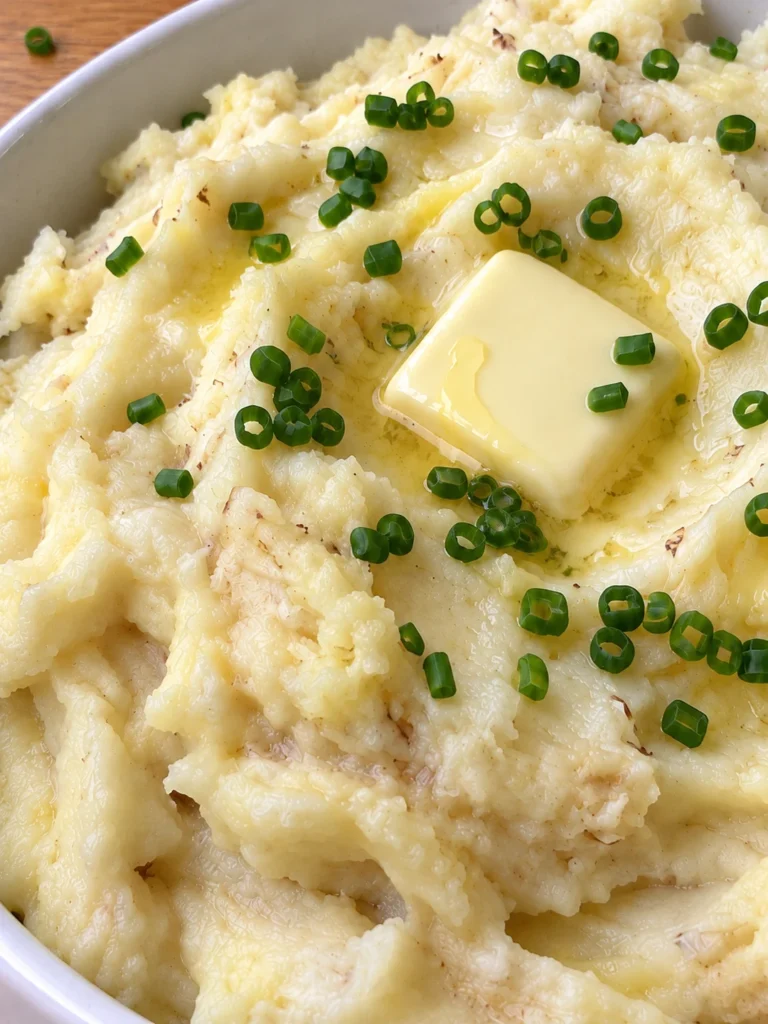
I tried the hand mixer once, thinking it would be faster. It was faster and it was also glue. Short bursts only if you must, and never a food processor, because over-beating ruptures the starch and there is no coming back from that.
The other one was red potatoes, because they were what I had. Waxy potatoes do not survive six hours in a crock. Gummy, slightly sticky, edible but sad.
For a loaded version I put shredded cheddar, crumbled bacon and sliced green onions in little bowls and let people wreck their own plates. Leftovers keep four days and reheat gently with a splash of warm milk. Cold, straight from the container, standing at the counter. Honestly better than it should be.
I have made this for a pot roast, for a roast chicken, and once for a meatloaf on a Tuesday for no reason at all. The Keep Warm setting holds it for a couple of hours and that is the real gift here, the one Donna was talking about when she said she stopped worrying about potatoes a long time ago.
I think about that counter seat every time I lift the lid. It was the best meal of a badly planned trip, and it came out of a slow cooker that had clearly been dropped more than once.
Crockpot Mashed Potatoes
Ingredients
Equipment
Method
- Peel the potatoes and cut them into even 1-inch chunks. Even sizing matters here, because the slow cooker gives you no way to fish out the pieces that finish early.
- Put the raw potato chunks straight into the slow cooker. Add the chicken broth, whole garlic cloves and 1.5 teaspoons salt, then toss with your hands so the broth coats everything. Do not add water and do not cover the potatoes with liquid; three quarters of a cup is all they need.
- Cover and cook on LOW for 6 to 7 hours, or HIGH for 3 to 4 hours. Lift the lid and give the potatoes a brief stir roughly once an hour, then close it again right away. Keeping the lid on between stirs traps the steam that actually cooks them.
- The potatoes are ready when a fork slides in with no resistance and the chunks are starting to collapse on their own. If there is any firmness at the center, keep cooking. Undercooked potatoes will never mash smooth, no matter how hard you work them.
- Warm the milk in a small saucepan over low heat until it steams, then pull it off the burner. Cold dairy straight from the fridge chills the potatoes and gives you a pasty mash.
- Turn off the slow cooker. Mash the potatoes and the softened garlic cloves directly in the crock with a potato masher, working through the starchy broth at the bottom rather than draining it off. Stop as soon as the big lumps are gone. Over-working the starch is what makes a mash gluey.
- Add the butter, sour cream and cream cheese and stir until melted and absorbed. Then add the warm milk a splash at a time, stirring after each addition, until the mash is just creamy and loose enough to fall from a spoon. You may not need all of it.
- Season with the black pepper and more salt to taste, tasting as you go. Mashed potatoes take more salt than you expect.
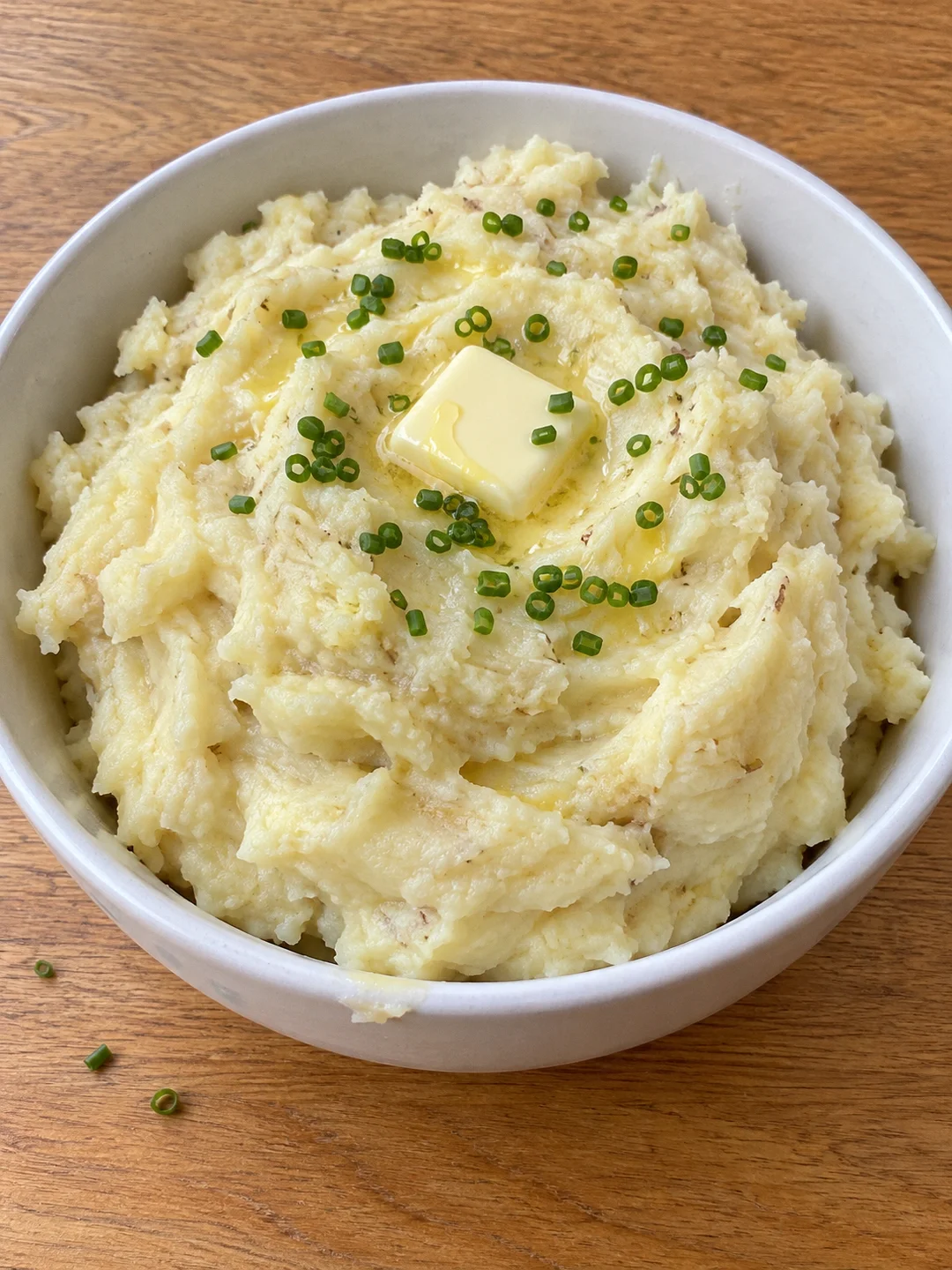
- Scatter the chives over the top and switch the cooker to Keep Warm until serving, up to 2 hours. If the mash tightens while it sits, stir in another splash of warm milk to bring it back.