
Cinnamon Roll Casserole was not on the menu. There was no menu. I had stumbled into a private dinner in a rented top-floor apartment in the Whittier neighbourhood of Minneapolis, in December, because the woman at the coffee counter downstairs heard I was travelling alone and said her friend was cooking for eight upstairs and one had cancelled.
The friend was a chef named Dan. Grey sweatshirt, sleeves pushed to the elbow, no apron, a dish towel through his belt loop instead. His kitchen was maybe nine feet wide. Two burners worked. Snow was coming sideways past the window over the sink.
The Chef Who Corrected Me Twice
Dinner was long and loose and by the end of it Dan mentioned he had something in the fridge for the morning. He pulled out a 9×13 pan wrapped in cling film, dough pieces sitting in custard, and put it on the counter to show me. Then he explained it, standing there, while somebody else washed wine glasses behind him.
I made two mistakes out loud and he corrected both. First, I asked if it was basically monkey bread. It is not. Monkey bread is pull-apart balls of yeast dough rolled in cinnamon sugar with no egg custard anywhere near it. Second, I asked how much sugar goes in the custard, and he laughed at me.
The dough is already sweet and already full of cinnamon, he said. If you build the custard like French toast, you end up with something you cannot finish. So the custard here stays quiet. Eggs, cream, a little brown sugar, salt, and that is it.
He also said the thing I have repeated to about six people since. A soggy bottom is not the nature of this dish. It is either over-soaking or an oven set too hot, which browns the top long before the middle sets.
What It Actually Is, Historically
The cinnamon roll has a much longer lineage than the casserole does. The oldest recorded recipes are German and go back to the 16th century, and the pastry moved north into Scandinavia through Hanseatic traders working the port of Bergen.
Its modern shape settled in Sweden in the early 1920s as the kanelbulle, once post-war rationing eased and butter and sugar and spice were affordable again. German and Scandinavian immigrants brought the roll to North America, where it got sweeter and got frosted.
But the casserole is not a heritage dish. It is a modern American invention, borrowing the custard-soak logic of bread pudding and breakfast strata, and it took off once refrigerated canned dough was on every grocery shelf. Dan was clear that using the canned dough is not a shortcut anybody apologises for. It is the mainstream form of the dish, not a lesser version of it.
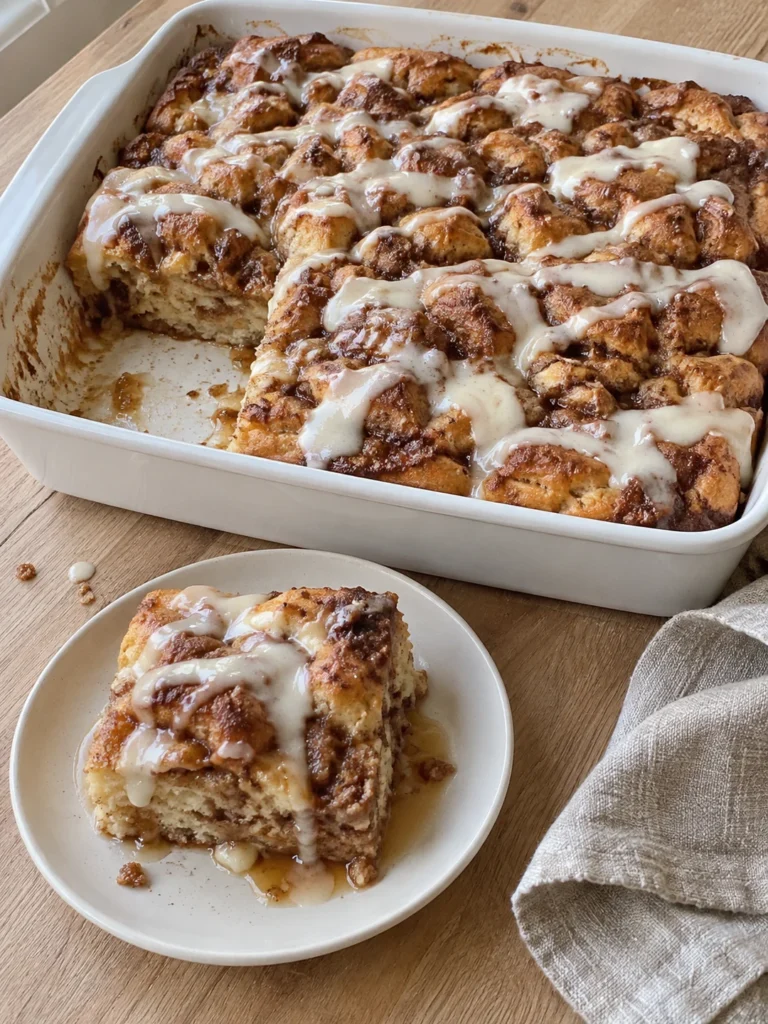
Bringing the Cinnamon Roll Casserole Home
I flew back and made it that same week, Sunday morning, before anybody in my building was awake. Assembled it the night before, exactly the way Dan does, and left it in the fridge overnight.
My oven runs hot, which I know because of a cheap dial thermometer I keep hanging off the rack. I ignored that the first time. The top went dark and handsome at thirty minutes and the centre was still wet, which is precisely the failure Dan described and I walked right into it anyway.
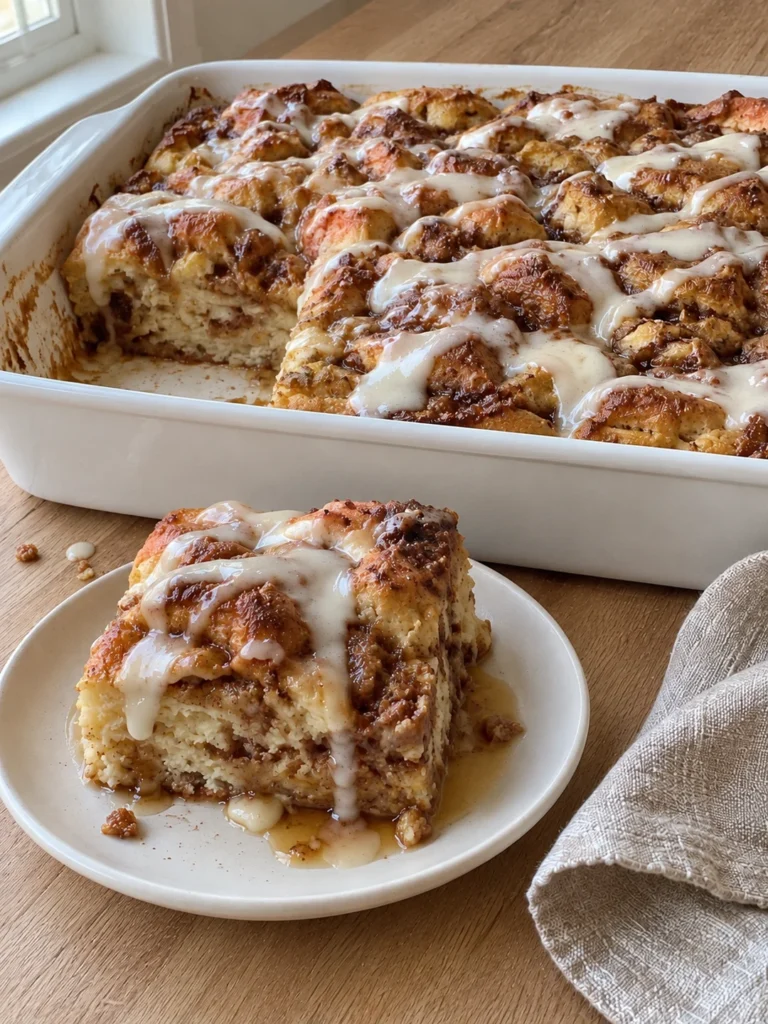
Second attempt I trusted 350 F and nothing above it. Forty-two minutes. The top puffed and cracked and went that deep gold, and the middle held when I nudged the pan.
The other thing worth fussing over is the whisking. Forty-five seconds of steady work until the custard is one uniform colour with no streaks of white or yolk hiding in it. Stop early and you get rubbery ribbons running through the finished bake. It is the single most boring step and the one that decides everything.
What I Used
- Two tubes of refrigerated cinnamon roll dough, icing packets set aside
- Four large eggs, out on the counter first
- Three quarters of a cup of heavy cream, though whole milk is fine
- Ground cinnamon, about a teaspoon and a half
- Real vanilla extract
- Pure maple syrup, a third of a cup, plus more at the table
- Melted unsalted butter, and more for the pan
- Packed brown sugar, only a quarter cup
- A pinch of salt
- The cream cheese icing packets that come with the rolls
The maple I buy at the Sunday farmers market on Ivar, from a stand that trucks it in from Vermont, because the grocery store stuff tastes like a candle. That is my one snobbery in the whole recipe.
Where People Go Wrong
Butter the pan more than feels reasonable and get it into the corners. Quarter the rolls into rough one-inch pieces, scatter them, pour the custard over, and toss with your hands so every cut edge gets coated. Then settle them back flat.
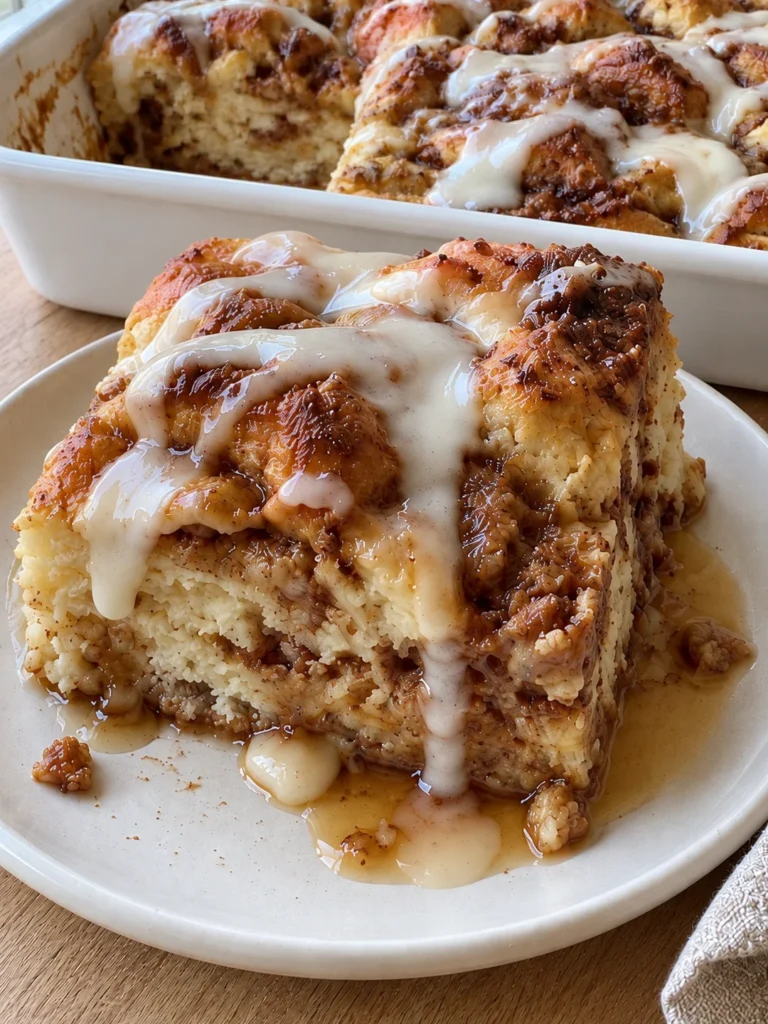
The maple goes on top at the end and does not get stirred in. It pools and caramelises at the edges. Dan was firm about that and he was right.
Day-old baked cinnamon rolls actually work better than fresh dough here, which sounds wrong and is not. They drink the custard instead of turning to paste.
Warm the icing packets for five to ten seconds, no more, and pour them over the pan while it is still hot so it disappears into every crack. I almost skipped that step the first time thinking it was too much. It is not too much.
How I Serve It Now
This became my cinnamon roll breakfast casserole for anybody staying with me between trips, which is more people than you would think. Berries on the side, sausages if I have them, coffee going before the oven timer.
I always let it rest five minutes before cutting. Except when I do not, which is most times, because somebody is standing there with a plate.
Cold leftovers, straight from the fridge, standing at the counter. Honestly better than the first slice.
I have not been back to Minneapolis since that December, and I never got Dan’s last name. But this pan comes out of my oven maybe once a month now, and every time the top cracks I think of snow going sideways past a nine-foot kitchen. Some recipes travel better than photographs do.
Cinnamon Roll Casserole
Ingredients
Equipment
Method
- Preheat the oven to 350 F. Butter a 9x13 inch baking dish generously, working the butter into the corners.
- Open both tubes of cinnamon roll dough and set the icing packets aside at room temperature. Cut each roll into quarters, roughly one-inch pieces, and scatter them evenly across the buttered dish.
- In a large bowl, whisk the eggs, heavy cream, cinnamon, vanilla, brown sugar, and salt until the mixture is completely smooth and uniform in color with no streaks of white or yolk. This takes a solid 45 seconds of steady whisking.
- Whisk the melted butter into the custard until fully combined.
- Pour the custard evenly over the dough pieces. Gently toss the pieces with your hands or a spatula so every cut surface is coated, then settle them back into an even layer.
- Drizzle the maple syrup across the top of the casserole. Do not stir it in.
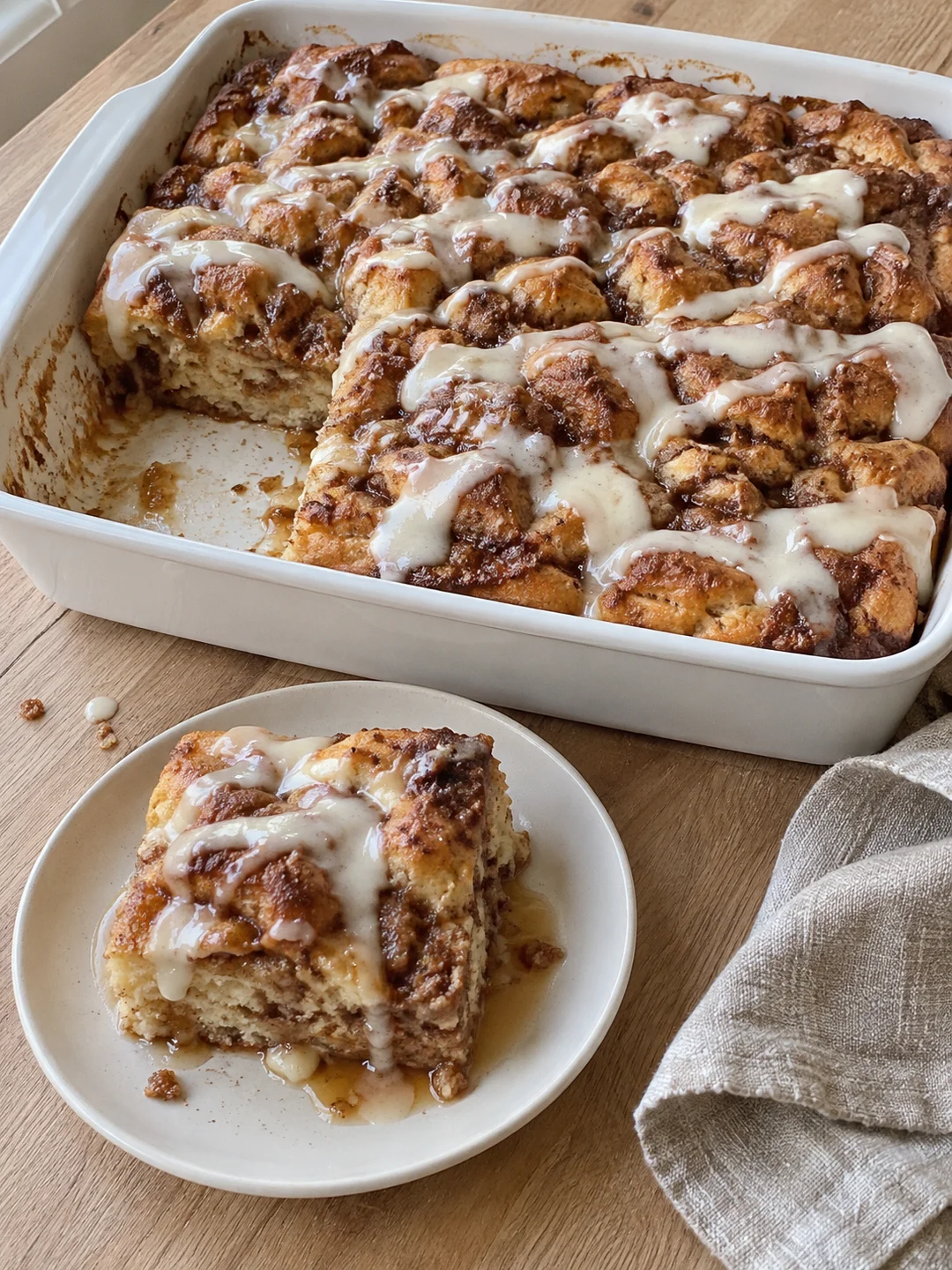
- Bake uncovered for 35 to 45 minutes, until the top is deep golden brown and visibly puffed and the center no longer jiggles when you nudge the pan. A knife inserted into the middle should come out clean of wet custard.
- While the casserole rests for 5 minutes, warm the icing packets in the microwave for 5 to 10 seconds until pourable.
- Drizzle the warm icing over the hot casserole so it melts down into the crevices. Cut into 12 portions and serve warm, with extra maple syrup at the table.