
New England Creamed Pearl Onions were the last thing I expected to write down in a notebook. Beige food. A side dish people apologize for before they pass it.
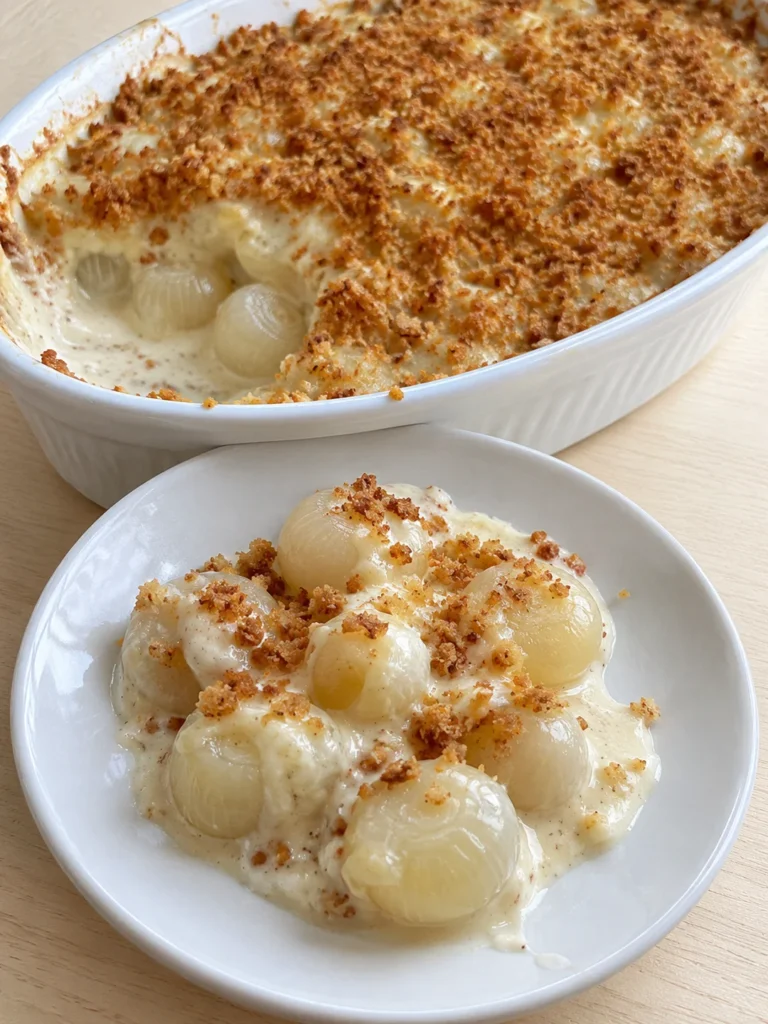
Then Marcy Hodgdon set a tray of them on the pass at eleven at night in Portsmouth, New Hampshire, with the dining room lights already off, and I ate a third of it standing up with a fork I did not ask permission for.
The Night Marcy Made Them in Portsmouth
I was driving the coast north in late November, slowly, the way you can when nobody is expecting you anywhere. Her parents opened the restaurant on Daniel Street in 1978 and she still runs the dining room. Her husband Ray cooks, and in the winter she keeps the books for a boatyard across the river in Kittery, because a thirty-seat restaurant in February is not a living.
I had the last table. I stayed for a cider I did not need, and when the chairs went up she was at the pass with a paper sack of pearl onions and asked if I wanted to make myself useful.
So I cut shallow X marks into root ends for the better part of an hour. Ninety seconds in boiling water, cold rinse, pinch the top and the skin comes away in one piece. Trim only the root, she said, never both ends, or the whole onion unlayers itself in the pot like a bad origami.
They were for the next day. Thanksgiving, her brother-in-law’s house, and she said if she walked in without them he would notice before he noticed the turkey. The recipe lives on a card in a tin, in her aunt’s handwriting, and she read it out to me anyway from memory, wrong in two places.
We still text. She sends me the first snow every year. I send her photographs of produce she has no use for. In January a copy of the card showed up in my mailbox, handwriting that leans hard to the right, with “DRY sherry” underlined twice.
Why New England Creamed Pearl Onions Are Not a Pilgrim Dish
I assumed, like most people do, that this was colonial. It is not. Small boiled onions bound in bechamel is an English side dish for roast meats, and the sauce itself is French, and the whole idea arrived in the United States with European immigrants. Printed American recipes turn up by about 1902, probably later than home cooks were already making it.
What makes it a New England dish is what happened next. It settled onto the holiday table in the early twentieth century and stuck hardest in the Northeast, because small onions kept beautifully through a cold winter and a flour-and-milk sauce turned a cheap root vegetable into something rich enough for a feast day.
Nationally the thing gets mocked. Beige, fussy, texturally dull. In Marcy’s family, leaving it off is closer to a betrayal than a menu decision.
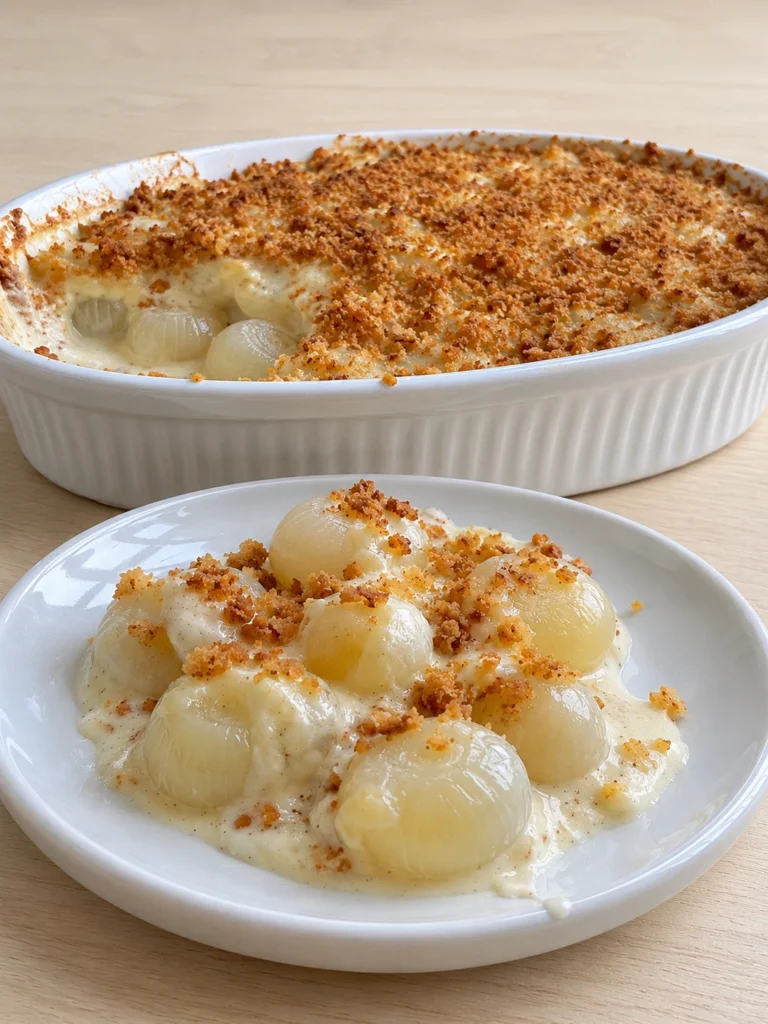
What I Used
- Two pounds of fresh pearl onions, the small ones, about an inch across
- Chicken stock, low sodium, for simmering them instead of plain water
- Unsalted butter, five tablespoons in total, three for the roux and two for the crumbs
- All-purpose flour
- Whole milk, warmed, and a half cup of heavy cream
- One bay leaf and six black peppercorns, for infusing
- Dry sherry, two tablespoons, which is not optional and not sweet
- A whole nutmeg to grate, or mace if that is what you have
- White pepper, freshly ground
- Coarse breadcrumbs torn from day-old white bread
- Salt, more than you think
What I Changed Back in My Own Kitchen
Marcy simmers her onions in salted water. I use chicken stock, because the pearl onions I find at the Wednesday farmers’ market are sweet but watery, and the stock gives them a backbone they do not have on their own. That change earned its place the first time I tasted them side by side.
The second change is the bay leaf. Her card drops it straight into the sauce. I warm the milk and cream with bay and peppercorns, let it sit off the heat for ten minutes, then strain. Same flavor, no peppercorn surprises, and the sauce stays properly white.
Her aunt used cracker crumbs on top. I tear day-old white bread into coarse crumbs instead and toss them in melted butter, because crackers go sandy and bread goes gold and shatters a little under the spoon.
Nutmeg gets grated fresh. I had a tin of pre-ground in the cupboard for years and it tasted like dust. The whole nutmeg lives in a jam jar next to the salt now.
One honest failure. My first attempt I got impatient and trimmed both ends of every onion, and what came out of the pot was a dish of onion petals in cream sauce. Edible. Not the dish. The second time I also walked away for five minutes too long and they went soft in the middle, so now I test one at twelve minutes with the tip of my paring knife, the cheap one with the loose rivet I keep meaning to replace.
I do the peeling on the wooden table on a Sunday morning before the building wakes up, rain on the window if I am lucky. It is forty minutes of dull work and I have come to like it.
Swaps, Shortcuts and One Thing to Never Do
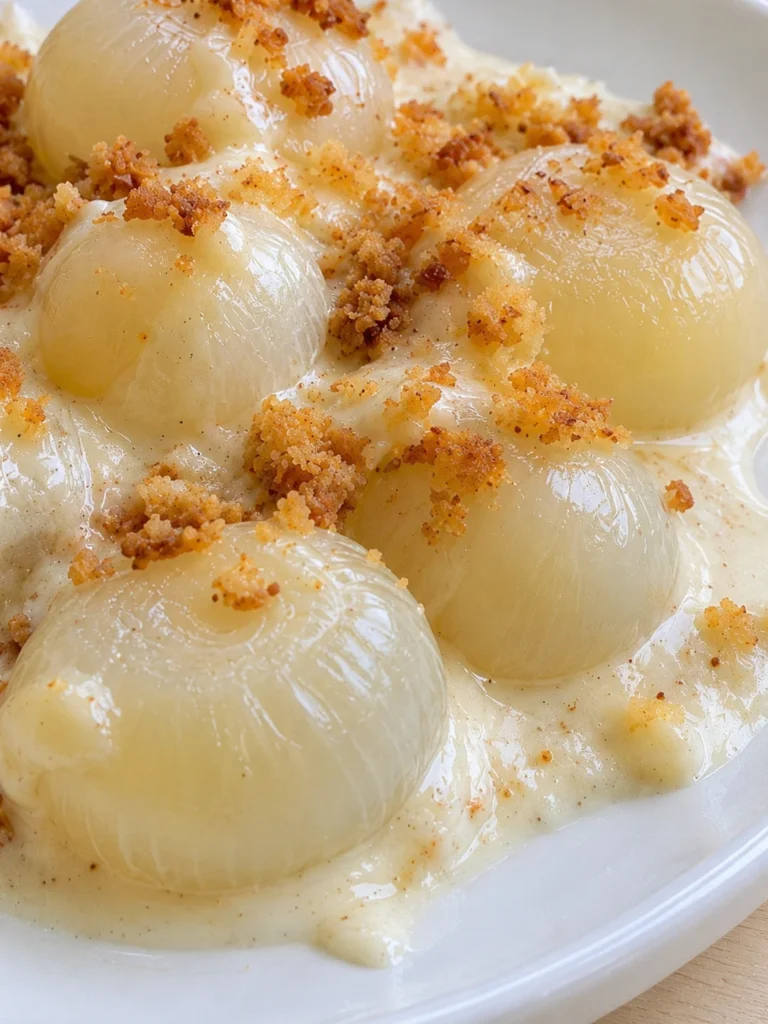
Frozen peeled pearl onions are the acceptable cheat. Thaw them, pat them very dry, skip the blanching, and cut the simmer to six minutes. They wrinkle and shrink more than fresh and nobody at the table has ever mentioned it. I always peel fresh. Except last December, when I had four days at home and did not.
Jarred cocktail onions are not a substitute. They are briny and already soft and they collapse into the sauce. Sweet or cream sherry is the other mistake, and the reason Marcy underlined that word twice, since the onions bring all the sugar the dish needs.
Almost all of it can be done ahead, which is the real argument for putting it on a holiday table. Cook the onions, make the sauce, keep them separate in the fridge for up to two days, then combine, crumb and bake. Straight from cold it wants another ten minutes in the oven.
Also, these are poached white and tender, never browned. Not caramelized onions, not the crispy fried topping. If the onions take on color you have gone somewhere else entirely.
Why It Stays on My Table
I make it with roast chicken in January as often as I make it in November, which would probably horrify half of New Hampshire. The sherry and the nutmeg are the whole trick, and without them it really is the dull beige side its critics describe.
Marcy still has not visited. She says she will come out when the boatyard books are quiet, and I keep telling her I will have the onions ready.
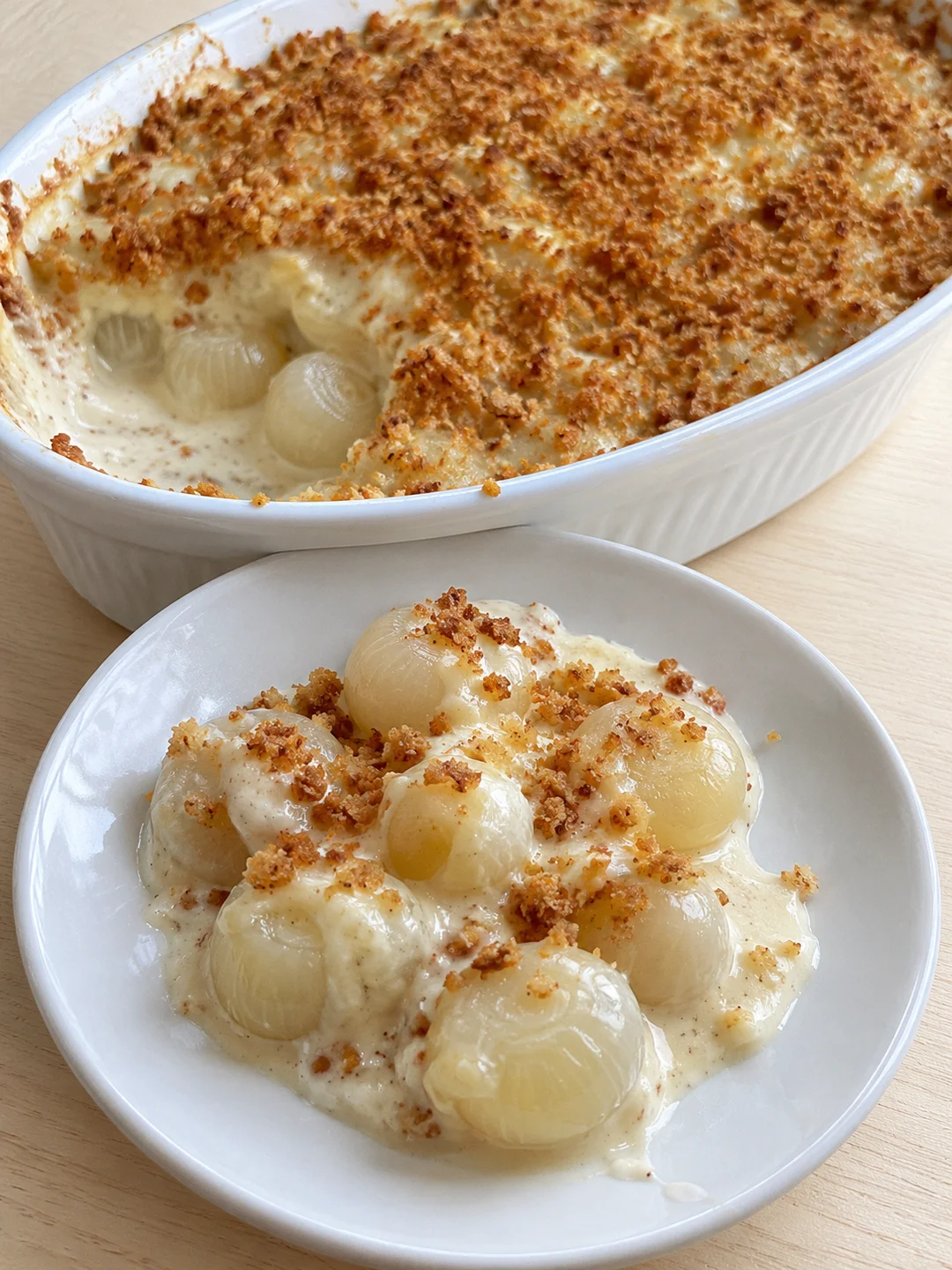
New England Creamed Pearl Onions
Ingredients
Equipment
Method
- Bring a large saucepan of water to a rolling boil. Trim only the root end of each pearl onion and cut a shallow X into it with a paring knife. Leave the tops intact so the layers stay together.
- Drop the onions into the boiling water for 90 seconds, then drain into a colander and run cold water over them until cool enough to handle. Pinch each onion at the top and the skin will slip off in one piece. Discard the skins.
- Return the peeled onions to the saucepan with the chicken stock and 1 teaspoon salt. Add water if needed to just cover. Simmer gently, uncovered, for 12 to 15 minutes, until a knife tip slides into an onion with no resistance but the onion still holds its round shape. Drain well, reserving 1/2 cup of the cooking liquid.
- Warm the milk, cream, bay leaf and peppercorns together in a small pan over low heat until steaming, then take off the heat and let them infuse for 10 minutes. Strain and discard the bay leaf and peppercorns.
- Melt 3 tablespoons of the butter in a heavy saucepan over medium heat. Whisk in the flour and cook for 2 minutes, whisking constantly, until it smells nutty but has taken on no color at all.
- Pour in the infused milk and cream a little at a time, whisking smooth after each addition. Simmer for 4 to 5 minutes, whisking, until the sauce coats the back of a spoon. Thin with a splash of the reserved onion liquid if it tightens too much.
- Stir in the sherry, nutmeg and white pepper. Taste and add salt. The sauce should be lively and well seasoned, not pasty, since the onions are mild.
- Fold the drained onions into the sauce and warm through for 2 minutes, stirring gently so the onions stay whole. Transfer to a buttered 2-quart baking dish.
- Melt the remaining 2 tablespoons butter and toss it with the breadcrumbs until evenly coated. Scatter them over the onions.
- Bake at 400 F for 15 to 20 minutes, until the crumbs are deep gold and the sauce bubbles at the edges. Let the dish settle for 5 minutes before serving.