
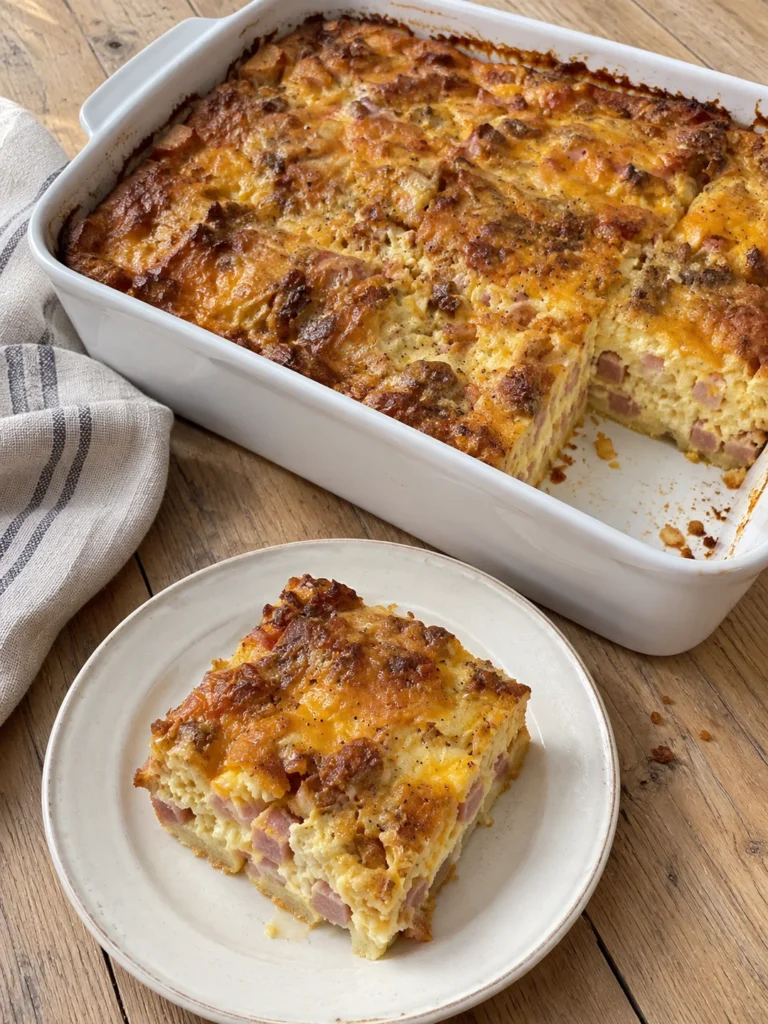
The Amish Breakfast Casserole that changed how I think about breakfast came out of a warming tray at Bird-in-Hand Farmers Market, on a Saturday in October when the parking lot smelled like woodsmoke and diesel. A woman named Miriam was cutting squares of it with a metal spatula and sliding them onto paper plates. Two dollars fifty, written in chalk.
I was there for the fall festival crowd and for the shoofly pie, honestly. The casserole was an afterthought.
The Stall at Bird-in-Hand
Miriam had a line four deep and she did not rush for anybody. She worked with her forearms more than her hands, the way people do when they have moved a lot of heavy pans in their life. Her tray was a battered 9×13 and it had clearly come out of a home oven, not a commercial one.
The square was hot enough that the paper plate went soft under it. I ate it standing near a stack of crates, and the thing that surprised me was the texture. Not eggy. Not rubbery. Somewhere between a soufflé and bread pudding, with pockets where the cheese had gone stringy and the ham sat in salty little bursts.
I asked her what was in it. She said bread, eggs, milk, ham, cheddar, a little dry mustard. Then she told me it sits overnight, and that was the whole answer really. I remember thinking that could not possibly be it.
What I Got Wrong for a Year
Back in my kitchen I made it four times before it worked. The first attempt was a disaster because I used fresh sourdough, sliced that morning, and it turned to paste under the custard. Wet in the middle, dry crust on top, the worst of both.
Then I made the mistake almost everyone makes. I looked up the recipe online and every version that came back was built on frozen hash browns with Swiss and cottage cheese. So I made that instead, thinking I had misremembered Miriam’s stall.
That version is real, but it is not the same dish. It comes from a recipe collected at an Amish inn and published in Taste of Home’s Quick Cooking in May of 2002, and it is what most Americans now picture when they hear the name. The older Pennsylvania Dutch farm version has no potato in it at all. Both go by Amish Breakfast Casserole and they are different constructions entirely.
If you do want to go the potato route, know that the single most common way a hash brown breakfast casserole goes wrong is undrained potatoes. Thaw them fully, blot them dry with paper towels, and do not skip that step.

Why the Overnight Soak Actually Matters
This dish came out of farm mornings where a woman with a large family needed something she could build after supper and slide into the oven before dawn. Eggs from the henhouse, milk from that morning, home-cured ham, cheese she made herself, and the loaf of bread from two days ago that had gone slightly hard. Nothing bought.
The overnight rest is not a convenience. It is the whole mechanism. The bread has to fully drink the custard, and eight hours is what it takes for cubes that size.
I gave it thirty minutes once, when I had people coming and I had forgotten. It baked up with a dry brown lid and a wet layer underneath that never set. Not worth serving.
What I Used
- 10 cups day-old bread, cubed with the crusts left on
- 2 cups diced cured ham, about 12 ounces
- 3 cups sharp cheddar, shredded from a block, not the bagged stuff
- 3 tablespoons all-purpose flour
- 1 teaspoon dry mustard
- 10 large eggs, out of the fridge for a bit first
- 3 cups whole milk
- 4 tablespoons butter, melted and cooled slightly, plus more for the dish
- 1.5 teaspoons salt
- Half a teaspoon onion powder
- Half a teaspoon black pepper, ground fresh
That is the whole list. Authentic Amish cooking of this dish uses almost nothing in the way of spice, and every loaded, heavily seasoned version I have seen is a modern addition. I get my ham from the counter at Grand Central Market downtown, sliced thick and diced at home, and I dry my bread on a sheet pan overnight on the counter if it is not already stale enough.
Building It on a Sunday Night
I make this on Sunday evenings, usually around nine, kitchen lights low and the window cracked because the oven has been off all day and the room still holds heat. Bon Iver, most times. It is a quiet job.
Butter the dish generously, corners included. Then bread in an even layer pressed down lightly, ham scattered over, cheddar covering everything. Do not toss it together. The layers matter and they read differently in the finished square.
Stir the flour and dry mustard in a small bowl and sprinkle that over the cheese. It thickens the custard and seasons it in one move, which is the kind of efficiency that tells you a farm cook designed this.
Whisk the eggs until they are one uniform color, then the milk, butter, salt, onion powder, pepper. Pour it slowly, corners inward, and press the bread down with the back of a spoon. Cover it tight and forget about it until morning.

The Cold Oven Thing
In the morning, uncover it and let it sit on the counter half an hour while you do everything else. Then here is the part I resisted for a long time. The dish goes into a COLD oven. You put it on the middle rack, then turn the oven to 350 and let it come up together.
I thought this was folklore. It is not. The slow rise lets the center set before the top gets any color, and the difference between that and a preheated oven is a browned lid over an underdone middle.
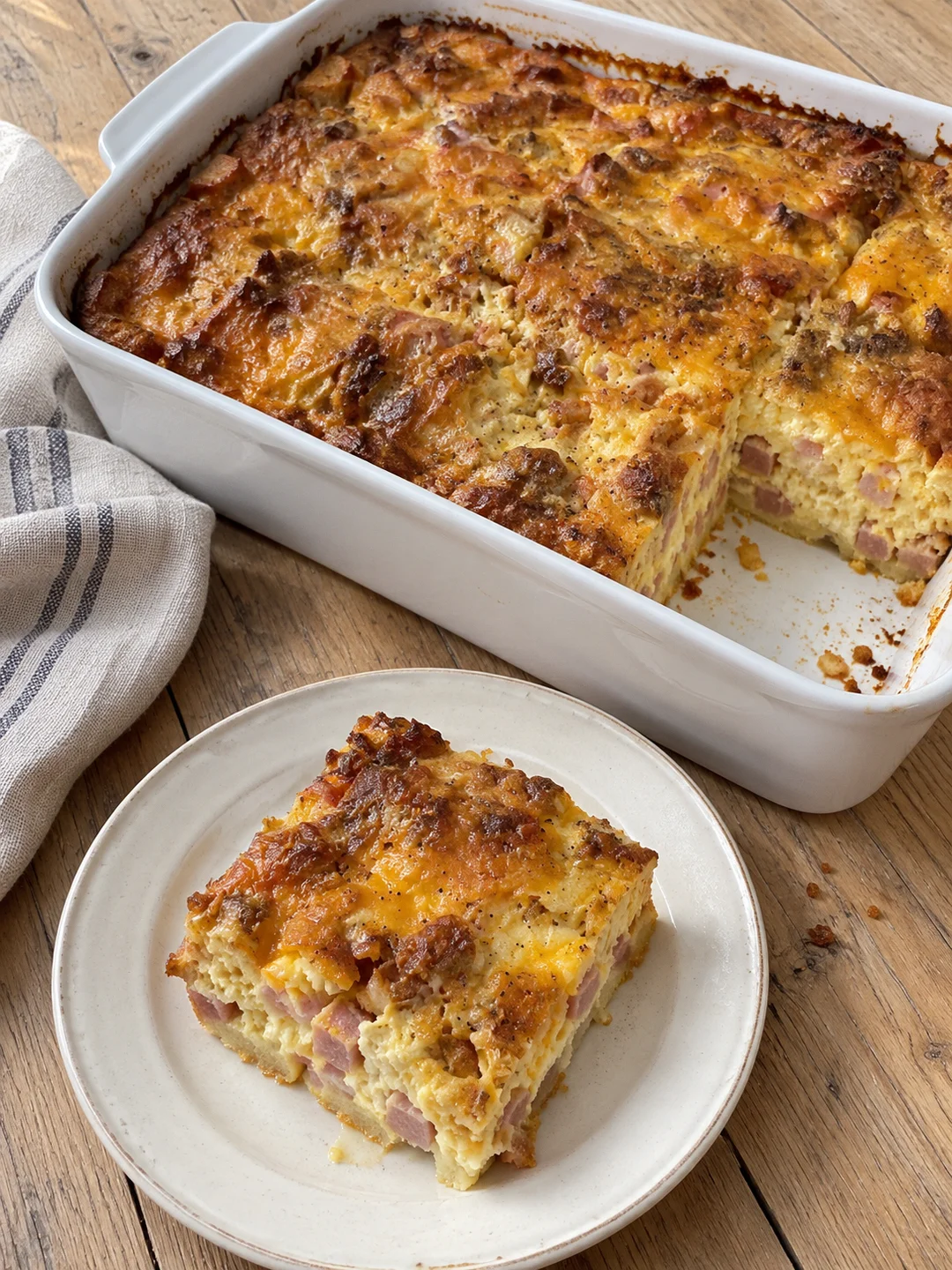
Fifty-five minutes to an hour. It is done when the top is golden, the edges have pulled back a little, and a knife in the center comes out clean with nothing loose clinging to it. Rest it ten minutes before you cut, because it firms as it settles and slices far cleaner.
Swaps and One Warning
Ham, bacon, or sausage are all traditional. Twelve ounces of fried crumbled bacon works beautifully, and sausage gives you a slightly richer result that I like on cold mornings.
Onions, peppers, mushrooms are all fine, but sauté them first. Raw vegetables release water and waterlog the custard. And do not add extra cheese or meat thinking it will improve things. It will not. The excess moisture keeps the middle from ever setting, which I learned by being greedy.
Serve it with fried potatoes or a bowl of fruit and coffee. That is roughly how it comes to the table on a farm morning.
Leftovers keep four days and I reheat them covered at 325 for twenty minutes. Though I will admit I eat a lot of it cold, straight from the pan, standing at the counter. Which is closer to how I ate it the first time anyway, on a paper plate in a cold parking lot in Lancaster County, wishing I had bought two.
Amish Breakfast Casserole
Ingredients
Equipment
Method
- Butter a 9x13 inch baking dish generously, corners included. Spread the cubed day-old bread across the bottom in an even layer, pressing it down lightly so it fills the dish.
- Scatter the diced ham evenly over the bread, then cover the whole surface with the shredded cheddar. Do not stir or toss; the layers matter.
- Stir the flour and dry mustard together in a small bowl, then sprinkle the mixture evenly over the cheese. This binds the custard and seasons it at the same time.
- In a large bowl, whisk the eggs until the yolks and whites are fully combined and the mixture is uniform in color. Whisk in the milk, melted butter, salt, onion powder, and black pepper.
- Pour the custard slowly and evenly over the entire dish, working from the corners inward so no spot stays dry. Press down gently on the bread with the back of a spoon to help it start absorbing.
- Cover tightly with plastic wrap or foil and refrigerate at least 8 hours or overnight. The bread must fully drink up the custard; this is what separates the dish from a rushed egg bake.
- In the morning, uncover the dish and let it sit on the counter for 30 minutes while you do the rest of your work.
- Place the uncovered dish on the middle rack of a cold oven, then set the oven to 350 F and turn it on. Starting cold lets the center set before the top browns.
- Bake 55 minutes to 1 hour, until the top is golden, the edges have pulled slightly from the sides, and a knife inserted in the center comes out clean with no loose custard clinging to it.
- Let the casserole rest 10 minutes before cutting. It firms up as it settles and slices far more cleanly. Cut into squares and serve warm.