
Butternut Squash Lasagna was not on the itinerary. The market tour in Mantova was supposed to be about cheese and salumi, and our guide Elisa had already walked us past three stalls in Piazza delle Erbe before she stopped at a small counter run by a woman named Nadia.
Nadia sold mostarda. Jars of it, apple and pear, the fruit suspended in syrup like something preserved for a museum. Elisa made us all taste a spoonful and I nearly spat it out, because nobody warns you that mustard oil hides inside sweet fruit.
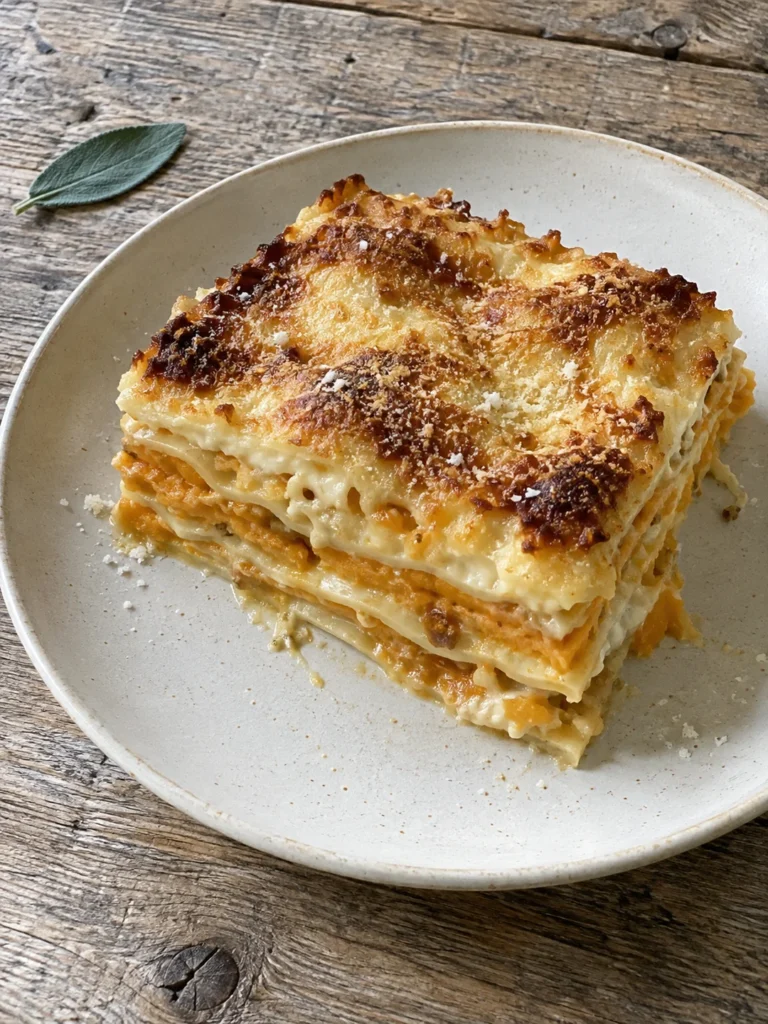
Then Nadia lifted a tray from under the counter with a square of lasagna on it. Orange, pale on top, still warm. She cut it into eight pieces and handed them around on scraps of paper, and the whole tour went quiet.
What Nadia Told Me at the Stall
It was sweet first. Then savoury, then a small mustard heat right at the back of the throat that made no sense with pasta and cheese and yet completely worked. I asked her what was in it and she pointed at the mostarda jars, then mimed crushing something.
Amaretti. Crushed almond biscuits, folded into squash puree. Elisa translated while Nadia talked, and I stood there with a paper napkin going soft in my hand, taking notes on my phone like a lunatic.
Nadia said the filling was the same one that goes into tortelli di zucca, the parcels Mantova and Ferrara put on the Christmas Eve table. Same filling, different shape. One gets sealed inside pasta, the other gets layered flat.
Why This Is Not the Squash Lasagna You Know
The version most of us have eaten, roasted squash with sage and mozzarella and a lot of cream, is a modern invention. It has no documented history. Somebody in an English-speaking kitchen decided squash and sage belonged together and everyone agreed, which is fine, but it is not what Mantova does.
Lasagne alla zucca comes out of the Po Valley, where squash landed after the Americas and got absorbed into the local kitchen completely. The sweet-savoury thing is not an accident either. It is a leftover taste from Renaissance court cooking at the Gonzaga court, and the region never gave it up.
There is no ragù. No tomato. It has nothing to do with lasagne alla Bolognese beyond the word lasagna, and it belongs to autumn and winter and family gatherings rather than a Tuesday.
I did not know any of that at the stall. I looked it up on the train to Verona that evening.
Getting It Home to My Kitchen
I brought four jars of Nadia’s mostarda back in my checked bag, wrapped in socks, and prayed. Three survived. The fourth broke somewhere over the Atlantic and I found out at baggage claim at LAX.
Since then I order mostarda di mele online, and I buy the amaretti at an Italian deli in Atwater Village where the owner keeps the crisp ones on a high shelf away from the soft chewy kind. Get the crisp ones. Soft amaretti turn to paste and you lose the almond crunch entirely.
The squash itself I get at the Sunday farmers market, and I look for the heaviest ones with a dull matte skin. Shiny skin means it was picked early. The Parmigiano is the only thing I refuse to compromise on, real DOP, grated the same day.
What I Used
- 3 lb butternut squash, halved and seeded, roasted cut side down
- Butter, some for roasting and 6 tbsp for the bechamel
- Crisp amaretti biscuits, about 16, crushed by hand
- Apple or pear mostarda, finely chopped, plus a spoonful of the syrup
- Flour and whole milk, warmed, for the bechamel
- Freshly grated nutmeg, split between filling and sauce
- Egg lasagne sheets, fresh if I can get them
- Parmigiano Reggiano DOP, grated
- Fresh sage, steeped in the sauce and then removed
- Salt, more than you think
The Step Where Most People Ruin It
The puree has to be dry. Not damp, not loose, dry. You roast the squash, blend it, and then you cook it in a skillet for ten or fifteen minutes while it spits at you, scraping the bottom, until a spoon dragged through the middle leaves a trail that holds for a second.
That is the whole puzzle. Squash cannot be sliced in raw and layered, and it cannot go in wet either. Water in the puree turns into water in the bake, and you cut into it twenty minutes later and orange liquid runs across the plate.
My first attempt did exactly that. I got impatient because I had a friend arriving at seven and I pulled the pan off the heat about six minutes too soon. The flavour was there. The structure was gone.
Now I stand at the stove with a podcast on and just wait it out. It is the least glamorous half hour in the recipe and the one that decides everything.
Assembling and Baking the Lasagne alla Zucca
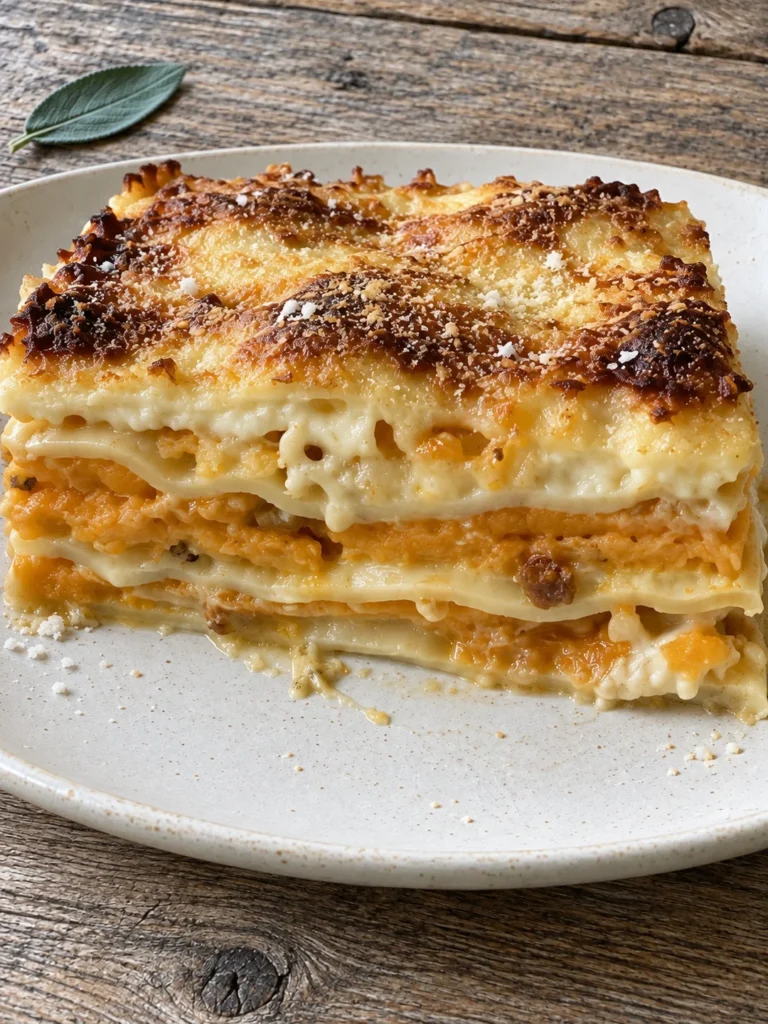
Taste the filling before it goes anywhere near pasta. It should read sweet, then savoury, then that faint mustard bite. If it is flat, more salt. If it is too sweet, another crumbled amaretto pushes it back toward almond and away from sugar.
The bechamel gets nutmeg and eight sage leaves steeped for ten minutes off the heat, then fished out. I leave them in longer some nights. Not on purpose, I just forget, and it is never a problem.
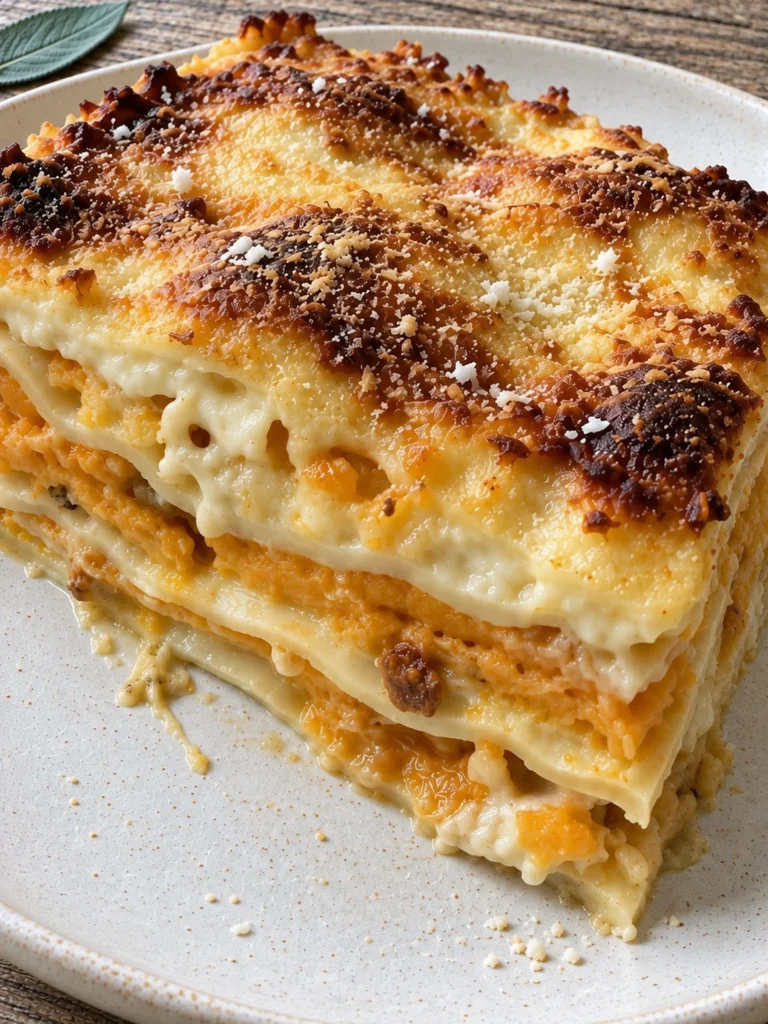
Keep the layers thin. Three rounds of filling, sauce and Parmigiano, then a final sheet of pasta with the last of the bechamel spread edge to edge and a full cup of cheese on top. Thin layers set properly. Thick ones slump.
Twenty minutes of resting after it comes out, minimum. Cutting early is the second most common way to wreck this butternut squash lasagna recipe, and I have done it more than once.
What It Tastes Like Now
Slightly better cold, from the fridge, standing at the counter the next morning. The sweetness settles down overnight and the almond comes forward. That is my honest preference and I know it is a strange one.
In Mantova this is a first course and a small square is the correct portion. I never manage that. I serve it as the whole meal with nothing beside it, which Nadia would probably find funny.
I think about that market most Novembers, when the squash starts showing up heavy and matte at the stalls here. A woman I met for four minutes changed what I cook every autumn. Some trips work like that.
Butternut Squash Lasagna
Ingredients
Equipment
Method
- Heat the oven to 400 F. Rub the cut faces of the squash halves with 1 tbsp of the butter and season with 1 tsp salt. Lay them cut side down on a rimmed sheet pan and roast 45 to 55 minutes, until a knife slides through the thickest part with no resistance and the edges have caramelized.
- Scoop the flesh away from the skins into a food processor and blend smooth, or mash hard by hand. Discard the skins.
- Melt the remaining 1 tbsp butter in a large skillet over medium heat. Add the squash puree and cook 10 to 15 minutes, stirring often and scraping the bottom, until it thickens and a spoon dragged through the center leaves a clear trail that holds for a second. This step decides whether your lasagna is creamy or watery. Do not rush it.
- Pull the pan off the heat. Stir in the crushed amaretti, the chopped mostarda and its syrup, half the nutmeg, and 1/2 tsp salt. Taste. It should read sweet first, then savoury, with a faint mustard heat at the back. Set aside to cool.
- Make the bechamel. Melt 6 tbsp butter in a heavy saucepan over medium heat, whisk in the flour, and cook 2 minutes until it smells faintly of toast but takes no color. Pour in the warm milk in a slow stream, whisking constantly.
- Cook the sauce 6 to 8 minutes, whisking, until it coats the back of a spoon. Whisk in the remaining nutmeg and 1/2 tsp salt. Drop in the sage leaves, cover, and let them steep 10 minutes off the heat, then fish them out.
- If using dried lasagne sheets, boil them 2 minutes short of the package time in well-salted water, then spread them flat on a towel. Fresh sheets go in as they are.
- Lower the oven to 350 F. Spread a thin layer of bechamel across the bottom of a 9x13 inch baking dish. Lay down a sheet layer of pasta.
- Spread a third of the squash filling over the pasta, spoon over a quarter of the remaining bechamel, and scatter 1/2 cup Parmigiano. Repeat twice more, keeping the layers thin and even.
- Finish with a final layer of pasta, the last of the bechamel spread edge to edge, and the remaining 1 cup Parmigiano over the top.
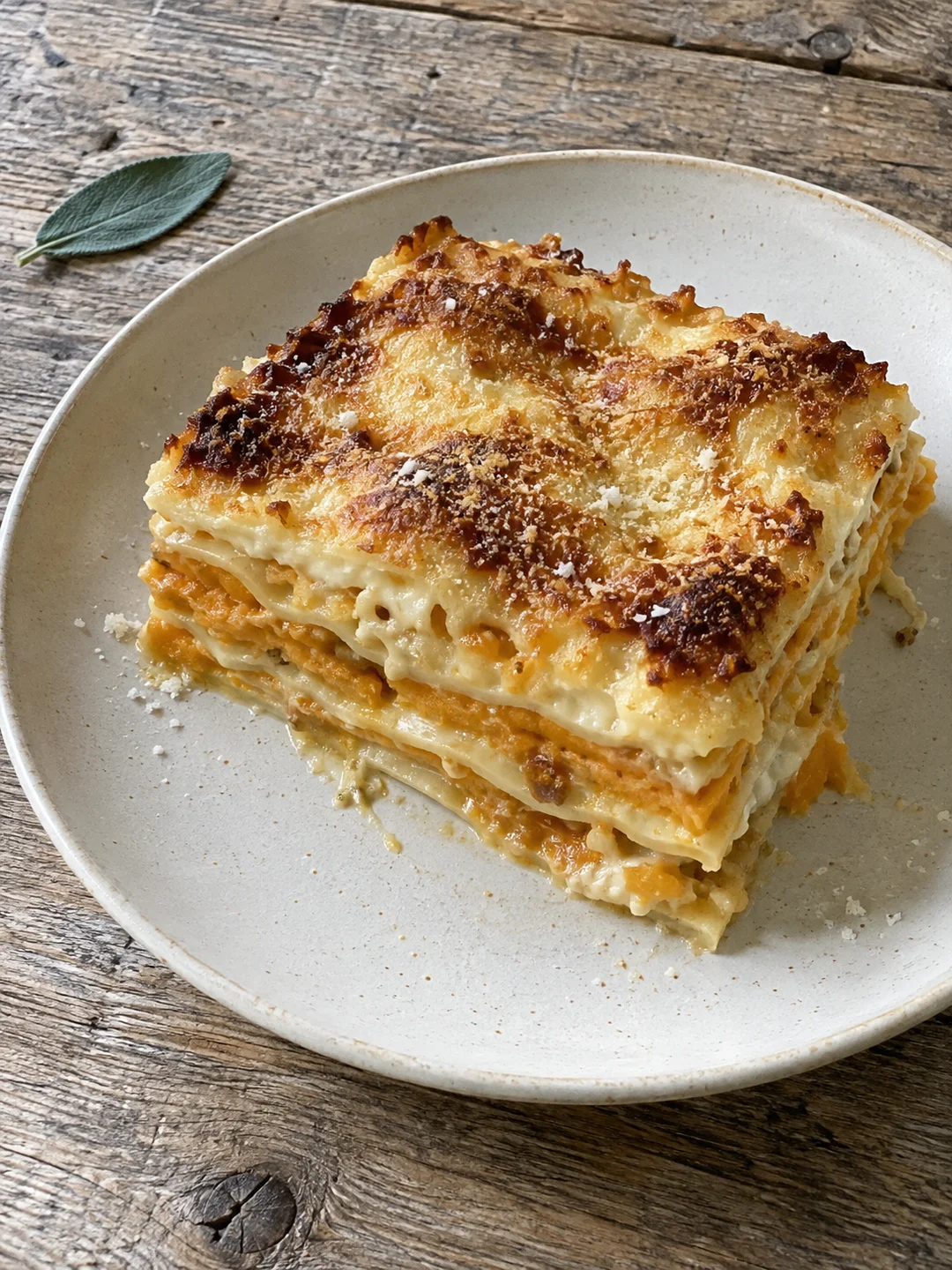
- Bake 25 to 30 minutes, until the top is golden and lightly crusted and the sauce bubbles at the corners. If the surface is still pale, run it under the broiler for 90 seconds.
- Rest the lasagna 20 minutes before cutting. It needs that time to set, and the sweet-savoury flavour comes through more clearly just below piping hot.