
Potato Latkes were the reason I ended up in a stranger’s kitchen in Kazimierz on a December night, wearing someone else’s apron, being told I was doing it wrong. Kraków in winter is dark by four in the afternoon. I had gone for a festival and stayed for the food.
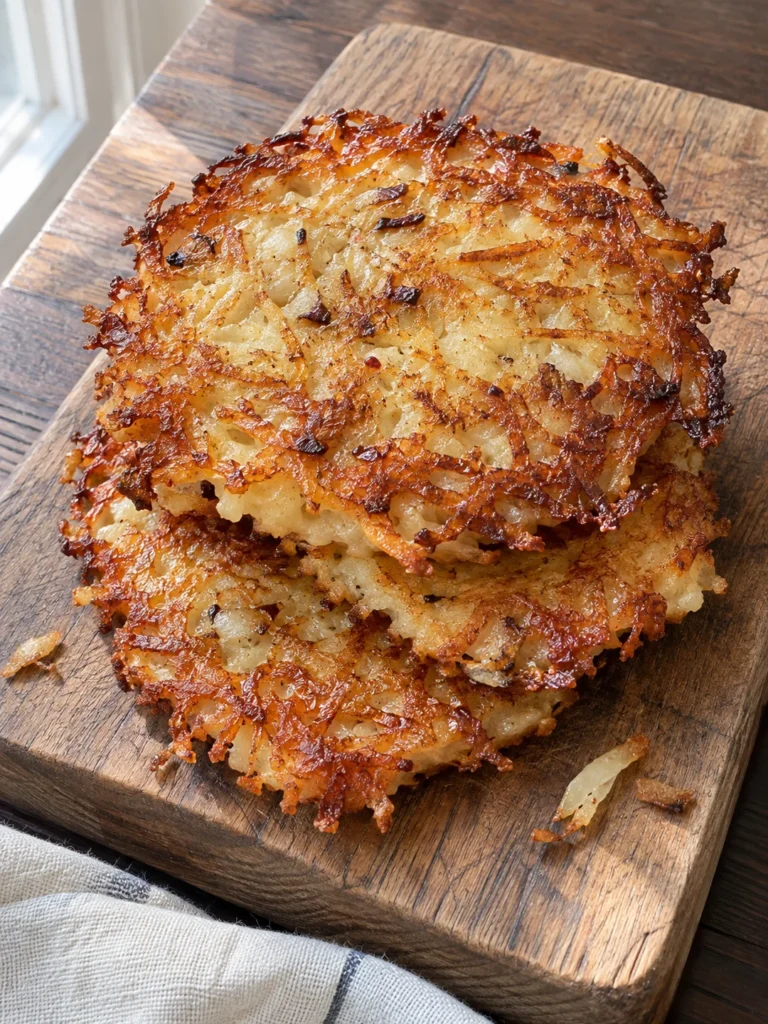
A woman named Halina, the mother of a friend of a friend, opened the door and handed me a box grater before she asked my name. Her kitchen was narrow, one window fogged from the inside, a radiator ticking under it. She wore a cardigan the color of dried mustard with the sleeves pushed to her elbows.
The Kitchen in Kazimierz
She did not speak much English and I speak about eleven words of Polish, so the whole lesson happened through her hands. She grated a potato. Then an onion. Then a potato. Then she looked at me until I understood the alternating was not decorative.
The onion juice keeps the potato from going gray. Halina made a face at the color of my first bowl, which had sat too long while I fumbled with the grater, and dumped it. Just dumped it, into the bin, without ceremony. Then she started again with me watching.
The wringing was the part she cared about. She twisted the towel over the sink with her whole upper body until the tendons stood out on her forearms, and when I took a turn she shook her head and took it back. Squeeze until your hands ache. Then squeeze again.
What I remember most is the smell of hot chicken fat in a small room with the window shut against the cold.
Latkes Are Younger Than You Think
Here is the thing nobody tells you while you are standing over the pan. The potato latke is not an ancient food. The original latkes were fried cheese pancakes, ricotta or curd, fried in poppyseed oil and served with fruit preserves, a tradition that spread among Jews in Italy from the fourteenth century and travelled north with Sicilian Jews pushed into Ashkenaz.
The potato only became a staple in Eastern Europe in the mid-1800s. After the crop failures of 1839 and 1840 in Ukraine and Poland, potatoes went into the ground in enormous quantity to stave off famine, and they became cheaper than wheat flour. So the potato latke is a nineteenth-century invention of Jewish peasants, not a relic of the Maccabees.
The Hanukkah part is the oil. Not the potato. Eight nights of frying because one day’s worth of oil burned for eight, and everything else is just what was available and affordable at the time.
People also call them hash browns, or rösti, or Kartoffelpuffer, and they are none of those. Rösti is potato alone, often parboiled, with no egg, no flour, no onion. The egg-and-matzo-meal batter and the grated onion make a latke its own thing entirely.
What I Used
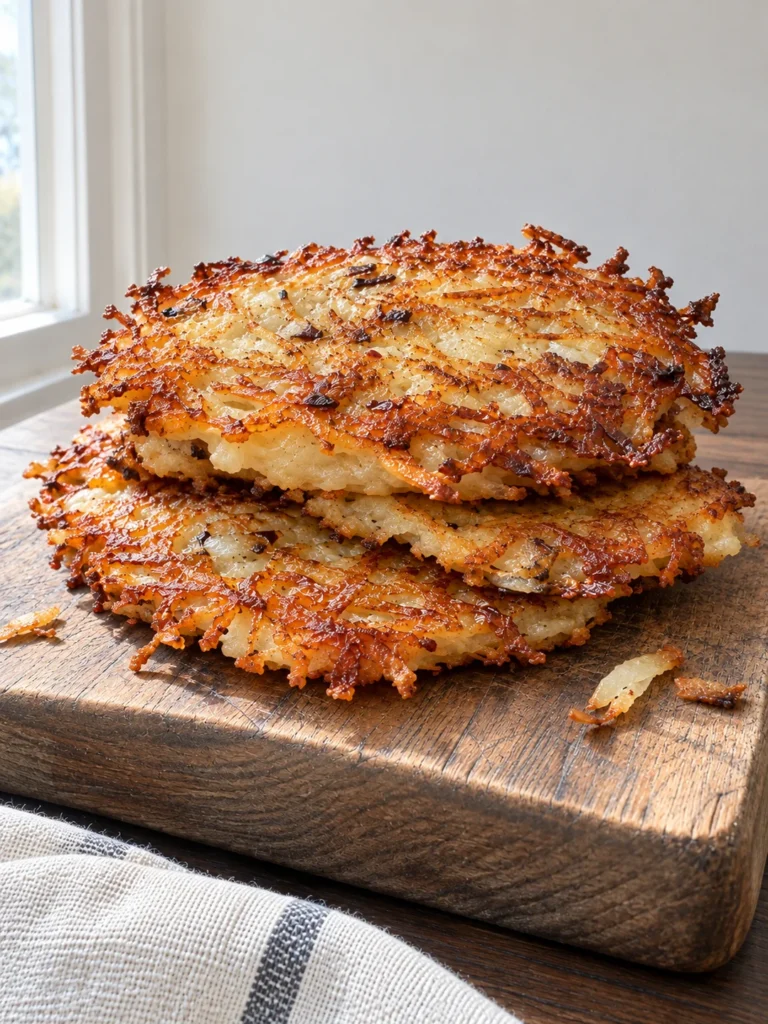
- Two pounds of russet potatoes, peeled, about four medium ones
- One medium yellow onion, peeled and ready to alternate with the potato
- Two large eggs, beaten until frothy
- A third of a cup of matzo meal, or all-purpose flour if that is what is in the cupboard
- Kosher salt, a teaspoon and a half, plus more for finishing
- Half a teaspoon of black pepper, ground fresh
- A cup of schmaltz for frying, rendered chicken or goose fat
Bringing Potato Latkes Home to My Kitchen
The first thing I had to solve was fat. Halina had schmaltz in a jar in her fridge the way I have olive oil on the counter, rendered from her own birds, and I had none. I now get mine from the butcher counter at the kosher market on Pico, and if they are out I render it myself from chicken skin over low heat while I do something else.
It is worth the trouble. Schmaltz tastes like schmaltz and neutral oil tastes like nothing. But if you cannot find it, use a high smoke point oil and do not apologise for it. The latke will still be good, just less itself.
The potatoes were the second thing. I tried these with Yukon Golds early on because that was what was in the house, and they were fine, softer, a little sweeter, less shattery at the rim. Russets are the best potatoes for latkes and I say that after having gotten it wrong on purpose to check. Higher starch, drier flesh, edges that go lacy instead of limp.
The trick Halina never explained because she did it automatically. Let the drained potato liquid sit for two minutes before you throw it out. A chalky pale layer of starch settles at the bottom of the bowl. Pour off the water, scrape that starch back into the potato, and it binds better than any extra spoonful of matzo meal.
The Frying, Which Is the Whole Job
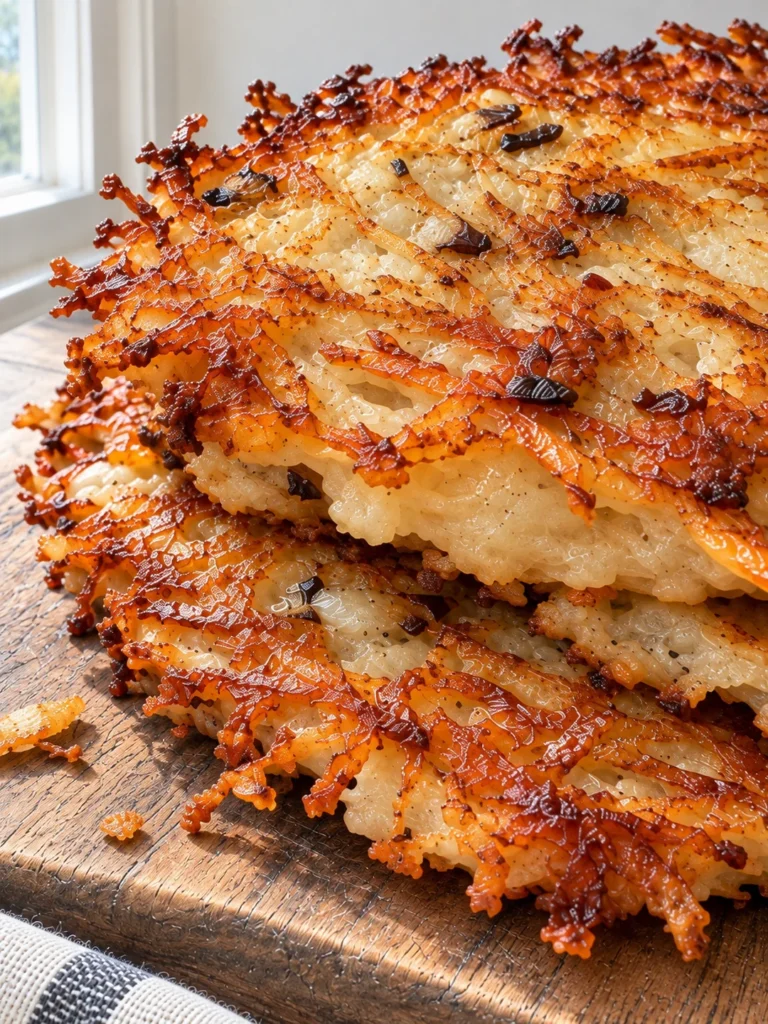
Quarter inch of fat, medium-high, and a shred of potato dropped in should sizzle hard and immediately. Not politely. Hard.
Three or four at a time, no more. I crowded the pan the first winter I made these on my own and got sixteen pale sad discs that steamed instead of fried, and I ate every one of them standing at the stove anyway because it was raining and I was not going to start over at nine at night. Four to five minutes a side. You want the edges dark, almost too dark, because that ragged brown rim is the entire point.
Salt them the second they come out, while the surface is still glossy, onto a wire rack and never onto paper towels. Paper towels trap steam under the latke and undo everything you just did. My rack is warped on one corner from a sheet pan incident I do not want to discuss and it works fine.
Applesauce or sour cream is a real argument and also a joke people enjoy having. There is a practical root to it, since kosher law keeps dairy away from meat, so applesauce is what goes on the table when latkes come alongside a brisket. Halina put out sour cream. I put out both and let people decide, which is probably a cop-out.
What Changed and What Did Not
I do not do anything clever to these. No parmesan, no scallion, no sweet potato version. I thought about it once and then thought better of it.
The only real adjustment I have made is timing. I fry in two rounds now, early evening, and reheat the first batch on a wire rack in a 400 degree oven for six minutes right before people eat. Never the microwave. The microwave turns a latke into a wet napkin.
Cold ones from the fridge the next morning, eaten over the sink, no plate. Honestly not far off the fresh ones.
I have not been back to Kraków since, though I think about that kitchen every December when the light goes early here too. Halina corrected me maybe six times in two hours and I still hear her voice at the sink when I am wringing the towel. That is the part of a recipe you cannot write down.
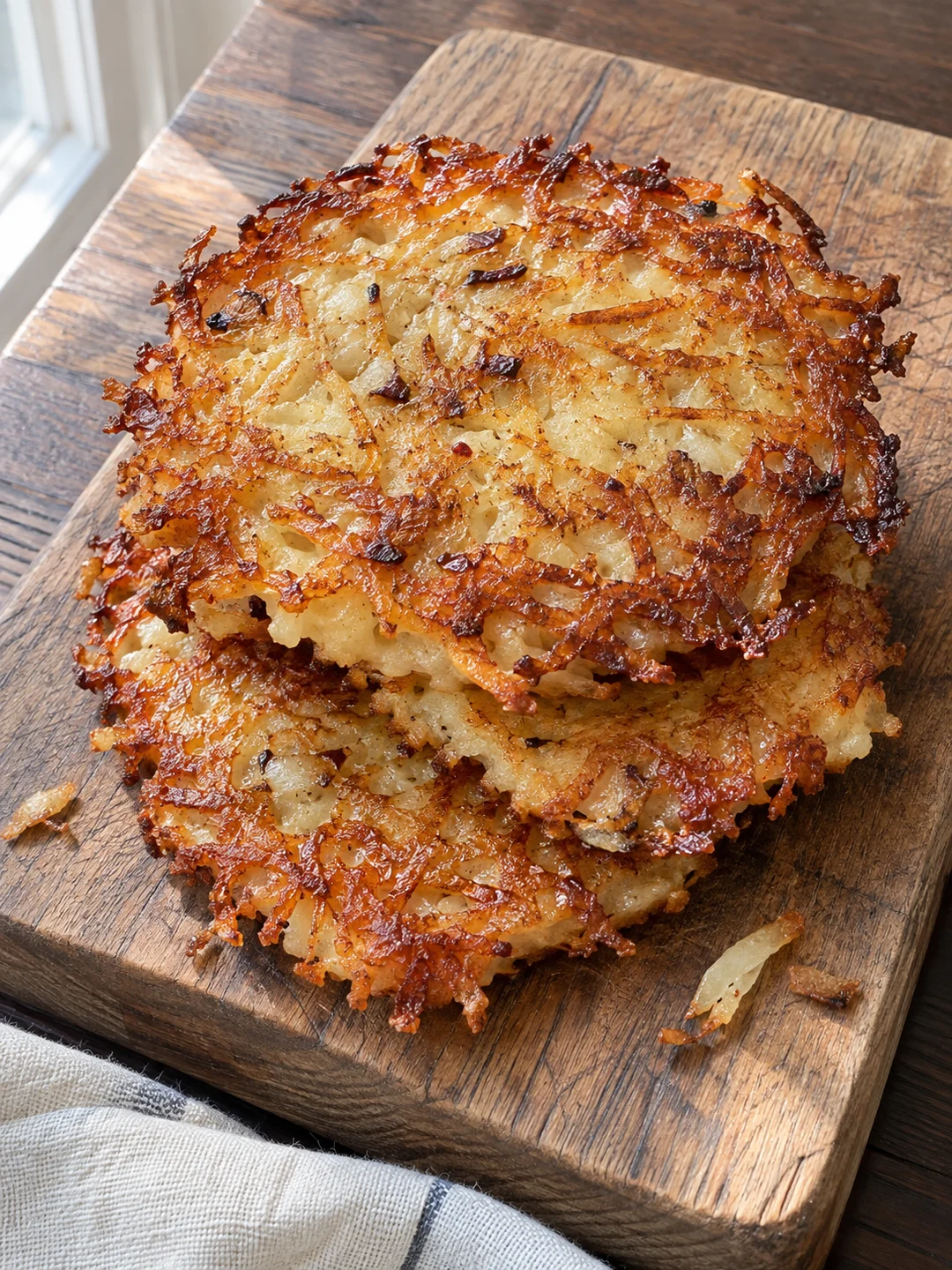
Potato Latkes
Ingredients
Equipment
Method
- Set a wire rack over a sheet pan next to the stove. Line a large bowl with a clean kitchen towel.
- Grate the potatoes on the coarse holes of a box grater, alternating with the onion so the onion juice coats the potato and keeps it from graying. Work quickly.
- Pile the grated potato and onion into the towel. Gather the corners and twist hard over the sink, wringing out every drop of liquid you can. Catch that liquid in a bowl or measuring cup instead of the drain.
- Let the drained liquid stand for 2 minutes. A chalky white layer of potato starch will settle on the bottom. Pour off the water and scrape the starch into the mixing bowl.
- Add the wrung potato and onion to the starch. Fold in the beaten eggs, matzo meal, salt, and pepper. Mix just until everything holds together. The batter should be shaggy and barely wet.
- Melt the schmaltz in a heavy skillet over medium-high heat until it reaches a depth of about one quarter inch. It is ready when a shred of potato dropped in sizzles hard immediately.
- Drop heaping tablespoons of batter into the fat and flatten each one with the back of the spoon to about 3 inches across and a quarter inch thick. Fry 3 or 4 at a time. Do not crowd the pan.
- Fry 4 to 5 minutes on the first side, until the edges are lacy and deeply browned, then flip and fry another 4 minutes.
- Lift onto the wire rack and salt immediately while the surface is still glossy with fat.
- Top up the schmaltz between batches and let it come back to temperature before adding more batter. Serve hot, right away.