
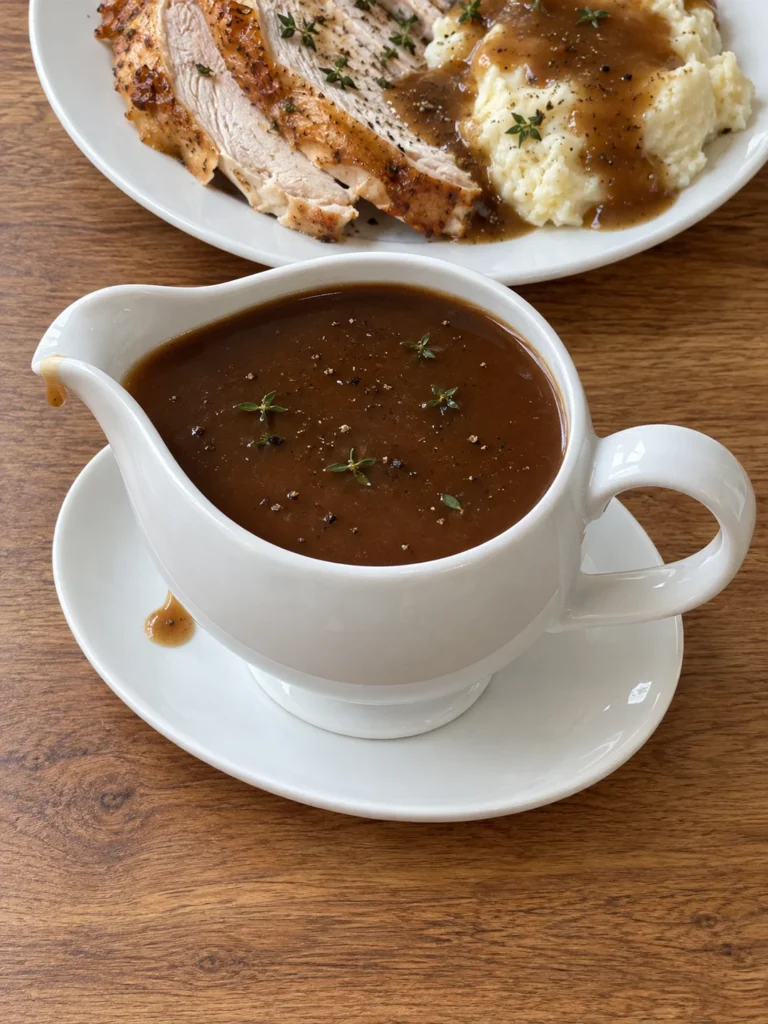
Make-Ahead Turkey Gravy was not what I expected to carry home in my head after a Thursday morning food walk through Borough Market in London. I had signed up for cheese and a sausage roll. I left with a lecture about turkey wings.
The guide was a woman named Dervla who walked fast and talked faster, eleven of us trailing after her past the fish counters in the cold. She had a route and a schedule. The butcher stall was meant to be a two-minute stop.
The Butcher at Borough Market Who Wrecked the Schedule
His name was Gareth and he was tying up a crown roast for the person ahead of us, so we stood there and waited. Dervla checked her watch twice. Then someone in our group pointed at a crate of turkey wings sitting next to all the pretty cuts and asked who on earth buys those, and the schedule was finished.
Gareth said the wings and the drumsticks are the parts people bin, and they are the parts that make the sauce. He picked one up and showed us the joint, said you hack it right there so you get two-inch pieces, because more pieces means more surface and more surface means more brown. Flat in the pan. Never piled up, or it steams instead of roasting.
Then he talked about salt, which he was weirdly firm about. Season at the end, not at the start, because you are going to reduce that liquid by half and anything you salt early comes back doubled. And then he talked about the rest.
That was the bit that got me. The bird needs thirty or forty minutes out of the oven before you carve, and that rest is exactly when the drippings finally exist, and also exactly when you have twelve other things happening. Which is the whole argument, he said, for building your sauce days earlier and leaving only the drippings for the day itself.
Six Hundred Years of Gravy, Briefly
I looked it up on the flight back because I could not let it go. The word shows up in Middle English as gravé, borrowed out of medieval French cookery writing, and the earliest English mention is in The Forme of Cury around 1390, where it just meant the juices that ran out of roasting meat. No flour, no roux, no boat.
Thickening those juices with a cooked flour-and-fat roux came later, in English and French kitchens, and that technique crossed the Atlantic and landed on the Thanksgiving table alongside the turkey and the mashed potatoes. So turkey gravy is not an American invention, even though America is where it became the connective tissue of an entire holiday plate and the thing families argue about hardest.
The make-ahead version is genuinely modern, though. It came out of American home kitchens and test kitchens solving two problems, the twenty-minute panic while the bird rests, and the rise of deep-fried and spatchcocked turkeys that hand you almost no drippings at all. It is not a shortcut. Built on roasted turkey parts and a stock reduced for an hour and a half, it tastes deeper than anything you can scramble together in ten minutes.
What I Used
- Turkey wings and drumsticks, about 3 pounds, hacked at the joints into two-inch pieces
- The neck and giblets, heart and gizzard only, because the liver goes bitter and ruins the whole pot
- Two yellow onions, quartered, skins left on for color
- Carrots and celery in fat two-inch chunks
- Six cloves of garlic, smashed, still in their papers
- Vegetable oil for tossing
- A cup of dry white wine for the pan
- Ten cups of low-sodium turkey or chicken broth
- Thyme sprigs and a couple of bay leaves
- Six tablespoons of the turkey fat you skim off the chilled stock, butter to top it up if you come up short
- Half a cup of all-purpose flour
- Kosher salt and black pepper, added at the end, per Gareth
- Defatted pan drippings on the day, if your bird gives you any
Make-Ahead Turkey Gravy in My Kitchen
I get the wings at the Hollywood farmers’ market on Sunday, where the poultry guy will joint them for me if I ask early enough. Everything else is pantry. There is nothing to import here, which is a nice change.
Inside the roasting pan at 450 F the wings do something I never get tired of watching. The skin tightens, the fat renders out and starts frying the vegetables sitting in it, and the sugars in the onion and carrot hit the proteins on the turkey skin and go from gold to rust to something close to mahogany. Underneath, the juices that escape hit the hot metal and dry into a dark varnish. That varnish is the whole point. Take it further than feels safe.
Then the wine goes in over a burner and the pan hisses and the varnish lifts in sheets when you scrape. I use a beat-up wooden spoon with a scorched edge for this. It is the only job that spoon is good for now.
In the stockpot with the broth it should barely tremble, never roll. A hard boil pushes fat and protein into the liquid and you get cloudy stock, so keep the surface lazy and skim the gray foam off in the first fifteen minutes. An hour and a half later you are down to around five cups, strained, and into the fridge overnight where the fat sets into a solid pale cap you can lift off with a spoon.
The roux is the only place you can really lose. Fat first, shimmering, then the flour whisked in, and you stand there two to four minutes while it stops smelling like raw flour and starts smelling toasty, the color moving to honey. I scorched one once answering the door. Threw it out, started over, learned.
Warm stock, in a thin stream, into the cooked roux, whisking the whole time. That order is the entire anti-lump rule. Lumps do not come from making gravy ahead, they come from dry flour hitting hot liquid or cold stock shocking a hot roux.
Drippings, Swaps, and the Batch That Looks Broken
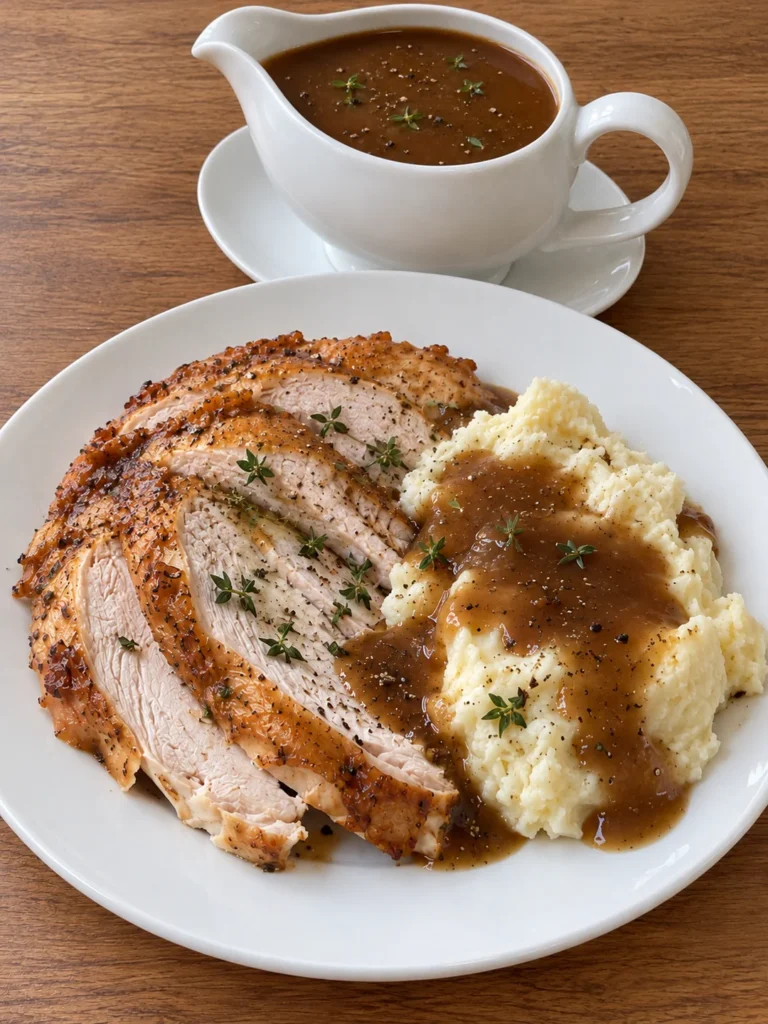
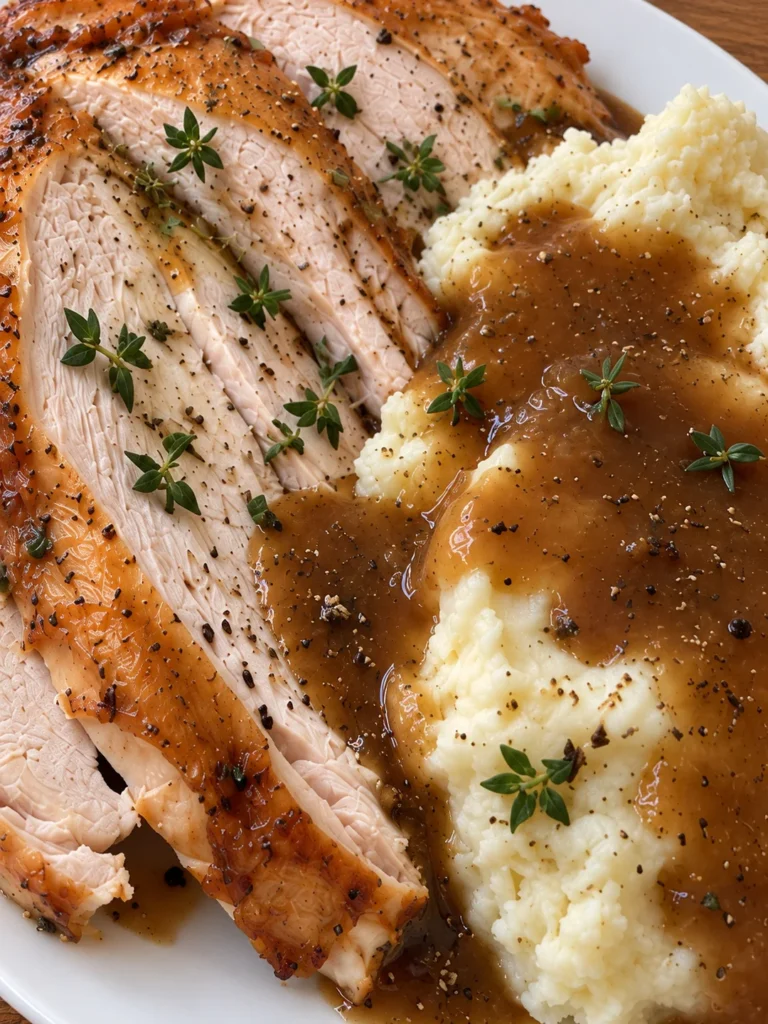
Straight out of the fridge, cold, it looks thin and separated and wrong. It is not wrong. Full rolling boil, whisk hard, and it comes back glossy in under a minute. Then the defatted drippings go in, two minutes more, and a last taste for salt.
If you deep-fry or smoke your bird there will be no drippings at all. Skip them, add an extra pinch of salt, and the stock carries it. Drippings are a finish, not a foundation. For gluten-free, leave the roux out entirely and whisk three tablespoons of cornstarch slurried in cold water into the warm simmering stock.
Also, this is not giblet gravy. That one has chopped giblets and neck meat in it, and in the South a chopped boiled egg, and it is its own heritage thing passed down in families. Mine is smooth. I did consider the Cognac splash at the end. Actually no, the stock was already loud enough without it.
I made my first batch on a Tuesday night in a quiet kitchen with rain finally hitting the window, which almost never happens here in November. The thing I keep thinking about is that I was at the table when everyone sat down. Gareth was right about the rest.
Make-Ahead Turkey Gravy
Ingredients
Equipment
Method
- Preheat the oven to 450 F. Toss the turkey wings, drumsticks, neck, and giblets with the vegetable oil in a large roasting pan, then scatter in the onions, carrots, celery, and garlic. Spread everything in a single layer so it roasts rather than steams.
- Roast 1 hour to 1 hour 30 minutes, turning the parts once at the halfway mark, until the meat and vegetables are deeply browned and a dark crust of fond has formed on the bottom of the pan. Browning here is where the color and flavor of your finished gravy comes from, so take it further than feels comfortable.
- Transfer the roasted parts and vegetables to a large stockpot. Set the roasting pan over medium-high heat on the stovetop, pour in the white wine, and scrape hard with a wooden spoon for 2 to 3 minutes until every bit of fond lifts and the wine reduces by half. Pour it all into the stockpot.
- Add the broth, thyme sprigs, and bay leaves. Bring to a bare simmer, then lower the heat so the surface barely trembles. Simmer uncovered about 1 hour 30 minutes, until reduced by roughly half to about 5 cups. Skim any gray foam in the first 15 minutes.
- Strain through a fine-mesh sieve into a large bowl, pressing lightly on the solids to get the last of the liquid, then discard the solids. Cool, then refrigerate at least 4 hours or overnight so the fat sets into a solid cap on top.
- Lift off the solid fat and reserve it. Measure 6 tablespoons; if you fall short, make up the difference with unsalted butter. You should have about 5 cups of defatted stock. Warm the stock in a saucepan until steaming but not boiling, and keep it warm beside the stove.
- Heat the reserved turkey fat in a heavy-bottomed saucepan over medium heat until it shimmers. Whisk in the flour and cook, whisking constantly, 2 to 4 minutes, until the roux smells nutty and turns the color of honey to light golden brown. Do not let it scorch.
- Add the warm stock in a thin, steady stream, whisking hard the whole time. Start with just a cup to make a smooth paste, then pour in the rest. The warm-stock-into-cooked-roux order is what keeps it lump-free.
- Bring to a gentle simmer and cook 10 minutes, whisking often, until the gravy thickens enough to coat the back of a spoon. Season with the salt and pepper, tasting as you go. Cool to room temperature, then refrigerate up to 3 days or freeze in portions.
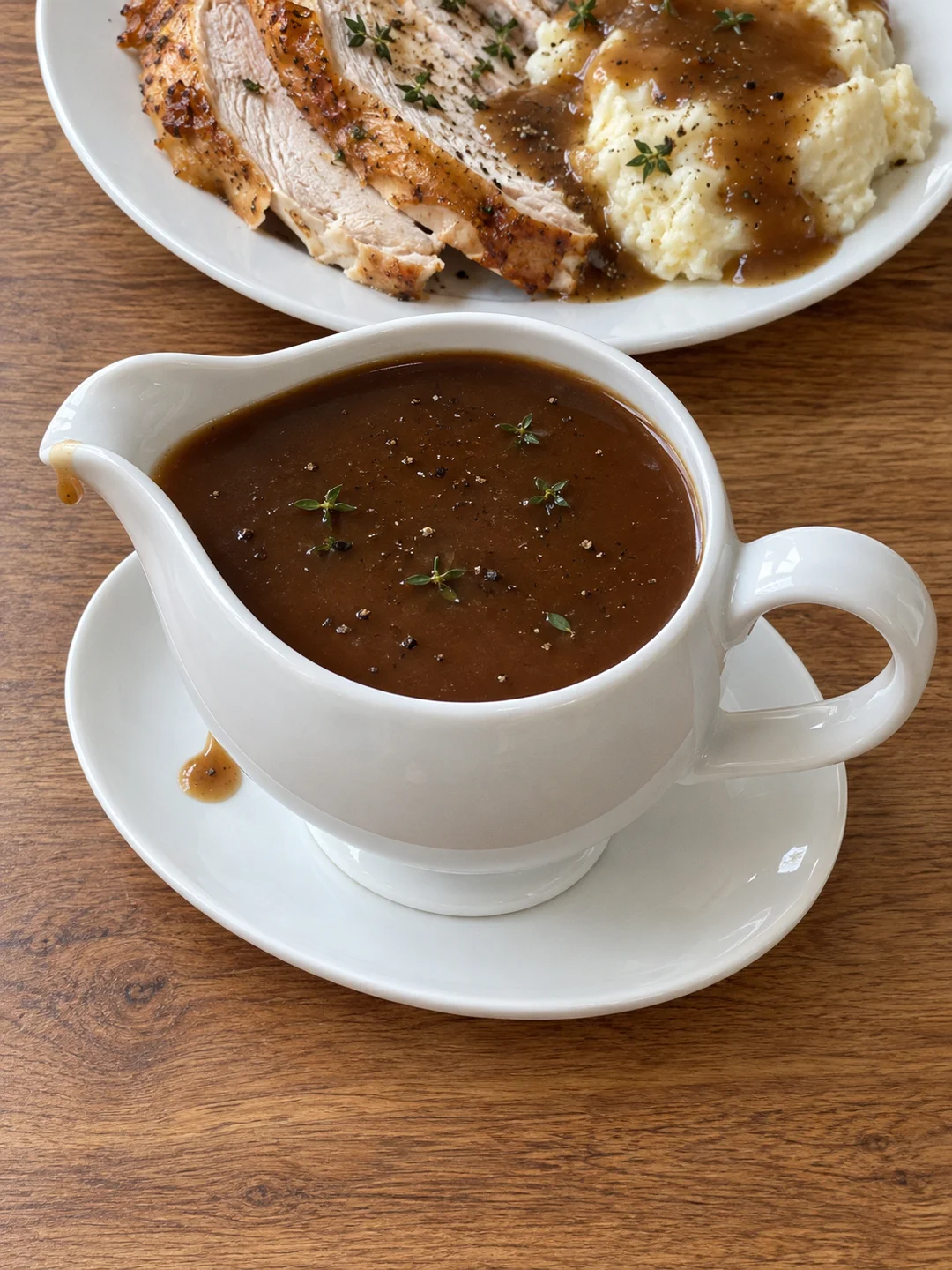
- On the day: scrape the cold gravy into a saucepan and bring it to a full rolling boil, whisking vigorously to bring it back together. Whisk in the defatted pan drippings from the roasted bird, simmer 2 minutes, taste once more for salt, and pour into a warmed gravy boat.