
The first Southern Sweet Potato Pie I ever ate came on a paper plate at a roadside counter on Highway 17, past Walterboro, South Carolina. I had been driving since five in the morning and I was not even hungry for dessert. I ordered it because the handwritten sign out front said the pies were still warm.
Four stools, a window unit rattling against the heat, and a coffee pot that had clearly been on since breakfast. Nobody was in a hurry.
I have thought about that slice far more than I expected to.
The Roadside Counter Outside Walterboro
The woman working the counter introduced herself as Miss Loretta and asked where I was headed. Charleston, eventually, with no particular reason to arrive at any specific hour. She cut the slice herself and set it down with a fork already on the plate.
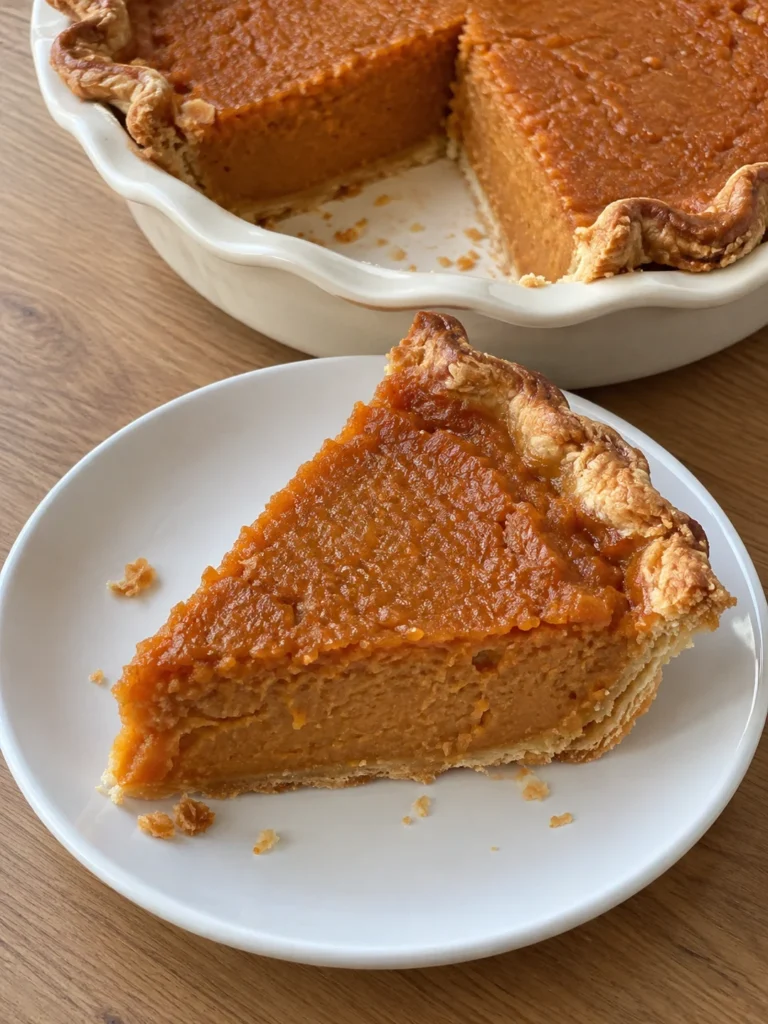
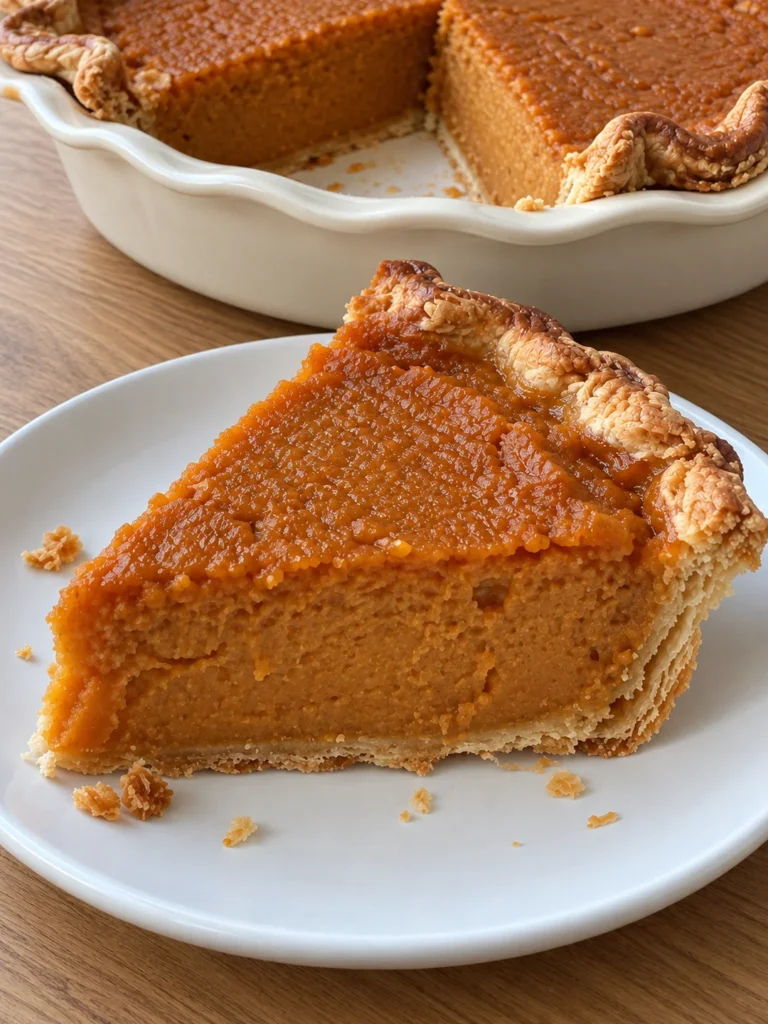
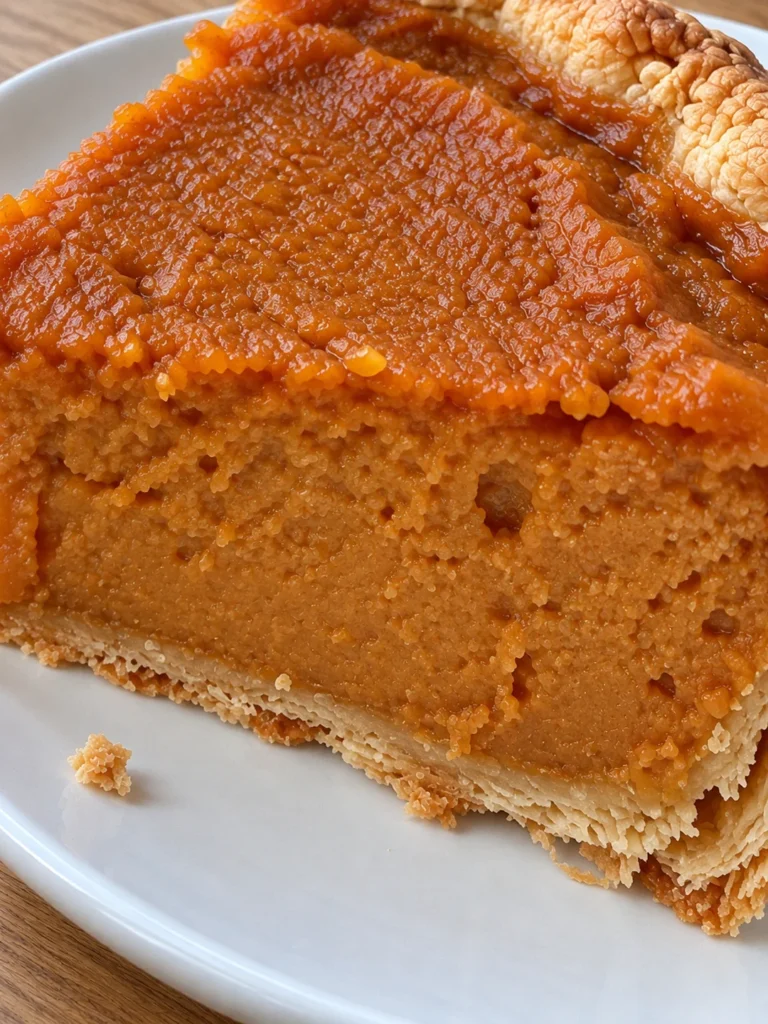
The filling was dense and smooth rather than fluffy, the color of dark caramel, and it tasted more like sweet potato than like spice. When I asked how she got it that way she said she roasts them whole and never boils them, same as her mother did. People who boil them, she told me, end up with soup in a crust.
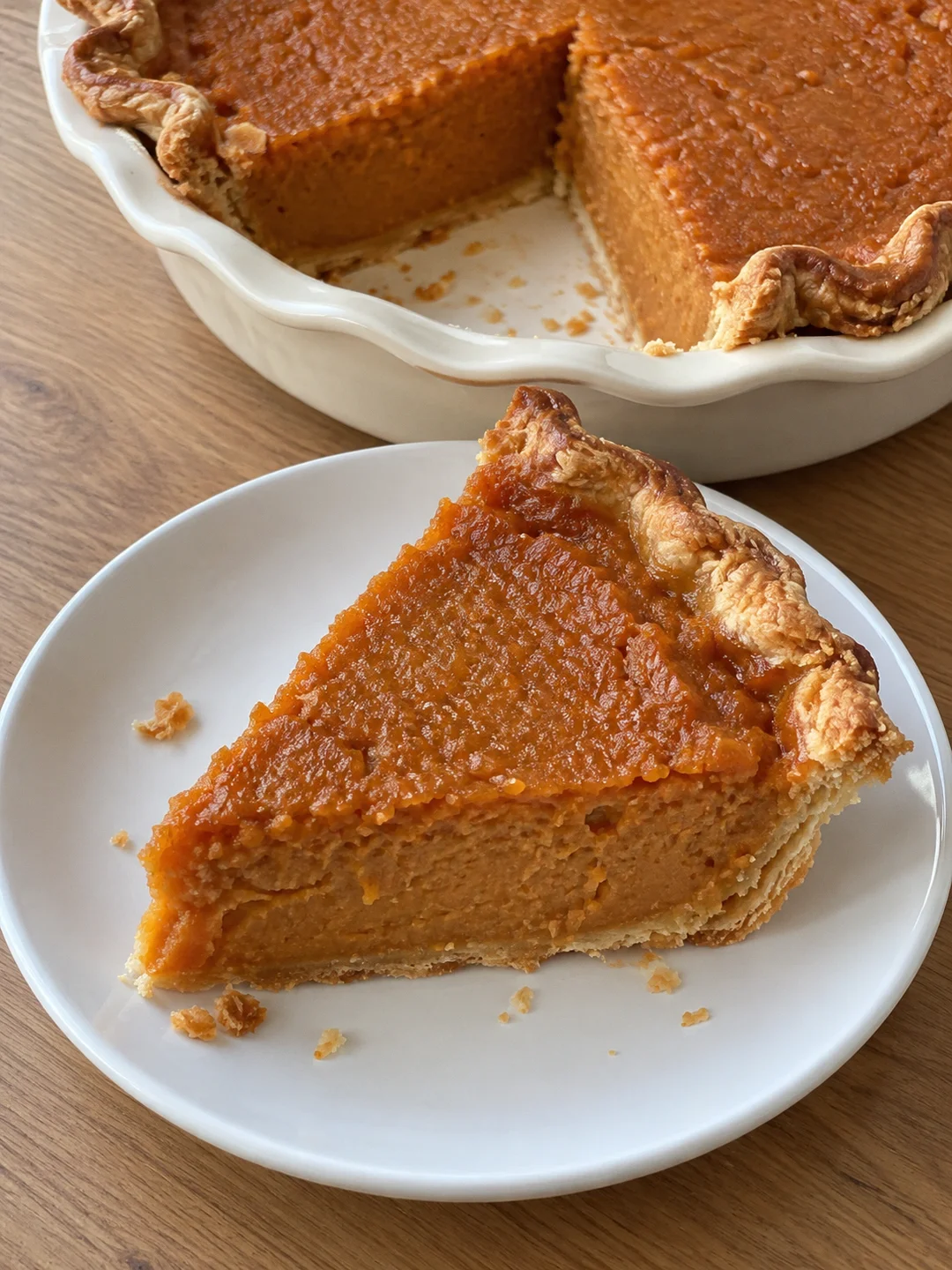
No top crust, no lattice, no decorative anything. Just one flaky edge crimped by hand and a flat open face with a faint sheen on it. I ate it in about ninety seconds and ordered coffee so I could sit there a little longer.
Why Sweet Potato Pie Is Not Pumpkin Pie With a Swap
I read about it properly once I got home, because I had assumed, wrongly and a little lazily, that it was a Southern substitute for pumpkin. It is older and more its own thing than that. Sweet potato pie came out of the colonial American South, where European custard and pastry technique met a root that was native to the Americas and already long cultivated by Native peoples.
Enslaved Africans took up the sweet potato as a stand-in for the yams of West Africa, and the earliest versions were as plain as mashed sweet potato cooked at the edge of a hearth. The first known published American recipe is credited to Abby Fisher, a formerly enslaved cook born in South Carolina, in her 1881 book of Southern cooking, one of the earliest cookbooks by an African American author. The pie went down through generations of Black Southern families and sits at the center of soul food, church suppers, Juneteenth, family reunions, and the repast after a funeral.
A sweet potato pie carries its own lineage, older than the Thanksgiving table it usually shows up on. It also needs much less spice than people think, because the vegetable is already sweeter and silkier than pumpkin and will happily lead. And what American cans label as yams are almost always sweet potatoes, not true African yams, which is a small thing that turns out to matter.
What a Charleston Market Tour Taught Me About the Filling
Two days later I took a four-hour class in Charleston that started, chaotically, at the farmers market on Marion Square. Our instructor, Renée, moved through the stalls at a speed none of us could match, holding up garnet sweet potatoes and rejecting most of them. She wanted stubby and heavy, not long and tapered, and she would not be argued with on the nutmeg question.
In the kitchen she did two things I would not have thought of. She beat the hot mashed potato with a mixer for two full minutes before anything else went in, until the strands disappeared and the mash went glossy. Then she measured cinnamon, nutmeg and ginger separately into her palm and said the pre-mixed pumpkin blend turns every pie in America into the same pie.
That is the part I carried home. Not the recipe exactly. The reasoning behind it.
What I Used
- Fresh sweet potatoes, about two pounds, garnet or jewel, never canned
- One single all-butter pie crust for a nine inch plate, chilled hard
- Unsalted butter, softened, mashed in while the potato is still hot
- Light brown sugar, packed, with a smaller amount of granulated
- Three large eggs at room temperature
- Evaporated milk, not cream, not fresh milk
- Vanilla extract, a generous two teaspoons
- Ground cinnamon, nutmeg and ginger, measured separately
- Salt, half a teaspoon, which sounds like nothing and is not nothing
Baking Southern Sweet Potato Pie in My Own Kitchen
The potatoes are where my version diverges most. The ones I get on Wednesday mornings at the farmers market a few blocks from my apartment are drier and a shade sweeter than what Renée was working with, so I roast them at 375 for closer to sixty minutes than fifty and I wait for syrup to actually bubble out of the fork holes. If there is no syrup on the pan, it is not done, however soft the center feels.
I boiled them once, early on, because I was in a hurry and told myself it could not matter that much. It matters. The custard never set properly and the whole thing tasted faintly of water.
Butter is the other adaptation. In October here the kitchen is still warm at nine in the morning and softened butter goes to liquid fast, so I now mash it into the hot potato immediately rather than letting it sit out beforehand. I beat the mash with a hand mixer that has one slightly bent beater and makes an unholy noise, and if the potatoes feel at all stringy I push the mash through a fine sieve before the eggs go in.
My pie plate is an old glass one with a chip on the rim that I keep meaning to replace. Fifteen minutes at 400 to set the crust, then down to 350 without opening the door, and I pull it when the outer two inches are puffed and the middle still shivers if I nudge the plate. Then three hours on the rack, which is the only genuinely hard part.
Small Changes at the Table
Lightly sweetened whipped cream, room temperature pie, black coffee. That is how I serve it and I do not think it needs anything else, although candied pecans scattered over the top at the table are a fine idea and I have never once turned down the scoop of vanilla ice cream version.
I prefer the second day, cold from the fridge, left out thirty minutes to lose the chill. The custard is firmer and the spice has settled into the potato rather than sitting on top of it. I had Bill Withers on the last time I made one and the windows open, which is as close as I can get to that counter on Highway 17.
What I cannot recreate is the hunger of a long day’s driving, and I have stopped trying. The pie is still the pie. It just arrives in a quieter room now, and I miss the noise of that one a little every time I cut it.
Southern Sweet Potato Pie
Ingredients
Equipment
Method
- Heat the oven to 375 F. Scrub the sweet potatoes, prick each one several times with a fork, and set them directly on a rimmed baking sheet.
- Roast 50 to 60 minutes, until the skins wrinkle and a knife slides through the center with no resistance. Syrup bubbling from the fork holes is the sign you want. Do not boil them, water dilutes the flavor and loosens the custard.
- While the potatoes roast, fit the chilled crust into a 9 inch pie plate. Trim the overhang to about half an inch, fold it under, and crimp the edge. Chill the shell in the refrigerator until you are ready to fill it. There is no top crust on this pie.
- Split the hot potatoes and scoop the flesh into a mixing bowl, discarding the skins. You want about 2 packed cups. Add the softened butter and the salt and mash while everything is still hot so the butter melts in completely.
- Beat the potato mixture with an electric mixer on medium for 2 full minutes, until no fibrous strands remain and the mash looks whipped and glossy. For an especially silky pie, press it through a fine mesh sieve.
- Add the brown sugar and granulated sugar and beat 1 minute more. Beat in the eggs one at a time, then the evaporated milk, vanilla, cinnamon, nutmeg and ginger. The filling should be loose, pourable and the color of caramel.
- Raise the oven to 400 F. Pour the filling into the chilled crust and smooth the top, leaving about a quarter inch below the rim.
- Bake at 400 F for 15 minutes to set the crust, then lower the heat to 350 F without opening the door and bake 35 to 45 minutes longer.
- The pie is done when the outer 2 inches are set and puffed and the center still has a faint jiggle when you nudge the plate. A knife slipped in an inch from the edge should come out clean. Tent the crust edge with foil if it browns too fast.
- Cool on a wire rack for at least 3 hours. The custard firms as it cools, and cutting warm pie gives you a loose slice. Serve at room temperature or lightly chilled.