
The first Southern Cornbread Dressing I ever ate came out of a foil hotel pan on a folding table at the Forsyth Farmers’ Market in Savannah, three dollars a square, the price chalked on a little slate propped against a stack of napkins.
It was late October and still humid enough that my shirt stuck to my back. The woman working the stall, Miss Ruthie, cut squares with the side of a spoon and handed them over on paper plates that went soft almost immediately.
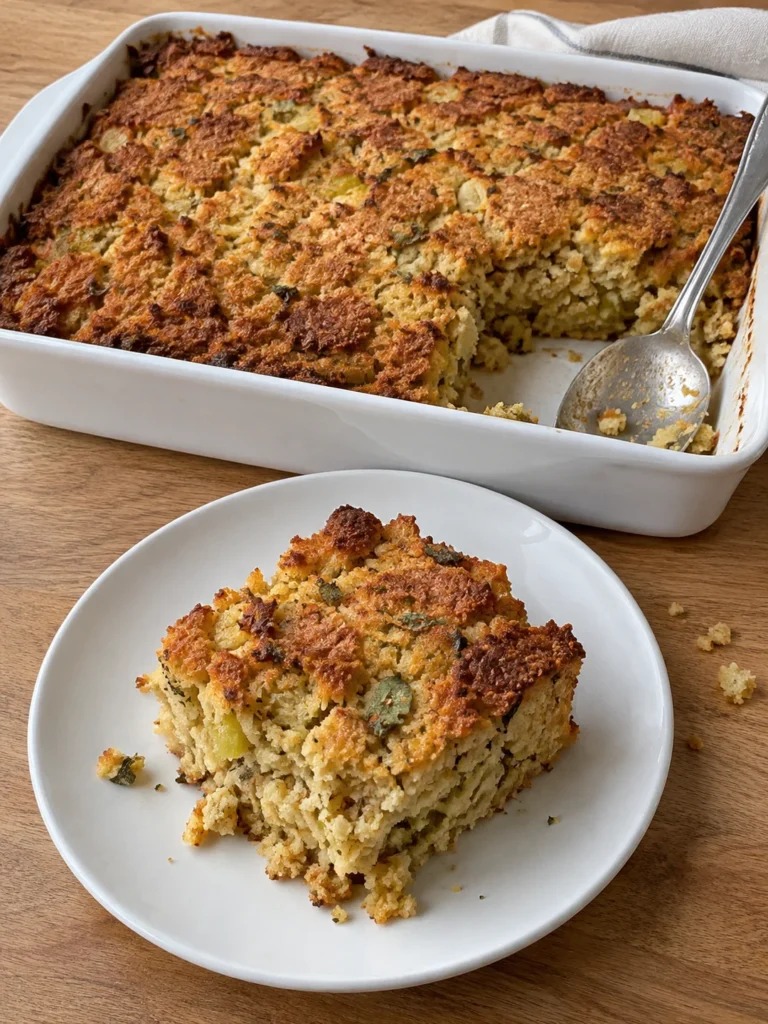
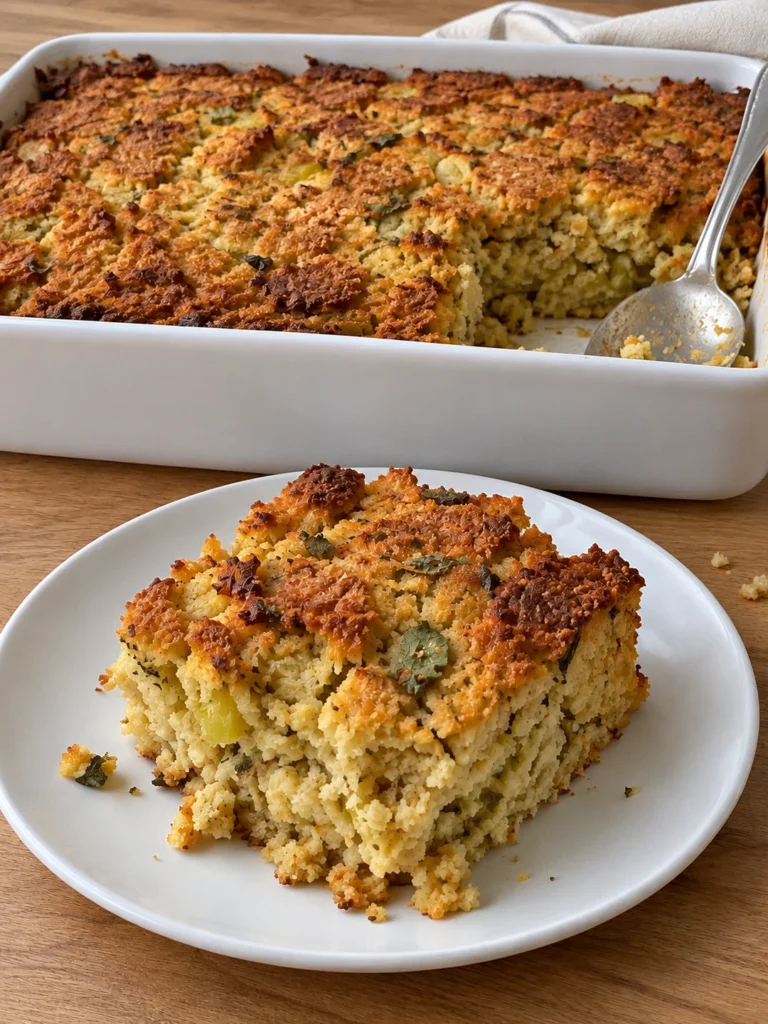
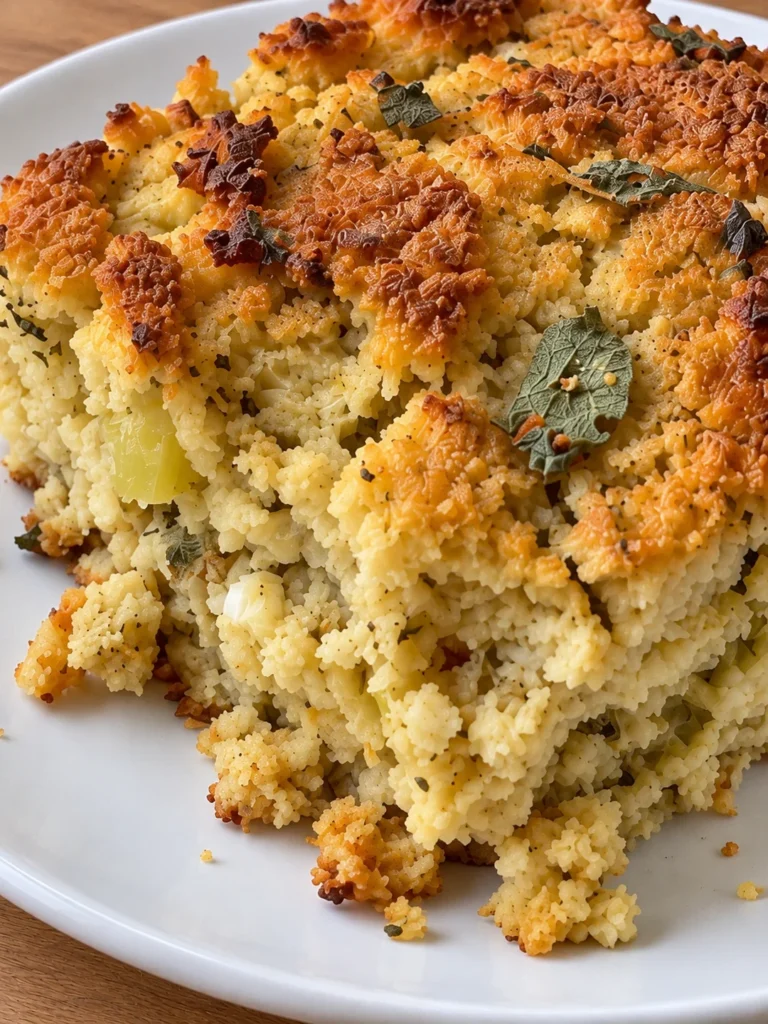
I ate mine standing in the shade of a live oak. Custardy in the middle, cracked and browned on top, so heavy on sage that I tasted it in the back of my throat for an hour.
The Stall at the Forsyth Farmers’ Market
I asked Miss Ruthie how she made it and she laughed at me, which I deserved. She told me it was her grandmother’s and that she was not going to stand there in the heat explaining it to a woman from California.
Fair enough. What saved me was the hostel I was staying in a few blocks off Barnard Street, where the owner, Dee, cooked a proper Sunday dinner for whoever was still hanging around with nowhere to be.
That Sunday it was roast chicken, collards, and the same cracked golden pan I had been thinking about all week. Dee let me stand at her elbow with a notebook, and she talked while she worked, mostly about what not to do.
Her first rule was that the cornbread had to be baked a day or two before and left out on the counter to go stale, loosely covered, like you were ignoring it on purpose. Fresh cornbread, she said, turns the whole thing to paste.
Why Southern Cornbread Dressing Is Not Stuffing
The cornbread dressing on that table had a longer history than I understood while I was eating it. Its direct ancestor is kush, a skillet dish of crumbled day-old cornbread scrambled with onions, fat and herbs that enslaved West Africans in the South adapted from kusha and couscous traditions, swapping corn for the millet and sorghum they had cooked with before cornmeal became the ration grain.
From the quarters it moved into the kitchens of the big house, where it got butter, stock, eggs and poultry giblets, and shifted out of the skillet into a baking pan. When Thanksgiving settled in as a national holiday in the later 1800s, the South put this on the table instead of the wheat-bread stuffing of the North, because corn was the everyday grain there and wheat was not.
And it is dressing, not stuffing. The distinction is about method rather than vocabulary, because it bakes in its own pan instead of being packed into the bird. Call it stuffing in most of the South and you have announced exactly where you are not from.
Dee also made the point, firmly, that this is not a Thanksgiving-only dish. Chicken and dressing turns up at Christmas, at Sunday suppers, at church dinners and at funeral repasts all year long. Hers showed up every Sunday for backpackers.
What I Used
- Stone-ground yellow cornmeal, the coarse kind, not a self-rising sweet mix
- A little all-purpose flour, baking powder, baking soda, salt
- Full-fat buttermilk, two cups, and two eggs for the cornbread
- Bacon drippings, saved in a jar in the fridge door, some for the batter and a spoonful for the hot skillet
- Butter, six tablespoons, plus more drippings for the vegetables
- Yellow onion and celery, finely chopped, inner ribs and the pale leaves too
- Stale biscuits or day-old white sandwich bread, torn, if you want to stretch it
- Rubbed dried sage, and more than feels reasonable
- Dried thyme, coarse black pepper, more salt
- Seven cups of stock, ideally giblet broth from simmering the neck and giblets
- Three beaten eggs for the dressing itself
- Hard-boiled eggs and chopped stewed chicken, both optional, both traditional
What Savannah Taught Me About Timing
This dish punishes impatience at three separate points, and I have failed at all of them at least once.
The first is the drying. My first attempt back home I crumbled warm cornbread straight into the bowl because I wanted to eat dinner, and what came out of the oven was gummy in a way no amount of extra baking fixed. Now I bake the cornbread Friday, crumble it by hand into my biggest bowl, and leave it out until Sunday.
The second is the onion and celery. Twelve to fifteen minutes on medium-low, stirring now and then, until they go completely soft and sweet and barely take on color. Most recipes imply you can rush this. You cannot, and sharp raw onion in the finished pan is unmistakable.
The third is the stock. You heat it until it is steaming and you pour in more than looks sane, folding gently, until the mixture pours off a spoon instead of holding a shape. If you can roll it into a ball it will bake out dry and crumbly. It is supposed to look alarming in the bowl.
I bake it in a 10 inch cast iron I bought at a swap meet for eleven dollars, handle pitted, bottom slick as glass by now. Forty-five to sixty minutes at 375, uncovered, until the top is deep brown and cracked and a knife comes out of the center clean and moist. Then it rests fifteen minutes, which is the fourth test of patience and the one I skip most often.
Sourcing It Away From the South
Real stone-ground cornmeal was the one thing I had to hunt for. I found it eventually at a Southern grocery out in the Crenshaw district, and now I buy two bags at a time because driving across town for cornmeal twice in one month is foolish.
Do not sweeten the cornbread. I know the boxed sweet mix is right there. It makes the dressing taste like a dessert that went wrong, and it is the single fastest way to make a Southern cook put down their fork.
Giblet broth is worth the extra pot. If I am not roasting a bird I simmer chicken wings and a few necks with celery tops for an hour, which is not strictly correct but gets close. Cubed stuffing mix is not a substitute for any of this, and I say that with love.
Twists and Family Arguments
Every household draws its own lines here. Dee folded in chopped hard-boiled eggs and a cup and a half of stewed chicken pulled off the bone, which makes it a meal rather than a side.
Biscuits are the other great argument. A couple of cups of torn stale biscuits or plain white sandwich bread softens the texture, and some cooks consider that heresy. I like it. Sage is the real battleground though, and I have crept up from one tablespoon to nearly one and a half, which Dee would probably approve of and Miss Ruthie would probably still laugh at.
Assemble it a day ahead if you are feeding a crowd, refrigerate it covered, add ten minutes to the bake.
Sunday Mornings, Mavis Staples On
I make this now on the first cool Sunday of the year, usually before anyone texts me, with Mavis Staples on and the windows open. Cold leftovers eaten standing at the counter the next morning, straight from the pan. Honestly better than the first plate.
Southern Cornbread Dressing
Ingredients
Equipment
Method
- One to two days ahead, make the cornbread. Preheat the oven to 450 F with the 10 inch cast-iron skillet inside for 10 minutes.
- Whisk the cornmeal, flour, baking powder, baking soda, and 1.5 teaspoons salt in a bowl. In another bowl beat the buttermilk with 2 eggs, then stir in 3 tablespoons of melted bacon drippings. Pour the wet into the dry and stir just until combined. Do not add sugar.
- Pull the hot skillet out, add the remaining 1 tablespoon bacon drippings, and swirl to coat. Pour in the batter; it should sizzle at the edges. Bake 20 to 25 minutes until the top is golden and the center springs back. Turn out onto a rack and cool completely.
- Crumble the cooled cornbread by hand into a very large bowl, breaking it into coarse pea-size and thumbnail-size pieces. Leave it loosely covered on the counter for 24 to 48 hours to dry out fully. Tear in the stale biscuits or white bread, if using, and let them dry alongside.
- On the day you serve, preheat the oven to 375 F and grease a 9x13 inch baking dish or a large cast-iron skillet.
- Melt the butter with the 2 tablespoons bacon drippings in a large skillet over medium-low heat. Add the onion and celery and cook slowly, stirring now and then, 12 to 15 minutes, until completely soft, sweet, and just barely colored. Do not rush this.
- Scrape the vegetables and all the butter over the dried cornbread crumbs. Add the sage, thyme, black pepper, and 1.5 teaspoons salt and toss with your hands until the seasoning is evenly distributed.
- Heat the stock in a small saucepan until steaming. Pour 6 cups over the crumbs and fold gently. The mixture should be sloppy and loose. Add the remaining stock a little at a time until it pours from a spoon rather than holding its shape. This looks far too wet. It is correct.
- Taste the mixture for salt and pepper and adjust now, before the eggs go in. It should taste assertively seasoned and clearly of sage.
- Stir in the 3 beaten eggs, then fold in the chopped hard-boiled eggs and stewed chicken if you are using them. Pour the batter into the greased pan and smooth the top lightly; it should level itself.
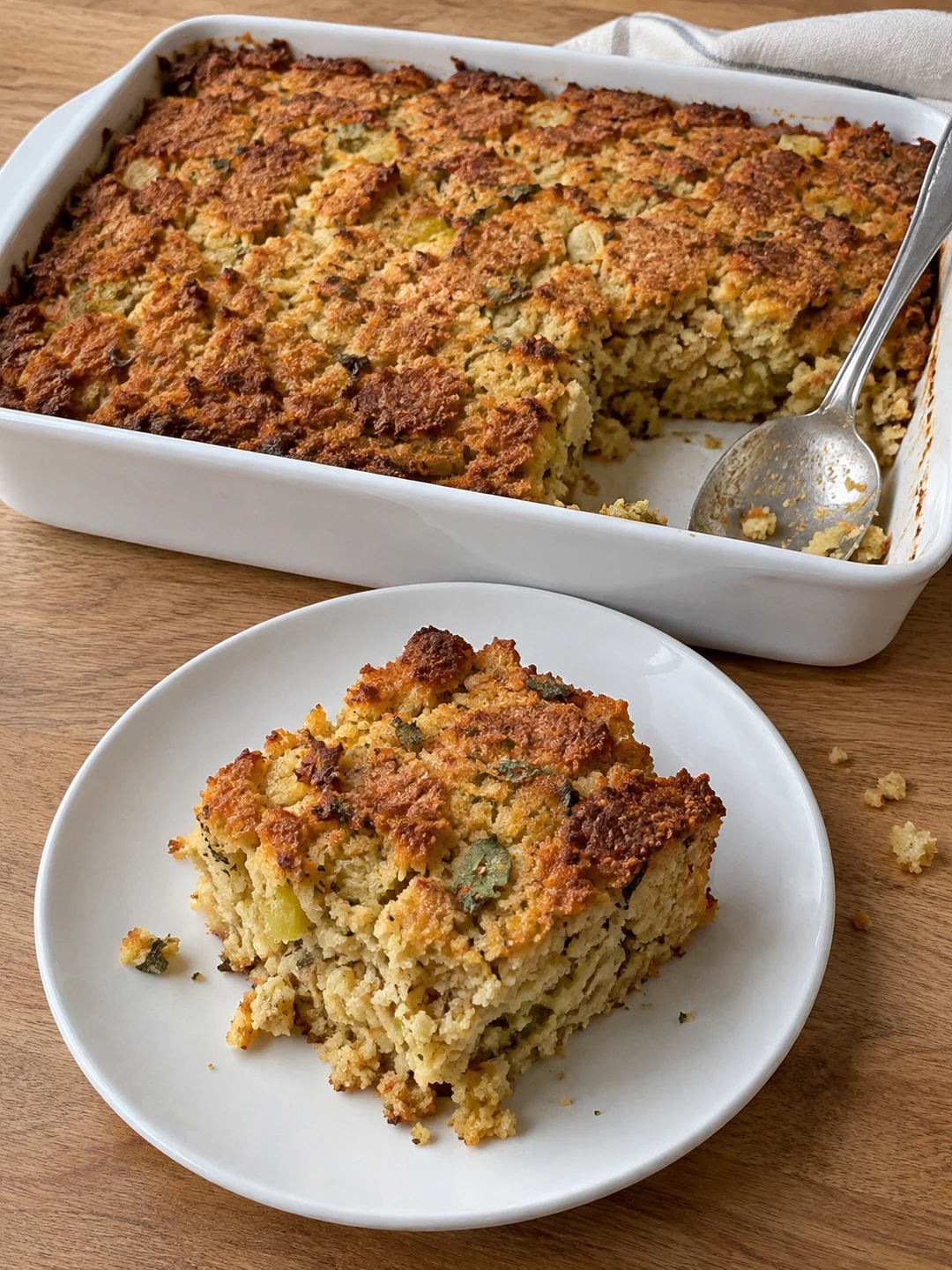
- Bake uncovered 45 to 60 minutes, until the top is deeply golden brown and cracked and the center is set but still custardy. A knife slid into the middle should come out clean and moist, not wet with batter.
- Let the dressing rest 10 to 15 minutes before cutting into squares or spooning it out. It firms up as it sits.