
The best twice baked potatoes I have eaten came out of a community kitchen oven in Madison, Wisconsin, on a cold Tuesday in October. I had signed up for a three-hour class on Midwestern holiday sides mostly because the hostel I was in had no kitchen and I wanted to eat something that was not gas station cheese curds.
The room smelled like bacon fat and scorched potato skin and wet wool, because everybody’s coats were drying on the backs of the chairs. Our instructor was a woman named Dana who had cooked for a supper club out on the lake for eleven years and talked about potatoes the way other people talk about their kids.
The Night in Madison That Ruined Plain Baked Potatoes for Me
Dana handed each of us two russets and told us not to wrap them in anything. Somebody reached for foil out of habit and she caught it mid-air. Foil traps steam, she said, and steam gives you a limp leathery jacket and a gummy middle, which is the opposite of the entire point.
So the potatoes went bare onto a foil-lined sheet pan, pricked with a fork, rubbed with oil, scattered with coarse salt. An hour later the kitchen had that dry, toasty smell of skins going brittle. She split one open with a paring knife and it hissed.
What got me was the part I had never seen anyone do. After we scooped out the flesh, the empty shells went back into the hot oven alone, cut side up, for ten more minutes. Nothing in them. Just drying out while we mashed.
That is the whole trick. I have made these dozens of times since and the ten empty minutes are the difference between a side dish and a soggy mashed potato in a bag of skin.
Twice Baked Potatoes Are Older Than the Steakhouse
I assumed this was a 1970s invention. Something that arrived with sour cream and iceberg wedges and dim restaurant lighting. Wrong by about a century.
Estelle Woods Wilcox printed a recipe called Potatoes in Jackets in her 1877 Ohio collection, and it is essentially what Dana taught us, bake, scoop, mash with butter, refill, bake again. Through the 1880s the stuffed versions were flavored simply with cheese, breadcrumbs and a little spice. The bacon and scallion and cheddar came much later, borrowed straight off the loaded baked potato.
In the 1960s they got rebranded as potato boats and served as an hors d’oeuvre, which is very funny to me. By the 1970s plenty of households gave up on the shells entirely and spread the whole thing in a baking dish for a crowd. That casserole exists and it is fine, but it is not this. The crisp intact shell is the dish.
Also worth saying, since I have seen people mix them up on menus. These are not potato skins. Potato skins stay hollow and get topped as an appetizer. Twice baked potatoes get the flesh mashed with dairy and piled back in as a side.
What I Used
- Four big russets, about twelve ounces each, scrubbed and dried properly. Russets only, no debate here. Red or new potatoes are too waxy and the shells slump.
- A tablespoon of vegetable oil and a teaspoon of kosher salt, just for the skins
- Six slices of thick cut bacon
- Four tablespoons of unsalted butter, room temperature, cut up so it melts fast into the hot potato
- Three quarters of a cup of full fat sour cream
- A quarter cup of whole milk, warmed. Buttermilk if I have it open, which is rare
- Two cups of sharp cheddar, shredded, split between the filling and the tops
- Four scallions, thinly sliced, or three tablespoons of chives. I like scallions better, the white part gives you something to chew
- Half a teaspoon of garlic powder. Yes, powder. Fresh garlic goes harsh and raw in here
- Salt and freshly ground black pepper
I buy the russets at the farmers market on Wednesday mornings when the dirt is still on them. The cheddar I am fussier about. After Wisconsin I came home with a brick of two-year creamery cheddar in my carry-on, and now I grate my own from a block rather than buying the pre-shredded bags, which are coated in starch and never melt right.
What Happens Inside the Potato
Here is what the hour of baking is actually doing. The starch granules in a russet are packed tight and dry, and in the heat they swell and go mealy and separate from each other, which is why the inside comes out fluffy instead of dense. Meanwhile the skin is losing water to the open oven air and turning papery and crackly. Wrap it and you stop both of those things cold.
Scoop while it is still hot. The flesh breaks apart cleanly at that temperature. Let it cool and the starch firms up and you end up fighting it.
Then the mashing, which is where most people wreck it. Hand masher or a ricer. Never a food processor, never a mixer on high. Agitated starch releases and the filling turns into glue, grey and stretchy and sad. Dana said stop the second it looks smooth, then stop again.
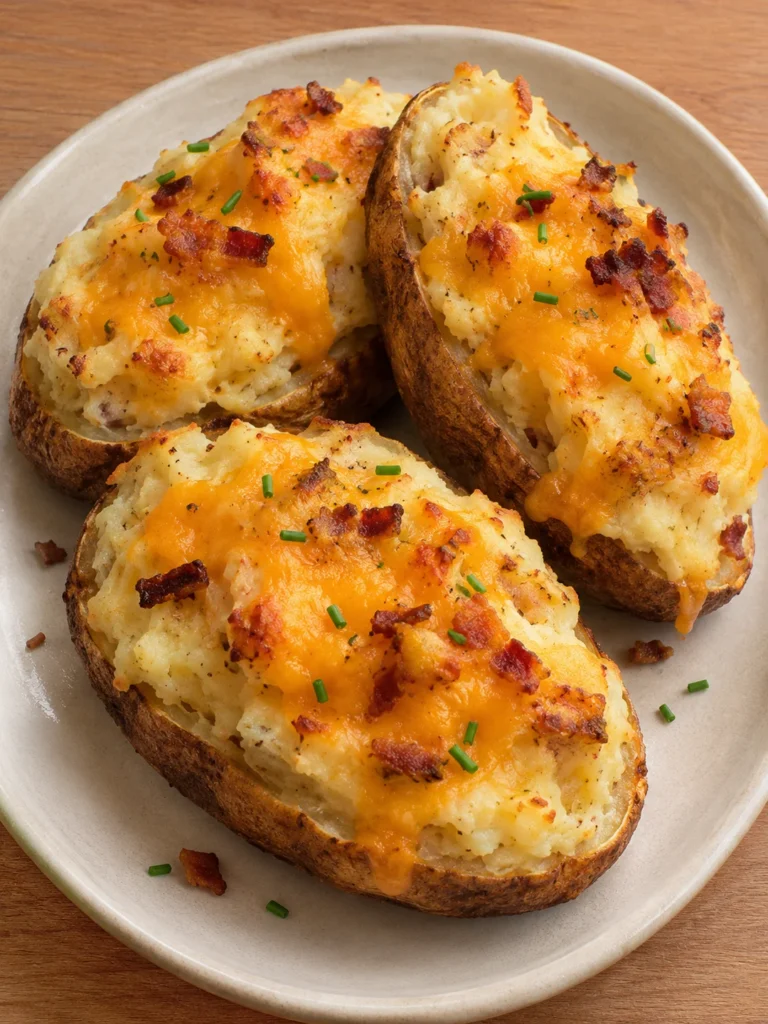
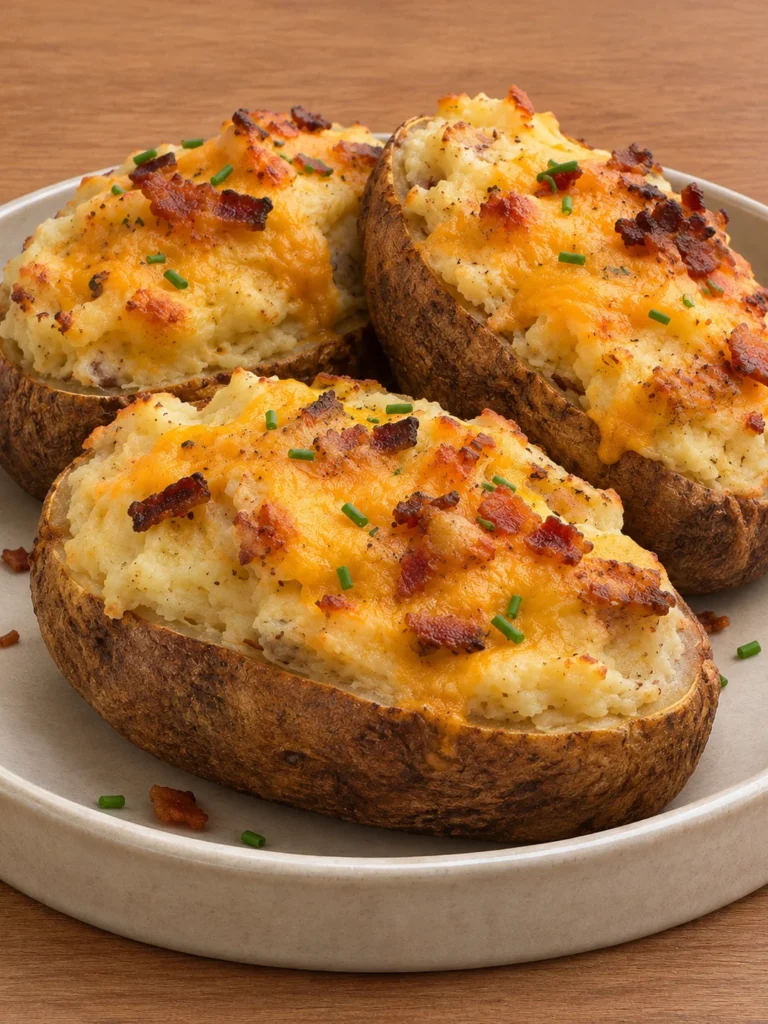
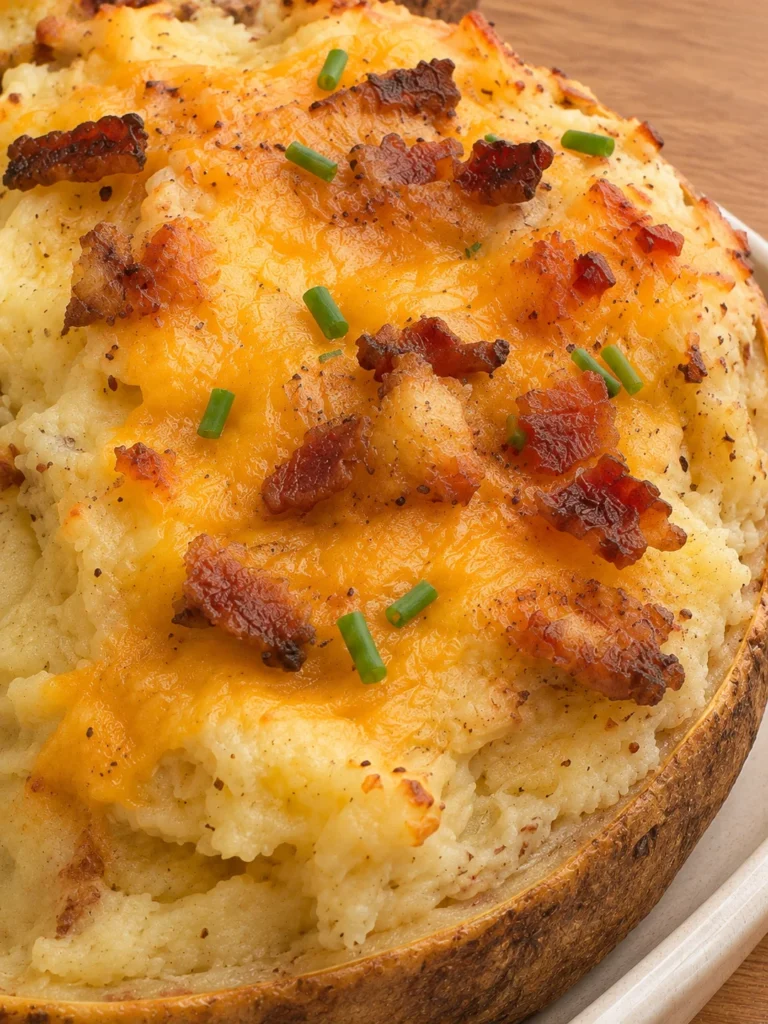
Butter first, so it melts into the heat and coats the starch. Then the sour cream and the warm milk and the seasoning. Fold in the cheddar and most of the bacon and most of the scallions, mound it high into the dried shells, and rough up the tops with a fork so the peaks catch color.
Fifteen or twenty minutes at 400 and the cheese goes bubbly and spotty brown. I give mine two minutes under the broiler at the end and stand there watching, because I have walked away before and come back to carbon. Then rest ten minutes so the filling sets. Cutting into them straight away gives you a landslide.
Swaps, And Making Them Ahead
I have swapped the bacon for crisped-up prosciutto when that was what the fridge held, and it works, though it goes brittle rather than chewy. Gruyere in place of half the cheddar is good. A spoonful of cream cheese makes the filling denser and a little tangier, which I liked once and have not bothered with since.
The real reason I make these for a table of people is that they wait patiently. Fill the shells, cover them, refrigerate up to two days, then bake twenty-five to thirty minutes straight from cold. Or freeze them filled and unbaked on a sheet pan, bag them once solid, and bake from frozen at 375 for about forty minutes.
They belong next to a steak or a holiday ham with green beans or something sharp and green. Extra sour cream and chives on the table, always.
It rained the last time I made them, properly rained, and the oven ran for two hours and warmed the whole apartment, and I did not mind at all. Cold leftovers the next morning, eaten standing at the counter. Honestly better than the original.
Twice Baked Potatoes
Ingredients
Equipment
Method
- Heat the oven to 400 F. Prick each potato 8 to 10 times all over with a fork, rub the skins with the oil, and sprinkle with the kosher salt.
- Set the potatoes directly on a foil-lined baking sheet, not wrapped, and bake 60 to 70 minutes, until the skins are deep brown and crisp and a skewer slides through the center with no resistance.
- While the potatoes bake, cook the bacon in a skillet over medium heat until crisp, about 8 minutes. Drain on paper towels and crumble.
- Let the potatoes cool 10 minutes, just until you can handle them. Slice each one in half lengthwise.
- Scoop the flesh into a large bowl with a spoon, leaving a shell about 1/4 inch thick so the halves hold their shape. Work while the flesh is still hot.
- Return the empty shells cut side up to the baking sheet and bake 10 minutes to dry and re-crisp them. Leave the oven on.
- Mash the hot potato flesh with the butter until the butter melts in. Add the sour cream, warm milk, garlic powder, salt and pepper and mash just until smooth. Stop as soon as it comes together, or it turns gummy.
- Fold in 1 1/2 cups of the cheddar, three quarters of the bacon and three quarters of the scallions. Taste and adjust the salt.
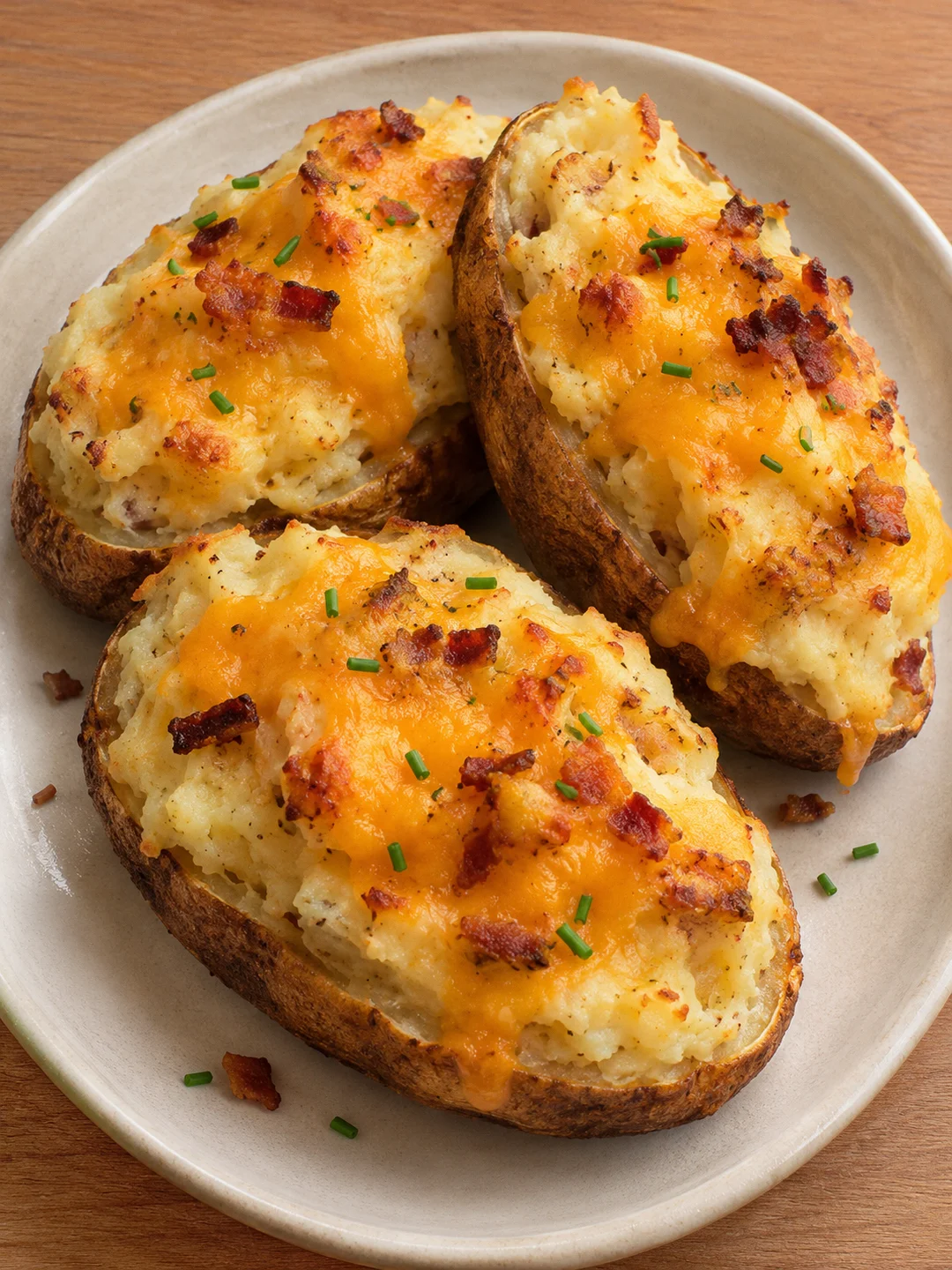
- Mound the filling into the dried shells, piling it high and roughing up the surface with a fork so the peaks brown. Scatter the remaining cheddar and bacon over the tops.
- Bake at 400 F for 15 to 20 minutes, until the cheese is bubbling and the tops are spotty brown. For darker tops, broil the last 2 minutes, watching closely.
- Rest 10 minutes so the filling sets, then scatter with the remaining scallions and serve.