
The first jar of Veracruz Salsa Macha I ever tasted was passed across a folding table in Orizaba by a woman named Rosalba who ran a spice stall inside the covered market on Calle Sur. She had a small tasting spoon and a bowl of warm bolillo torn into pieces. She fed me one and watched my face.
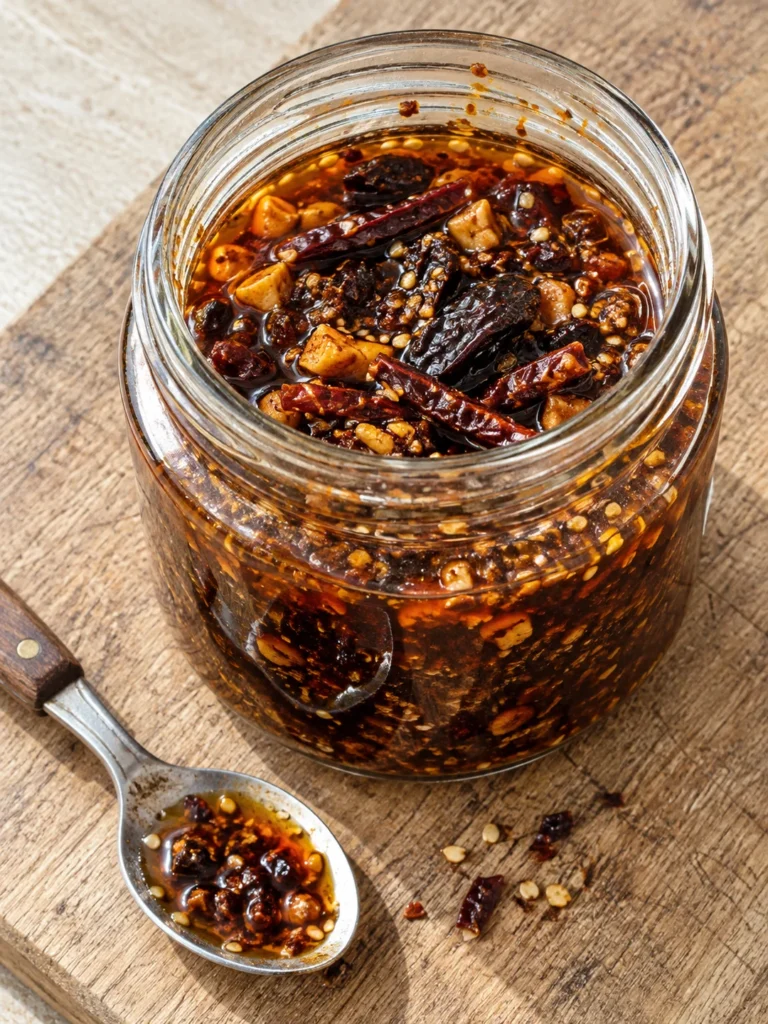
Then she scribbled the recipe on the brown paper bag she was already using for my dried chiles. Chile de árbol, chipotle, cacahuate, ajonjolí, aceite. Her handwriting slanted hard to the right. I still have the bag.
The Stall in Orizaba Where It All Started
I had gotten on a bus from the port of Veracruz that morning, climbing up into the mountains where the air cools off and the coffee gets serious. Orizaba sits in that Orizaba-Córdoba corridor everyone in the state will tell you is the real home of this condiment. Rosalba was very clear about that. Zongolica does a rougher, molcajete-pounded version, she said, but the classic peanut-and-sesame style is hers.
She told me two things I did not know. One, the name probably comes from macho or macha, meaning bold or brave, because it hits harder than a table salsa. Two, the sesame in it is not indigenous. It arrived through the port down the mountain during the Manila Galleon trade, along with Asian oil-infusion techniques that turned a pre-Hispanic mortar paste into what sits in the jar today. Totonac chile-and-seed method, Spanish oil, Asian sesame. All three cultures in one spoon.
She would not let me leave with just the chiles. She weighed out the peanuts too. Raw, skin on. She said the skin was the point.
Bringing It Back to My Kitchen
Back in my apartment I laid the paper bag flat on the counter and stared at it for a minute. Then I got out my comal, the one my neighbor Hugo gave me when he moved back to Guadalajara. It has a warp on the left side that I have learned to cook around.
Sourcing the chiles in California is honestly easy. There is a little Mexican grocery three blocks from my place that carries chile de árbol by the bag and moritas in the back cooler. I bought both. If you cannot find morita, the standard chipotle meco works, just do not use canned adobo. That is a different sauce entirely.
The one thing I want to say up front. This is not the same as Chinese chili crisp. I know it looks similar in the jar. But there are no Sichuan peppercorns, no ginger, no fermented soy. This is a mexican chili oil built on toasted dried chiles, peanuts, and sesame, with a whole different aromatic profile. Do not treat them as interchangeable.

What I Used
- 1 cup neutral vegetable oil, sunflower is my go-to
- 1 oz dried chile de árbol, about 20 to 25, stems pulled
- 0.5 oz dried chipotle or morita, stems pulled
- 0.5 cup raw peanuts, skin on, unsalted
- 6 garlic cloves, peeled
- 3 tbsp sesame seeds
- 1 tsp kosher salt, to taste
- 1 tsp apple cider vinegar, optional but I always add it
Inside the Pot, Toasting the Chiles
The comal goes on medium-low first. Not hot. If you drop the árbols on a screaming skillet they will scorch in ten seconds and the whole batch will taste like cigarette ash. Ask me how I know. My first attempt in this kitchen, I torched the chiles inside a minute and had to throw the whole thing out.
What you want is thirty to sixty seconds a side, pressing them flat with a wooden spatula. Watch what happens inside the chile. The skin puffs a little, goes from matte to slightly glossy, and the volatile oils in the seeds start to lift into the air. That is your signal. Pull them.
Then the peanuts in two tablespoons of oil. Low heat again. The peanut skins darken by a shade, from papery beige to a russet, and their aroma shifts from raw and grassy to toasted and sweet. Fish them out. Garlic next, golden at the edges only, not brown all the way through. Then the sesame seeds, thirty seconds tops, swirling constantly. They go pale gold and start to jump.
The remaining oil comes in cool and warms gradually to about 260. Not smoking. Never smoking. You slide everything back in and take the pan off the heat. That last part is critical. You are not frying anymore, you are steeping. The chiles rehydrate slightly in the warm oil, the peanuts release fat back into it, and the sesame gives up its perfume.
Molcajete or Blender
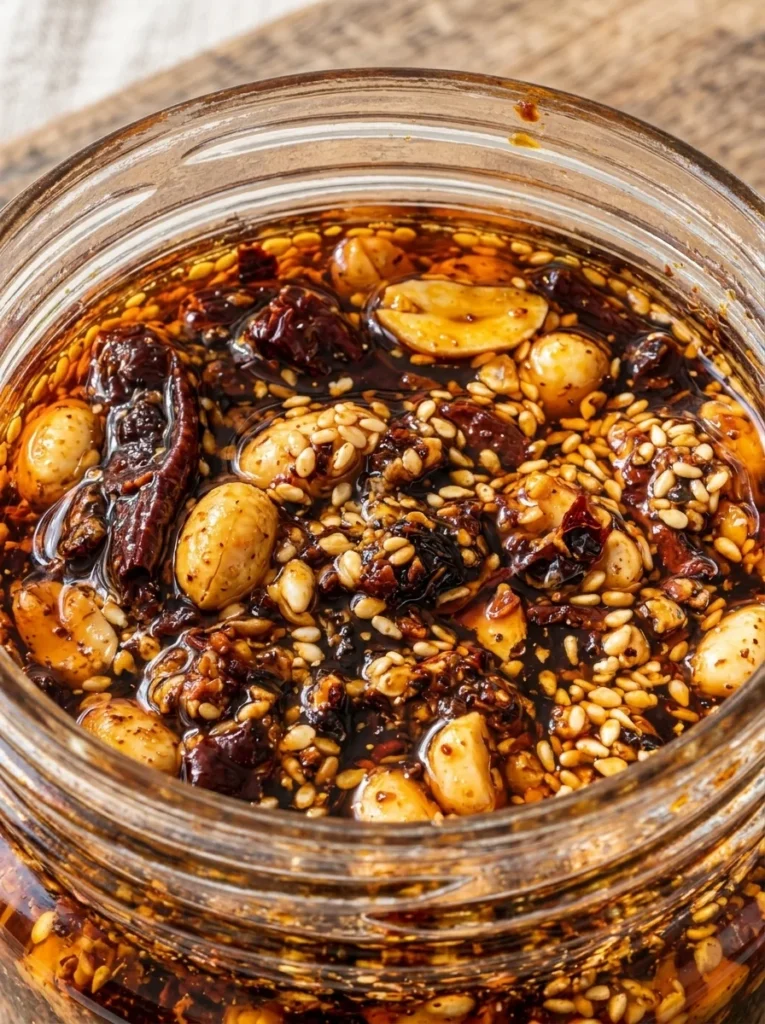
Rosalba pounded hers in a stone molcajete on the counter behind the stall, and honestly the texture from that method is unbeatable. I do not own one. My blender does the job if I keep it honest, four to six short pulses, nothing more. You want to see pieces. Actual chile skin, actual peanut halves, actual sesame. Not a paste.
Add the salt. Add the vinegar if you are using it. Taste. Adjust.
Into a sterilized jar it goes. Push the solids down so the oil covers them by a thin layer. Let it sit for an hour on the counter before you touch it again. This is not the moment to be impatient. I almost skipped this step the first round and the flavor was flat. An hour later the same batch tasted like Rosalba’s stall.
How I Actually Eat It
On eggs. Almost every morning. A spoonful over a plate of huevos revueltos with warm corn tortillas and I am set until lunch. Also over carne asada, over roasted sweet potato, on a torta with avocado. Not on tortilla chips. That is the one thing it is not for. Its texture is thick and oily and it is meant to be drizzled, not scooped.
Sunday morning, the last time I made a fresh batch, the kitchen window was open and the sesame perfume drifted out onto the fire escape. My downstairs neighbor asked what I was cooking. I gave her a jar.
A Few Honest Notes
Refrigerated with the solids submerged, mine keeps three to four weeks. Always a clean dry spoon, no double-dipping, no fingers, or you introduce moisture and it spoils. If you want the Zongolica-style rustic version, up the chile ratio and crush it by hand in a mortar. Chunkier, hotter, no blender involved.
I make this every three weeks now. The jar on my counter is nearly always half full. Rosalba, if you ever read this, the paper bag is taped to the inside of my cabinet door.
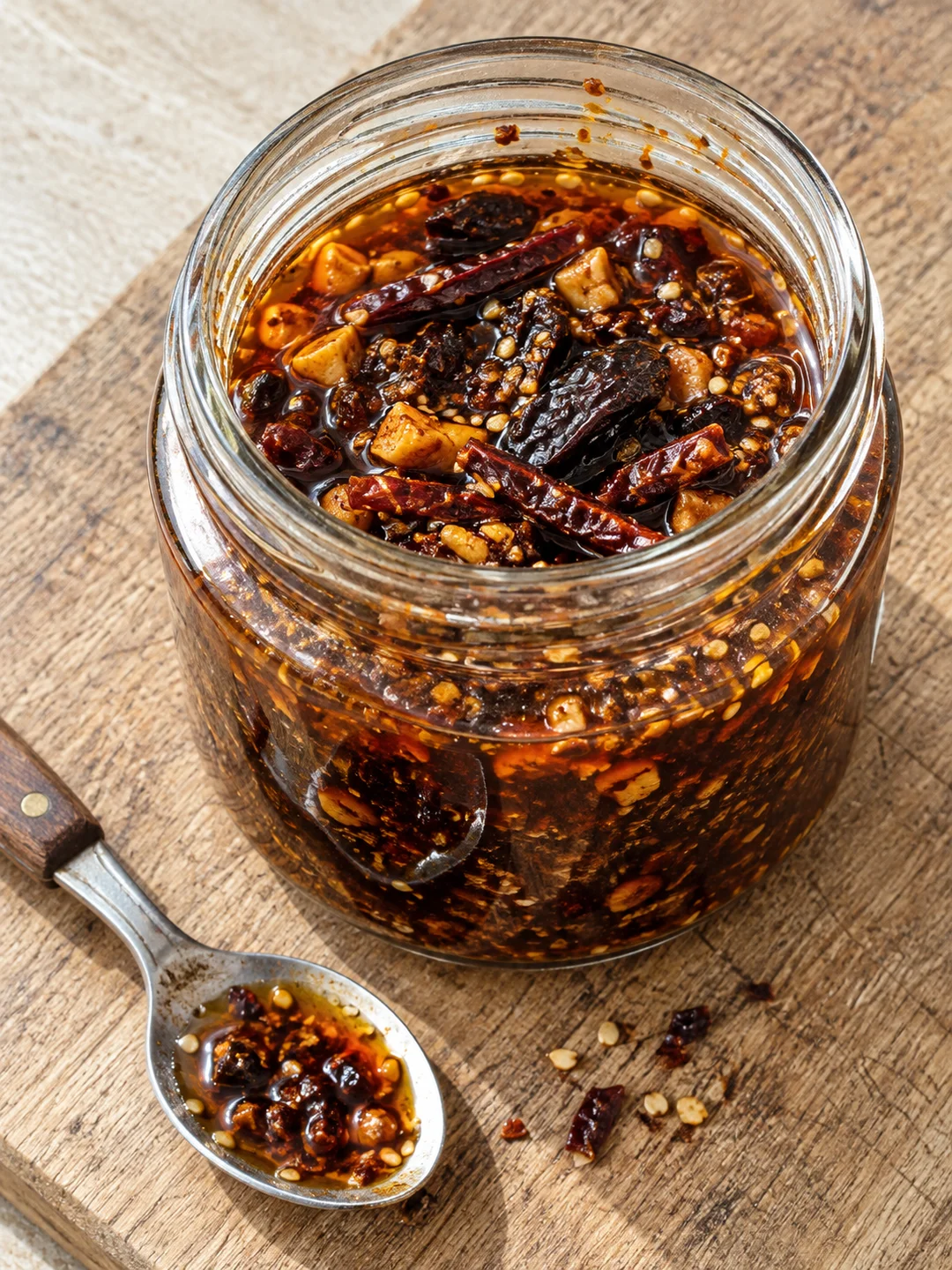
Veracruz Salsa Macha
Ingredients
Equipment
Method
- Wipe the dried chiles clean with a dry cloth, then pull off the stems. Leave the seeds inside — they carry heat and body.
- Heat a dry comal or heavy skillet over medium-low heat. Toast the chiles de árbol and chipotles for 30 to 60 seconds per side, pressing them flat, just until fragrant and slightly puffed. Do not let them scorch or the whole batch turns bitter. Transfer to a plate.
- In a small saucepan, warm 2 tablespoons of the oil over medium-low heat. Add the peanuts and toast, stirring often, for 2 to 3 minutes until they turn a shade darker and smell nutty. Scoop them out with a slotted spoon and set aside.
- Add the garlic cloves to the same oil and cook for 1 to 2 minutes until golden at the edges. Remove and set aside with the peanuts.
- Add the sesame seeds and toast for about 30 seconds, swirling constantly, until they take on a light gold color. Remove and set aside.
- Pour the remaining oil into the saucepan and warm it over low heat until it shimmers but does not smoke, about 250 to 275 F. Slide in the toasted chiles, peanuts, garlic, and sesame seeds. Let everything steep, off the heat, for 5 minutes so the flavors infuse the oil without frying.
- Transfer the whole mixture, oil and all, to a molcajete or blender. Add the salt and vinegar if using. Crush by hand for a coarse, rustic texture, or pulse the blender 4 to 6 times in short bursts — you want visible pieces of chile, peanut, and sesame, not a smooth paste.
- Taste and adjust the salt. Spoon into a sterilized glass jar, making sure the solids are submerged under a layer of oil. Let it sit at room temperature for at least 1 hour before serving so the flavors settle, then refrigerate.