Go Back
Old English Bread Pudding (Bread and Butter Pudding) with Sultanas and Nutmeg

Bread Pudding

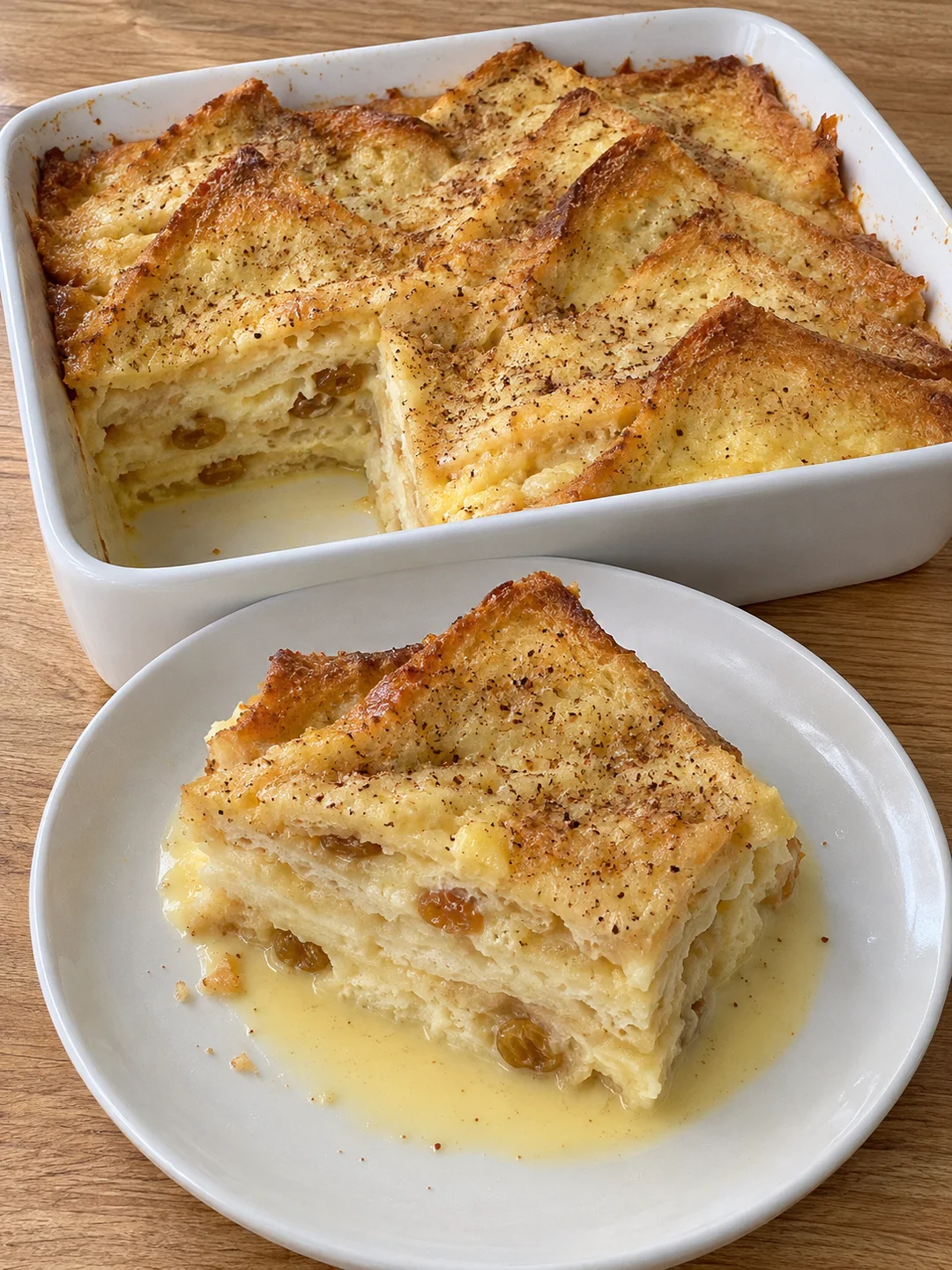
This is the English original: slices of stale white bread spread thick with butter, overlapped in a dish with sultanas and lemon zest, then flooded with vanilla custard and left to soak. In the oven the buried crumb sets soft and silky while every exposed corner crisps to deep gold. Frugal in origin, Victorian in reputation, and still the best use for yesterday's loaf.
Prep Time 20 minutes
Cook Time 40 minutes
Total Time 1 hour 30 minutes
Servings: 6 People
Course: Dessert
Cuisine: British
Calories: 445

Ingredients
  

  • 10 slices white bread slightly stale, crusts left on
  • 5 tbsp butter softened, plus extra for the dish
  • 0.75 cup sultanas or raisins or currants
  • 1 tsp lemon zest finely grated
  • 1.5 cups whole milk
  • 0.75 cup heavy cream
  • 3 large eggs at room temperature
  • 1 large egg yolk
  • 0.5 cup superfine sugar plus 1 tbsp for the top
  • 1.5 tsp vanilla extract
  • 0.25 tsp salt
  • 0.5 tsp nutmeg whole, for grating fresh

Equipment

  • 1 8x11 inch baking dish or any 2 quart shallow dish
  • 1 Medium saucepan
  • 1 Large mixing bowl
  • 1 Whisk
  • 1 fine grater for nutmeg and lemon zest

Method
 

  1. Butter the baking dish well, right up the sides. Spread the softened butter generously over one side of every bread slice, then cut each slice in half on the diagonal to make triangles.
  2. Arrange a first layer of triangles in the dish, butter side up and overlapping like roof tiles. Scatter over half the sultanas and half the lemon zest.
  3. Lay the remaining triangles over the top in the same overlapping way, butter side up, and tuck the rest of the sultanas and zest between the slices rather than on top, where they would scorch.
  4. Warm the milk and cream in a saucepan over medium heat until steam rises and the edges just tremble. Do not let it boil.
  5. In a large bowl whisk the eggs, egg yolk, half cup of sugar, vanilla and salt until smooth and pale, about 1 minute.
  6. Pour the hot milk into the eggs in a slow stream, whisking constantly, until you have a thin, even custard.
  7. Pour the custard slowly and evenly over the bread, letting it soak in before adding more. Press the top slices down gently with your fingertips so they drink it up, then let them float back.
  8. Leave the dish to stand at room temperature for 30 minutes. The bread should feel heavy and saturated, with only a shallow pool of custard left around the edges. Heat the oven to 350 F toward the end of the soak.
  9. Sprinkle the remaining tablespoon of sugar over the surface and grate nutmeg generously across the top.
  10. Bake uncovered on the middle rack for 35 to 45 minutes. It is done when the exposed corners are deep golden and crisp, the custard is set around the sides, and the center still has a slight wobble when you nudge the dish.
  11. Rest 10 minutes before serving. Spoon it out warm, straight from the dish, scooping down through the crisp top to the soft custard underneath.

Notes

  • Stale bread is not a compromise, it is the method. If your loaf is fresh, lay the slices on a rack for an hour or dry them in a 300 F oven for 5 minutes.
  • Do not skip the 30 minute soak. That rest is what turns custard and bread into one sliceable thing instead of wet bread in liquid.
  • Serve warm with hot pouring custard, cold single cream, or a scoop of vanilla ice cream alongside. A dusting of icing sugar is traditional at the table.
  • For a richer version swap the white bread for brioche or challah and use half cream, half milk.
  • Soak the sultanas in 3 tablespoons warm tea or rum for 20 minutes first if they are very dry.
  • Leftovers keep covered in the fridge for 3 days. Reheat covered with foil at 325 F for 15 minutes.